
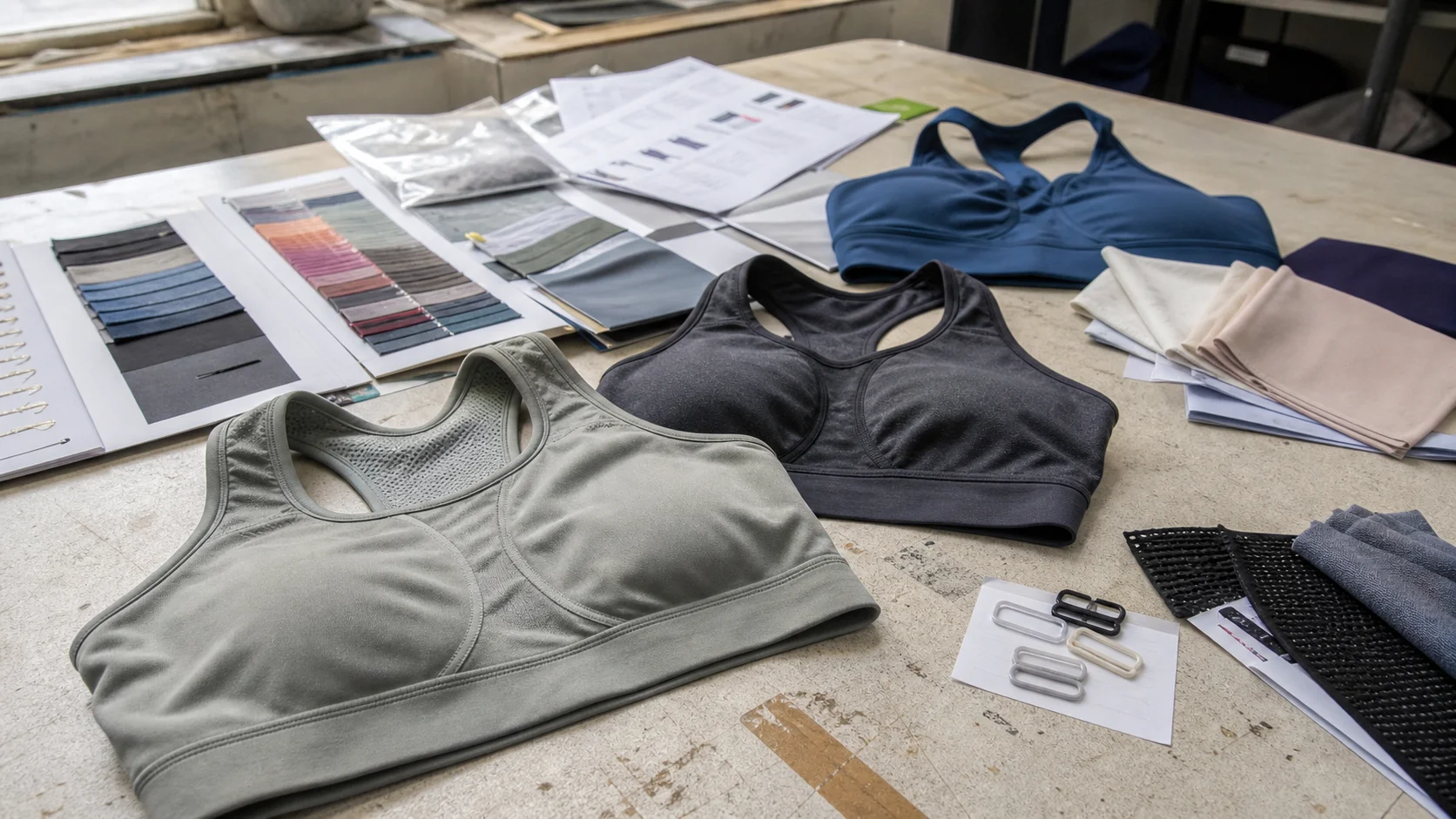
A practical SEO outline for repair chain buyers evaluating wholesale sports bra fabrics, lab tests, durability risks, and inspection evidence before...
Sports Bra Fabric Testing for Repair Chain Buyers - Activewear & Teamwear manufacturing guide
Sports bra fabric is not a simple activewear purchase. For repair chain buyers, it is a repeat-use material decision that affects fit recovery, customer satisfaction, alteration success, replacement panel consistency, and warranty exposure. A fabric that looks acceptable in a showroom can fail quickly after repeated stretching, washing, sweat exposure, or heat pressing during repair work.
This wholesale sports bra fabric testing guide is written for repair chain buyers who source fabrics, trims, elastic, linings, or replacement components for activewear repair and refurbishment programs. The buying logic is different from a fashion brand launching one seasonal collection. Repair chains need fabric that can match existing garments, tolerate local repair processes, and remain stable across multiple purchase cycles.
The commercial risk is straightforward. If a replacement wing panel curls after wash, the customer blames the repair shop. If the underband elastic loses recovery after a few wears, the chain absorbs complaints. If a black compression knit bleeds onto lighter garments during laundering, the repair order becomes a service failure. Testing does not remove every risk, but it gives buyers a practical basis for approving fabric, rejecting weak lots, and negotiating with suppliers before bulk purchasing.
Purchasing judgment: sports bra fabric should not be approved only by hand feel, color, or sample-room appearance. For repair chain buyers, recovery, dimensional stability, colorfastness, and compatibility with repair equipment are more important than a low fabric price.
Buyers working on larger sourcing programs can also use manufacturers that offer technical development support, pattern adjustment, and sampling coordination. For a wider view of production-related support, see Fabrikn services.
Repair chains usually face mixed inventory conditions. One location may repair high-compression sports bras from several brands, while another may handle light-support lounge bras, teamwear crop tops, dancewear pieces, or maternity activewear. That means the fabric sourcing brief must be broader than a single product tech pack.
A brand buyer can specify one body fabric for one style. A repair chain buyer often needs a small approved library of fabrics: compression body knit, softer lining knit, power mesh, underband elastic, brushed elastic, spacer pad material, hook-and-eye backing, binding, thread, and sometimes laminated support panels. The goal is not always exact duplication. It is usually functional compatibility, close color matching, and dependable repair performance.
Repair operations also create extra stress on fabric. Panels may be unpicked and re-stitched. Seams may be bartacked. Elastic may be replaced near areas already stretched by wear. Heat, steam, adhesive, or pressing can be used depending on the repair method. A fabric that performs well in new-garment production may still be unsuitable if it puckers, shines, delaminates, or distorts during repair handling.
Because repair chains serve many garment types, it is rarely wise to approve one “universal” sports bra fabric for every job. Compression fabrics can feel too rigid for light-support garments. Soft knits may fail on high-tension repairs. Power mesh may stabilize a panel but feel abrasive if used without proper lining. The better buying approach is to approve fabrics by repair function.
Fabric testing should reflect how the repaired garment will be worn, washed, stretched, and handled. Most buyers do not need a laboratory report for every small fabric reorder, but they do need baseline data before adding a material to an approved repair library. For large wholesale orders, third-party or supplier laboratory testing is a reasonable expectation.
Stretch and recovery are the first tests to review for sports bra materials. A fabric may have impressive stretch but poor recovery. That creates bagging at the bust, rolling at the underband, or loose side wings after wear. Repair buyers should ask for stretch data in both lengthwise and crosswise directions, especially for nylon-spandex and polyester-spandex knits.
Typical useful ranges vary by function. A compression body fabric may need controlled stretch with strong recovery, while lining fabric may need softer extension. For many sports bra body fabrics, buyers often see elastane content in the 12% to 25% range, though fiber percentage alone does not prove performance. Knit construction, yarn quality, heat setting, and finishing have a major effect.
Sports bras are frequently washed, and many customers wash them incorrectly. Repair buyers should still specify realistic wash testing. If a replacement panel shrinks while the original garment does not, seam twisting and distortion can appear quickly. If it grows, the repair loses structure.
For wholesale approval, request dimensional change results after at least three wash cycles, and preferably five when the fabric is intended for high-volume repair programs. A common buyer tolerance might sit around plus or minus 3% for many activewear fabrics, but tighter tolerances may be needed for underband and cup-area repairs. The right tolerance depends on garment category and repair location.
Colorfastness is a major issue for repair chains because replacement fabric is often sewn into garments that already have different aging and wash histories. Black and dark navy fabrics are common problem areas. Bright teamwear colors can also migrate during washing or sweat exposure.
Buyers should request colorfastness to laundering, acidic and alkaline perspiration, and dry and wet rubbing. Wet rubbing is especially important where sports bras contact skin, towels, outer garments, and light-colored apparel. A fabric that passes dry crocking but fails wet rubbing can still cause customer complaints.
Pilling can make a repair look cheap even when the stitching is clean. Sports bras rub against outerwear, gym equipment, backpack straps, and the wearer’s body. Brushed fabrics may feel premium but can pill faster if yarn and finishing are not controlled.
Repair buyers should check pilling resistance before approving fabrics for visible panels. Abrasion testing also matters for underarm, side wing, and band areas. A fabric used only as an internal stabilizer may not need the same visual pilling standard as a visible back panel, but it still needs enough durability to survive wear.
Moisture-wicking claims are common in activewear, but not all claims are useful. Repair chain buyers should be cautious with vague terms such as “quick dry” or “sweat friendly” unless supported by test methods or comparative samples. For sports bra repair, moisture behavior matters most in linings, center-front panels, underband areas, and high-sweat zones.
Ask whether the fabric relies on mechanical wicking, chemical finish, or both. Chemical finishes may reduce after repeated washing. Mechanical performance is often more stable, but fabric construction and yarn selection must support it. If a supplier cannot explain the wicking mechanism, treat the claim as marketing until tested.
Underband elastic is a separate purchasing decision from body fabric. Many sports bra failures begin at the band. Elastic can lose recovery, curl, split, delaminate, or become rough against the skin. For repair chains, elastic replacement must be reliable because the underband carries much of the support load.
Request repeated extension testing for elastic, not only width and appearance. Check recovery after laundering and after exposure to sweat conditions. If elastic is plush-backed, inspect the pile for shedding and abrasion. If it is branded or jacquard, check whether the face yarn snags or distorts when stitched.
Component Key Test Common Failure Buyer Judgment Body compression knit Stretch recovery and wash stability Bagging, twisting, uneven support Approve only after wash and repeated stretch checks Lining knit Softness, wicking, colorfastness Skin irritation, dye transfer, poor comfort Prioritize comfort and stable shade over lowest cost Power mesh Burst strength and recovery Tearing, scratchy feel, seam strain Use for support zones, not as a universal substitute Underband elastic Elastic fatigue and wash recovery Curling, slackness, edge irritation Test as a support component, not a decorative trim Binding Stretch, recovery, edge stability Wavy armholes, tight edges, seam cracking Match stretch to the garment opening and stitch typeA good test report is not enough if the purchase specification is vague. Repair chains should create a clear fabric and trim sheet for every approved material. This does not need to be complicated, but it should prevent suppliers from changing construction, weight, finish, or yarn without approval.
For wholesale sports bra fabric, the body fabric specification should include fiber content, fabric weight, width, construction, stretch direction, stretch percentage, recovery, color standard, finish, hand feel, and approved use. Weight is often listed in GSM. Many sports bra body fabrics fall somewhere around 220 to 320 GSM, but lighter and heavier options exist. High-compression styles may use heavier or denser knits, while light-support bras may use softer lower-weight fabrics.
Fiber selection involves tradeoffs. Nylon-spandex often gives a smoother hand and strong stretch recovery, but cost can be higher than polyester-spandex. Polyester-spandex can be durable and colorfast when properly processed, but some qualities feel harsher or less premium. Recycled yarns may support sustainability goals, but buyers should verify consistency, shade stability, and availability before relying on them for ongoing repair programs.
Linings should not be treated as afterthoughts. A sports bra lining touches skin and affects comfort. Some repair programs use soft polyester-spandex lining, nylon-spandex lining, power mesh, or lightweight tricot depending on the repair area. Stabilizers may be needed in front panels, strap bases, and side wings.
Specify whether the lining is for comfort, support, coverage, or moisture management. These uses require different fabric behavior. A lining that feels soft may stretch too much for support. A strong stabilizer may be too abrasive against skin unless covered.
Trim testing is often where repair buyers save too little and risk too much. Underband elastic, strap elastic, neckline binding, armhole binding, thread, sliders, rings, hooks, eyes, and labels all affect the repaired garment. A sports bra repair can fail even when the fabric is good if the trim specification is weak.
For buyers planning a custom activewear or repair-component program, early supplier discussion helps narrow the technical brief. A practical starting point is to contact a manufacturer through Fabrikn’s contact page with target fabric use, order scale, support level, and required testing.
Repair chain buyers should not move from fabric swatch to bulk order too quickly. A structured sample approval process reduces the chance of ordering fabric that cannot be used efficiently by repair locations.
Start with hand feel, stretch direction, color, opacity, thickness, and surface texture. Swatch review is useful, but it is only a screening step. Reject obvious mismatches early. Keep promising options for lab or in-house testing.
For repeat programs, approve color against a standard. This may be a Pantone reference, a physical fabric standard, or a customer-approved shade band. Repair chains often need practical core colors such as black, white, nude, grey, navy, and beige. Nude shades are especially difficult because customer expectations vary and slight undertone differences are noticeable.
Use the candidate fabric in actual repair operations. Replace a band, side panel, binding, or lining area on test garments. Inspect sewing behavior, edge rolling, seam puckering, needle cutting, stitch cracking, and operator handling. This step reveals issues that lab testing may not show.
Wash the repaired samples multiple times. Stretch the repaired area repeatedly. Check whether fabric tension remains balanced against the original garment. For high-support sports bras, the repair must hold shape under load. For light-support styles, comfort and appearance may matter more than maximum compression.
Before bulk fabric or trim purchase, request a pre-production sample or pilot lot when possible. This is especially important if the supplier has adjusted yarn, finish, dye process, width, or fabric weight after initial sampling. Compare the pilot material to the approved standard before authorizing bulk cutting or distribution.
Bulk approval should include shade, width, GSM, stretch, recovery, surface defects, odor, packaging, and roll identification. Keep sealed reference samples from approved lots. Repair chains with multiple locations should distribute clear handling notes so operators understand which fabric is approved for which repair type.
Purchasing judgment: a fabric that passes a swatch review but fails a sewing trial is not a sourcing success. For repair chains, the best fabric is the one that performs consistently in real repair conditions.
MOQ depends on whether the buyer orders stock fabric, custom-dyed fabric, custom construction, special finishing, or private-label trims. Suppliers vary widely, so the following ranges should be treated as typical planning bands rather than fixed rules.
Item Typical MOQ Range Lead-Time Considerations Buyer Tradeoff Stock sports bra fabric 100 to 500 meters per color Availability depends on current stock and shade consistency Lower MOQ, but weaker control over repeat shade and construction Custom-dyed fabric 500 to 1,500 meters per color Lab dip, dyeing, finishing, and testing add time Better color control, but higher commitment and longer approval cycle Custom knitted fabric 1,000 to 3,000 meters or more Yarn sourcing, knitting schedule, dyeing, and finishing drive timing Best technical control, but not ideal for small repair programs Underband elastic 1,000 to 5,000 meters per width/color Jacquard, plush backing, and custom color increase lead time Stock elastic is faster; custom elastic improves consistency Binding or tape 1,000 to 3,000 meters Color matching and stretch behavior must be approved Small price savings can create major sewing issuesLead times depend on more than supplier willingness. Lab dips can take several days to several weeks depending on color complexity and approval speed. Fabric knitting and dyeing schedules may be delayed during peak activewear seasons. Testing adds time, particularly when buyers require wash cycles, colorfastness reports, or physical performance checks. Shipping method, customs clearance, packaging requirements, and roll inspection also affect delivery.
For planning, buyers should separate sample lead time from bulk lead time. A sample may arrive quickly because it comes from existing stock. Bulk fabric may take much longer if it must be knitted or dyed. A common sourcing mistake is to assume that swatch availability means bulk availability. Ask suppliers directly whether the sample is from current production, old inventory, or a lab-developed quality.
Low MOQ is useful for trial programs, new repair categories, and regional testing. It helps buyers avoid overstocking colors or fabric types that may not be used often. The tradeoff is that low-MOQ stock materials may change between orders. If a repair chain needs consistency across locations and seasons, a higher MOQ with controlled production may be safer.
Higher MOQ can be justified when the fabric is used daily, the color is a core shade, and the repair chain needs consistent quality. Black underband elastic, black compression knit, nude lining, and standard power mesh may be worth larger commitments if demand is predictable. The buyer should still avoid overbuying materials with uncertain shelf life, unstable shade, or limited repair use.
Sports bra fabric inspection should be practical and repeatable. Repair chains do not always need brand-level production audits for every reorder, but they do need incoming quality control. Defects that seem minor on a roll can become costly when repair operators cut small panels from multiple areas.
Shade variation is one of the most common risks in activewear fabric. A repaired black panel that appears slightly brown, blue, or faded against the original garment can look poor. Check shade across rolls and within rolls. For multi-location repair chains, label fabric lots clearly so locations do not mix incompatible shades for the same repair category.
Fabric width affects cutting yield. GSM variation affects compression, opacity, and hand feel. A fabric that becomes lighter in bulk than in sample may lose coverage or support. A heavier bulk lot may feel stiff and create tension mismatch in repairs. Measure width and weight before distribution.
Some stretch fabrics are sensitive to needle cutting. Tiny holes may expand after washing or stretching. Repair buyers should test with the actual needles, threads, stitches, and machines used in repair locations. Coverstitch, zigzag, bartack, flatlock, and binding operations each stress the fabric differently.
Chemical odor, oily finish, rough backing, or residue can create customer complaints. Sports bras are skin-contact garments, so comfort and safety expectations are higher than for many outerwear repairs. Buyers should ask for relevant safety compliance based on selling region and customer requirements. If claims involve recycled content, antimicrobial treatment, or special finishes, request documentation and understand the limits of the claim.
If repair chains replace pads or foam cups, testing should include shape retention, wash behavior, thickness consistency, yellowing, edge cracking, and compatibility with pocket openings. Foam can look fine before washing and then curl or crease. Removable pads are a frequent complaint area, so replacement pad quality should be checked carefully.
A simple supplier scorecard helps repair chain buyers compare options without relying only on price. The best supplier is not always the one with the lowest meter price. Reliability, repeatability, testing transparency, and communication are often more valuable for activewear repair programs.
Scorecard Area What to Ask Strong Signal Weak Signal Testing support Can the supplier provide stretch, recovery, wash, and colorfastness data? Clear reports with test methods and dates Only verbal claims or generic marketing sheets Repeatability Will future lots match the approved standard? Lot control, retained standards, and written tolerances Frequent substitutions without notice MOQ flexibility Can the supplier support pilot orders and scale later? Practical stock options plus custom routes MOQ too high before demand is proven Technical communication Can the supplier discuss fabric behavior, not just price? Specific answers on construction, finish, and repair use Vague descriptions such as “good quality” only Bulk inspection Can rolls be checked and labeled before shipment? Roll reports, shade control, and defect handling No clear incoming or outgoing QC processRepair chain buyers should also consider whether the supplier understands activewear construction. Sports bras are not basic T-shirts. Support, stretch, seam engineering, fabric recovery, and trim behavior all work together. A supplier familiar with activewear and teamwear requirements is more likely to flag problems early.
For buyers evaluating manufacturing partners rather than fabric vendors alone, company background and service scope can help frame the discussion. A starting reference is Fabrikn’s about page.
Start with a small approved fabric library rather than too many similar options. For most repair chains, the first library should include one or two black compression knits, one softer lining fabric, one power mesh, one standard underband elastic, one plush elastic, and two binding options. Add colors only when repair volume justifies the inventory.
Do not chase the lowest GSM or lowest price if the repair involves support. Sports bra repairs depend on controlled stretch and recovery. A slightly more expensive fabric that reduces rework is often cheaper in the full service cost. Operator time, customer complaints, replacement repairs, and inventory confusion cost more than many buyers expect.
Keep approved standards physically and digitally. Store swatches, test reports, supplier references, lot numbers, color approvals, and repair-use notes. If a location reports failures, trace the material lot before blaming the operator. If several locations report the same issue, quarantine that fabric or trim lot until reviewed.
For every new supplier, run a pilot before chain-wide rollout. A pilot order can expose cutting yield issues, operator complaints, shade mismatch, and wash failures. Once the material proves stable, negotiate better pricing and repeat-order terms. This is slower than buying bulk immediately, but it is safer for repair chains with customer-facing service obligations.
Sports bra fabric testing is not only a laboratory exercise. It is a purchasing discipline. The right tests help buyers decide which materials deserve shelf space, which suppliers can support repeat business, and which low-cost options should be avoided. For repair chain buyers, consistency is the real value.
Get a free quote from Fabrikn — your trusted B2B clothing manufacturer with 10+ years of experience. MOQ as low as 200 pieces.
Get a Free Quote →Stretch recovery is usually the first priority because sports bras rely on controlled support. Wash stability and colorfastness are close behind. A fabric that stretches well but does not recover can cause bagging, loose panels, and customer complaints after repair.
Stock fabrics may start around 100 to 500 meters per color, while custom-dyed fabrics often require 500 to 1,500 meters or more. Custom knitted qualities can require 1,000 to 3,000 meters or higher depending on supplier, yarn, and construction.
Both can work. Nylon-spandex often gives a smoother hand and strong recovery, while polyester-spandex may offer durability and cost advantages. The better choice depends on support level, customer expectations, colorfastness, budget, and repeat availability.
At least three wash cycles are useful for initial screening. Five cycles give a better view for materials used in frequent repairs or high-support sports bras. Buyers should inspect shrinkage, growth, shade change, twisting, pilling, and elastic recovery after washing.
Common causes include shade variation, poor recovery, construction changes, weak elastic, unstable finishing, and insufficient sewing trials. Bulk fabric may not match the sample if the supplier changes yarn, dyeing, heat setting, or finishing without approval.
Usually no. High-support panels, soft linings, bindings, underbands, and stabilizers have different performance needs. A small approved fabric and trim library is more reliable than forcing one material into every repair.
Include fiber content, GSM, width, construction, stretch percentage, recovery, color standard, finish, approved use, wash performance, colorfastness expectations, and supplier lot details. Trim sheets should include elastic width, recovery, backing, softness, and wash behavior.
Begin with core colors and proven repair functions. Pilot test new materials before chain-wide rollout. Keep physical standards, label lots clearly, and avoid large orders for fabrics with uncertain demand or unstable repeat quality.