
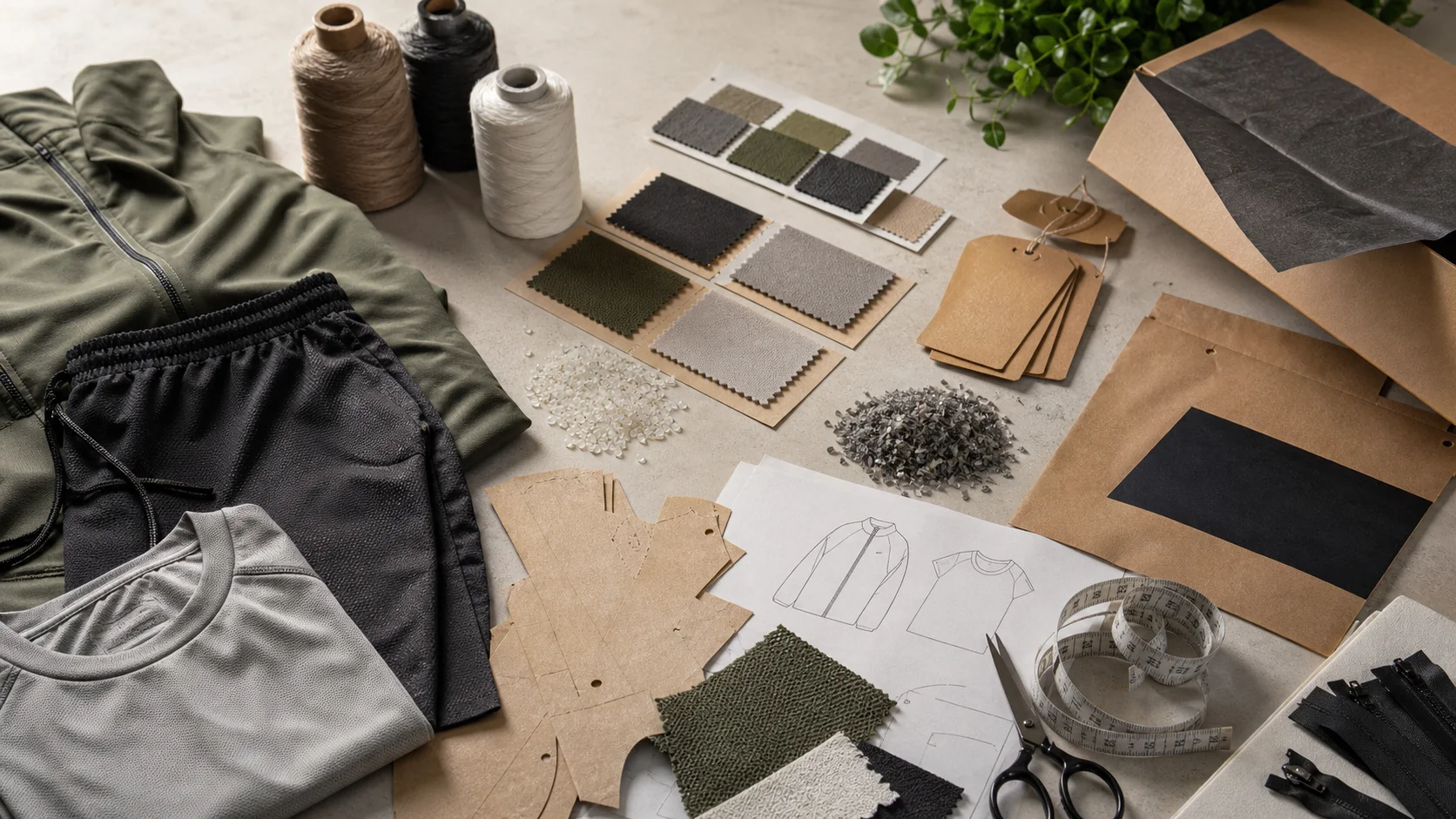
A retail operations checklist for releasing wholesale sports bra styles to a factory, covering specs, approvals, packaging, compliance, and launch-ready...
Wholesale Sports Bra Factory Release Checklist - Fabrikn production reference
Retail operations teams live or die on release discipline. A wholesale sports bra program can look simple on paper, then turn messy fast when size specs drift, elastane recovery slips, trims arrive late, or packaging instructions are unclear. The release checklist is the control point that keeps production, merchandising, QA, and logistics aligned before bulk work is allowed to move forward.
This guide is written for wholesale sports bra factory release checklist workflows in retail operations teams. It focuses on what should be checked before approval, what usually causes delays, and where buyers should be strict versus flexible. The goal is not to over-engineer the process. It is to release the right product, in the right quantity, with the right risk controls.
If you need manufacturing support or a broader sourcing framework, see Fabrikn services, contact options, and company background.
Sports bras sit in a difficult part of the activewear range. The product has to hold shape, support movement, feel comfortable, and survive repeated washing. A small error in stitch tension, band width, cup grading, or elastic recovery can create a line-wide problem once bulk production starts. The factory release checklist exists to stop avoidable defects before they become expensive inventory.
Retail operations teams also need the checklist because sports bras are rarely one-spec products. A single order may include multiple colors, cup support levels, strap styles, size curves, and packaging requirements. Without a disciplined release step, teams end up approving partial information and hoping production fills in the gaps. That approach usually shows up later as fit complaints, store returns, and rework charges.
The strongest release checklists do three things. They verify that the technical package is complete, confirm that the sample set reflects the final bulk standard, and make sure the factory has the right materials, capacity, and quality controls to produce consistently.
In wholesale apparel manufacturing, “release” should mean that the factory is cleared to start bulk production against an approved standard. It is not a casual green light. It should only happen after key documents, samples, measurements, and material approvals are locked. If a retailer changes the design after release, the team should treat that as a controlled variation, not a routine edit.
For sports bras, the release point usually comes after:
Retail operations teams should treat release as a document control event. If one item is missing, weak, or ambiguous, it is cheaper to hold production than to fix a bulk issue later.
A release checklist starts with the paper trail. A factory can only build to the standard it can see. If the technical package is incomplete, the factory will fill the gaps with its own assumptions, and those assumptions often vary by line supervisor or subcontracted operator.
The minimum pre-release document set should include:
Teams should also verify that revision control is clean. One of the most common release errors is approving a sample against an old measurement sheet, then assuming the factory will infer the updated curve. That creates avoidable confusion, especially when the same style is being produced in multiple colorways or support levels.
For larger wholesale programs, it is worth assigning a single release owner. That person does not need to do everything, but they should be the one who confirms that every required document is current and aligned before the factory receives production authority.
Sports bras can vary widely in structure. A light-support pullover bra with a double-layer front panel is a different manufacturing problem from a compression bra with molded cups or a high-support style with adjustable straps and a back closure. The release checklist should reflect the real construction, not a generic activewear template.
Tolerances matter. Retail teams should not assume that a 1 cm measurement variance is harmless across all dimensions. Some measurements can tolerate more movement than others. Band circumference and strap length usually affect fit more visibly than minor panel width variation. Release criteria should reflect which dimensions are fit-critical and which are visual.
Grade rules need special attention. If the small size is approved but the larger sizes are not fully checked, the factory may extrapolate poorly. That can lead to support imbalance, stretched straps, or cup placement issues in the upper size range. A good release process verifies at least the fit anchor sizes, then reviews how the grade behaves across the line.
Fabric choice is one of the biggest drivers of quality risk in sports bras. Buyers often focus on hand feel and overlook recovery, stretch direction, opacity, and batch consistency. Release should not happen until the fabric standard is locked against the approved sample and the factory has enough reserve to cover bulk production.
For wholesale sports bras, common fabrics include nylon-spandex or polyester-spandex blends. The exact ratio depends on the support target, surface finish, and price point. Retail teams should ask the factory to confirm whether the fabric is single-knit, double-knit, brushed, or compressed construction, because the feel and support differ meaningfully. A slight change in gsm can alter compression and drape more than expected.
Trim checks deserve the same discipline. Elastic can vary in firmness, width, and recovery. Thread count, needle compatibility, and heat-transfer adhesive strength all affect durability. If the program uses removable pads, the pad density, shape retention, and edge finishing should be validated before release. If the style includes hardware, the closure strength, coating quality, and corrosion resistance should be included in the approval record.
Bulk shortages often begin with trims, not fabric. Suppliers may underrun labels, underestimate elastic consumption, or substitute packaging components at the last minute. A release checklist should confirm that the BOM is not only approved but also physically available or firmly scheduled with lead times that support the production window.
Fit approval is the point where the retail team should be most disciplined. A sports bra can look correct on a hanger and still fail in wear due to compression imbalance, strap placement, or movement restriction. The sample process should not stop at a visual review.
Not every program uses every sample stage, but the team should know which one is authoritative. If the confirmed sample differs from the PP sample, the release record must say which version controls bulk production. That is the only way to avoid arguments later when quality disputes appear.
Fit testing should consider movement, not just static wear. The reviewer should check band stability, shoulder pressure, arm mobility, side containment, bust shaping, and whether padding shifts after movement or washing. A sports bra that passes a still-life fit session can still fail in real retail use if the straps migrate or the underband rolls.
When approvals are sent to the factory, the comments should be specific. “Looks good” is not a release note. The better practice is to record exactly what is approved, what is conditional, and what must not change. If a seam allowance, strap position, or pad insertion method is still under review, bulk should not be released against that uncertainty.
Before the factory receives release authority, retail operations teams should confirm that the production setup is ready. This check matters because some defects are caused by weak planning rather than weak execution.
For sports bras, machine compatibility is not trivial. Stretch seams, coverstitch settings, binding attachment, and elastic application all need stable line settings. If the factory is switching from another product category, the first production run should be watched carefully. Small tension shifts can create wavy seams, puckering, or weak stretch return.
A good release checklist also asks what the factory will do if the approved fabric lot runs short or a trim lot shows defects. The response plan should be defined before production starts. If the team waits until a shortage appears, the decision usually becomes a rushed substitution rather than a controlled approval.
Inspection planning should be part of the release, not something added after production starts. Wholesale sports bra orders are often time-sensitive, and quality failures discovered late are expensive to fix. Retail operations teams should confirm who inspects, what standard they use, and what defects are automatic rejects.
At a minimum, the release checklist should define:
Inspection risk is highest where construction and comfort overlap. A seam can pass measurement but still irritate the wearer. An elastic band can look neat but fail recovery after repeated extension. Pads can sit correctly in a sample and then shift in bulk if the pocket opening is too loose. The inspection plan should reflect those product-specific risks.
One practical approach is to separate defect checks into three groups. First are safety and compliance issues, such as broken needles, sharp hardware edges, or incorrect labeling. Second are fit and performance issues, such as band distortion or poor strap recovery. Third are cosmetic issues, such as thread ends, needle marks, or uneven topstitching. That separation helps operations teams decide what is acceptable and what must stop shipment.
Packaging for wholesale sports bras often looks simple, yet it is a frequent source of release mistakes. Retail operations teams should confirm whether the product ships flat, folded, hangtagged, polybagged, or packed in retail-ready units. The answer affects labor, carton volume, and presentation quality.
Checklist items should include:
Label accuracy is not a minor issue. A wrong fiber content statement, care instruction, or size code can trigger chargebacks, customs delays, or returns. The release pack should include final approved labeling artwork and the factory should confirm that the print or woven label vendor is using the latest revision.
Packaging also affects damage rates. Pads can deform if the folding method is too aggressive. Mesh inserts can snag on rough polybag edges. Metallic finishes can scuff during transit if cartons are overfilled. A release checklist should make room for these basic physical risks, not just graphic approval.
MOQ is one of the first commercial questions, but it should not be the only one. For wholesale sports bras, typical MOQ ranges vary widely by factory, construction complexity, fabric minimums, and color count. Simple styles may start around a few hundred pieces per color, while more technical or branded programs can require higher thresholds. The real point is to confirm the actual minimum for each fabric, colorway, and size run, not to rely on a general quote.
Lead time also depends on more than sewing time. Fabric knitting or dyeing, trim sourcing, sample revision rounds, test approvals, and booking shipping all affect delivery. A tighter schedule may be possible if the factory has stock fabric and standard trims already approved. A custom fabric mill run, new color match, or fresh packaging approval will extend the timeline.
Retail teams should watch for these lead-time dependencies:
A practical release decision balances speed against rework risk. If the program is time-sensitive, it may be better to simplify the construction, reduce the number of colorways, or use a proven fabric standard. Complexity should be added only where it supports the retail brief and margin, not because the design team wants every possible feature on a first run.
Even with a good checklist, certain risks appear again and again in wholesale sports bra programs. Retail operations teams should watch for these in particular.
First, support inconsistency across sizes is common. A style may fit well in the sample size but lose balance in larger or smaller grades. That happens when grading does not respect how stretch fabrics behave under tension.
Second, elastic performance can drift. A narrow underband or strap elastic that looks correct at approval may feel weaker in bulk if the mill lot changes. Teams should ask whether the factory plans to source the same elastic supplier throughout the order.
Third, pad behavior creates hidden returns risk. Removable pads can shift, fold, or lose shape after packing and washing. If the retail position depends on a clean silhouette, the pad pocket and pad design should be treated as a critical feature.
Fourth, color variation becomes more visible on stretch surfaces. A shade that looks acceptable on a flat swatch may appear slightly different once stretched. That matters most in dark fashion colors, neon tones, and heathered finishes.
Fifth, finishing quality can slip at scale. Thread tails, skipped stitches, and uneven topstitching often increase when multiple operators are working to a tight schedule. A strong pre-production sample helps, but the factory still needs inline controls and final inspection discipline.
A release checklist should not be treated as paperwork for its own sake. It is the point where a retail team decides whether the bulk order is ready to absorb manufacturing risk or whether the program still needs correction.
Where possible, retail teams should build a short lessons-learned log after each style launch. That record becomes useful on the next order, especially if the same factory is producing a repeat body with a different colorway or price target.
Get a free quote from Fabrikn — your trusted B2B clothing manufacturer with 10+ years of experience. MOQ as low as 200 pieces.
Get a Free Quote →The most important item is a fully aligned approved standard. That includes the tech pack, size spec, sample sign-off, fabric and trim approvals, and any notes that define what bulk production must follow. If those are not aligned, the factory can only guess.
That depends on the complexity of the style and the supplier’s process. Many programs use a proto sample, fit sample, and pre-production sample, while simpler repeats may use fewer stages. The key is to know which sample is controlling and to keep that record clear.
MOQ varies by factory, construction, fabric, and color count. Some simple styles can start in the low hundreds per color, while more technical programs may require higher quantities. Buyers should confirm MOQ by fabric, trim, and size curve rather than relying on a single headline number.
Fabric approval, lab dip revisions, trim sourcing, sample corrections, and shipment booking usually create the longest delays. A new support structure or custom finish can extend lead time further. Stable fabrics and standard trims are the fastest route to release.
They should check measurement accuracy, seam quality, elastic recovery, pad placement, label correctness, packaging accuracy, and any style-specific support features. High-stress seams and band performance deserve extra attention because they affect wear and returns.
Yes. Packaging affects presentation, damage risk, carton efficiency, and labeling compliance. For sports bras, fold method, polybag spec, barcode accuracy, and carton pack ratios should be confirmed before bulk release.
Tolerance limits should be strict enough to protect fit and commercial consistency, but not so tight that they ignore fabric behavior. The best approach is to identify which measurements are fit-critical and hold those closely, while allowing more flexibility on non-critical dimensions.
For teams building or tightening their sourcing process, the most useful next step is usually a documented release template that can be reused across styles. If you need a broader manufacturing starting point, review the service overview or contact the team for program support.