
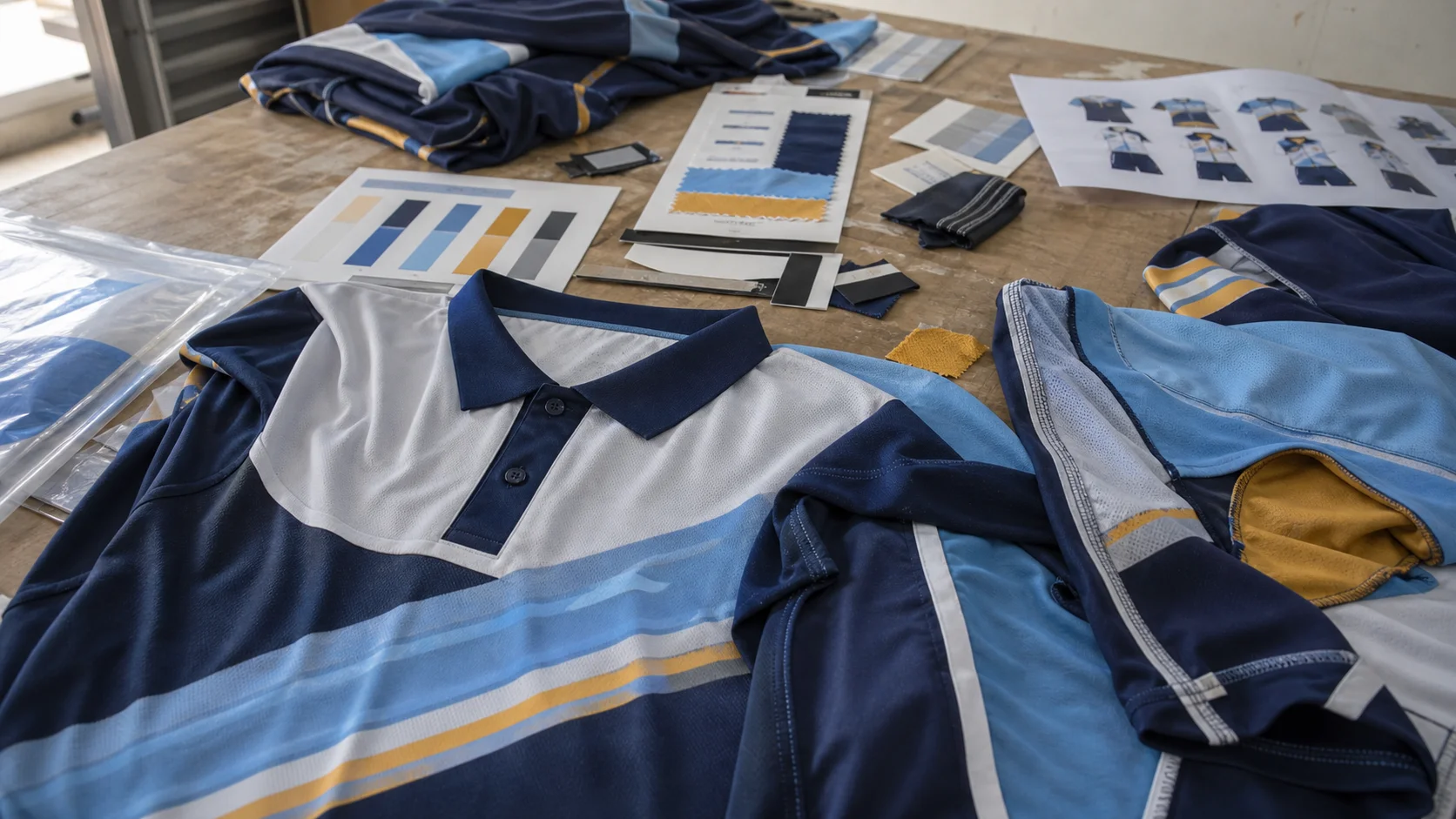
A focused outline for tournament merchandise distributors sourcing wholesale tracksuits with sublimation, covering MOQ strategy, print-ready artwork, fabric and panel decisions, sampling, pricing variables, and production planning tied to event-driven demand.
Wholesale Sublimation Tracksuits for Tournament Buyers - Fabrikn production reference
Wholesale sublimation tracksuits sit in a useful middle ground for tournament merchandise distributors. They offer stronger visual impact than basic screen-printed warmups, and they usually handle multi-color branding better than cut-and-sew panel embroidery programs built around standard stock fabrics. For tournament buyers managing event merchandise, sponsor visibility, club identity, and short seasonal selling windows, that combination matters.
Sublimation works especially well when a program needs bold gradients, repeat patterns, team crests integrated into the garment layout, or sponsor logos spread across jackets and pants without adding multiple decoration processes. The print becomes part of the polyester fabric rather than sitting heavily on the surface. That generally helps maintain color clarity and reduces the cracking risk associated with some transfer or print methods.
From a sourcing standpoint, sublimation can also simplify SKU planning. A distributor may be able to use one base tracksuit pattern across several team designs while changing only artwork files, colorways, and labeling details. That is useful for tournament environments where demand can spike quickly and buyers need flexibility across youth, adult, and staff apparel programs.
The tradeoff is that sublimation does not automatically make a tracksuit easy to source. Buyers still need to control pattern consistency, fabric performance, zipper quality, sizing tolerance, and artwork accuracy. A sharp-looking mockup is not the same as a production-ready wholesale program.
In practical terms, a wholesale sublimation tracksuit program usually involves polyester-based fabrics printed through heat transfer from paper onto white or light base material before garment assembly. Most factories use this process on interlock, tricot, brushed-back polyester, or mechanical stretch knits suited to athletic outerwear.
For tournament merchandise distributors, the key point is that sublimation is not a single product type. It can apply to:
Production flows vary by supplier, but the standard sequence usually includes artwork setup, pattern mapping, print file separation, print strike-off approval, fabric printing, heat transfer, fabric relaxation, cutting, sewing, trimming, pressing, packing, and final inspection.
A buyer should ask early whether the supplier prints panels before sewing or uses a different method. Panel-first sublimation is common because it gives better design alignment across sleeves, side panels, and leg sections. It also reduces distortion risk compared with printing after garment construction. Alignment still needs control, especially where color blocks cross seams.
If you are comparing vendors for broader private-label apparel support, it helps to review what their development scope covers on pages such as /services/. A supplier that can handle pattern work, trim sourcing, labeling, and packaging coordination in one workflow is usually easier to scale than one that only prints fabric and outsources sewing.
Tournament merchandise distributors are not buying like a single school, a local club, or a direct-to-consumer fashion startup. Their pressure points are different. They often manage multiple stakeholders, compressed event calendars, mixed reorder patterns, and brand approvals that can come from organizers, sponsors, associations, or resellers.
That changes what “good sourcing” looks like.
A tournament buyer usually needs more than low unit cost. They need repeatability across multiple drops, realistic MOQ flexibility, clean logo execution, and enough planning discipline to avoid late deliveries close to event dates. Missing an event window destroys margin much faster than paying a slightly higher factory price.
There is also a merchandising layer to consider. Some tracksuits are sold as official event merchandise. Others are built for participating teams, volunteers, security crews, or premium hospitality kits. Those programs often require slightly different quality levels, packaging, and branding positions. A distributor should avoid combining all categories into one factory brief if the quality expectation is not actually the same.
Purchasing judgment: the cheapest sublimation supplier can be expensive if they miss shade consistency, zipper durability, or carton accuracy during a tournament rollout.
That is why many experienced buyers separate their decision into two questions: can this supplier make the product correctly, and can this supplier manage the program commercially? Both matter.
MOQ is one of the first topics tournament distributors need to pin down. In sublimation programs, MOQ depends on garment complexity, fabric type, number of sizes, trim customization, and whether the order uses a standard pattern or a newly developed block.
Typical MOQ ranges in the market often look like this:
Program Type Typical MOQ Range Notes Standard sublimated tracksuit set 100-300 sets per design Often achievable when using existing patterns and standard trims Custom private-label tracksuit 300-600 sets per style Higher MOQ if unique fabric, custom rib, or branded zipper pullers are required Multi-design tournament program 150-300 sets per colorway or artwork Some suppliers allow pooled fabric usage across related designs Premium technical tracksuit 500+ sets Common when stretch fabrics, taped details, or upgraded trims are involvedThese are not fixed rules. Some suppliers accept lower MOQs for sampling-stage launch orders, but the price usually rises because setup cost is spread across fewer units. Buyers should be careful with “low MOQ” offers that are only possible if the supplier substitutes standard stock fabric, limits size spread, or restricts customization.
For tournament merchandise distributors, pooled MOQ structures can be valuable. A factory may accept one total order quantity across several graphics if the base fabric, pattern, and trim package remain the same. That lowers risk when forecasting different teams or region-specific designs.
Still, pooled MOQ can create production complexity. If one artwork approval is delayed, the whole batch may be affected. Buyers should confirm whether production can proceed by design group or only after all files are locked.
Costing a wholesale sublimation tracksuit program requires more than asking for a per-set FOB price. Tournament distributors should separate the quotation into clear cost buckets so they can compare suppliers properly.
Main cost drivers usually include:
As a broad market guide, entry-level wholesale sublimation tracksuit sets can price much lower when using lightweight polyester tricot, basic zippers, and standard packaging. Mid-range programs climb once you add brushed fabric, mesh lining, premium fit blocks, and stronger trim specifications. Premium teamwear programs can move up again if the buyer wants recycled polyester, branded hardware, or exact sponsor color matching across many sizes.
Buyers should ask whether the quote includes:
One common sourcing mistake is comparing a low quote from one supplier against a fuller quote from another without normalizing the trim and packaging specification. The cheaper offer may exclude lining, drawcord tips, zipper garages, branded labels, or export carton requirements. That can distort cost comparisons badly.
If a distributor is building a longer-term sourcing pipeline rather than a one-off buy, it is worth discussing commercial structure early through channels such as /contact-us/. That conversation should cover reorder pricing, repeat artwork handling, and whether future volume can reduce setup cost.
Not every sublimated tracksuit performs the same way on the rack or after washing. Fabric and trim choices drive both cost and complaint risk.
Common fabrics include 100% polyester tricot, interlock, and brushed-back knits, often in the 180-280 gsm range for tracksuits. Lightweight options can work for warm climates or budget merchandise. They can also feel less substantial, show zipper waviness more easily, and wear out faster in high-friction areas.
Heavier fabrics tend to improve drape and perceived value. They also increase cost and may extend drying time after wash. For tournament merchandise that targets retail sell-through, a balanced mid-weight polyester is often the safer choice unless the event specifically needs technical performance or cold-weather use.
Important fabric checks include:
Zippers are one of the most visible failure points. Low-grade zippers can snag, wave, or break in transport and fitting. Buyers should specify zipper tape color, coil quality, puller finish, and top-stop security. Pants drawcords, elastic waistbands, cuff rib, and pocket mesh also need defined standards.
For packaged tournament merchandise, branded swing tags and clear size labeling improve retail handling. For team distribution, carton assortment accuracy may matter more than premium hangtag presentation.
Sublimation handles complex branding, but it requires clean vector files and realistic placement rules. Tiny text, fine outline logos, and seam-crossing sponsor marks can create avoidable quality issues. Buyers should request artwork safe zones around zippers, pocket openings, and major seam junctions.
If the program includes secondary branding such as embroidery, woven badges, rubber patches, or heat-seal crests, each add-on should be tested for compatibility with the base fabric. A jacket that looks good flat may pucker once a heavy badge is applied to a lightweight knit.
For tournament merchandise distributors, sampling discipline is often the difference between a smooth rollout and a rushed correction cycle. Sublimation tracksuits need more approvals than many buyers expect because artwork, fit, and sewing quality interact closely.
A practical sample path usually includes:
Some factories try to skip steps on repeat orders. That can be reasonable if the fabric, pattern, artwork scale, and trims are truly unchanged. It becomes risky when a buyer modifies fit, adds new sponsor placements, or changes zipper type while assuming the previous sample still covers the new order.
The print strike-off stage deserves special attention. Buyers should check:
Pre-production approval should also confirm packaging instructions, carton ratio, care label content, and barcode data. Those details sound minor until tournament delivery teams need to sort thousands of units under time pressure.
Lead time for wholesale sublimation tracksuits depends on sample approval speed, fabric readiness, print capacity, trim lead times, and factory line availability. Buyers should treat any flat promise without dependencies as a warning sign.
A typical schedule might look like this:
Stage Typical Timing Main Dependency Artwork and tech pack review 3-7 days Complete files and measurement specs Proto and print strike-off 7-14 days Pattern readiness and print queue Pre-production sample 5-10 days Revisions after proto comments Bulk production 25-45 days Order volume, trim availability, and line loading Final inspection and shipment preparation 3-7 days Packing completion and inspection passFor event-driven merchandise, the smarter approach is to count backward from the delivery deadline and add contingency. A distributor should leave room for at least one revision round if the artwork is new. Waiting until sponsor logos are finalized before starting development often compresses the critical path too aggressively.
Another planning point: size mix affects production efficiency. Orders with heavy fragmentation across many youth and adult sizes can slow cutting and packing. That may not change the official lead time on paper, but it increases operational friction and mis-pack risk.
Buyers evaluating long-term apparel partners may also want to review company positioning and development scope on pages like /about-us/, especially when program management matters as much as manufacturing.
Sublimation tracksuits carry a different risk profile from plain dyed basics. The visual standard is higher because the garment itself is the graphic canvas. Small errors show quickly.
Common inspection risks include:
Buyers should define acceptable tolerances before production starts. That includes garment measurements, logo placement variance, and color expectations. Without written tolerances, end-of-line inspection becomes subjective.
Third-party inspection is often worth the cost for tournament programs with tight delivery windows, especially when the distributor is managing multiple designs. Inspection should cover not only workmanship and measurements but also assortment packing, barcode accuracy, and visual consistency between related SKUs.
Purchasing judgment: if your event date is fixed, inspection is not a luxury line item. It is cheap insurance against a far more expensive delivery failure.
Buyers should also ask how replacement units are handled. In tournament programs, even a low defect rate can create practical problems if there are no spare sizes for damaged or missing units.
Comparing wholesale sublimation tracksuit suppliers on unit price alone is a weak sourcing method. A better approach is to score them across technical, commercial, and operational criteria.
Useful comparison points include:
A supplier that asks detailed questions can actually be a better commercial choice than one that accepts everything instantly. In apparel sourcing, fast agreement without technical review often means hidden assumptions are left unresolved until bulk production.
Distributors should also consider whether they need a factory, a sourcing partner, or a hybrid vendor. If the program involves several garment types beyond tracksuits, coordinated sourcing support can reduce administrative load. If the product is highly standardized, a direct manufacturing route may offer simpler cost control.
For most tournament merchandise distributors, the safest buying strategy is phased rather than aggressive. Start by standardizing the base tracksuit block, fabric family, and trim package. Then vary the artwork and branding within that framework. This reduces development cost and makes MOQ negotiation easier.
A practical structure often looks like this:
This approach is less flashy than creating a different garment architecture for every tournament. It is also more commercially stable. Buyers can still keep the merchandise looking fresh through color, print, crest placement, and event branding, without rebuilding the sourcing package each time.
There is a clear tradeoff here. A fully bespoke tracksuit may offer stronger visual differentiation. It usually brings higher MOQs, more sample rounds, and greater deadline risk. For distributors operating on event calendars, that is often not the best margin decision.
Wholesale tracksuits with sublimation sourcing for tournament merchandise distributors can be a strong category when purchased with clear commercial discipline. The product works because it combines team identity, sponsor visibility, and retail-ready visual appeal in one garment set. It becomes difficult only when buyers treat it like a simple print job rather than a full apparel development program.
The core buying priorities are straightforward: understand the real MOQ, normalize cost comparisons, define fabric and trim specifications, insist on proper sample approvals, and protect the delivery window with inspection planning. Tournament business rewards reliability. A supplier that manages repeatability, artwork control, and packing accuracy is usually worth more than a factory that only posts an attractive opening quote.
For distributors building a seasonal or multi-event merchandise pipeline, the best results usually come from standardizing the product platform and customizing the graphics intelligently. That balance helps protect margin, shorten development cycles, and reduce avoidable production errors.
Get a free quote from Fabrikn — your trusted B2B clothing manufacturer with 10+ years of experience. MOQ as low as 200 pieces.
Get a Free Quote →Typical MOQ often starts around 100 to 300 sets per design for standard programs using existing patterns and common fabrics. Private-label or premium builds frequently move into the 300 to 600 set range or higher, especially when custom trims or unique fabric developments are required.
Yes, especially when the program needs bold graphics, sponsor integration, and team-specific identity across multiple designs. They are often a better fit than simpler print methods when visual branding is a major selling point.
The largest cost drivers are fabric quality, garment complexity, zipper and trim grade, number of printed panels, packaging requirements, and the total quantity per design. Small orders with heavy customization usually cost more per set because setup expense is spread across fewer units.
After approvals, bulk production commonly takes around 25 to 45 days, though the total calendar is longer once sampling, artwork review, and pre-production confirmation are included. Lead time depends heavily on print capacity, trim readiness, and how quickly approvals are completed.
The most common risks are color inconsistency, seam misalignment in printed graphics, zipper waviness, measurement tolerance issues, and packing mistakes. Those are manageable if the buyer sets clear specifications and uses pre-production review plus final inspection.
Sometimes, yes. Many suppliers allow pooled volume if the base fabric, pattern, and trim package stay the same across several graphics. Buyers should confirm whether each design still has a minimum threshold and whether delayed approvals on one design can slow the rest of the order.