
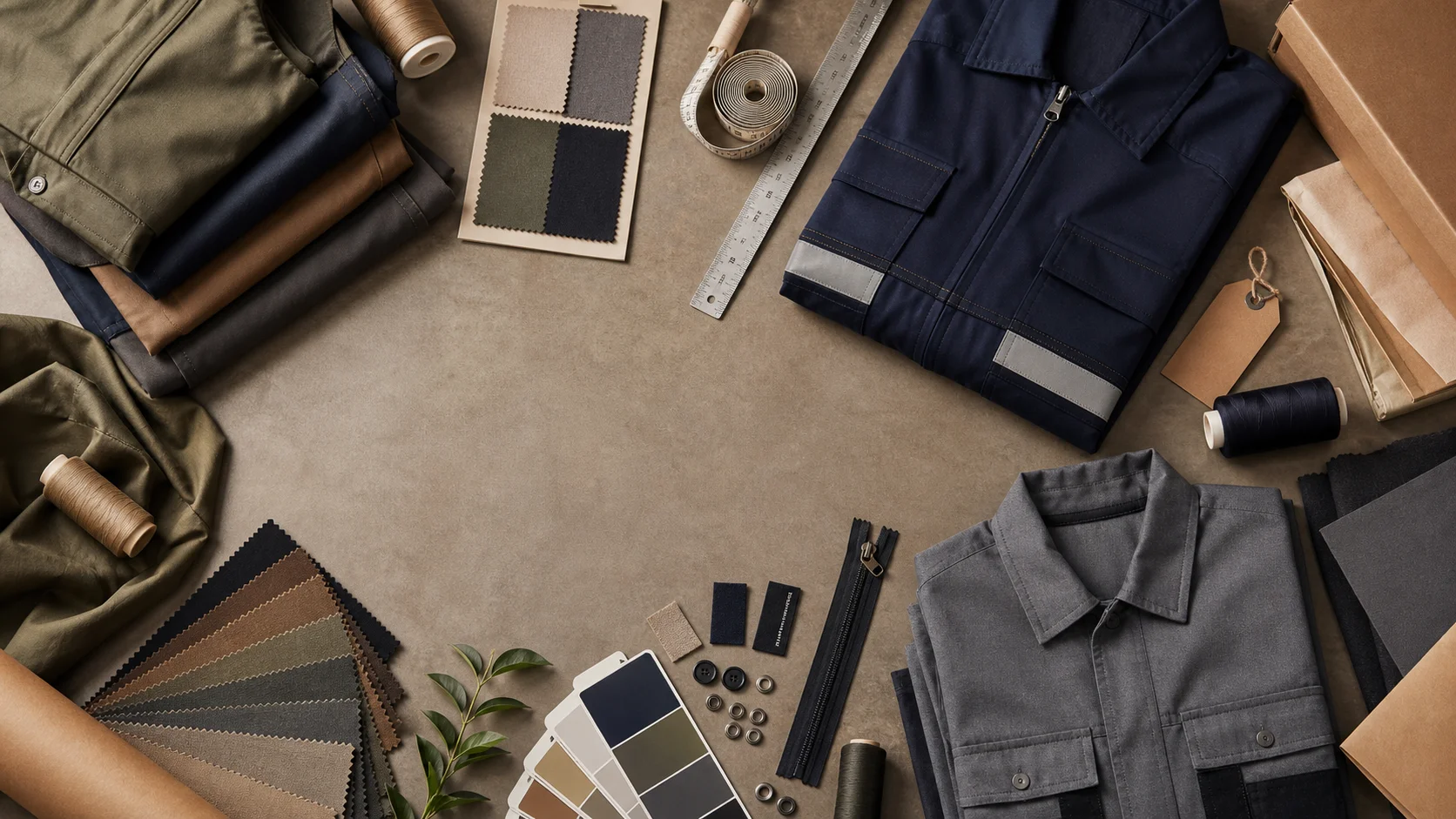
A focused outline for distributors sourcing sustainable workwear coats, centered on seam strength testing, construction risk, compliance, and how production data affects wholesale buying decisions.
Wholesale Workwear Coat Seam Testing for Sourcing - Fabrikn production reference
Wholesale seam strength testing for workwear coats distributor sourcing is not a technical side issue. It is one of the first checkpoints that separates a stable supply program from a costly returns problem. Workwear coats are expected to handle repeated motion, abrasion, weight in the pockets, layered wear, industrial or frequent laundering, and rough daily use. If the seam structure fails, the garment fails long before the fabric itself reaches the end of its useful life.
For distributors, importers, and private label buyers, seam performance affects more than product quality. It affects claims rates, replacement costs, account retention, and brand credibility. A coat may look acceptable at the sales sample stage, but that does not mean the seam construction is suitable for commercial use. Many sourcing issues appear only after stress is applied to armholes, side seams, sleeve joins, pocket attachments, or back yokes.
That is why seam testing should be treated as a sourcing gate, not a final afterthought. In practical purchasing terms, it is cheaper to reject or revise a pre-production sample than to discover seam slippage or seam breakage after a bulk shipment has landed.
Buyers building a more controlled sourcing program often review technical support and factory coordination early in the process. A structured development path through pages such as /services/ can help organize testing expectations before orders are placed.
Seam strength refers to how much force a stitched seam can withstand before the stitching breaks, the sewing thread ruptures, the fabric tears, or the seam starts to slip open. For workwear coats, the question is not simply whether the seam holds in a lab. The real question is whether the seam construction matches the garment’s use case.
A lightweight promotional jacket and a heavy-duty workwear coat do not need the same seam engineering. Workwear outerwear usually requires stronger thread selection, appropriate stitch density, balanced seam allowance, and reinforcement in high-stress points. In some cases, stronger seam performance comes from changing the seam type rather than merely increasing stitches per inch.
Buyers should separate four related but different concepts:
This distinction matters because some fabrics test well for raw tensile strength but still perform poorly at the seam due to loose weave, coating behavior, finish instability, or poor stitch balance. In coated cotton, canvas blends, recycled polyester twills, or stretch workwear shells, the seam may become the weak point even when the fabric looks robust on paper.
Most workwear coat failures do not happen evenly across the garment. They cluster around stress zones. A distributor sourcing outerwear in volume should ask for seam testing that reflects these risk areas instead of relying on one generic fabric report.
Common failure points include:
Inspection teams should look beyond visible seam breakage. Early warning signs often include skipped stitches, grin-through, puckering, uneven seam allowance, needle damage, or seam slippage after light stress. These are not cosmetic details. They are indicators that the sewing setup may be unstable in bulk production.
There is no single test that covers every seam risk. Buyers need a testing package that matches the fabric type, construction, and end use of the coat. The most common methods in wholesale sourcing are seam strength testing, seam slippage testing, tensile testing of fabric, and wash or care-cycle retesting after conditioning.
This test measures the force needed to break a stitched seam. A tensile tester applies controlled force until failure occurs. The result helps compare seam constructions and assess whether the selected thread, stitch type, and seam allowance are fit for purpose.
For workwear coats, the useful purchasing question is not only the numeric result. Buyers should ask what failed first:
Each failure mode points to a different corrective action. Switching thread count helps only when thread is the issue. It does not solve loose weave slippage or excessive needle damage.
Seam slippage is especially relevant for fabrics with lower yarn cohesion, certain recycled blends, brushed constructions, or softer finishes. The test checks how far the yarns pull away from the seam under force. A coat can pass a basic seam break test but still open unattractively in wear if seam slippage is not controlled.
This matters for sustainable workwear sourcing because recycled fibers and lower-impact fabric developments do not all behave the same way in sewing. Some are excellent. Some require seam redesign, backing, or adjusted stitch density.
Workwear coats often face repeated cleaning cycles. Testing only on unwashed material creates false confidence. Dimensional change, coating stiffness, shrinkage imbalance between shell and lining, and thread behavior after wash can all reduce seam performance.
A cautious buyer will request retesting after the intended care process, especially for garments marketed for industrial, utility, site, or heavy-duty use.
Some sourcing programs include movement-based checks on wear test samples. These are less standardized than lab tests, but they can reveal pattern or construction issues that numbers alone miss. Reaching, bending, kneeling, and repeated arm extension often expose weak seam zones quickly.
Testing is only useful when the tested sample reflects the real bulk specification. Many sourcing mistakes come from testing a development sample that does not match final production materials.
Before approving seam tests, buyers should confirm:
For workwear coats, practical fabric specs often fall in medium to heavy ranges such as 200 to 350 gsm shells for lighter utility coats and 300 to 450 gsm or more for heavier canvas or insulated styles. Those ranges vary significantly by climate, design, and end use, so they should be treated as commercial norms rather than universal rules.
Thread selection also deserves scrutiny. A stronger thread can improve seam performance, but only if it remains compatible with fabric weight and needle choice. If the thread is too heavy for the fabric or too aggressive for the stitch hole, it may increase puckering or cut the fabric under stress. Buyers should ask suppliers to show the exact thread specification used on test samples, not just a generic statement that “high-strength thread” was applied.
A disciplined sample approval process reduces surprises in bulk production. In workwear coat sourcing, the usual sequence includes development sample review, fit sample correction, size set confirmation, pre-production sample approval, and then bulk production. Seam testing should not be left until after all trims are booked and fabric is committed.
A workable approval flow often looks like this:
This process matters because seam performance can change between sample room production and line production. Sample rooms often use more experienced operators, slower handling, and closer supervision. Bulk lines introduce speed pressure, operator variation, machine setting drift, and trimming inconsistencies.
Purchasing judgment: if a supplier passes a seam test on a hand-built sample but cannot hold stitch balance consistently in pilot production, the test result alone should not justify approval.
Buyers who need a clearer sourcing conversation before development starts can direct initial requirements through /contact-us/. That is often the cleaner route when technical expectations need to be aligned before sampling begins.
MOQ and lead time decisions affect seam testing more than many buyers expect. Small runs may limit fabric mill flexibility, thread sourcing options, and line setup efficiency. Very large runs increase the cost of getting the spec wrong.
For wholesale workwear coats, common MOQs can range widely depending on fabric complexity, insulation package, and customization level:
These ranges are typical market references, not fixed rules. Some suppliers accept lower quantities with price penalties or limited customization. Others require higher commitments due to fabric minimums and line efficiency.
Lead time for workwear coat production depends on several moving parts:
A realistic lead-time estimate for custom workwear outerwear often runs roughly 60 to 120 days after final approval, with longer timelines possible if fabric is made to order or if multiple sample rounds are required. A buyer who compresses this schedule too hard usually ends up accepting higher seam-related risk, not just higher freight cost.
Bulk production risk is rarely a lab-only issue. The more common problems are consistency problems:
That is why in-line inspection and final random inspection should include seam-focused checks, especially on high-stress areas and size extremes. Larger sizes often reveal seam weakness faster because the stress path changes with measurement scale.
In the Sustainable Fashion category, seam strength testing is not separate from sustainability. It is part of it. A workwear coat that fails early creates replacement demand, return freight, wasted material, and avoidable emissions. Durability is one of the most practical sustainability metrics in commercial apparel.
Workwear buyers are increasingly balancing environmental material goals with real performance requirements. Recycled polyester shells, organic cotton canvases, lower-impact dye programs, and alternative finishes can support a better sustainability profile, but only if the garment still holds up in service. Weak seam engineering can undermine the value of otherwise responsible material choices.
There is a direct tradeoff here. Some sustainable fabric developments may require more careful sewing parameters, reinforced seam design, or adjusted garment construction. Buyers should not assume that a greener material can drop into an old technical package unchanged. That assumption causes avoidable failures.
A stronger sourcing approach is to treat durability, repairability, and lower replacement rates as part of the sustainability brief. In outerwear, that often means:
For buyers evaluating sourcing partners in this space, background and operating approach matter. A basic reference point is the company overview at /about-us/, then the conversation should move quickly into technical process rather than marketing claims.
When comparing suppliers for wholesale workwear coat sourcing, price alone does not tell much. A lower quote can disappear quickly if seam failures generate claims or rework. Buyers should ask targeted questions that reveal whether a supplier manages seam quality systematically.
There is no benefit in demanding unnecessary overengineering if the end market does not require it. An overbuilt seam can add cost, reduce comfort, create bulk, and slow sewing output. At the same time, chasing the lowest possible cost on thread, seam allowance, or reinforcement usually shows up later as field failure.
The right purchasing decision depends on the coat’s actual use case:
Use Case Seam Testing Priority Sourcing Judgment Light-duty distributor uniform coat Moderate seam strength and wash stability Balance price with consistent basic construction Warehouse or transport workwear coat Higher focus on armhole, pocket, and front opening seams Reinforcement details matter more than cosmetics Heavy-duty site or utility outerwear High seam strength, slippage control, and post-care performance Do not approve without full construction validation Sustainable premium workwear line Durability validation on eco-material construction Test material-performance tradeoffs earlyWholesale seam strength testing for workwear coats distributor sourcing should be handled as a commercial control point, not only a lab task. Strong-looking outerwear can still fail in the field if seam type, thread, stitch density, or seam allowance are not matched to the fabric and end use. The best sourcing results come from locking specifications early, testing the real construction, reviewing failure modes carefully, and confirming that pilot production matches approved samples.
In sustainable fashion, this discipline becomes even more important. A durable coat reduces waste more effectively than broad sustainability language unsupported by performance. Buyers who focus on seam strength, seam slippage, wash durability, and production consistency put themselves in a better position to source workwear coats that perform commercially and last longer in service.
For distributors, the practical standard is simple: if the seam system is not proven, the coat is not ready for volume.
Get a free quote from Fabrikn — your trusted B2B clothing manufacturer with 10+ years of experience. MOQ as low as 200 pieces.
Get a Free Quote →Seam strength testing measures how much force a stitched seam can take before it breaks, slips, or tears the fabric. In workwear coats, it helps buyers confirm whether the construction is suitable for repeated movement and heavy use.
Seam slippage shows whether the fabric yarns pull away from the stitch line under stress. A garment can have acceptable seam break strength but still look poor or fail in wear if seam slippage is not controlled.
Testing is best requested before pre-production approval and before bulk materials are fully committed. That timing gives buyers room to change thread, seam type, reinforcement, or fabric choice if results are weak.
Typical MOQs often range from about 300 to 500 pieces for simpler stock-supported styles and 500 to 1,500 pieces or more for custom outerwear programs. Final MOQ depends on fabric minimums, trim sourcing, and production setup.
Better seam durability helps garments last longer, which reduces replacement frequency, returns, wasted materials, and transport impact. In practical terms, stronger product life is one of the clearest sustainability gains in workwear.
Buyers should also review pre-production samples, in-line sewing consistency, reinforcement placement, thread specifications, needle suitability, and final inspection results on high-stress seam areas.