
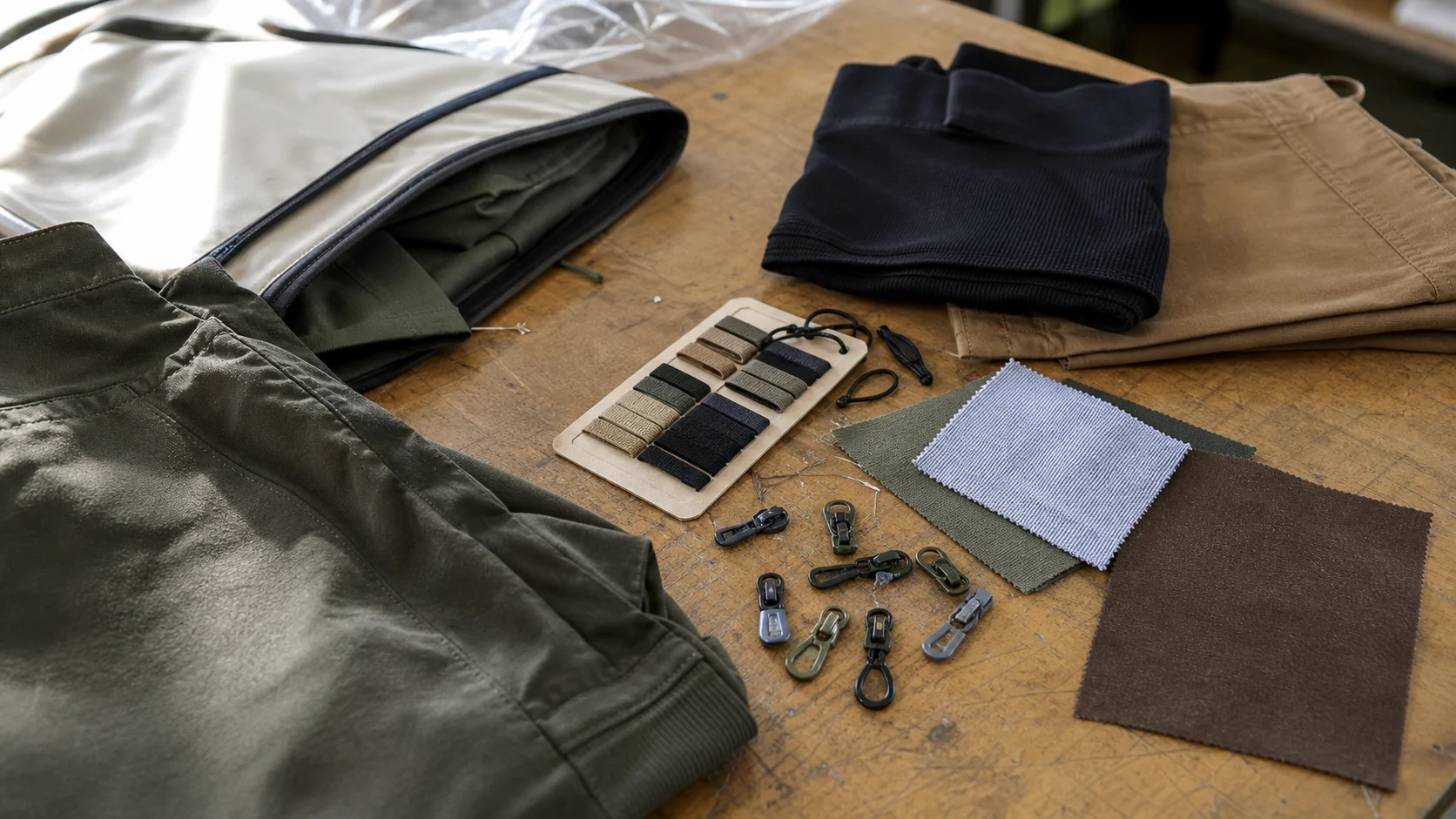
A practical compliance checklist for facilities managers sourcing wholesale zip puller charms, covering materials, attachment security, chemical...
Wholesale zip puller charm compliance looks simple at the sample stage and becomes messy when a facility has to apply it across multiple programs, product lines, and vendors. For facility managers, the real task is not choosing a decorative zipper pull. The task is making sure the component is safe, durable, correctly labeled, traceable, and acceptable for the end use without creating avoidable rework at receiving, decorating, or final inspection.
This checklist is written for the practical side of sourcing and facility control. It focuses on the questions that tend to matter most: what the puller is made from, how it is attached, which documents should exist before production, what a supplier can realistically prove, and where compliance failures usually appear. If your organization buys through a decorator, a garment vendor, or a trim supplier, the same logic still applies. The more standardized the approval process, the fewer surprises you absorb later.
For teams that need broader production support, it helps to align trim sourcing with the rest of the program. A vendor that handles decoration and printing should be able to coordinate trim approval with the artwork, pack-out, and final garment specification. If you need a starting point, review the services page and the about us page before setting expectations with a supplier.
Wholesale Zip Puller Charm Compliance for Facility Managers - Fabrikn production reference
In a facility context, compliance means the zip puller charm meets the agreed specification and can be used without introducing avoidable product risk. That includes material safety, dimensional consistency, attachment strength, finish quality, and documentation. It may also include customer-specific requirements around restricted substances, country-of-origin labeling, packaging, or brand presentation.
Because zip puller charms are small, people often treat them as low-risk trim. That assumption is only partly true. A decorative pull can still trigger problems if it contains a prohibited coating, sheds plating, uses weak hardware, interferes with zipper operation, or fails a retailer’s trim standard. The component may be small, but the exposure is not.
Compliance also varies by use case. A promotional jacket puller, a children’s garment puller, a bag zipper charm, and an industrial workwear puller are not interchangeable specifications. The rules you apply should reflect the product category, the sales channel, and the geography of shipment.
Facility managers sit between procurement, production, quality, and receiving. That position matters because trim mistakes often appear where responsibilities overlap. A supplier may approve the artwork, a buyer may approve the price, and receiving may assume the shipment matches the PO. If the trim does not match the agreed specification, the entire batch can become a sorting, rework, or disposal issue.
For decoration and printing programs, trim control is also tied to brand consistency. A zip puller charm can look like a minor detail on a blank, but it becomes highly visible on a finished product. If the finish is inconsistent, the plating scratches easily, or the logo embossing is soft, customers notice. If the puller fails after repeated use, the product may fail field performance reviews even when the garment fabric is sound.
Small trim components deserve the same discipline as larger garment parts. When the purchase order is vague, the supplier fills in the gaps with their standard. That is where most avoidable compliance issues begin.
The checklist below is designed for facility managers who need a repeatable approval process. Use it before sampling, before bulk purchase, and again at incoming inspection.
Checkpoint What to Verify Why It Matters Material declaration Base material, plating, coating, insert, and any decorative element Confirms product construction and flags restricted substance risk Size and fit Length, width, thickness, ring size, attachment method, and zipper compatibility Prevents assembly issues and zipper interference Finish consistency Color, gloss, texture, edge smoothness, and logo clarity Reduces cosmetic rejects and brand inconsistency Attachment strength Loop strength, crimp stability, clasp security, or molded joint integrity Limits breakage during use and transit Safety profile Sharp edges, small-part hazards, choking risk, and snag potential Important for children’s products and high-handling items Compliance documents Test reports, declarations, and supplier specs Creates a traceable record for audits and customer review Packing and labeling Carton labels, quantity per bag, lot code, and country-of-origin marking Supports warehouse control and traceability Sampling approval Signed sample reference, photo record, and revision number Defines the approved standard for bulk production Inspection plan AQL level, defect definitions, and sampling size Makes acceptance decisions consistent across lotsDo not approve a zip puller charm from a picture alone. Confirm whether it is die-cast metal, stamped metal, molded plastic, silicone, woven cord, rubber, or a mixed-material assembly. The same visual design can be produced with very different performance and compliance profiles. Metal with plating behaves differently from soft PVC, and a woven pull with a metal end cap should be treated as a separate specification from a fully molded pull.
Facility issues often begin with attachment. A puller can be designed with a split ring, a lobster clasp, a knotted loop, a stitched tab, or a molded connector. Each attachment method has different break risk, assembly labor, and compatibility with the zipper slider. If the attachment is too large, too soft, or poorly finished, the end user may struggle to operate the zipper or may remove the charm entirely.
Length, width, thickness, hole diameter, and hanging position should be fixed in a spec sheet. Tolerance matters. A supplier can easily be within a visual sample range and still produce a pull that is too bulky for the zipper platform. Small deviations become large problems once the trim is applied at scale.
Finish is a compliance issue as much as a visual one. Bright plating, matte paint, soft-touch coating, printed graphics, and embossed logos all carry their own risk. Scratching, bubbling, color variation, and uneven edges should be defined as defects if they affect the customer experience or interfere with use. If the item is used on premium apparel or accessories, the finish tolerance should be tighter than for commodity goods.
Depending on the market and category, the supplier may need to provide declarations for lead, cadmium, phthalates, nickel release, azo dyes, or other restricted substances. The exact test requirement depends on the destination market and product type. The safe approach is to request the buyer’s standard compliance package before production starts, not after the goods are packed.
Lot codes, batch numbers, carton labels, and sample reference numbers help separate a controlled purchase from a best-effort purchase. If a later issue appears, traceability determines whether you isolate one lot, one colorway, or the full shipment. Lack of traceability is expensive because it forces broader quarantine and slower disposition.
A good spec should state what is unacceptable. Typical reject points include uneven plating, exposed burrs, poor print registration, weak rings, broken welds, loose inserts, sharp edges, visible contamination, and inconsistent color. Clear defect criteria reduce arguments at inspection and help the supplier understand the standard before production begins.
Facility managers should not rely on generic trim descriptions like “metal logo charm” or “custom zipper pull.” Those descriptions are too loose for controlled purchasing. A useful spec includes the product name, the intended garment or accessory type, the material, the finish, the attachment method, the approved artwork, the size, the tolerance range, and the compliance documents required.
For example, a stronger specification might read: zinc alloy zipper pull, nickel-plated, 32 mm total length, 2.5 mm thickness, split ring attachment, debossed logo, smooth edge finish, lot-coded packaging, sample approval required before bulk, and material declaration required before shipment. That gives procurement, quality, and the supplier the same reference point.
Spec discipline matters even more when the puller charm is decorative and functional at the same time. If the item is meant to carry a brand mark, the artwork file should be approved separately from the production drawing. If the charm includes color fill or printed decoration, the ink, paint, or coating system should be named in the spec. If the purchase is for a seasonal program, the approved swatch or reference sample should be retained with the records.
When a supplier asks for “just a reference image,” that is a signal to tighten the brief. An image is useful for style intent. It is not enough for measurable production control.
Sampling is where compliance is easiest to control and cheapest to correct. A disciplined process usually includes a design submission, a physical sample, a review of measurements and finish, and then a signed approval or a marked revision list. Do not treat the first sample as final. Treat it as a controlled benchmark.
A workable sample approval sequence is usually:
That process protects both the buyer and the supplier. It reduces disputes over whether a variation was authorized. It also helps receiving teams know what “good” looks like when bulk arrives.
If the supplier cannot provide a meaningful sample stage, the purchase is higher risk. Some factories can quote quickly on stock forms and quick decoration, but custom trim should still pass through physical approval. A firm that can support full apparel decoration and printing should be able to align this process with broader production controls. If needed, use the contact us page to request a direct quoting and approval workflow.
Lead time for wholesale zip puller charms depends on more than factory capacity. The main variables are material sourcing, mold readiness, artwork complexity, finish type, testing requirements, and packing format. A simple stock puller with minor decoration may move faster than a fully custom charm with new tooling and compliance testing.
As a practical range, custom wholesale zip puller charms often start at MOQs around 300 to 1,000 pieces per design or color, while more complex or fully custom constructions may need 1,000 to 5,000 pieces or more. The exact threshold depends on whether the item is molded, die-cast, printed, assembled, or packed in special retail units. Buyers should treat any MOQ as negotiable until the supplier confirms the tooling and labor model.
Lead time usually stretches when one of these conditions changes:
Facility managers should build in time for revisions. A sample can look acceptable in photos and still fail when checked against the full garment or accessory. The zipper pull may be too heavy, too large, or too stiff. That is not unusual. It is a normal reason to adjust the spec before bulk, not after.
Incoming inspection should focus on repeatable defects, not just obvious breakage. Decorative trim often passes a casual glance and still fails consistency requirements across the lot. The most common issues include color drift, uneven plating, rough edges, weak attachment, printed logo misalignment, and contamination from polishing or mold release residue.
Another risk is mixed lots. If the supplier packs multiple revisions, colors, or finishes together, warehouse teams may not detect the problem immediately. That is why lot labeling and carton control matter. A small mix-up at packing can create a much bigger issue when the product is distributed to multiple plants or fulfillment centers.
Inspection should also address practical use. A puller that looks attractive but is hard to grasp, noisy in use, or too heavy for the zipper can lead to customer complaints. For children’s products, school items, and high-handling consumer goods, the snag and detachment risk deserves extra attention. If the component has sharp corners or breakaway parts, the product category may require a more conservative specification.
One useful rule is simple: if the charm can fail by falling off, cracking, rusting, or obstructing the zipper, it should not be treated as a purely decorative item. It is part of the functional hardware stack.
The fastest way to reduce risk is to ask direct questions before issuing the order. The goal is not to interrogate the supplier. The goal is to make sure the quoted item matches the buying intent.
These questions reveal whether the supplier is capable of controlled wholesale work or only small-batch visual matching. A strong supplier will answer with specific ranges, document names, and approval steps. A weak supplier tends to answer in broad assurances.
For facility teams, the right supplier relationship is one that reduces internal friction. You want fewer exceptions, fewer untracked substitutions, and fewer “close enough” decisions. The simplest way to get there is to define the requirements early and request the compliance evidence before production begins.
Keep the record set simple, but complete. At minimum, the file should contain the approved artwork, the approved physical sample reference, the purchase order with full specification, the supplier declaration, any requested test reports, and the incoming inspection result. If the product is used across multiple facilities, distribute the same approved reference to each location.
Document control matters because trim decisions often outlive the current order. A puller that is approved for one line may be reused in a later season with no one remembering the original constraints. That is how uncontrolled variation enters a program. Good records keep the approved standard visible.
It is also useful to separate commercial records from technical records. The commercial record covers price, MOQ, terms, and delivery. The technical record covers the material, finish, dimension, and compliance requirements. When those are mixed in one loose email thread, approvals become harder to defend later.
The best wholesale zip puller charm program is not the cheapest one on paper. It is the one that balances appearance, durability, documentation, and production control without creating hidden labor or inspection costs. In practice, that means paying attention to the attachment method, the finish system, and the supplier’s ability to hold spec over multiple lots.
If your operation is optimized for speed, keep the design simple. A simpler puller with fewer decoration layers is easier to reproduce and easier to inspect. If the program needs a premium brand look, accept that the purchase may require tighter tolerances, slower lead time, and more sample iterations. Those are normal tradeoffs, not exceptions.
The most reliable purchasing judgment is often conservative. If a charm only works when the supplier’s sample is handled gently or photographed from one angle, it is not ready. If the finish can be scratched in normal handling, it is not stable enough. If the document package is incomplete, the order should wait until the missing evidence is provided.
Get a free quote from Fabrikn — your trusted B2B clothing manufacturer with 10+ years of experience. MOQ as low as 200 pieces.
Get a Free Quote →The most important part is the written specification matched to an approved physical sample. Without both, inspection becomes subjective and supplier substitutions are easier to miss.
For custom zip puller charms, MOQs commonly start around 300 to 1,000 pieces per design or color. Fully custom or more complex items may require 1,000 to 5,000 pieces or more, depending on tooling, finish, and packing requirements.
Lead time depends on whether the item is stock or custom, whether tooling is needed, and whether testing is required. Sample approval can take a few days to a few weeks, while bulk production often depends on material availability and finishing steps.
Request the approved spec sheet, a physical sample reference, supplier declarations, any required test reports, and a clear lot and packing identification method. If your market has specific compliance requirements, ask for those documents before the PO is released.
Common defects include uneven plating, rough edges, weak attachment points, print misalignment, size drift, surface contamination, and mixed lots. These issues can affect both appearance and function.
No. The requirements vary by material, product category, destination market, and end use. A decorative puller for adult apparel is not the same compliance profile as a puller for a child-focused product or an industrial item.
Start by tightening the spec and asking for a sample approval workflow in writing. If the supplier also handles broader decoration work, review their service structure through the services page and use the contact us page to request a direct quote and approval path.