
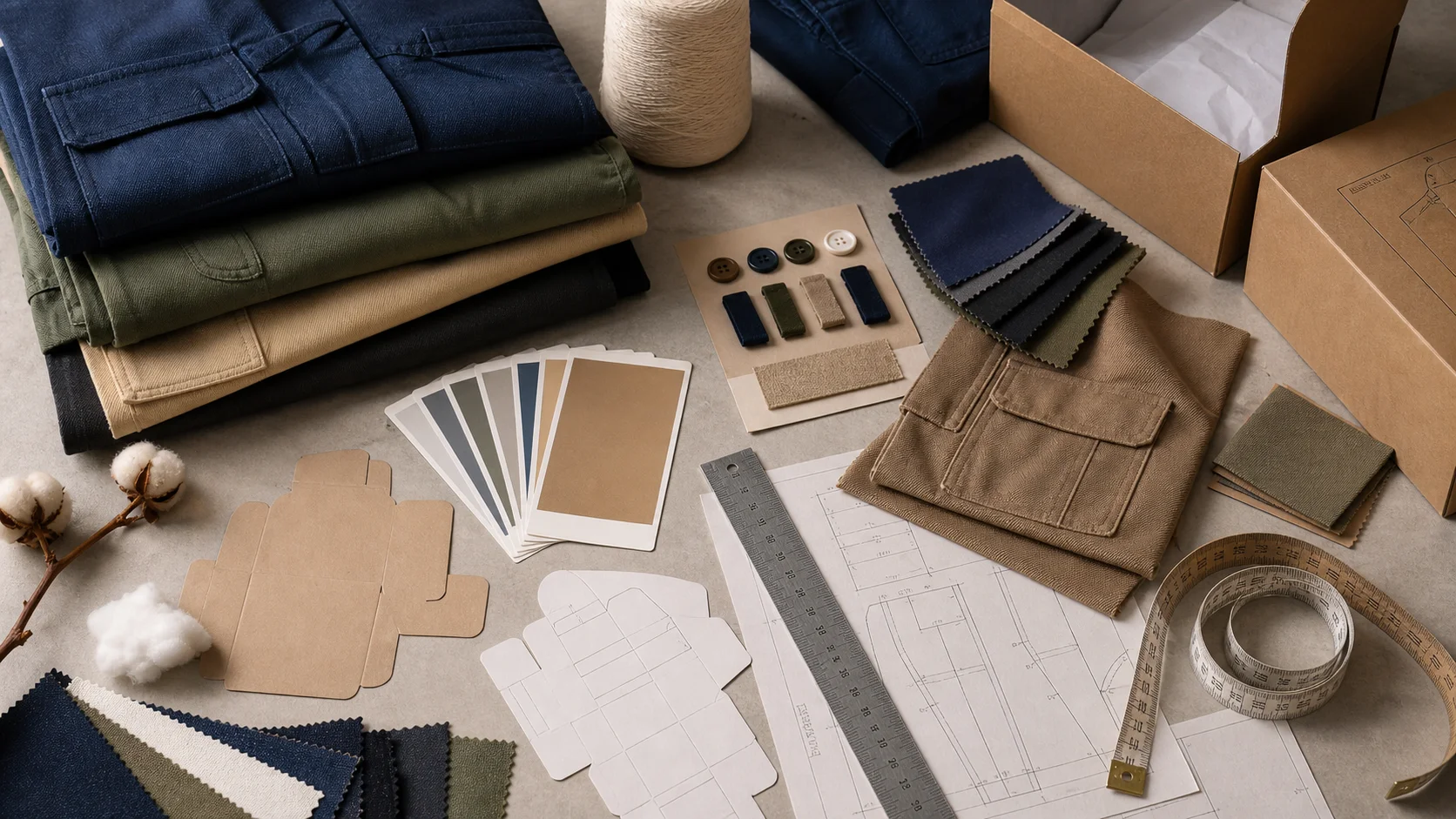
A practical SEO outline for outdoor school buyers planning bulk workwear uniform orders, covering garment specs, decoration methods, sizing, MOQ strategy,...
Workwear Uniform Bulk Order Guide for Schools - Fabrikn production reference
Outdoor school programs need uniforms that do more than look coordinated. The garments must handle mud, rain, abrasion, repeated laundering, temperature swings, and the daily movement of pupils and staff. A basic polo-and-fleece package may work for indoor settings, but outdoor education, forest schools, agricultural learning centers, field trip teams, boarding schools, and campus maintenance groups usually need a tougher workwear uniform specification.
This guide is written for school buyers, procurement teams, bursars, operations managers, and outdoor program coordinators placing bulk uniform orders. It covers MOQ planning, cost drivers, fabric choices, sizing, sampling, lead times, decoration, quality inspection, and sourcing tradeoffs. The goal is not to push the cheapest option. The goal is to help you buy uniforms that arrive on time, fit the intended users, survive the school year, and remain reorderable.
Outdoor school uniforms sit between education apparel and light industrial workwear. They must be presentable enough for parents, school photography, and safeguarding visibility, but practical enough for wet grass, woodland paths, gardening plots, camps, sports fields, workshops, and off-site visits. That dual purpose affects every purchasing decision.
The biggest mistake is treating outdoor uniforms as a simple branded clothing order. A school may receive attractive jackets with embroidered crests, only to find that the cuffs soak up water, trouser seams split during kneeling, or reflective tape peels after repeated washing. At bulk-order scale, those problems become expensive quickly.
A better approach starts with use cases. Who will wear the uniform? How often? In what weather? Will pupils wear the items over regular school uniform? Are staff expected to wear the same color system? Is high visibility required for road walking or only useful for group identification? These answers should be agreed before requesting quotations.
Purchasing judgment: outdoor school workwear should be specified around activity and laundering, not only around school colors and logo position.
For most outdoor school buyers, the practical uniform package includes a mix of waterproof outerwear, softshell or fleece mid-layers, durable trousers, hi-vis vests, caps or beanies, and sometimes coveralls or aprons for specialist activities. Not every school needs all categories. Buying fewer, better-specified items is usually more effective than buying a wide set of low-grade garments.
Waterproof jackets are often the highest-risk item in a school outdoor uniform order because expectations are high and technical details matter. A jacket described as “water-resistant” is not the same as a waterproof shell. For pupils spending long periods outside, buyers should ask for hydrostatic head ratings, seam sealing details, lining type, hood construction, and wash-care performance.
Common bulk school options include lightweight packaway jackets, lined waterproof jackets, and 3-in-1 jackets with removable fleece liners. Packaway jackets reduce cost and storage space, but they may not last a full year of rough outdoor use. Lined waterproof jackets cost more but offer better comfort. 3-in-1 systems are flexible but add complexity in sizing, zips, labeling, and replacement parts.
Softshell jackets are useful for dry, windy, or cool weather. They look smarter than fleece and are easier to brand. Most are water-repellent rather than waterproof. For outdoor school programs, a 280-350gsm bonded softshell with elastane content is a common practical range. Lighter versions may pill or snag faster, while very heavy softshell can feel stiff for younger pupils.
Softshell is usually a good staff uniform item because it presents well and performs across seasons. For pupils, it works best where the school also provides waterproof shells or where outdoor time is weather-dependent.
Fleece remains cost-effective for warmth. Anti-pill microfleece, polar fleece, and bonded fleece are common choices. A typical school bulk order might use 180-220gsm microfleece for lighter wear or 280-320gsm fleece for colder outdoor programs. Fleece is easy to embroider but can look tired if the quality is poor or if laundering is aggressive.
One tradeoff is drying time. Fleece dries faster than heavy cotton sweatshirts but can collect grass seeds, wood chips, and surface lint. Dark colors hide marks but show lint. Mid-grey, navy, bottle green, and charcoal are usually more forgiving.
Outdoor trousers are where many school uniform orders fail. Standard school trousers are not designed for repeated kneeling, climbing, soil contact, or wet ground. Workwear-style trousers with reinforced knees, durable seams, and practical pockets may be needed for forest school, gardening, field studies, and maintenance teams.
For pupils, avoid overcomplicated pocket systems unless there is a clear use case. Too many pockets increase cost and may create snagging points. A 220-280gsm poly-cotton twill or stretch woven fabric is common for school outdoor trousers. Reinforced knee panels are helpful, but removable knee-pad systems may be unnecessary for most pupils and can add compliance questions.
Hi-vis garments support group visibility during excursions, roadside walking, campus movement, and poor weather. Buyers should distinguish between simple visibility vests for identification and certified high-visibility clothing intended to meet recognized safety standards. If the school requires certified hi-vis, ask suppliers to confirm the applicable standard, fabric, tape, label, and test documentation.
Hi-vis vests are usually low-cost, but they are not all equal. Binding strength, hook-and-loop quality, reflective tape adhesion, and sizing over coats should be checked. For younger pupils, oversized vests can slip off shoulders or interfere with movement.
Some outdoor schools need coveralls for agriculture, muddy play, conservation tasks, or workshop sessions. Coveralls protect regular uniform but require careful sizing because torso length matters more than chest width alone. Aprons may suit gardening, art, food-growing, or environmental science activities. Specialist garments are best ordered after the core jacket and trouser program is stable, unless they are central to the curriculum.
MOQ, or minimum order quantity, is one of the first sourcing barriers for school buyers. The MOQ depends on whether the school is ordering stock blanks with decoration, private-label garments, or fully custom manufacturing.
Order Type Typical MOQ Range Best For Main Tradeoff Stock blank garments with logo 25-100 pieces per style or logo run Small schools, pilot programs, urgent orders Limited control over fabric, fit, and continuity Stock garments with custom trims 100-300 pieces per style Schools needing color and branding improvements Some customization, but still tied to supplier base garment Custom color or fabric production 300-800 pieces per style/color Multi-campus groups and annual uniform programs Longer lead time and higher planning burden Fully custom workwear uniform 500-1,500 pieces per style/color Large school networks or long-term tenders Best control, but higher MOQ and development riskThese are typical commercial ranges, not fixed rules. MOQ can rise if the fabric is specially dyed, if zippers are custom-colored, if reflective tape must meet a specific certification, or if the size range is wide. MOQ can sometimes be lower when a supplier already stocks suitable fabric or when the school accepts standard colors.
Buyers should avoid spreading a modest total quantity across too many styles and colors. A 600-piece order sounds strong, but if it is split across six styles, two colors, and twelve sizes, the production plan becomes weak. Unit prices rise, suppliers may reject the order, and leftover odd sizes become likely.
Purchasing judgment: for a first outdoor uniform program, prioritize two or three core styles with reliable sizing rather than a full catalogue of customized garments.
A small outdoor learning group may need only 40 jackets, 40 fleeces, and 40 hi-vis vests. In that case, decorated stock garments are usually the sensible route. Trying to develop custom garments at that volume can create excessive sample charges, slow timelines, and poor supplier attention.
A medium-size school ordering for 200-500 pupils and staff may qualify for better pricing and some trim customization. This is where buyers can negotiate stronger logo placement, color consistency, packaging, size sets, and reorder terms.
A large school group, academy trust, or outdoor education network may have enough volume for custom production. The reward is better control over fabric, fit, colors, labeling, and cost over multiple seasons. The risk is that the first order requires disciplined specification and sampling.
Bulk workwear uniform pricing is shaped by more than fabric weight. Construction, trims, testing, decoration, packaging, inspection, freight, and duty can all change the final landed cost. A low unit price is not useful if zippers fail, sizing is inconsistent, or repeat supply is unavailable.
Cost Driver Impact on Price Buyer Note Fabric type and weight High Waterproof membranes, bonded softshells, and reinforced fabrics increase cost Seam sealing Medium to high Needed for true waterproof performance, not always included Logo decoration Low to medium Embroidery costs rise with stitch count and positions Reflective tape Medium Certified tape and correct application cost more than generic reflective strips Size range Medium Wide child-to-adult grading increases cutting and inventory complexity Packaging Low to medium Individual bags, size stickers, and class packs save admin time but add cost Freight method High Air freight solves timing but can damage the budget on bulky jacketsFor budgeting, buyers should ask suppliers to quote both ex-works or FOB pricing and estimated landed cost if they can provide it. Schools often compare garment unit prices but forget freight, import charges, VAT or sales tax treatment, warehousing, relabeling, and internal distribution. Bulky outerwear can make freight a major part of total cost.
Decoration also needs careful costing. A left-chest embroidery may be affordable, but adding back print, sleeve logo, name personalization, and reflective piping changes the equation. If the garments are for pupils, name personalization can complicate returns and size exchanges. For staff, personalization may be useful, but it can create waste when roles change.
A clear specification protects both the school and the supplier. It reduces quotation confusion and makes sampling more objective. The spec does not need to be overly technical, but it should define the minimum acceptable performance.
Schools should request fabric composition, weight, color reference, shrinkage tolerance, colorfastness expectations, and wash-care instructions. For pupil garments, durability after repeated home laundering matters. Parents may tumble dry items even when the label advises otherwise. That does not mean every garment must be tumble-dry approved, but buyers should know how the product behaves when washed frequently.
Trims are a common failure point in school workwear. Zippers, snaps, hook-and-loop fasteners, drawcords, toggles, elastic, labels, and reflective tape must suit child and staff use. A strong shell fabric is of limited value if the front zipper fails in the first term.
Drawcords and small detachable parts deserve special attention for younger pupils. School buyers should review safety requirements in their market and avoid features that may create snagging, choking, or entrapment concerns. This is especially important on hoods, neck openings, and waist areas.
Sizing can make or break a bulk school uniform order. Outdoor garments are often worn over base layers, school shirts, sweatshirts, or sports kits. A jacket that fits neatly in a sample room may be too tight over winter clothing.
For pupil ranges, buyers should request a full size chart with body measurements and garment measurements. Body measurements show the intended wearer size. Garment measurements show the actual product dimensions. Both matter. Outdoor jackets need enough ease across the chest, shoulders, and sleeve length for movement.
For staff uniforms, the size curve is often different from pupil sizing. Staff may need adult unisex, women’s fit, or extended sizes. If one garment is expected to cover all staff roles, check sleeve length, hip measurement, and layering comfort. A unisex cut can be efficient, but it may fit poorly on some wearers. Offering two fit blocks can improve adoption, but it adds MOQ and inventory complexity.
Purchasing judgment: size-set approval is not optional for outdoor workwear uniforms. A few sample garments can prevent hundreds of unusable units.
A disciplined sample process reduces disputes and production surprises. For stock garments, the process may be simple: approve garment quality, logo placement, decoration color, and size chart. For custom production, sampling should be more structured.
Buyers should document comments clearly. “Make it better” is not useful. “Increase sleeve length by 2cm on sizes 9-10 and above” is useful. “Logo too low” is vague. “Move left chest logo 3cm higher from current approved sample” is better.
For custom colors, request lab dips or strike-offs before bulk fabric is made. School navy, royal blue, forest green, burgundy, and charcoal can vary widely between suppliers. If color matching matters, provide a physical standard or recognized color reference. Screen colors are not reliable enough for approval.
Lead time depends on garment type, customization level, season, fabric availability, decoration, testing, and freight method. School buyers often need delivery before a term starts, which creates pressure on both approval and production.
Order Route Typical Lead Time Key Dependency Stock garments with simple decoration 2-5 weeks Stock availability and logo approval Stock garments with multiple decoration positions 3-7 weeks Artwork, embroidery digitizing, and production queue Custom trims or color accents 6-10 weeks Trim sourcing and sample approval Fully custom production 10-18 weeks Fabric booking, sampling, bulk production, inspection, freight Certified safety garments 12-20 weeks or more Testing, documentation, and approved componentsThese are typical working ranges. Peak season can extend them. Delays often start with slow decisions on artwork, color, size quantities, or sample comments. If a school needs uniforms for September, the sourcing work should usually begin months earlier, especially for custom jackets or trousers.
Freight planning is another dependency. Sea freight is cheaper for bulky outerwear but slower. Air freight is faster but expensive and less attractive for heavy or padded garments. Split shipments can be practical: send urgent staff jackets by air and bulk pupil items by sea. This must be planned early, not after production is already late.
Branding should support identification and school presentation without undermining garment performance. Large embroidery on waterproof fabric can create needle holes and affect water resistance unless handled carefully. Heat transfer logos can look clean but must be tested for adhesion, stretch, and wash durability.
Logo files should be supplied in vector format where possible. Embroidery requires digitizing, and the stitch count affects price. Fine text may not reproduce well on textured fleece. Small crests with detailed shields can become unclear if reduced too far. Buyers should approve a physical logo sample, not only a digital mockup.
For outdoor school buyers wanting a supplier to support garment development, logo placement, and bulk coordination, a service overview can help frame the discussion. See Fabrikn services for an example of how apparel sourcing and production support may be structured.
Inspection is especially important for school uniform bulk orders because issues may not appear until distribution week. Once parents, pupils, and staff are waiting, every defect becomes visible. A pre-shipment inspection should check more than carton count.
Inspection risks rise when orders include many sizes, multiple logos, personalized names, or split deliveries. A common problem is mixed carton packing, where size labels and actual garments do not match. Another is shade variation between production lots, especially with navy and green. For waterproof jackets, seam tape defects can be hidden until rain exposure. Random inspection should include inner seam checks, not just outside appearance.
Schools can ask for AQL-based inspection or a simpler agreed checklist, depending on order size and risk. For a small decorated stock order, a supplier quality check may be enough. For a large custom order, independent inspection before final payment or shipment is usually more prudent.
The right supplier depends on the school’s order size, timeline, customization level, and risk tolerance. A local decorator may be the best choice for a small urgent order. A manufacturer or sourcing partner may be better for annual programs, custom garments, or multi-campus rollouts.
Low prices should be questioned if the quote omits fabric weight, trim quality, decoration method, packaging, or freight terms. A supplier who cannot explain lead-time dependencies may still be able to decorate stock garments, but they may not be suitable for custom workwear production.
Buyers should also review supplier communication quality. Slow, vague answers during quotation usually become bigger problems during production. Clear suppliers ask practical questions: age ranges, order quantities by size, expected use, logo files, deadline, weather requirements, packaging needs, and reorder expectations.
If the school is comparing supplier models or wants to understand the production partner behind the order, company background pages can be useful starting points. See Fabrikn about us for an example of the type of information buyers may review when assessing a sourcing partner.
School uniforms are rarely a one-time purchase. Pupils join mid-year, sizes change, staff turnover happens, and garments get lost or damaged. A good bulk order plan includes reorder logic from the start.
For stock garments, continuity depends on the supplier maintaining the same style and color. Stock ranges can be discontinued without much notice. Buyers should ask whether the style is part of a long-term range and whether substitute products may differ in shade or fit.
For custom garments, continuity depends on fabric availability, dye-lot control, trims, patterns, and MOQ. If a school orders 800 custom jackets but needs only 60 replacements next year, the reorder may not meet MOQ. A practical solution is to order extra core sizes upfront, negotiate a stock-holding arrangement, or align reorders across multiple campuses.
The right extra stock percentage depends on budget, storage, and size predictability. Do not buy equal extras across every size. Extra stock should be weighted toward the sizes most likely to be used. For pupil garments, that often means middle sizes. For staff garments, check previous HR or uniform issue data where available.
A structured workflow keeps the order on track and reduces confusion between the school, supplier, decorator, and logistics team. The following sequence works for most school uniform procurement projects.
Schools placing their first custom or semi-custom order should build in decision time. The calendar should include sample shipping, internal approvals, finance approval, parent communication if needed, production, inspection, freight, and distribution. Compressing all of this into the final weeks before term starts increases cost and risk.
The cheapest garment can become expensive if it fails early. Outdoor school uniforms are used in demanding conditions, and replacement admin has a cost. Unit price should be judged alongside expected wear life, defect risk, reorder availability, and parent satisfaction.
Outerwear must fit over real school clothing. If pupils wear blazers, sweatshirts, or base layers underneath, sample testing should reflect that. Tight jackets restrict movement and are less likely to be worn.
Digital mockups are useful for layout, but they do not prove logo scale, thread color, heat transfer adhesion, or fabric behavior. Physical approval is much safer, especially for large orders.
Every extra color, style, logo, and personalization option increases complexity. For schools, simplicity usually improves delivery accuracy. A tight range also makes reorders easier.
Uniforms arriving in mixed bulk cartons can create days of sorting. If the school needs class packs, house packs, size stickers, or named bundles, specify this before quotation. Packing is not a detail to leave until dispatch.
The following example shows how a school buyer might define a basic outdoor uniform package. It is not a universal specification, but it demonstrates the level of detail suppliers need.
Garment Specification Example Buyer Priority Waterproof jacket Navy polyester outer, waterproof coating or membrane, sealed main seams, mesh lining, detachable or foldaway hood, left-chest logo Weather protection and fit over layers Fleece Anti-pill polyester fleece, 220-280gsm, full zip or half zip, embroidered crest, name label area Warmth, wash durability, easy issue Outdoor trouser Poly-cotton or stretch woven fabric, reinforced knee panels, elasticated or adjustable waist for younger sizes Movement and abrasion resistance Hi-vis vest Fluorescent fabric, reflective tape, hook-and-loop closure, sized to fit over jackets Visibility and group controlThis type of brief gives suppliers enough information to quote responsibly. It also helps the school compare like-for-like offers. If one supplier quotes a sealed-seam waterproof jacket and another quotes a shower-resistant jacket, the price difference is not a saving; it is a different product.
A sourcing partner can be useful when the order involves custom manufacturing, multiple product categories, overseas production, quality control, or coordination across campuses. The value is usually in specification control, supplier management, sampling discipline, and production follow-up.
For a small run of embroidered stock fleeces, a local uniform shop or decorator may be faster and simpler. For a larger workwear uniform program with jackets, trousers, hi-vis items, packaging, and reorders, a sourcing partner may reduce management load and improve consistency.
Schools preparing a tender or multi-style order should share a clear requirement document rather than asking for “best price” only. Suppliers can price more accurately when they know the target quality level, volume by style, delivery date, branding needs, and inspection requirements. If a buyer is ready to discuss a custom or bulk program, a direct enquiry through Fabrikn contact us is the type of channel typically used to begin that conversation.
The best outdoor school uniform order is not necessarily the most customized one. It is the order that balances durability, cost, MOQ, delivery timing, fit, and repeat supply. Buyers who define their requirements early and approve samples carefully are far more likely to receive garments that work across the school year.
Get a free quote from Fabrikn — your trusted B2B clothing manufacturer with 10+ years of experience. MOQ as low as 200 pieces.
Get a Free Quote →For stock garments with school logo decoration, typical MOQs may start around 25-100 pieces per style or logo run. Semi-custom garments often require 100-300 pieces per style. Fully custom workwear uniforms may require 500-1,500 pieces per style and color, depending on fabric, trims, and supplier capacity.
Stock garments with simple branding may take 2-5 weeks if inventory and artwork are ready. Custom outdoor workwear can take 10-18 weeks or more because it involves fabric sourcing, sampling, production, inspection, and freight. Certified safety garments can take longer due to testing and documentation.
Waterproof jackets are better for regular outdoor learning in rain or wet conditions, especially if seams are sealed. Water-resistant jackets may be acceptable for light showers or short outdoor sessions. Buyers should check the waterproof rating, seam construction, hood design, and wash durability before deciding.
Embroidery can be used, but it creates needle holes and must be placed carefully. For waterproof panels, heat transfer or badge solutions may sometimes be more suitable. If embroidery is required, ask the supplier how they manage backing, sealing, and water resistance around the logo area.
Use previous uniform order data, current pupil measurements, staff size requirements, and a size-set fitting session. Do not split quantities evenly across all sizes. Most schools need extra stock in common middle sizes, with smaller buffers in very small or very large sizes.
Check fabric quality, color, garment measurements, fit over layers, trims, logo placement, decoration quality, labels, wash-care instructions, and packaging approach. For waterproof garments, check seam sealing and hood construction. The pre-production sample should match what the school expects to receive in bulk.
Hi-vis vests improve visibility, but they are not a complete safety plan. Buyers should confirm whether the school needs certified high-visibility garments or simple group-identification vests. Fit over coats, reflective tape quality, and closure strength should be checked before bulk purchase.
Limit the number of styles, use standard colors where possible, avoid unnecessary personalization, consolidate size quantities, approve samples quickly, and plan early enough to avoid air freight. Cost reduction should not remove critical performance features such as durable seams, suitable fabric, and reliable trims.
The biggest risk is under-specifying the garments. Vague requests lead to quotes that look cheaper but may not meet outdoor use requirements. Clear specifications for fabric, trims, fit, decoration, inspection, and packing reduce disputes and improve delivery quality.
Yes, in most cases. Extra stock helps cover late admissions, lost garments, size changes, and defects. Typical buffers range from 3-10% depending on item cost and usage rate. The extra stock should be weighted toward common sizes rather than spread equally across the full range.