
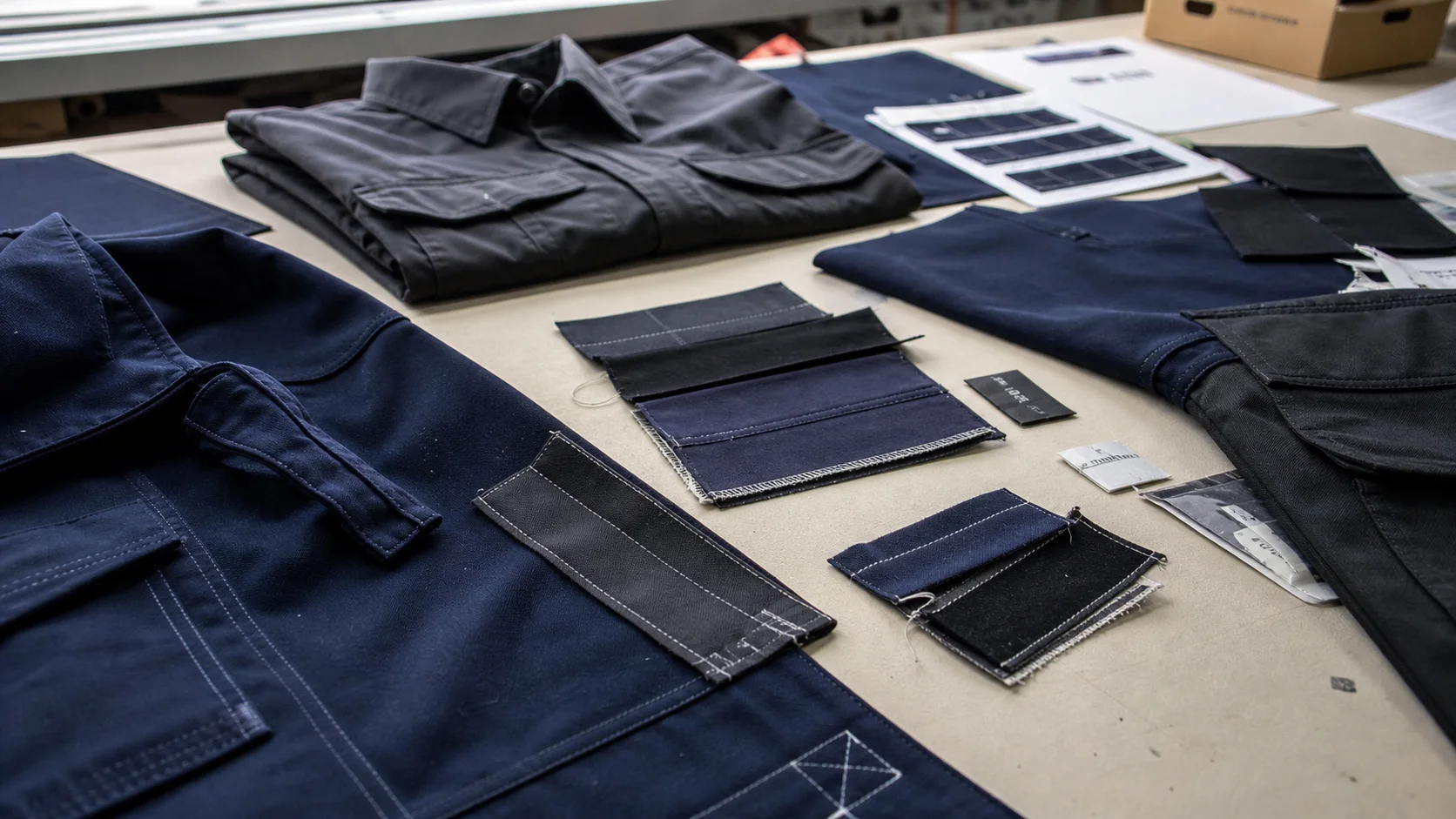
Practical breakdown of workwear uniform order seam strength review for clinic purchasing teams, covering MOQ, cost, timeline, quality checks, and supplier...
Workwear Uniform Order Seam Strength Review For Clinic - Fabrikn production reference
Clinic uniforms are expected to look clean, move well, and survive frequent washing without coming apart at the seams. That sounds basic, but seam strength is one of the quickest ways a uniform order succeeds or fails in real use. For purchasing teams, the issue is not only whether the garment looks neat on approval day. It is whether the construction holds up after repeated laundering, long shifts, bending, sitting, cart pushing, patient handling, and constant abrasion from daily wear.
In a clinic buying program, seam strength deserves the same attention as fabric weight, color fastness, and size consistency. Weak stitching can lead to open side seams, popped crotch seams, split pockets, or frayed hems that make a uniform look old before its time. Once that happens, replacement cost rises and staff confidence drops. A uniform that fails early also creates avoidable complaints, returns, and reorders.
This review is written for purchasing teams that need a practical way to judge seam quality before placing a workwear order. It focuses on what to ask suppliers, what to verify on samples, and where inspection teams usually find problems. If you are comparing vendors or preparing a clinic program, it helps to review supplier capability early. Fabrikn’s services, about-us, and contact-us pages are useful starting points for understanding how a manufacturing partner supports development and production.
Clinic uniforms face a heavier practical load than many buyers expect. Scrubs, tunics, lab coats, pants, and housekeeping garments are washed often, sometimes at higher temperatures, and often with industrial detergents. Even when the fabric survives, the seam can fail first. Thread degradation, poor stitch density, weak seam allowance, and bad needle selection all reduce performance.
For a clinic, seam failure is not just a quality nuisance. It affects presentation, safety, and budget control. A garment with a split seam can expose underlayers, restrict movement, or simply look unprofessional in front of patients. In large orders, a small construction defect can turn into a batch-wide issue if the same sewing method is used across all sizes.
The right judgment is to treat seam strength as a measurable quality point, not a vague “good stitching” claim. The supplier should be able to discuss stitch type, seam allowance, thread count or ticket size, testing method, and the expected performance after wash cycles. If the answer is only that the garments are “well made,” the buying team does not yet have enough control over the order.
Before a clinic signs off on a workwear order, the sourcing team should define the garment’s use case. A receptionist uniform does not face the same stress as a nurse tunic or housekeeping trouser. The seam standard should match the job function, because overbuilding a simple item raises cost, while underbuilding a hard-use item creates quality risk.
Purchasing teams should also check whether the supplier can keep construction consistent across size runs. Seam strength often varies when grading is poor. A seam that performs acceptably on a medium can become tight or vulnerable on an extra-large if the pattern and stitch balance are not controlled.
For clinics with multiple branches or staggered rollouts, consistency matters as much as peak strength. A uniform program succeeds when the first delivery and the third delivery are essentially the same in fit, construction, and wash performance. That requires a supplier with stable sewing methods and a clear production approval process, not just one good prototype.
Not every seam needs the same construction. A strong sourcing decision depends on matching seam type to garment function and fabric behavior. Light poplin-style items may use a different construction from stretch twill or poly-cotton blends. The goal is to prevent stress concentration and avoid seam puckering, slippage, or breakage after laundering.
In clinic workwear, the most common constructions include plain seams, flat-felled seams, overlocked seams, and reinforced topstitched seams. Plain seams can be acceptable on less-stressed areas if the seam allowance is adequate and the thread quality is right. Flat-felled seams are often preferred where extra durability is needed, though they can add bulk. Overlocked edges help control fraying, but overlock alone is not always enough for high-stress joints.
Purchasing teams should pay close attention to seam allowance width. Narrow allowances can save fabric but reduce margin for sewing error and long-term durability. Wider allowances usually give more stability, especially when the garment will be repeatedly washed or resized through pattern grading. The tradeoff is slightly higher fabric usage and sewing time.
Critical stress points deserve extra scrutiny:
Good construction is not only about stitch density. Needle choice, thread balance, fabric recovery, and operator skill all matter. A very tight stitch count can look neat but still fail if it cuts into the fabric or creates excessive puckering. In many clinic programs, a balanced, well-tested seam is more valuable than a visually dense one.
Seam strength starts with the base material. A stable poly-cotton blend, a performance stretch fabric, or a brushed twill will each react differently to stitching and washing. The supplier should confirm fabric composition, weight, yarn structure, and finish. For clinic uniforms, common fabric weights often fall in the mid-weight range, though exact targets depend on climate, privacy needs, and garment type.
Thread selection is equally important. Polyester core-spun thread is often favored for durability and wash resistance, while pure cotton thread is usually less suitable for demanding clinic laundering. If a garment has stretch content, the seam must also tolerate recovery without popping. In those cases, thread elasticity and stitch formation become more important than buyers sometimes realize.
Trim details should not be ignored. Buttons, zippers, elastic, snaps, labels, and reinforcement tapes all affect how a seam behaves. A pocket bar tack may hold the pocket in place, but if the trim attachment is weak, the whole area can fail under load. Zippers in tunics and jackets should be tested for smooth operation and secure insertion points, since the seam at the zipper tape is often a weak zone.
A practical spec sheet for clinic uniforms should include:
Spec Item What To Confirm Why It Matters Fabric composition Fiber blend, stretch content, and finish Affects seam behavior, shrinkage, and wash life Fabric weight GSM or oz/yd² target Impacts durability, drape, and comfort Thread type Polyester, core-spun, ticket size Controls seam durability under laundering Stitch type Lockstitch, overlock, coverstitch, bar tack Determines strength and appearance Seam allowance Measured width at critical seams Provides durability margin and sewing tolerance Reinforcement Bar tacks, stays, taped zones, double stitch Protects stress points from failureBuying teams should be cautious about choosing the lightest possible fabric for cost savings. Thin materials can reduce comfort in hot environments, but they also make seam failure more likely if the construction is not upgraded. A lower fabric cost can disappear quickly if the replacement rate climbs.
The sample stage is where seam strength should be evaluated in a disciplined way. The first sample is not the final answer. It is a working model that shows whether the concept can be produced consistently. Buyers should review fit, construction, thread appearance, seam alignment, and stress-point reinforcement before approving bulk production.
A sensible approval sequence usually looks like this:
Seam strength should be reviewed at each stage, not only at final approval. If a pocket pull test or seam stretch test reveals weakness in the sample stage, the supplier still has time to improve the pattern or sewing method. Waiting until bulk inspection is too late and usually more expensive.
For clinic purchasing teams, the best sample is not the prettiest one. It is the one that reveals real production behavior early enough to fix it.
It is also wise to ask whether the supplier has a documented sample approval sign-off process. That process should capture fabric codes, trim references, stitch settings, and any revisions made after testing. Clear records reduce disputes later, especially when multiple buyers or branches are involved in the final decision.
Inspection teams tend to see the same seam-related issues across clinic apparel orders. Many are preventable if the factory controls stitching, pattern balance, and operator training. Others appear because the buyer did not specify the stress standard clearly enough.
Common risks include seam puckering, skipped stitches, loose threads, needle damage, uneven seam allowance, poor bartack placement, and seam slippage on smooth or lightly woven fabrics. On trousers and tunics, the seat seam and underarm often show the first signs of wear if tension is wrong or the stitch density is too aggressive.
Another frequent issue is inconsistency between sizes. A medium may pass inspection while an XXL shows seam distortion because the grading introduced tension at the wrong point. That is why buyers should request size-run checking, not just a single sample review.
Laundry performance is another major risk. A uniform can look perfect at delivery and still fail after repeated washing if thread shrinkage, fabric shrinkage, and seam construction are not aligned. Shrinkage mismatch is a common reason for twisting seams, puckered hems, and pocket distortion.
Inspection teams should not rely on visual checks alone. A practical review often includes hand pull checks on critical seams, close measurement of seam allowance consistency, and review of reinforcement placement. When the order is large, a simple visual audit is not enough to protect the clinic from a batch problem.
MOQ expectations in clinic workwear vary by supplier, garment complexity, fabric availability, and customization level. For basic scrub tops or pants, typical MOQ ranges may start around 300 to 500 pieces per color or style, while more customized uniforms may require 500 to 1,000 pieces or more. Smaller trial orders are possible with some vendors, but buyers should expect a higher unit price and limited trim options.
Lead time depends on more than sewing time. Fabric sourcing, dyeing, lab dips, trim approval, sample revisions, and inspection scheduling all affect the calendar. A straightforward repeat order may move faster than a new development program, but only if the fabric and trims are already available. If a custom color or specialty finish is involved, extra time should be built in.
Cost tradeoffs around seam strength are worth stating clearly. A stronger seam may require a slightly wider allowance, better thread, additional bartacks, or a more skilled sewing operation. That raises production cost, but it can reduce returns, reorders, and reputational damage. In most clinic programs, paying for proper construction is cheaper than replacing weak garments later.
Buyers should be careful when comparing quotes that look identical on paper. One supplier may quote a lower price because the seam allowance is narrow, the thread is lighter, or reinforcement is omitted. If the garment is destined for repeated laundering and daily use, that “saving” is often false economy.
The smartest commercial decision is usually to define a construction baseline first and negotiate within that boundary. Price should be compared only after seam standards, fabric weight, and test expectations are fixed.
Supplier selection should focus on repeatability. A clinic does not need a one-off sample that impresses in a showroom. It needs a production partner that can make the same garment consistently across batches, sizes, and reorders. The strongest indicator is not a sales pitch. It is evidence that the supplier understands construction control, inspection flow, and documentation.
Ask direct questions about sewing capability, in-line quality checks, final inspection methods, and how the factory handles rejected seams or rework. If possible, request a production specification sheet that includes stitch type, seam allowance, reinforcement method, and wash-care assumptions. The supplier should be comfortable discussing tradeoffs between comfort, strength, and cost.
It also helps to review whether the supplier can support development and communication cleanly. A responsive partner reduces delays during sample approval and helps prevent mistakes in bulk production. For a clinic purchasing team, the best supplier is usually the one that makes technical details easy to confirm before the order is released. If you are benchmarking vendors, a review of services and about-us can help frame the level of support expected before moving to contact-us.
Use this checklist when reviewing a workwear uniform order for seam strength:
This kind of checklist is simple, but it protects a clinic budget better than relying on general supplier assurance. When seam strength is defined up front, comparisons between quotations become clearer and production disputes become less likely.
A workwear uniform order for a clinic should be judged on more than appearance and price. Seam strength is one of the clearest indicators of whether the garment will survive repeated wear and laundering without causing replacement headaches. For purchasing teams, the practical approach is to specify the seam construction in advance, insist on proper sample approval, and inspect the areas most likely to fail under real use.
Good seam strength does not always mean the heaviest construction. It means the right seam for the fabric, the job function, and the wash program. That balance is what keeps clinic uniforms looking professional and lasting long enough to justify the order.
If you are evaluating a supplier or preparing a clinic uniform program, use the sample stage to ask hard questions, and use the inspection stage to verify the answers. That is where most quality risk can still be controlled.
Get a free quote from Fabrikn — your trusted B2B clothing manufacturer with 10+ years of experience. MOQ as low as 200 pieces.
Get a Free Quote →The biggest risks are split side seams, open crotch seams, pocket failures, underarm tearing, and hem distortion after washing. These areas take the most stress during movement and laundering.
Typical MOQs often start around 300 to 500 pieces per style or color for simpler items. Custom fabrics, special trims, or complex construction can push the MOQ higher.
No. It should be reviewed from prototype through pre-production. Early testing is cheaper and gives the factory time to adjust stitch balance, reinforcement, or seam allowance.
It depends on the garment and stress level. Flat-felled seams and reinforced topstitched seams are often stronger in high-wear areas, while plain seams may be acceptable in lighter-use zones if the fabric and thread are suitable.
Stricter construction requirements can add time if the factory needs extra sample rounds, more reinforcement, or special thread and fabric sourcing. If materials are already available and the spec is clear, the impact is usually modest.
Ask for seam type, seam allowance, thread specification, sample approval steps, wash assumptions, and inspection criteria. That set of questions usually exposes whether the supplier can deliver consistent production quality.