
A buyer-focused review of reorder risks for outdoor school workwear uniforms, covering fit consistency, fabric replacement risk, decoration durability, and...
Outdoor school buyers often treat uniform reorders as routine procurement. In practice, they are one of the easiest parts of a school uniform program to disrupt. A workwear uniform manufacturer may be able to repeat a previous order on paper, but small changes in fabric availability, trim consistency, size ratios, or production timing can create avoidable cost and quality problems. That is why a reorder risk review matters before you place the next buy.
This article looks at workwear uniform manufacturer reorder risk review for outdoor school buyers through the lens of MOQ, cost, and sourcing control. The focus is practical: what can change between the first order and the repeat order, where buyers usually lose time, and how to reduce surprises without overbuying inventory.
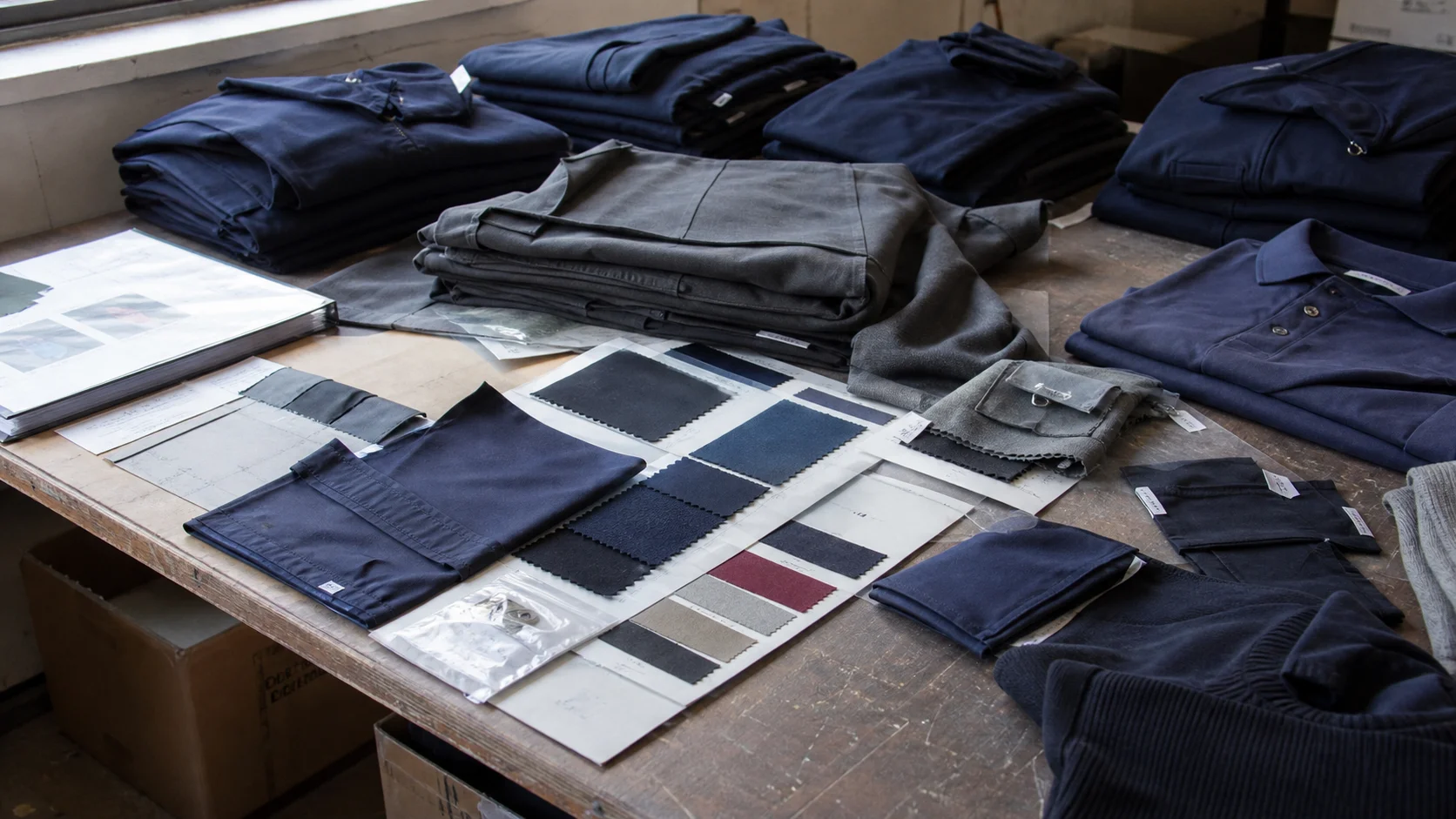
Workwear Uniform Reorder Risk Review - Fabrikn production reference
Repeat orders look simple because the style already exists. The pattern is approved, the garment fit is known, and the school has a record of previous pricing. The problem is that uniforms are not finished goods sitting on a shelf. They are made from current fabric lots, current trims, and current production capacity. If any of those inputs shift, the reorder may no longer be identical to the original.
Common reorder failures usually fall into four buckets:
For outdoor school buyers, these failures matter more than they do in many commercial categories. Uniforms used for sports, field activities, campus work, or weather exposure need to keep their shape, color, and function after repeated wear and wash cycles. A small difference in fabric performance can become a student complaint within weeks.
Outdoor school programs usually need more than standard apparel. They need durable, repeatable uniforms that can withstand movement, abrasion, weather, and frequent laundering. That means the reorder review should center on functional continuity, not just price and delivery date.
Key requirements often include:
School buyers also face a demand pattern that commercial buyers do not always see. Reorders are often triggered by enrollment changes, student growth, seasonal damage, or replacement needs after a semester of use. That means the order quantity can be smaller, the timing more urgent, and the tolerance for mistakes lower.
MOQ is one of the first places reorder risk shows up. A manufacturer may quote a low repeat-order unit price, but if the order is below the factory’s minimum for that fabric, trim, or color, the actual cost per unit can rise quickly. In apparel manufacturing, MOQ is not only about garment quantity. It can also apply to fabric dye lots, custom labels, printed logos, or special trims.
Typical MOQ ranges vary by product complexity, but outdoor school workwear often lands in these practical ranges:
When a buyer pushes below a factory’s preferred MOQ, one of three things tends to happen. The factory agrees but adds charges. The factory changes the process by using existing stock fabric or trims. The factory declines or delays the order until more volume is available. None of those outcomes is ideal for a school buyer trying to maintain consistency across a cohort.
Cost risk is not limited to unit price. Look at the full reorder picture:
Cost factor What can change on reorder Buyer impact Fabric price Mill pricing, dye lot, minimum purchase quantity Higher unit cost or forced fabric substitution Trim cost Zippers, thread, labels, reflective tape, elastic Small changes can affect compliance and appearance Setup charges Pattern, marker, print screen, embroidery digitizing Penalizes small repeat orders Packaging Individual bagging, hangtags, size stickers Can affect distribution efficiency at school level Freight Shipping mode, carton count, urgency Expedite costs can erase unit savingsFor outdoor school buyers, the best approach is to treat each reorder as a controlled production event. A prior order does not guarantee the same economics unless the specs, volume, and timeline still align.
A reorder should not rely only on memory or old email approvals. The safest repeat order starts with a file review and a sample check. Even if the school already approved the style once, a current sample review helps catch drift before mass production begins.
A practical approval sequence looks like this:
Buyers sometimes skip re-sampling to save time, especially when a reorder seems straightforward. That can be a false economy. A modest sampling delay is usually cheaper than correcting a full-size production run that misses color, fit, or trim expectations.
If the reorder is tied to a school term deadline, the approval process should be locked in early. A late sample review compresses bulk production and can force freight upgrades or partial shipments. Those costs are usually avoidable with better planning.
Vague specifications are one of the most common reasons a repeat order fails to match the first one. “Same as last time” is not enough when the buyer, merchandiser, and factory are not working from a controlled record. The more functional the uniform, the more precise the specification should be.
For outdoor school workwear, the specification should at least cover the following:
Trim changes are easy to miss because they are small, but they can create a big difference in appearance and durability. A zipper that closes properly on a sample may feel different on mass production if the supplier switches quality tier. A reflective tape that looks similar in daylight may perform differently under low-light conditions. These are not minor issues for school buyers managing outdoor use.
In reorder programs, the safest savings come from standardization, not from guessing that “close enough” will be accepted again.
For schools, standardization also helps control replacement buying. If the original order has clean specs, later reorders are easier to quote, easier to inspect, and less likely to create parent complaints or student size disputes.
Lead time is often treated as a simple manufacturing number, but reorder timing depends on several connected steps. If any one of them slips, the whole order can move behind schedule.
The main dependencies are:
For a reorder, the lead time is often shorter than a first order if the factory still has the same fabric and trims in stock. That said, buyers should not assume that repeat production will be fast automatically. A seasonal backlog or a missing component can remove that advantage very quickly.
When planning around an academic calendar, give yourself slack. A practical reorder window is usually broader than buyers expect, especially if the school needs distributed sizes, logo application, and final packaging by class, house, or grade.
Inspection on a repeat order should not be treated as a formality. Small process shifts can pass through production unnoticed until the final check. For school uniforms, the most common issues are not dramatic defects. They are consistency problems.
Typical inspection risks include:
For buyers managing outdoor school programs, pre-shipment inspection should focus on the areas that affect daily use. That means checking not only overall workmanship but also wear points, closure reliability, and consistency across all sizes in the shipment.
If the factory is handling a reorder after a long gap, it is wise to inspect the first production pieces early. Catching a problem at the start is far less expensive than sorting an entire finished batch after packing.
A good reorder strategy starts with records. Many sourcing problems are not procurement failures in the strict sense. They are documentation failures. The buyer knows what was ordered, but the factory file is incomplete, the approved sample is missing, or the school has changed the spec informally since the last order.
To reduce risk, use a controlled source file for every uniform style. Keep the following together:
It also helps to separate “must-match” details from “nice-to-have” details. For example, fabric weight, color, logo position, and size consistency are usually must-match items. Packaging style may be less critical unless the school distributes uniforms through a formal issue process.
Buyers should also think about supply continuity. If the first order depended on a fabric or trim that is no longer easy to source, the next order may need either a higher MOQ or a design adjustment. That is a sourcing decision, not a production surprise. It should be discussed before the PO is issued.
If your procurement team is building a recurring workwear program, it can help to review available support services before the next season. See our services page for sourcing and production support options, and use the contact page to discuss reorder requirements early. For supplier background, the about page is useful for understanding the company structure and approach.
Before approving a reorder, work through a short but disciplined checklist. This is especially useful when the school is under time pressure or the buyer is comparing multiple supplier quotes.
This checklist is not complicated, but it is effective. Most reorder risks come from assumptions, and assumptions are expensive in apparel sourcing.
Not every repeat order should be treated as a pure reorder. If the original product has quality issues, if the supplier changed fabric sources, or if the school now needs a different size curve, a small revision may be smarter than a direct repeat. A revised order can increase development time, but it may lower long-term risk.
The tradeoff is simple. A direct reorder is cheaper and faster only if the original specs still work and the supply chain is stable. A revised order is more work up front, but it may protect the school from repeat complaints, poor wear life, or inventory mismatch. For outdoor school buyers, that judgment should be made style by style, not as a blanket rule.
As a sourcing habit, the safest approach is to treat “reorder” as a controlled new buy with reference history, not as a copy-and-paste transaction. That mindset usually produces better pricing discipline, cleaner approvals, and fewer avoidable delays.
A workwear uniform reorder may look low-risk, but outdoor school buyers know how quickly small changes can turn into operational problems. MOQ pressure, fabric drift, trim substitutions, sample shortcuts, and rushed lead times all carry real cost. The best defense is not more optimism. It is better documentation, tighter approval control, and realistic sourcing assumptions.
If you manage school uniforms for outdoor use, the reorder review should answer four basic questions before the PO is issued: Can the factory truly repeat the same spec? Does the MOQ support the budget? Is the lead time safe for the school calendar? Will the inspection standard catch variation before delivery? If the answer to any of those is unclear, pause and clean up the spec file first.
Get a free quote from Fabrikn — your trusted B2B clothing manufacturer with 10+ years of experience. MOQ as low as 200 pieces.
Get a Free Quote →The biggest risk is usually material inconsistency. Fabric shade, weight, or performance can change even when the style number stays the same. For outdoor school wear, that can affect durability and appearance quickly.
It depends on the garment and supplier setup. Basic styles may be repeatable around 300 to 1,000 pieces, while technical or custom-reinforced garments may require higher quantities. Below MOQ, pricing and material availability often become less favorable.
Only if the original specs are fully controlled and nothing has changed in fabric, trim, size grading, or logo method. If any detail has shifted, a new sample or size set is the safer choice.
Fabric composition, fabric weight, color standard, sizing, trim quality, seam construction, and logo placement matter most. These are the details most likely to affect wear performance and visual consistency.
Lock the spec file early, confirm fabric and trim availability before issuing the PO, and leave time for sample approval and inspection. Freight planning should also start early if the school has a fixed delivery deadline.
Small quantities, lost fabric discounts, setup charges, and urgent freight can all push the repeat order cost above the original. A repeat order is only cheaper if the supply chain and order volume still support the original economics.