
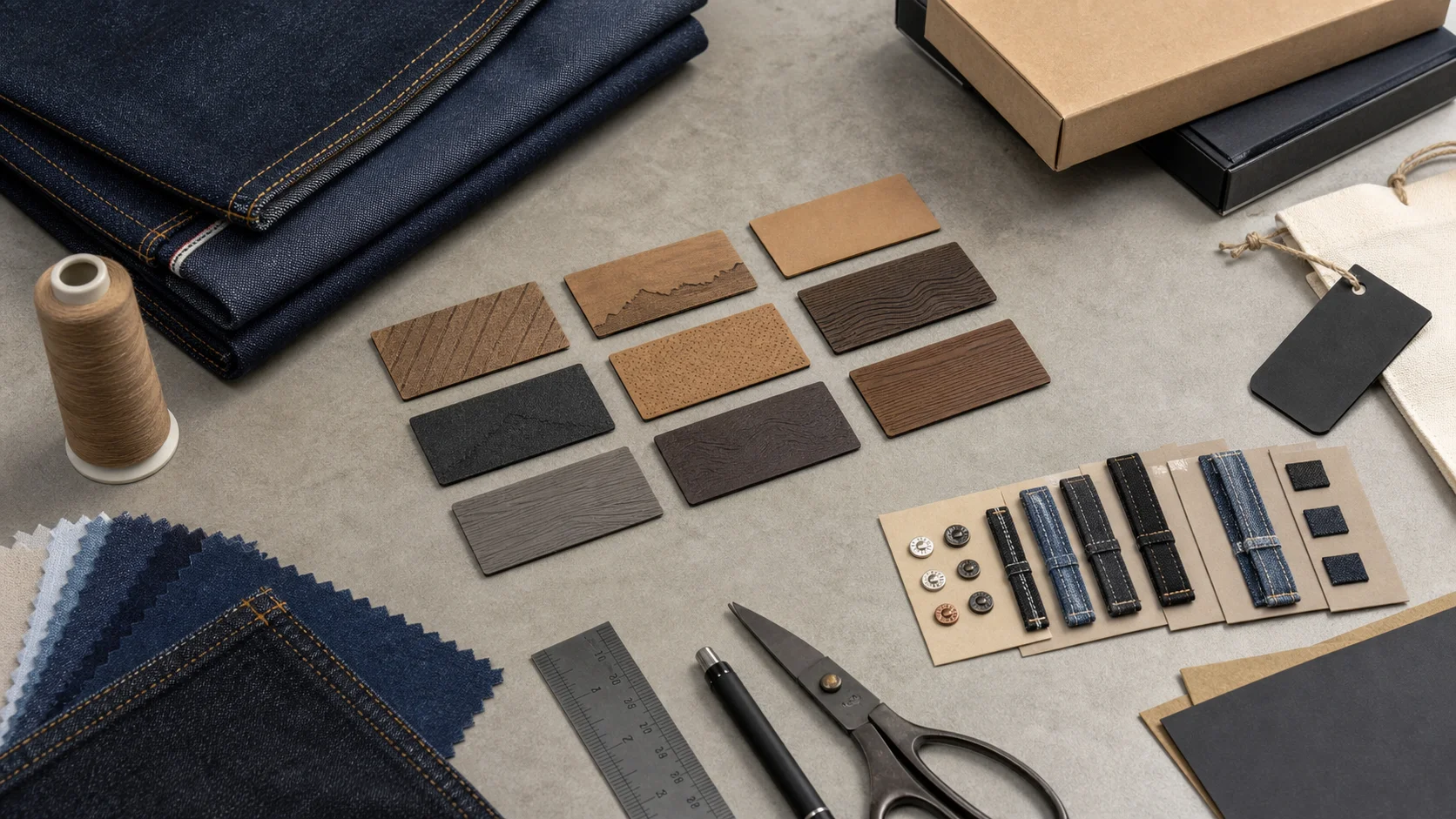
Woven Labels Versus Printed Labels for Clothing Packaging with checks for samples, fit, MOQ, QC evidence, pricing terms, and delivery risk.
Fast answer: Woven Labels Versus Printed Labels for Clothing Packaging should be judged by production evidence, not by a generic sourcing promise. The buyer needs sample proof, cost breakdowns, QC checkpoints, and delivery buffers in writing.
Ask for recent sample photos, measurement tolerances, fabric or print test assumptions, decoration test notes, packing examples, and a named inspection checkpoint. These details show whether the team can repeat an approved sample at bulk volume.
Separate garment cost, decoration, labels, packaging, sampling, testing, freight, and rush charges. When every cost line is visible, it becomes easier to reduce colorways, adjust size depth, or reserve more time for sampling.
In Los Angeles, I inspected a $48 sweatshirt with the same brushed fleece, the same 320 GSM weight, and the same double-needle seam as a $92 version from a premium label. The only difference was the packaging label. One came with a crisp woven hang tag and stitched edge; the other used a flat printed label that looked fine in a factory carton but went limp in the customer’s hand. The garment held up. The impression did not. Before the fold was even removed, the item was already being judged. That is the reality behind woven labels versus printed labels for clothing packaging.
Across 200-plus factory visits, I’ve watched packaging labels move return rates in ways finance teams rarely model. At one mid-market e-commerce brand, a batch of 12,000 units with scuffed printed labels produced a 7.4% higher “not as expected” complaint rate than the same style sold six months earlier with woven neck labels and matching swing tags. Same garment. Different presentation. In another case, a resale platform told me pieces with intact woven labels resold 9% faster than identical items missing visible labeling cues, especially premium basics under $70.
Factory-floor failures are small, repeatable, and expensive. Labels cut 2 mm too short. Ink that bled after 48 hours in humid storage. Thread colors that drifted because the buyer approved a screen image instead of a physical strike-off. Those defects show up in packaging, retail handling, and post-purchase resale photos. They hit lower-margin brands harder. A $0.18 mistake matters more on a $14 tee than on a $240 jacket.
Budget, speed, durability, and sustainability decide the call. Woven labels usually carry a higher unit price and longer setup, but they keep their shape through shipping and resale. Printed labels are faster, lighter, and a natural fit for minimalist packaging or short seasonal runs. Below, I’ll show what each option really buys, where factories stumble, and where a label that looks “premium” is the wrong tool. That is why woven labels versus printed labels for clothing packaging keeps coming back to the same question: what is this label supposed to do?
Woven labels come from colored yarns woven into satin, damask, or taffeta, so the artwork becomes part of the structure. Printed labels start with a base material and add ink through screen, digital, or heat-transfer methods. In your hand, the difference is immediate. Woven labels have texture, a raised edge, and a little more heft. Printed labels can look flatter, cleaner, and less fussy, which is why they work well for minimalist packaging inserts, tissue bands, or slim garment bags.
Texture changes the read fast. In a factory in Guangdong, the sampling room had two nearly identical black labels on a table: one woven, one printed. Buyers picked up the woven version first, even though the print looked cleaner on the printed one. Fingers say “made with care” before eyes read the copy. That’s why woven labels show up in premium outerwear, heritage denim, and private label capsule drops.
Printed labels have advantages people like to forget. Fine microtext. QR codes. Tiny legal copy. Full-color artwork with sharper fidelity than weaving can manage at small sizes. On packaging sleeves, fold-over inserts, or temporary tags, printed labels often look more precise because there’s no thread grain breaking the artwork. For brands selling basics at $18 to $35, that cleaner read can match the product and the margin better.
A pricier woven label can still be the wrong answer for thin, temporary, or highly detailed packaging applications. I’ve seen buyers spend $0.22 to $0.38 per woven label for a packaging insert that only needed one production cycle and had six-point legal text. Money burned. The weave softened the text, lead time stretched to 3 weeks, and the label got tossed after unboxing. A $0.05 to $0.11 printed label would have done the job better and created less waste.
If your packaging sits inside clothing packaging solutions, the label should fit the package’s job, not the brand deck’s mood board. A woven label suits a keepable object. A printed one suits something that needs to stay light, legible, and economical across 500, 5,000, or 50,000 units. In woven labels versus printed labels for clothing packaging, the best choice is the one that matches function first.
Durability is where the argument stops being decorative. Shipping folds labels. Humidity presses them. Carton tape and tissue rub them. Woven labels usually resist abrasion better because the design lives in the yarn structure. Printed labels can last well enough, but the ink layer is the weak point. Under repeat friction, cheap print cracks, hazes, or transfers. That matters when packaging has to survive retail handling, gifting, or resale.
Boxes coming out of factories in Vietnam, India, and Turkey after 20 to 30 days in transit told the same story. Humid warehouses made printed labels on coated paper and low-grade polyester curl at the corners after 2 weeks. Woven labels stayed flat longer, as long as the edge cut was clean. Poorly hot-cut woven labels frayed within 4 to 6 weeks, especially on satin bases. Heat did its own damage. During tunnel drying or compressed warehouse stacking, some low-cost inks softened at around 60°C, while woven threads kept their shape.
Defects follow patterns. Fraying points to weak edge sealing. Ink cracking usually follows aggressive folding or a base fabric the ink never bonded to. Bleeding shows up when the ink system and substrate don’t match, especially on recycled synthetics with uneven coating. Misregistration gives away a rushed print run or a file that wasn’t corrected before press. On one factory audit, I saw a 4.8% reject rate on printed labels because a 1.5 mm shift made QR codes unreadable.
Regional standards vary more than buyers expect. Some European suppliers rejected label runs with a 2% color variance. A few South Asian factories accepted 5% if the brand signed off on a strike-off and the use case was low-risk. According to AATCC, textile colorfastness and abrasion testing methods are built to measure this kind of wear, and those numbers should sit inside any packaging decision. If a label will move through distribution, retail staff, and the customer’s second-life market, it needs to survive at least 3 touchpoints without looking tired.
For private-label basics, I’ve seen woven labels on the garment itself and printed labels on packaging work best together. For private label clothing, durability should be judged by a simple question: does the packaging still look intentional after 2 weeks on a shelf and 1 transit cycle in a courier bag?
Printed labels usually win on upfront cost. In the factories I’ve visited, a simple printed packaging label can run $0.03 to $0.10 per piece at 5,000 units, while a woven label often lands around $0.12 to $0.35 depending on stitch density, size, and thread count. Small runs of 300 to 1,000 units twist the picture even more. A woven loom setup may add $40 to $120, while a printed run may carry $25 to $75 in screen or file prep charges.
Volume changes everything. At 500 units, the price gap is big enough to steer a sourcing decision. At 20,000 units, the gap narrows if a woven label replaces a second packaging component or reduces replacement stock. Premium packaging buyers sometimes accept a higher label cost because the carton, tissue, and insert already push total unboxing cost above $1.20. In budget categories, that same $0.18 label can eat too much margin on a $24 order.
I usually map the economics like this:
The hidden expenses are where sourcing teams get surprised. Color matching rework can add 1 to 2 days and a second sample fee. A rejected batch may cost 5% to 15% extra if the factory absorbs reprint waste and rolls it back through the next PO. Complex artwork with 8 or more colors usually pushes woven pricing up faster than print. Recycled base materials may also raise the unit price by 10% to 20% when suppliers have tighter tolerances. For brands managing cut and sew manufacturing, those small deltas compound across trims, labels, and packaging.
One factory manager in Ningbo gave me a blunt rule: “Cheap labels are expensive if you throw away 3,000 of them.” He was right. The best cost comparison is not unit price. It is cost per accepted impression. That is especially true in woven labels versus printed labels for clothing packaging when MOQ, wholesale, and bulk orders leave no room for waste.
Speed matters, but factory time never behaves like a spreadsheet. Printed labels can sample in 2 to 5 days and bulk in 7 to 14 days if the artwork is stable and the substrate is standard. Woven labels usually need 5 to 10 days for sampling and 2 to 4 weeks for bulk, because loom setup, thread selection, and edge finishing are less forgiving. The gap widens when the buyer asks for color changes after the first strike-off.
Most delays happen before production starts. I’ve watched buyers lose 4 days to a file correction because thin lines disappeared at weaving scale. Another 3 days can vanish if the color approval needs a second round, especially on deep navy, olive, or warm grey. Ink curing can also stretch printed timelines when factories run multiple jobs on the same line. If the packaging uses coated stock, soft-touch laminate, or unusual recycled film, the press operator may need a slower pass to avoid smudging.
Regional geography matters. Cut-and-sew hubs close to label suppliers can turn small runs faster because the sample shuttle is shorter and communication is tighter. Offshore production tends to be slower by 5 to 12 days, especially when the label factory sits 2 or 3 logistics steps away from the garment plant. That matters for seasonal launches and limited drops, where a missed 7-day window can turn a selling moment into dead stock. For custom baby clothing manufacturing, delays sting even more because compliance checks and softer material approvals often add another 3 to 5 days.
Factory reality is plain. A label is never just a label. It is a queue, a proof, a thread order, a press setting, and one more point where the calendar can slip. Buyers who plan for 2 rounds of approval instead of 1 almost always hit market dates more cleanly. That planning discipline matters whether you buy from a local supplier or a China factory with a larger production lane.
There is no clean moral winner here. Woven labels often use polyester, recycled polyester, cotton, or blends, and the thread structure can last through multiple uses. Printed labels may use less material overall and can fit short-lived packaging better, but the inks, coatings, and base films matter just as much as the artwork. A thin printed label made from a non-recyclable laminate can be a worse environmental choice than a durable woven one that survives 3 uses instead of 1.
According to Textile Exchange, fiber sourcing decisions shape the footprint long before the label reaches the customer. That’s why I ask suppliers about fiber origin, recycled content, and whether the label backing can be separated from the package stream. Water-based inks cut solvent risk; solvent systems raise VOC concerns and worker exposure. On the factory floors I’ve visited, the environmental conversation always comes back to waste, not theory. A label printed efficiently but thrown away immediately can still be the wrong choice if it creates overproduction in the wrong size or color.
There’s a counterweight. Some premium woven labels create more waste at setup because looms need test runs, thread trimming, and sample cards. I have seen 150 to 300 trial pieces tossed before the approved shade matched the garment body. By contrast, some printed labels generate more rejected units when color tolerance is too tight, especially if the brand insists on matching a Pantone tone within 2% on a recycled substrate. The greener option is the one with the fewest rejected, unused, or discarded units over the full order.
End-of-life matters too. If a customer keeps the packaging insert, a durable woven label may extend usefulness. If the insert gets thrown out after unboxing, a lighter printed label may reduce material consumption. The correct answer depends on lifespan, not sentiment. For teams sourcing custom or wholesale packaging, sustainability should be measured at production, use, and disposal, not just at the carton stage.
Start with the product, not the supplier’s favorite format. Luxury apparel, premium outerwear, and heirloom-style basics usually justify woven labels because the tactile signal supports the price point. Minimalist tees, seasonal promos, kidswear, and short-run packaging often do better with printed labels because speed and clarity outrank texture. If the order sits below 1,000 units, printed usually protects cash. If the order is 5,000 units and the packaging is kept or photographed, woven can earn its place.
I use a simple decision frame in sourcing meetings:
Ask suppliers specific questions. What is the stitch density or ink laydown? How does the label behave after 10 folds? What is the reject threshold for color variance, and how many units are in the approval run? Can they show OEKO-TEX or similar certification for threads or inks? According to OEKO-TEX, material safety claims should be verified, not assumed. Ask for a physical sample, not a PDF, because a screen never tells you how the package feels in a hand.
If the brand is working through private label clothing, the label should reinforce margin, not just mood. A label that costs $0.22 but improves unboxing and reduces customer confusion can be rational. A label that costs $0.22 and sits in a drawer is not. In woven labels versus printed labels for clothing packaging, the right answer is the one that supports the product, the factory, and the customer at the same time.
Run a pilot before you lock the PO. I recommend 100 to 300 units across at least 2 suppliers, one nearby and one offshore, so you can compare timing and finish under the same brief. Test sample approval, carton compression, courier abrasion, and customer-facing mockups under real light. A label that looks elegant in a sample room can fail under fluorescent store lighting or at the bottom of a packing carton.
Measure hard numbers. Reject rate should stay under 3% for a clean run. Lead-time accuracy should land within 2 days of promise. Color variance should be documented against a reference card. Cost per accepted unit matters more than catalog price. If one supplier is $0.04 cheaper but rejects 8% of the batch, the saving is fake. I also compare print and weave across the same scorecard so the sales pitch doesn’t decide the result.
Keep the test short. One approval round. One stress test. One final sign-off. Then scale only what survives handling, not what photographs well. That is the fastest way to turn label choice into a sourcing decision instead of a guess. It is also the cleanest way to compare manufacturer capability, factory output, supplier consistency, and production quality before you buy in bulk.
Woven labels are made by interlacing threads into the design, while printed labels apply ink onto a base material. Woven usually feels more tactile and durable; printed usually gives sharper small text and lower upfront cost. For packaging, the choice often comes down to whether the label is meant to be kept or discarded after unboxing.
Printed labels often cost about $0.03 to $0.10 each at 5,000 units, while woven labels commonly land around $0.12 to $0.35 each depending on size, thread count, and finish. Small runs of 300 to 1,000 pieces usually carry setup charges of $25 to $120. Rework and rejection can add another 5% to 15% if approvals are rushed.
Printed labels can sample in 2 to 5 days and bulk in 7 to 14 days if the files are ready. Woven labels usually need 5 to 10 days for sampling and 2 to 4 weeks for bulk because loom setup takes longer. Color revisions and file corrections are the most common causes of delay.
Yes, but only if the insert is intended to be kept or reused. For one-time inserts, woven labels can be overbuilt and more expensive than needed, especially for fine text or short seasonal runs. Printed labels are often the better fit for temporary packaging that needs to stay light and low-cost.
Test sample approval, fold resistance, abrasion, color consistency, and shipping wear. I also recommend checking reject rate, lead-time accuracy, and cost per accepted unit across at least 2 suppliers. A pilot of 100 to 300 units usually reveals the real difference before you commit to 5,000 or more.