
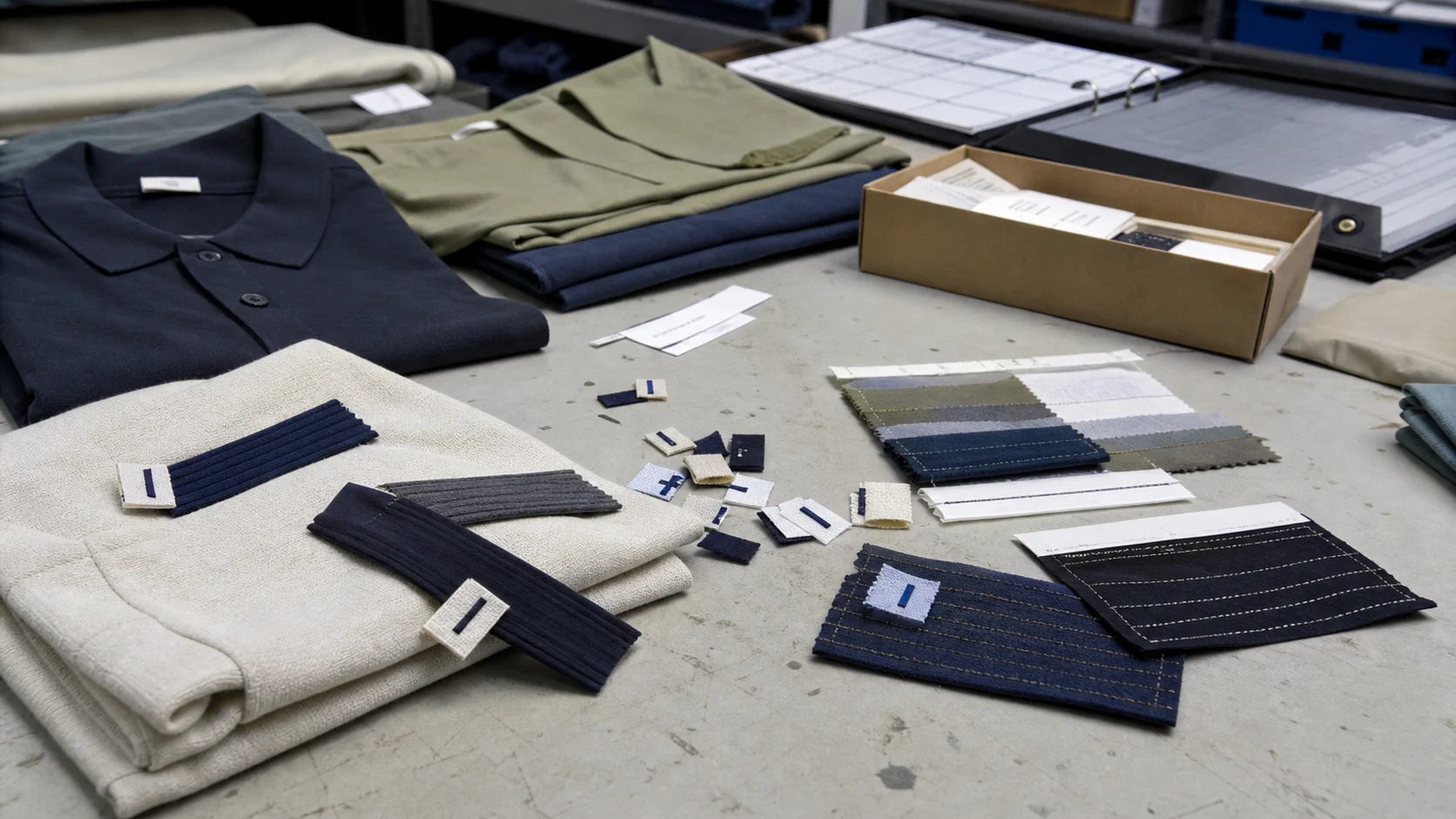
A buyer-focused audit framework for woven origin tabs on fitness club apparel, covering dye migration, wash performance, test methods, and approval checkpoints.
Fitness clubs buy branded apparel for repeat use, visible branding, and reliable wash performance. A woven origin tab seems small, but it sits in the same failure chain as the rest of the garment: if the tab bleeds, fades, curls, or abrades early, the brand looks careless. For club buyers, a colorfastness audit is not a cosmetic exercise. It is a practical check on whether the supplier can hold color under real laundering, sweat, light exposure, and handling.
This article focuses on the woven origin tab manufacturer colorfastness audit for fitness club buyers. The emphasis is on sourcing discipline: what to test, what to specify, which failures matter, and where buyers tend to overpay for unnecessary performance or under-specify critical details. The same basic logic applies whether the woven tab is sewn into a neckline, side seam, hem, or accessory label on teamwear, staff uniforms, or retail club merch.
For buyers building a new program or tightening an existing one, it helps to start with a supplier that can document testing and explain construction choices clearly. Useful reference points are the manufacturer’s services, the company about-us page, and the main contact-us channel for requesting lab support, strike-offs, or pre-production samples.
Woven Origin Tab Colorfastness Audit for Club Buyers - Decoration & Printing manufacturing guide
Fitness club apparel gets washed often and aggressively. Staff tops, trainer uniforms, retail tees, leggings with woven branding, and member welcome packs all face repeated laundering. A woven origin tab that holds color in the first wash but breaks down after the fourth or fifth cycle creates a wider quality problem than the tab itself. It can make the garment appear old before its time, confuse brand consistency across replenishment orders, and trigger complaints from clubs that expect predictable presentation.
Colorfastness also affects placement. A woven tab is often close to contrast fabric panels, logos, heat-applied decoration, or binding. If the tab migrates dye, the surrounding area can show staining or haloing. That risk increases when dark yarns, satin-like constructions, or cheap finishing chemicals are used without proper fixation. Buyers should treat the tab as a branded component with its own failure mode, not as an afterthought.
For fitness clubs, the commercial issue is consistency. Many club programs reorder in small batches. A tab that matches the approved sample on the first order but drifts on later lots creates avoidable dispute. A disciplined audit protects the buyer from claims that the garment passed approval while the bulk did not.
A serious woven origin tab audit should look at the whole component, not just the visible color. That includes yarn choice, weave density, edge behavior, finishing, and how the tab responds to standard test conditions. A supplier can sometimes pass a visual inspection while still failing in practical wear. The goal is to identify whether the tab is stable enough for the buyer’s use case.
Ask what fiber content is being used. Polyester is common because it generally offers stronger wash stability than many natural-fiber blends. Recycled polyester can be suitable if the mill controls dyeing carefully, but recycled feedstock sometimes introduces greater shade variation from lot to lot. Cotton woven tabs can feel premium in some applications, yet they usually need tighter control over shrinkage and color bleeding. Blends are possible, but they add complexity to testing and approval.
Yarn count matters as much as fiber choice. Fine yarns can produce crisp detail but may show abrasion faster. Heavier yarns often improve robustness, though they can make the tab bulkier and less comfortable against skin. Buyers should ask for the yarn spec, construction density, and whether the tab is woven as damask, taffeta, or another structure. Each structure behaves differently in wear and wash.
Colorfastness starts at the dye stage. For club buyers, it is reasonable to ask whether the mill uses disperse dyes for polyester, reactive dyes for cotton, or a documented process suited to the chosen fiber. The point is not to insist on a particular chemistry in every case. The point is to make sure the dye class matches the base material and that fixation is verified.
Finishing is just as important. Anti-fray coatings, softeners, heat-setting, resin treatments, and washing aids can change how the tab performs. A finish that improves hand feel can still reduce rubbing resistance or create a gloss change after washing. Any finish used should be disclosed in the spec sheet, because hidden finishing is a common reason an approved sample does not match bulk behavior.
The tab’s position on the garment affects inspection. A side-seam tab may rub against sports equipment or repeated body motion. A neck tab may be exposed to sweat and repeated stretching. A hem tab may be subject to snagging in laundry bags or contact with fasteners. Buyers should connect the test plan to the intended placement rather than relying on a generic pass/fail rule.
Size also matters. Small tabs can appear harmless, but they often use tighter weave structures and richer dye concentration to preserve legibility. That combination can raise the chance of crocking or shade shift. Larger origin tabs may distribute color better, though they can introduce greater seam stress and more visible wear if the edges are not well sealed.
Test selection should reflect the garment’s likely exposure. A club apparel tab does not need every possible textile test on every order. It does need the tests that connect to actual use, especially if the item will be washed frequently or distributed across different climates and club operating environments.
Test Area What It Shows Why Buyers Care Wash fastness Whether dye shifts or bleeds during laundering Critical for repeated wash programs and bulk consistency Rubbing or crocking Whether color transfers through dry or wet friction Important when the tab touches skin, other panels, or equipment Sweat fastness How the tab performs under perspiration and salt exposure Relevant for activewear and staff uniforms in warm environments Light fastness Resistance to fade under light exposure Useful for retail display, window exposure, and bright facilities Heat stability How the tab responds to ironing, heat pressing, or drying Helps avoid warping, gloss change, or color shift after finishingCommon industry references include ISO and AATCC methods, but a buyer does not need to build a specification around method numbers alone. What matters is matching the test to the risk, defining the acceptance standard, and confirming the lab condition used for the sample and the bulk. A result without context is not a usable result.
Wash fastness is usually the top concern. If a woven tab can survive a realistic wash cycle without obvious shade loss or staining, it is usually a better candidate for fitness club programs than a tab that only looks good in a display sample. Rubbing tests are next in importance, especially where dark logos or origin marks are printed or woven against light garments. Sweat testing is useful for any club-focused order because human movement creates heat, moisture, and friction together, not in isolation.
Light fastness is often underused in apparel sourcing. It matters when garments are displayed in club reception areas, retail walls, or studio lighting. A tab that fades in storage or on the shelf can damage perceived quality before the garment is even worn.
For club buyers, the practical question is simple: will the tab still look intentional after repeated use, not just after approval? If the answer is uncertain, the sample is not ready for bulk.
A clean approval process reduces surprises. The best supplier relationships use a staged path from concept to production, with each step documented.
Specify fiber content, tab size, weave type, placement, brand colors, and expected washing conditions. State whether the garment is for staff use, retail sale, or promotional distribution. Those use cases can justify different performance thresholds.
The first sample should be checked for shade accuracy, text clarity, edge finish, and hand feel. Ask the supplier to identify the sample lot, dye lot, and any finishing process applied. If the supplier cannot trace the sample, the approval is weak.
Do not approve purely by visual inspection. Run the relevant colorfastness tests on the sample before sign-off. If the tab is part of a garment program, it is wise to test the tab in the same context it will be used, because stitching, backing, and surrounding fabrics can affect outcome.
Approval should freeze the critical variables: yarn, color code, weave structure, dimensions, finishing, and packaging. A useful approval note is specific enough that later substitution is visible. Loose approval language creates room for untested changes.
A pilot run or first bulk lot can catch machine settings, density changes, or heat-setting errors. Buyers should ask for batch photos, test reports, or a small retained sample set from the production lot. This is especially important when club orders are split across sizes or fulfillment windows.
Bulk inspections should confirm that the delivered tabs match the approved sample and that the colorfastness risk has not changed due to process drift. A tab can pass sample testing and still fail bulk if the mill changes yarn source, dye bath concentration, or finishing temperature.
Good specs prevent vague arguments. A buyer should define more than color name and tab width. The more repeatable the spec, the lower the chance of shade disputes and inspection failures.
Specs should also state whether metallic threads, reflective yarns, or special coatings are allowed. These elements can improve visual impact, but they often change the test result. A reflective origin tab might look stronger at first glance while being more fragile under abrasion. A coated tab may resist fraying but lose softness or color depth after heat exposure.
Another useful detail is label placement. If the tab is hidden in a seam, the buyer may prioritize durability over appearance. If the tab is external and part of the brand story, appearance and color matching matter more. The supplier needs to know which priority governs the order.
Woven origin tabs are often available at lower MOQs than fully cut-and-sewn garments, but the actual minimum depends on loom setup, color count, yarn availability, and finishing demands. A common sourcing range for custom woven tabs is roughly 1,000 to 5,000 pieces per design or colorway, though some suppliers can support lower trial quantities at a higher unit cost. Multi-color weave patterns, special edges, and unusual sizes can push the MOQ higher.
Lead time is not fixed. Simple woven tabs may move in 10 to 20 days after approval, while more complex orders can take longer if dyeing, sampling, or packaging is custom. The real dependency is approval timing. If the sample round takes two weeks and the buyer adds a second revision, the project schedule can shift more than the production line itself.
Buyers should budget time for testing. A lab test can take days rather than hours, and re-testing after a failed result adds more delay. When a club launch date is tied to a seasonal campaign, the approval path should be locked early. The fastest way to miss a launch is to assume sample approval will happen on the first pass.
There is also a cost tradeoff. A higher MOQ may lower unit cost, but it can leave the buyer with excess tabs if the club changes branding, membership tier, or garment line. Lower MOQ orders are useful for trial programs, though they usually cost more per unit and may have less favorable lead times. The right choice depends on whether the club is testing a new line or replenishing a stable program.
Most tab failures come from a small set of preventable causes. Buyers who understand those risks are in a better position to ask the right questions before production starts.
This is the most frequent issue. The approved sample may be produced from one yarn lot, while bulk uses another. If the supplier does not lock the dye source and lot control, the visible color can move enough to be noticeable on a dark tab or a brand-critical shade.
Bleeding usually appears when fixation is weak or the garment wash environment is harsher than the lab sample. This is especially risky with dark reds, blacks, navy, and saturated brand colors. A wet rub test can reveal part of the problem, but it does not replace wash testing.
Woven tabs with weak edge finishing can begin fraying after wash or use. If the tab is attached near a high-stress seam, the edge problem can become a construction problem. Buyers should inspect both the cut edge and the stitch line.
Some tabs look acceptable before use and then develop a shiny or flattened area after laundering. That effect can make a premium club garment look lower grade. It is common in tabs that rely on soft finishing without enough abrasion resistance.
If the approved sample is not retained, photographed, and traceable, disputes become difficult to resolve. Keep a reference sample, test report, and approved spec sheet together. The cost is low. The value is high when a bulk lot arrives with questionable shade or texture.
Not every program needs the highest possible test result. What matters is fit for purpose. A staff polo for a quiet front-desk role does not need the same colorfastness profile as a wash-heavy trainer uniform or high-turnover retail apparel. Buyers should avoid over-specifying where the use case is light, but they should not cut corners on washing and rub resistance where the garment will be used daily.
A useful rule is to prioritize the failure that would most visibly damage the brand. For fitness clubs, that is usually bleeding, fading, or tab distortion after wash. A slightly more expensive yarn or a tighter weave may be justified if it removes that risk. A decorative finish that looks attractive but weakens fastness is harder to defend.
The cheapest option is rarely the lowest-risk option. At the same time, the most expensive option is not automatically the best one. Buyers should ask the supplier to explain what the extra cost buys: more consistent dye control, better edge finishing, stronger lot traceability, or higher test margins. If the answer is vague, the price premium is probably not warranted.
The supplier’s internal controls matter as much as the material spec. A mill or converter that can show repeatable lot control, retained samples, and clear test records is usually safer than one that only offers visual assurance.
Buyers should also ask whether the supplier can isolate failed lots. If a mixed shipment arrives and only part of the batch is out of spec, the ability to trace by lot can limit the damage. That is especially useful for club programs that place staggered orders throughout the year.
For buyers who need broader decoration support beyond woven tabs, it is worth checking the supplier’s wider production scope before placing the order. A manufacturer with coordinated decoration and printing support may reduce handoff errors, provided the technical controls are clear and the approval process stays disciplined. The starting point is usually the same: ask for the production path, verify the samples, and confirm that the final bulk will match the approved reference.
Get a free quote from Fabrikn — your trusted B2B clothing manufacturer with 10+ years of experience. MOQ as low as 200 pieces.
Get a Free Quote →It is a review of how well a woven origin tab holds color under wash, rubbing, sweat, light, and heat. For club buyers, the audit checks whether the tab can survive real use without bleeding, fading, or visibly degrading.
Wash fastness and rubbing fastness are usually the first two. Sweat fastness is important for fitness apparel, and light fastness is useful when garments are displayed or stored in bright areas.
Many custom woven tab orders start around 1,000 to 5,000 pieces per design or colorway. The actual MOQ depends on weave complexity, color count, finishing, and whether the supplier is making a trial run or a full production lot.
A basic sample can be turned quickly, but approval often takes longer because testing and revisions add time. A practical lead time depends on how many sample rounds are needed and whether the buyer requires lab confirmation before sign-off.
Bulk failures usually come from changes in yarn lot, dye source, machine settings, finishing temperature, or subcontracting. The approved sample may be correct, but the bulk process may not stay locked to the same variables.
Not always. The right standard depends on how the garment will be used, how often it will be washed, and how visible the tab is. The buyer should specify performance that is fit for purpose, not just the highest possible number.
Keep the approved sample, the test report, the written spec, and any color reference used for sign-off. That record makes later claims and reorders much easier to manage.
In practice, the best woven origin tab program is the one that is boring in production. It passes the same way every time, it arrives on schedule, and it does not create avoidable quality complaints after the first wash. For fitness club buyers, that is the standard worth enforcing.