
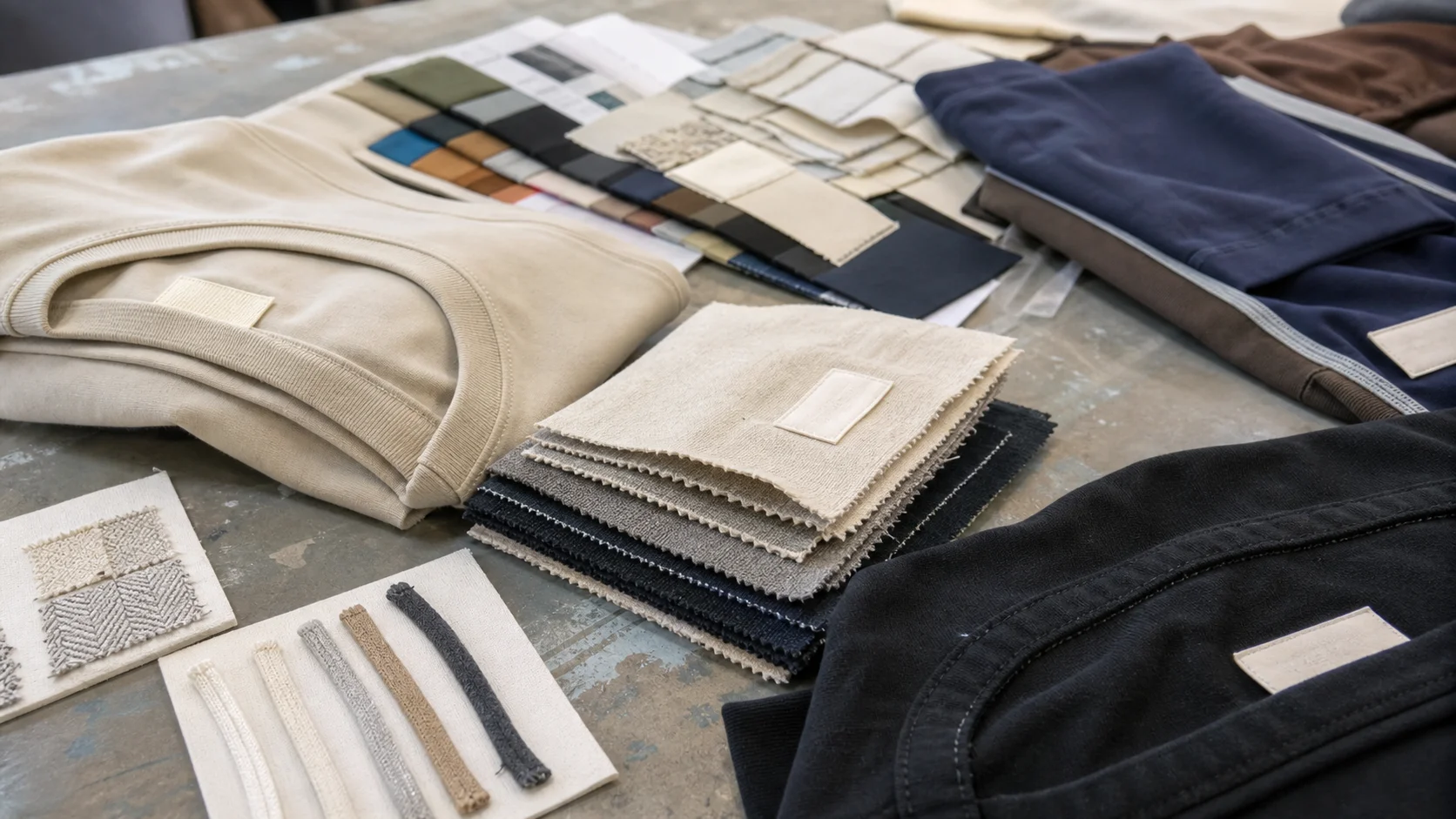
A practical procurement-focused outline for evaluating woven origin tab suppliers, with hotel-specific quality, compliance, and branding criteria for...
Hotel procurement teams that buy woven origin tabs are not just buying a small label. They are buying a compliance detail, a branding signal, and a quality-control checkpoint that sits close to the guest-facing product. A woven origin tab may be tiny, but if it is wrong, missing, badly finished, or inconsistent across replenishment orders, it can create avoidable friction in housekeeping, merchandising, and audit reviews.
This scorecard is designed for hotel procurement teams evaluating woven origin tab suppliers in the Decoration & Printing category. It focuses on practical sourcing criteria: product quality, customization capability, lead time, minimum order quantities, compliance readiness, sampling discipline, packaging, and service reliability. For broader production support, it can also help to review a supplier’s services, company background on the about us page, and direct communication options on the contact us page.
Woven Origin Tab Supplier Scorecard for Hotels - Fabrikn production reference
A woven origin tab is a small woven label or tab used to show manufacturing origin, brand identification, or regulatory information. In hotel sourcing, these tabs often appear on towels, bathrobes, bedding accessories, luggage items, amenity bags, spa textiles, or soft goods that require clear identification. Some hotel programs use the tab primarily for origin disclosure. Others use it as part of a broader branding system to keep items traceable across multiple properties.
From a procurement standpoint, the tab is a low-cost item with a high consistency requirement. It needs to match approved artwork, fit the intended placement, survive laundering or handling, and remain legible over time. If a hotel buys across multiple properties, the tab must also be repeatable. A supplier that can produce a perfect first run but cannot hold the standard on repeat orders is a weak fit.
Hotel procurement teams often manage many small decorative and identification components with limited time and broad vendor lists. A scorecard makes the supplier selection process more objective. It helps teams compare weaving quality, compliance readiness, commercial terms, and response speed in a way that is easier to defend internally.
That matters because woven origin tabs are not usually complex to produce, which can lead buyers to overemphasize price alone. Price matters, of course, but a cheap supplier can cost more through misprints, shrinkage, missing color consistency, late deliveries, or poor packaging. A scorecard forces the buyer to look at total sourcing performance, not just unit cost.
For hotel procurement, the best supplier is usually the one that balances stable quality, clear communication, acceptable minimums, and reliable delivery. That is a practical decision, not a theoretical one.
Use the following criteria to score woven origin tab suppliers for hotel programs.
The first test is whether the supplier can reproduce the approved artwork accurately. This includes text clarity, symbol detail, spacing, border definition, and edge finish. Woven labels can look acceptable at a glance and still fail close inspection if small letters blur or the weave density is too loose. Hotel teams should request close-up images, a physical sample, or both.
If the tab is attached to towels, robes, or other laundered items, the material must withstand repeated wash cycles. Buyers should ask what yarn type is used, whether the tab is polyester, cotton, or a blended construction, and how it performs under heat, detergent, and abrasion. If the supplier cannot explain wash durability in plain terms, that is a warning sign.
Hotels often need brand colors to stay consistent across properties and replenishment seasons. Suppliers should be able to work to Pantone references or approved swatches, while recognizing that woven production can create slight visual differences from printed artwork. A good supplier will explain those limits before production starts, not after the batch ships.
Small labels are often judged by their finish. Heat cut, ultrasonic cut, folded edge, or sewn-in constructions all have different implications for appearance and durability. A rough edge may fray. An overly stiff edge may irritate the user. The supplier should recommend the right finish for the application, not simply push one standard method across all projects.
Hotel procurement teams may need origin disclosure, fiber composition, care-related documentation, or simple packing declarations. The supplier should be able to provide item specifications, product descriptions, and shipment documents that match the PO. If the program is tied to a regulated market or a chain-standard procurement process, documentation quality matters nearly as much as the product itself.
Minimum order quantity is one of the most practical decision points. Some woven origin tab suppliers can support lower trial quantities, while others require production-scale minimums that do not fit hotel test programs. Teams should score suppliers on their ability to support pilot runs, reorder lots, and property-by-property rollouts without forcing excess inventory.
Lead time is not just the number of days on a quote. It depends on artwork approval, yarn sourcing, loom scheduling, finishing, packing, and freight mode. A supplier that quotes a short lead time without describing dependencies is taking shortcuts in the commercial discussion. Hotels need dependable dates, especially when tabs are attached to a broader opening, renovation, or replacement program.
Good suppliers understand that the sample stage is where most label issues are caught cheaply. A proper workflow should include artwork confirmation, digital or woven strike-off, pre-production sample approval, and final production sign-off. A supplier that skips steps may appear efficient, but it increases the risk of avoidable quality claims later.
Woven tabs are small, but they can still arrive damaged, mixed, or mislabeled if packaging is weak. Hotel teams should ask how cartons are labeled, whether items are polybagged or bundled, and how the supplier prevents color and size mix-ups. For multi-property programs, carton identification and batch traceability are useful, even for low-value components.
Procurement teams need suppliers that answer questions clearly and quickly. A supplier that responds only when the order is ready to ship is harder to manage than one that can confirm specs, recommend options, and flag risks early. Good responsiveness reduces hidden delays and protects the project timeline.
Even for a small woven origin tab, the spec sheet should be handled carefully. Vague instructions create inconsistent output. Strong specifications usually include the following:
Buyers should also confirm whether the supplier can manage narrow text, small symbols, or origin statements in multiple languages. The smaller the tab, the more important it is to set realistic expectations. A design that looks clear in a PDF may need simplification for woven production.
For hotel projects, a simple but tightly written spec usually performs better than a design brief that relies on assumptions. If the buyer wants the supplier to propose improvements, that should be stated explicitly.
Typical MOQ ranges for woven origin tabs vary by supplier, construction, and customization level. For basic woven tabs, some suppliers may offer trial orders in the low thousands of pieces. Custom designs, special finishes, or multiple color combinations can push minimums higher. Hotel procurement teams should ask for a clear MOQ by style, not a single generic number.
Lead time depends on the stage of approval and the complexity of the order. A straightforward repeat order can move faster than a new design. A new hotel opening, by contrast, often involves artwork revisions, sample review, and tighter coordination with other textile purchases. Freight method also changes the timeline. Air shipment is faster but more expensive. Sea freight can work well for planned replenishment if the buyer builds in enough margin.
Replenishment planning should account for property growth and breakage. A low-cost tab is still a supply chain item, and small quantities can become expensive if every reorder triggers fresh setup costs. For hotel groups, a supplier that can archive approved specs and repeat them accurately is often more valuable than a supplier that only competes on first-order price.
Sampling is where procurement discipline pays off. A disciplined woven origin tab supplier should support a simple approval route:
Hotel teams should avoid approving from a screen alone. Woven labels can look different in real light and on real fabric. A physical sample reveals edge quality, stiffness, stitching behavior, and how the tab sits on the textile. That is especially important when the label will be visible to guests or used across premium room categories.
Sample approval should also define what counts as acceptable variation. For example, slight shade tolerance may be normal in woven production, but text distortion or incorrect origin wording should not be tolerated. If the supplier does not know how to define acceptance criteria, the buyer should do so in writing.
For hotel programs, the safest procurement approach is to treat the sample as a production control tool, not a courtesy item. If the sample is wrong, the batch is likely to be wrong in a more expensive way.
Woven origin tabs carry a few recurring risks that hotel teams should watch carefully.
Small fonts can collapse during weaving, especially if artwork has too much detail. Buyers should simplify wording where possible and confirm minimum readable text size with the supplier.
Brand colors may vary across production lots if the supplier lacks solid process control. Even if the variation is small, it may be noticeable when an old batch is mixed with a new one.
Poor finishing can damage the perceived quality of the textile item. If a tab feels scratchy or begins to fray after handling, it reflects poorly on the hotel brand.
Origin wording must be checked carefully. The buyer should confirm spelling, formatting, and market-specific phrasing before production. A simple wording error can create compliance and relabeling problems.
When multiple styles or property versions are in one order, packaging discipline matters. Weak carton labeling can lead to mixed delivery, which creates unnecessary sorting labor on arrival.
The first batch may meet expectations while later orders vary. Procurement teams should keep the approved sample, spec sheet, and order history in one place so they can compare future shipments against the original standard.
Hotel procurement teams should not select a woven origin tab supplier based on a single strength. A low price does not compensate for unclear samples. A fast sample does not compensate for poor repeatability. A polished sales response does not compensate for weak packaging and order control.
The best way to choose is to score each supplier against the same criteria, then compare both the numerical result and the practical risk profile. If two suppliers are close, the better choice is often the one that communicates more clearly, documents better, and shows more discipline in sampling and version control.
For hotels that buy many decorative and identification items, it can also help to consolidate sourcing where appropriate. A supplier with broader decoration and printing capability may be able to support woven tabs, care labels, printed trims, and related textile identification components under one process. That can simplify development, though consolidation should never come at the cost of quality control.
If a supplier looks promising, ask for a quote tied to a clear specification, a sample timeline, and a realistic production schedule. A good partner will be comfortable with that structure. If the supplier resists detail, the risk usually shows up later in the order cycle.
Procurement teams can also review service depth through a supplier’s services page, then verify company positioning on the about us page. When there is a short list, direct discussion through the contact us page is often the fastest way to clarify whether the supplier can handle hotel-grade repeat orders.
For hotel buyers, the right woven origin tab supplier is usually the one that makes the process predictable. That means fewer surprises in artwork approval, fewer misunderstandings in packaging, and fewer disputes over quality thresholds. The cheapest offer may work for a one-off order, but hotels usually need repeatability more than a bargain price.
The strongest sourcing decision is one that protects the brand, reduces receiving problems, and keeps replenishment simple. On a small component like a woven origin tab, that judgment matters more than most teams expect at the beginning.
Get a free quote from Fabrikn — your trusted B2B clothing manufacturer with 10+ years of experience. MOQ as low as 200 pieces.
Get a Free Quote →There is no universal number, but many basic custom woven tabs are produced in the low-thousands per style, while more complex versions can require higher minimums. Hotel teams should ask for MOQ by artwork and finish, not by broad category.
Timing depends on sample approval, production queue, and freight method. A repeat order may move faster than a new design. Buyers should allow time for sample review, revisions, bulk production, and shipping.
Include finished size, artwork version, yarn or thread type, weave style, color references, edge finish, attachment method, packaging requirements, and inspection criteria. Clear specs reduce variation and rework.
They can be, if the material and finish are chosen correctly. Buyers should confirm wash durability, heat resistance, and abrasion performance before approving bulk production.
The most common risks are poor legibility, color drift, incorrect wording, and inconsistent repeat orders. Weak sampling discipline often leads to these problems.
No. A digital proof is useful, but a physical sample or strike-off is the safer approval step because it shows actual weave behavior, edge quality, and appearance on real fabric.
Use the same scorecard for each supplier. Compare weaving quality, sample discipline, MOQ, lead time, documentation, packaging, communication, and total landed cost. That produces a more balanced sourcing decision than price-only comparison.