
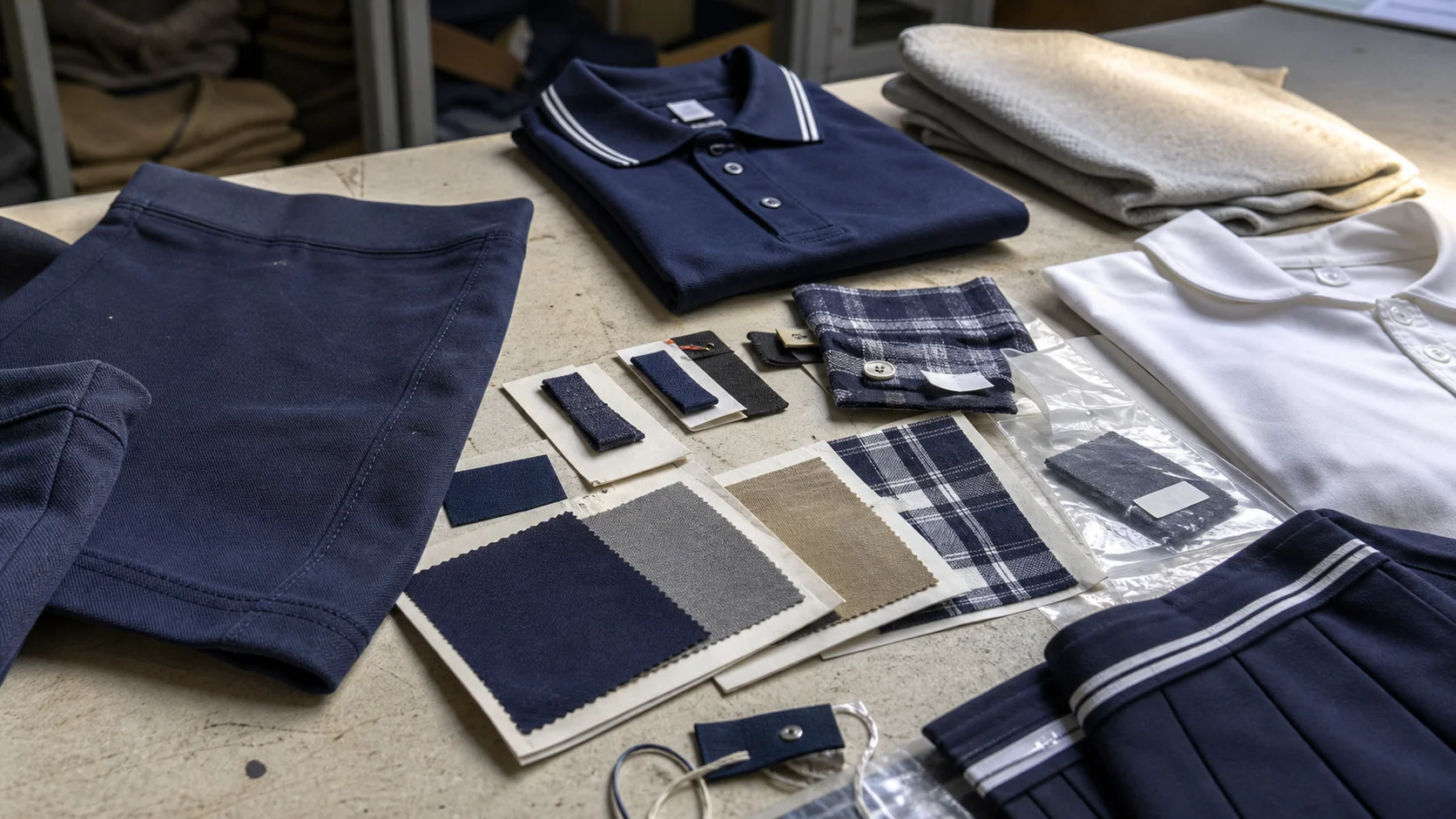
A distributor-focused guide to specifying, sourcing, proofing, and ordering woven origin tabs in bulk, with practical details on materials, fold types,...
Woven Origin Tabs Bulk Order Guide for Buyers - Fabrikn production reference
Woven origin tabs look simple, but they sit at the intersection of branding, compliance, garment construction, and bulk production control. For distributor buyers, the risk is not only whether the tab looks attractive. The real question is whether the woven tab can be produced consistently, sewn efficiently, packed correctly, and delivered in time for apparel production.
This woven origin tab supplier bulk order guide is written for buyers sourcing decoration and printing components at scale. It focuses on practical purchasing decisions: specifications, minimum order quantities, sampling, lead times, inspection points, packaging, and supplier communication. A distributor handling multiple apparel brands or retail programs needs repeatable standards, not one-off artwork approval based on a nice photo.
A woven origin tab is a small fabric label or side tab that identifies country of origin, brand origin messaging, collection identity, or product line information. It is usually sewn into a garment seam, hem, pocket edge, waistband, cuff, placket, or accessory seam. In many apparel programs, it acts as both a decoration element and a product information marker.
Origin tabs are commonly used on T-shirts, sweatshirts, denim, jackets, workwear, sportswear, uniforms, bags, caps, and children’s apparel. They may show text such as “Made in Portugal,” “Designed in USA,” “Organic Cotton,” “Heritage Series,” or a small logo plus origin statement. Some buyers use them as a premium detail to support retail storytelling. Others use them for SKU recognition or production line sorting.
The woven construction gives the tab durability. Instead of ink sitting on the surface, the design is formed with threads. This helps the tab resist washing, abrasion, and color fading better than many low-cost printed labels. That said, woven tabs are not always the best choice for every design. Very tiny letters, gradients, photo effects, and complex icons can lose sharpness when converted into weave structure.
Purchasing judgment: choose woven origin tabs when durability, texture, and perceived quality matter. Choose printed tabs when the design has very small details, many colors, or a short promotional lifecycle.
Distributor buyers often manage repeat orders across multiple brands, factories, and garment styles. A well-specified woven origin tab helps standardize decoration across these programs. It can create a consistent look even when garments are produced in different facilities or across different seasons.
For wholesale apparel, promotional apparel, private label programs, and retail replenishment orders, origin tabs can add perceived value without changing the whole garment pattern. A small side seam tab or hem tab is less expensive than a full jacquard patch or embroidered badge, yet it still gives the garment a branded finish.
Tabs also help when buyers need modular branding. A blank garment can be upgraded with a woven tab, neck label, hangtag, or packaging insert. Buyers looking for broader label and decoration support can review related production options through Fabrikn’s services, especially when multiple trim items need to match across a collection.
There is a tradeoff. A tab is a small component, but it can create large production disruption if it arrives late or fails inspection. Apparel factories generally cannot close side seams, waistbands, or certain pocket operations if the tab must be inserted during sewing. A delayed tab can hold finished garment output even when fabric and main trims are ready.
A buyer should not send only a logo file and ask for a price. Woven origin tabs require clear technical specifications. Missing details lead to wrong folds, unstable size, fraying edges, poor color matching, and avoidable sampling rounds.
The supplier needs finished size, unfolded size, and fold type. Common origin tab formats include center fold, end fold, straight cut, loop fold, Manhattan fold, and book fold. A center-fold tab may be specified as 20 mm x 15 mm finished, with a 30 mm total unfolded length. An end-fold tab may require turn-under allowance on both ends for sewing.
Small tabs are attractive but can be difficult to weave clearly. For bulk orders, buyers should avoid pushing text too close to the edge. A practical safety margin of 1.5 mm to 2 mm around the design helps reduce trimming and sewing problems.
Most woven origin tabs use polyester yarn because it is durable, colorfast, and cost-effective. Cotton woven labels are possible, but they may have more shrinkage, a softer rustic appearance, and less sharp detail. Recycled polyester is increasingly requested for sustainable apparel programs, though availability and color range can vary by supplier.
High-density damask weaving is common for premium tabs with small lettering. Satin weave can give a smoother sheen, while taffeta is usually more economical but less refined. The right choice depends on the brand position and required detail level.
Color should be controlled with Pantone TCX, Pantone TPX, or physical thread references where possible. Pantone C values from paper printing do not always translate accurately into yarn. A supplier may match to the closest available yarn rather than dyeing custom yarn for small orders.
For strict brand programs, ask whether custom-dyed yarn is available and what MOQ applies. Custom dyeing can increase lead time and cost. For many distributor orders, choosing from standard thread cards is more realistic.
If the tab includes country-of-origin language, the buyer should confirm legal wording with the brand owner or compliance team. Rules vary by market and product type. A woven tab can support origin communication, but it should not replace mandatory care labels, fiber content labels, or legally required manufacturer details unless the format is approved for that use.
Text legibility is one of the biggest risks. Very small woven letters can fill in, especially on low-density construction. For many suppliers, uppercase letters under 2 mm to 2.5 mm in height become risky. Lowercase text can need more height because of fine strokes and counters.
Common cutting methods include hot cut, ultrasonic cut, and laser cut. Hot cutting helps seal polyester yarn edges, but poor control can leave rough or slightly hardened edges. Ultrasonic cutting is clean for many synthetic materials. Laser cutting can work well but may discolor some materials if settings are not controlled.
Some tabs may need soft backing or anti-fray treatment. For babywear, activewear, and next-to-skin products, the handfeel is not a minor issue. A scratchy tab can trigger customer complaints even when the logo looks correct.
Specification Buyer Decision Common Risk Finished size Confirm width, height, and fold allowance Tab looks too small after sewing Weave type Damask, satin, taffeta, or recycled yarn option Fine text loses clarity Color standard Pantone, thread card, or physical standard Shade differs from brand artwork Cutting method Hot cut, ultrasonic, laser, or woven edge Fraying, hard edges, discoloration Packing Loose, bundled, counted bags, or roll format Factory loses time sorting labelsWoven and printed tabs solve different problems. A woven tab is stronger for long-term durability and premium handfeel. A printed tab is better for complex artwork, many colors, photographic effects, QR codes, and very small information blocks.
For distributor buyers, the best answer often depends on the garment price point and expected order repeatability. If the same origin tab will be used over multiple seasons, woven construction makes sense. Tooling and sampling effort can be spread over repeat orders. If the tab is for a limited event, short campaign, or small test run, printed tabs may reduce cost and approval time.
Woven tabs also carry a minimum practical thickness. They may not suit ultralight performance garments where every seam detail is noticeable. Printed satin or heat-transfer labels can be more comfortable in those cases. The tradeoff is durability and perceived quality.
MOQ varies by supplier, weave type, yarn availability, and whether the order uses standard colors or custom-dyed yarn. For common woven polyester origin tabs, typical bulk MOQs may start around 500 to 1,000 pieces per design for simple repeatable artwork. Many professional suppliers price more competitively from 3,000 to 5,000 pieces. Larger distributor orders may run 10,000, 50,000, or 100,000 pieces per design, especially when tabs are used across many garment SKUs.
Buyers should separate sample MOQ from production MOQ. A supplier may produce a few physical samples after artwork setup, but the cost per sample can be high because loom setup and programming are involved. A low unit price on a quote is not meaningful unless the buyer checks setup charge, sample charge, freight, import duty, packaging cost, and wastage allowance.
Pricing is usually affected by these factors:
A distributor combining several buyer programs should ask whether the supplier can aggregate total volume for better pricing while keeping separate SKUs, artwork codes, and packing labels. Some suppliers can offer better rates when loom setup is efficient. Others price each design separately regardless of total order volume.
Purchasing judgment: do not chase the lowest unit cost if the supplier cannot control counting accuracy, fold consistency, and shade continuity. A tab that costs slightly less can become expensive when sewing lines stop or finished garments need rework.
Sampling should be structured. A casual photo approval is not enough for most distributor buyers, especially when tabs will be inserted into thousands of garments. The goal is to approve both appearance and production usability.
Send vector artwork when possible, such as AI, EPS, SVG, or high-resolution PDF. The supplier should convert the artwork into a woven simulation or production file. This is where fine lines, small letters, color count, and edge spacing are checked.
If the artwork is not suitable for weaving, the supplier should flag it before sampling. Buyers should accept that some logos need simplification. A woven label is not a paper label, and forcing print-level detail into yarn often produces poor results.
The digital proof should show finished size, fold type, yarn colors, front and back view if relevant, and cutting direction. It should include the supplier’s internal item code or artwork code. This avoids confusion when several similar tabs are being developed at the same time.
A physical strike-off is the first woven sample made using production-intent materials and settings. Buyers should check color, size, text clarity, weave density, handfeel, edge finish, fold accuracy, and sewing allowance.
Ask for multiple pieces, not just one perfect sample. Five to ten pieces can reveal variation in cutting and folding. If the supplier sends only a carefully selected sample, it may not represent bulk stability.
The apparel factory should sew the tab into an actual garment or fabric mock-up. This step catches problems that are invisible on a desk. The tab may be too thick for a seam, too narrow for the operator to handle, or positioned in a way that distorts after washing.
Approval should be documented with date, version number, artwork file, sample reference, and allowed tolerances. For distributor buyers, this documentation is important because future repeat orders may be placed by different staff members.
Approval Stage What to Check Buyer Action Artwork review Letter size, color count, fold area Approve adjustments before sampling Digital proof Layout, dimensions, yarn colors Confirm technical details in writing Strike-off sample Physical look, handfeel, edge quality Compare against brand standard Sewing trial Ease of insertion and final appearance Approve for garment production Bulk approval Pre-production sample or top-of-production sample Release full production only after sign-offTypical lead times for woven origin tabs can range from about 7 to 20 days after final approval for common materials and standard colors. Complex designs, custom yarn dyeing, large quantities, special testing, or holiday production periods can extend this timeline. International freight and customs clearance can add several more days.
Buyers should not treat label lead time separately from garment production planning. If the tab is inserted into a side seam or waistband, the garment factory needs it before that operation begins. A late trim shipment can cause production batching, partial sewing, storage handling, and line rescheduling.
Several dependencies affect timing:
A practical planning method is to approve the woven tab before bulk fabric is cut, especially for programs with fixed launch dates. For replenishment orders, keep a safety stock of approved tabs when the same trim is used repeatedly. This reduces pressure on every production cycle.
Buyers coordinating multiple trims can use Fabrikn’s contact page to discuss order planning and documentation needs before committing to final garment schedules.
Inspection for woven origin tabs should be more detailed than counting cartons. Small trims can hide defects that only become visible after sewing or washing. Since tabs are often inserted into seams, replacement after garment assembly can be costly.
Size variation is common if cutting and folding are not controlled. Buyers should set practical tolerances, such as plus or minus 1 mm for many small tabs, depending on design and use. Very tight tolerances may increase cost or rejection rates.
Shade bands can occur between yarn lots or production batches. If repeat orders are expected, the supplier should keep a master standard. Buyers should ask whether shade continuity is guaranteed or only approximate.
Letters can blur, fill in, or distort at the edges. This is especially risky with narrow fonts, scripts, thin outlines, and small country names. Bulk inspection should include random checks across different bundles, not only the top of one bag.
Poor cutting can cause fraying. Excessive heat can make edges hard or sharp. Both problems matter more when the tab touches skin or sits on lightweight fabric.
Incorrect fold position can hide part of the logo in the seam. For center-fold tabs, both visible sides should align properly unless the design intentionally differs front to back.
Small tabs are easy to mix. Distributor buyers handling many similar origin tabs should require bag labels showing item code, artwork version, quantity, colorway, PO number, and production batch. Mixed tabs can cause serious brand errors at the sewing factory.
Inspection Point Acceptable Control Method Risk if Missed Quantity Weighed count plus random manual count Garment factory runs short Size Measure random samples from each batch Uneven seam appearance Color Compare to approved master sample Brand inconsistency Text Check legibility under normal light Origin message unreadable Edges Rub and visual inspection Fraying or wearer discomfort Packing Verify bag labels and carton marks Wrong tab used on production lineA good woven origin tab supplier should be evaluated on production control, not only sample appearance. Nice samples are common. Consistent bulk execution is harder.
Distributor buyers should ask for clear answers to these questions:
A supplier serving distributor buyers should understand version control. This is especially important when a brand updates “Made in” wording, changes a logo, or shifts from virgin polyester to recycled yarn. Old artwork must not accidentally be used for a repeat order.
Buyers should also check communication speed and technical clarity. If the supplier cannot explain fold allowance, yarn limitations, or cutting method during sampling, problems are likely to increase during bulk production.
Company background also matters. Buyers can review general information through Fabrikn’s about page when evaluating whether a sourcing partner’s capabilities align with their apparel trim and decoration needs.
Purchasing judgment: a strong supplier will push back on risky artwork before production. A weak supplier will accept every file quickly, then deliver a tab that cannot be read or sewn cleanly.
Before placing a woven origin tab bulk order, buyers should gather the full technical package. This saves time and reduces disputes after production.
For larger programs, create a trim matrix. The matrix should list every tab design, size, fold type, colorway, garment style, factory destination, and order quantity. This reduces the risk of sending the right tab to the wrong factory.
It is also sensible to order a small overage. Apparel factories may lose or damage trims during handling, sewing trials, and line setup. A common overage range is 2% to 5%, though the right level depends on the garment factory’s efficiency and the difficulty of the sewing operation. For very small orders, a fixed extra quantity may be safer than a percentage.
Packaging is often treated as an afterthought, but it directly affects sewing efficiency. Loose tabs in unmarked polybags may be acceptable for a small domestic order. They are not suitable for multi-factory distributor programs.
Ask for counted bags, usually in 100, 500, or 1,000 pieces per bag depending on tab size and factory preference. Each bag should show supplier item code, buyer item code, PO number, design name, colorway, quantity, and batch number. Cartons should carry matching labels.
If the apparel factory uses automated or semi-automated feeding systems, confirm whether tabs should be delivered on rolls or in a specific orientation. Most small side tabs are supplied loose or bundled, but production method should be checked before ordering.
Freight cost can be deceptive. Woven tabs are light, but urgent courier shipments can still become expensive when approvals run late. Consolidating trims may save freight cost, but it can also delay ready goods if one trim item is unfinished. The buyer should decide whether speed or consolidation is more important for each program.
Origin language must be treated carefully. A decorative origin tab should not make claims that conflict with the garment’s actual manufacturing origin, fiber origin, or legal labeling. Statements such as “Designed in,” “Made in,” “Crafted in,” and “Assembled in” can have different meanings. Buyers should confirm wording before the label is woven, because changing text after bulk production means scrapping the full lot.
Restricted substance compliance may also matter. Some buyers require OEKO-TEX, REACH, CPSIA, or brand-specific chemical declarations. Requirements depend on market, garment category, and end customer. Suppliers should state what they can support and whether reports apply to the exact materials used.
Sustainability requests should be specific. “Eco-friendly tab” is too vague for a purchase order. Buyers should state recycled polyester percentage, certification expectation if any, yarn source documentation, packaging preference, and whether mixed-material construction is acceptable.
The most common mistake is approving artwork without testing the sewn result. A tab can look balanced when flat but disappear into a seam after construction. The second mistake is accepting unclear color standards. Screen colors are not production standards.
Another frequent problem is ordering too close to garment production. Woven tabs need design conversion, sampling, approval, weaving, finishing, packing, and delivery. A buyer who waits until fabric is already cut may have limited room to solve issues.
Some buyers also fail to separate designs properly. A distributor may order similar tabs for several private label customers, each with slightly different origin wording. Without strict item codes and packing control, mixed inventory becomes a real risk.
Price-only sourcing is another trap. A very low quote may exclude sample cost, proper packing, custom colors, testing, or rework responsibility. The better commercial comparison is landed cost plus production reliability.
Woven origin tabs are small components with a large operational impact. For distributor buyers, the right supplier should provide technical advice, stable sampling, repeatable bulk production, and disciplined packing. The tab must look right, but it also has to sew correctly, survive washing, and arrive when the garment factory needs it.
The strongest buying approach is to specify the tab like any other critical trim. Define size, fold, weave, yarn, color, copy, tolerance, packing, and approval process before asking for final price. This gives suppliers a fair basis for quotation and gives buyers better control over risk.
For repeat apparel programs, build a master library of approved woven origin tabs with physical samples and digital records. This makes reordering faster and reduces version errors. It also helps distributors quote new programs more confidently because production assumptions are already documented.
Get a free quote from Fabrikn — your trusted B2B clothing manufacturer with 10+ years of experience. MOQ as low as 200 pieces.
Get a Free Quote →Typical MOQs often start around 500 to 1,000 pieces per design for simple woven polyester tabs, with better pricing usually available from 3,000 to 5,000 pieces. Custom yarn colors, special finishes, or complex designs may require higher quantities.
Common bulk production can take about 7 to 20 days after final sample approval, depending on supplier capacity, yarn availability, design complexity, testing, packing requirements, and freight method. Sampling and approval time should be planned separately.
Woven tabs are usually better for durability, texture, and premium appearance. Printed tabs are better for very fine details, many colors, gradients, QR codes, and short-run promotional programs. The best choice depends on garment use and artwork requirements.
Small text can be woven, but there are limits. Many designs become risky when letter height drops below about 2 mm to 2.5 mm, especially with thin fonts or lowercase letters. A physical strike-off is the safest way to confirm legibility.
Buyers should approve artwork, digital proof, physical strike-off, yarn colors, finished size, fold type, edge finish, handfeel, and sewing trial result. Written approval should include the version number and agreed tolerances.
Tabs should be counted and packed in clearly labeled bags, often 100, 500, or 1,000 pieces per bag. Labels should show item code, PO number, design, colorway, quantity, and batch number. This reduces sorting errors on the sewing line.
The main risks are wrong size, unclear text, shade variation, fraying edges, hard cut edges, incorrect fold position, short quantity, and mixed designs. Random inspection across multiple bags and batches is better than checking only one sample.
Recycled polyester may be available, but buyers should confirm yarn availability, color range, certification expectations, MOQ, and lead time. Sustainability claims should be documented clearly before production.
For repeat programs, keeping controlled safety stock can reduce production delays. Stock should be managed by artwork version, colorway, and batch number so old wording or outdated branding is not used by mistake.