
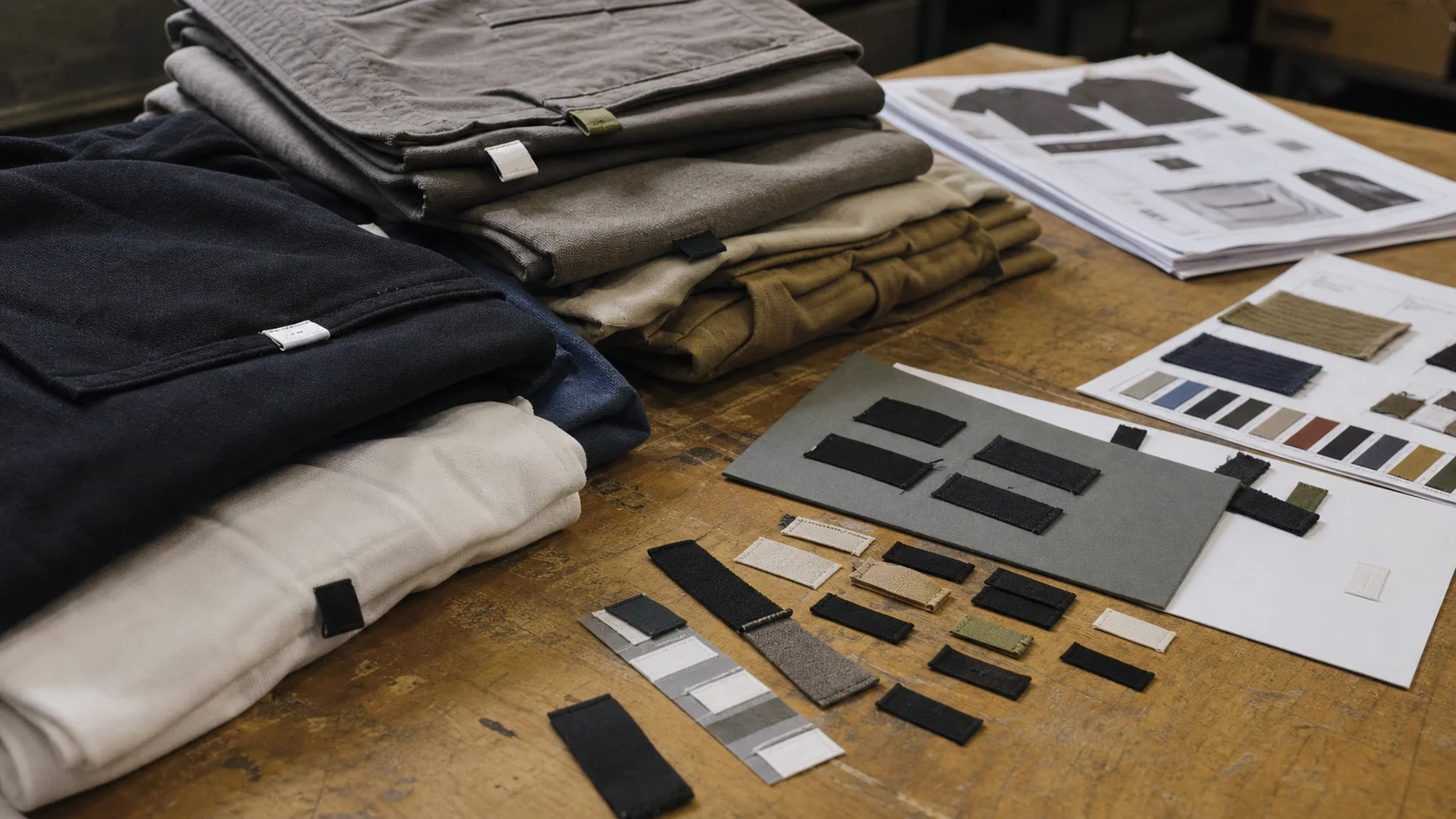
A practical bulk ordering guide for restaurant groups sourcing woven origin tabs, covering label specs, attachment planning, compliance copy, sampling,...
Woven Origin Tabs for Restaurant Bulk Orders - Decoration & Printing manufacturing guide
For restaurant groups, woven origin tabs are small trims with a larger operational role than their size suggests. They can identify country of origin, reinforce brand standards, support uniform traceability, and give aprons, chef coats, shirts, caps, and service jackets a more finished look. When a group is ordering uniforms across multiple locations, these tabs need to be specified with the same discipline as fabric, sizing, embroidery, and packaging.
This woven origin tab manufacturer bulk order guide for restaurant groups explains how to source, specify, sample, approve, and inspect woven tabs for commercial foodservice apparel. The focus is practical: what to decide before quoting, where costs and delays usually come from, what minimum order quantities are realistic, and how to reduce the risk of inconsistent trims across reorders.
Woven origin tabs are small fabric labels made on a narrow loom, usually using polyester yarns. They are typically folded and sewn into a garment seam or edge. In restaurant uniforms, they may show a country of origin, brand mark, group name, uniform line, department code, or a short compliance message.
The term “origin tab” can mean different things depending on the buyer. In some programs, it refers specifically to a country-of-origin indicator such as “Made in USA,” “Made in Mexico,” or “Made in Vietnam.” In others, it is a branded side tab that helps distinguish a restaurant group’s uniform from generic workwear. Before quoting, buyers should define whether the tab is a legal origin label, a decorative brand tab, or a secondary identification trim.
This distinction matters. Legal origin labeling is tied to import and retail compliance requirements, while decorative tabs are mainly branding and uniform-management tools. A restaurant group buying for internal use still needs accurate labeling if garments are manufactured, imported, or distributed through controlled channels. A trim supplier can produce the woven component, but the buyer and garment manufacturer must confirm the correct legal wording and placement.
Purchasing judgment: treat origin tabs as controlled trims, not afterthoughts. A one-cent trim error can create a full-lot rework problem if the wording, fold, or placement is wrong.
Restaurant groups use woven origin tabs for several reasons. Some are brand-driven, some are operational, and some are compliance-related. The strongest uniform programs usually combine all three.
A woven tab gives the uniform a consistent signature across multiple restaurants, regions, and staff roles. It can be placed on aprons, chef coats, overshirts, caps, polos, or tote-style service bags. When embroidery is too visible or too expensive for every item, a small woven tab can provide a subtle brand cue.
For restaurant groups with several concepts under one parent company, the tab may carry a parent brand, sourcing code, or collection marker. This can help operations teams separate uniforms by concept without making every garment visibly overbranded to guests.
Restaurant uniforms are exposed to heat, oil, detergent, abrasion, and frequent washing. Printed labels can work well for care information, but woven tabs often hold their appearance better when the design is simple and the yarn quality is stable. A woven origin tab should survive repeated commercial laundering without curling excessively, fraying, bleeding, or becoming rough against the wearer.
Polyester woven tabs are common because they are stable, cost-effective, and suitable for most wash programs. Cotton woven tabs can look more natural but may shrink more and lose edge stability depending on construction. Recycled polyester is an option, though buyers should confirm certification requirements and documentation before claiming sustainability benefits.
Restaurant groups often reorder uniforms in phases. A tab can include a discreet code that identifies production season, uniform line, or country of origin. This helps when comparing older stock with new stock or when resolving complaints about shrinkage, shade, or fit.
A tab is not a substitute for full production records, but it can support them. In larger rollouts, small identification details can save time when restaurant managers are sorting mixed inventory at store level.
Country-of-origin wording, fiber content, care labels, and importer information may be regulated depending on the market and sales model. The woven origin tab may carry part of that information, or it may work alongside a separate care label. Buyers should avoid asking a trim manufacturer to decide legal wording on its own. The trim supplier can confirm what is technically possible; the buyer, importer, or compliance advisor should confirm what is legally correct.
Placement affects visibility, sewing efficiency, wearer comfort, and inspection risk. A tab that looks attractive in a sample can become inconvenient in bulk if it slows sewing or causes discomfort during long shifts.
The side seam is one of the most common placements for woven tabs on waist aprons and bib aprons. It is visible, easy to standardize, and usually does not interfere with front embroidery or pocket function. For high-volume restaurant apron programs, side seam tabs are practical and cost-efficient.
The tradeoff is that tabs can twist or sit unevenly if the apron fabric is thick, the seam allowance is inconsistent, or operators do not follow a clear placement guide. Buyers should specify the tab distance from the top edge, pocket edge, or hem rather than relying on a vague note such as “side seam tab.”
Chef coats may use tabs at the sleeve hem, lower side seam, or back neck seam. Sleeve tabs are visible but more exposed to abrasion and laundering. Side seam tabs are more discreet and easier to standardize.
If the coat fabric is heavy cotton twill or poly-cotton canvas, the folded tab must not create a bulky seam. A narrow centerfold tab is usually easier to sew than a large endfold label. For chef coats, comfort and heat tolerance matter more than decorative size.
Casual restaurant shirts and overshirts often use woven tabs near the hem, placket, or side vent. This gives a retail-inspired look. It can work well for front-of-house uniforms where the garment is part of the dining-room presentation.
The main risk is placement drift. If the tab is meant to align with a vent, pocket, or hem stitch, the garment factory needs a measurable placement standard and a production sample. Without that, tabs can appear at different heights across sizes.
Caps can use small woven tabs at the back opening, side seam, or edge of a patch. Headwear requires extra caution because small labels can become uncomfortable or interfere with adjustable closures. If caps are produced by a different supplier than aprons or shirts, the tab specification must be shared as a controlled trim standard across vendors.
A proper woven tab quote needs more than artwork. The manufacturer needs size, fold type, yarn colors, ground color, edge finish, weave density, quantity, packing method, and any testing expectations. Restaurant groups should prepare these details before requesting bulk pricing.
Specification Common Options Purchasing Notes Material Polyester, recycled polyester, cotton blend Polyester is the usual choice for durability and price stability. Weave type Damask, satin, taffeta Damask is preferred for sharper small text and logos. Fold type Centerfold, endfold, mitre fold, straight cut Centerfold is common for seam insertion; endfold suits surface sewing. Size 10 mm to 40 mm visible width is common Very small tabs limit text legibility and logo detail. Edge finish Heat cut, ultrasonic cut, woven edge Poor edge finishing can cause fraying or scratchiness. Color count 1 to 4 colors commonly used More colors may increase cost and reduce clarity on small tabs. Packing Loose bags, rolls, bundles by quantity Rolls can improve sewing efficiency for some factories.Polyester woven tabs are the safest default for most restaurant uniform orders. They are washable, relatively stable, and available in many yarn colors. Recycled polyester may be suitable if the restaurant group has sustainability targets, but documentation should be checked. If a supplier offers recycled yarn claims, ask what certificate or transaction documentation can be provided.
Cotton or cotton-look tabs can suit natural canvas aprons and premium hospitality concepts. The tradeoff is greater sensitivity to shrinkage, shade change, and edge fraying. If the garment will go through industrial laundering, test cotton-look trims before bulk approval.
Damask woven tabs are commonly used when the design includes small text, thin lines, or a compact logo. Satin has a smoother sheen but can make small characters less crisp. Taffeta is more economical and works for simple marks, but it may not be the right choice for detailed origin wording.
For restaurant groups, the best woven tab is usually not the most complex one. A high-contrast, low-color design performs better in production than a tiny multi-color logo with narrow strokes. If the brand mark loses clarity when reduced to 20 mm, consider simplifying the tab artwork rather than forcing the original logo into an unsuitable size.
Centerfold tabs are folded in the middle and inserted into a seam, leaving a small visible flag. This is common for apron side seams and shirt hems. Endfold labels have folded ends and are usually sewn on the surface. Straight-cut tabs are simple but can expose edges if not finished well.
Restaurant uniform buyers should ask the garment factory which fold type best suits the sewing operation. The trim may look right on a desk but fail at the sewing line if it is too thick, too small to handle, or poorly matched to the seam construction.
Small woven tabs need disciplined artwork. A visible width of 15 mm to 30 mm is common for many restaurant uniform applications. Country-of-origin wording can require more room than a simple icon. If the tab must say “Made in Vietnam” or “Made in USA,” test the exact wording at production size before approving.
As a practical rule, avoid extremely small lettering unless the manufacturer confirms it through a physical woven sample. Digital mockups are useful for layout, but they do not prove yarn-level legibility.
Woven yarn colors may not match Pantone references exactly. A supplier can approximate the color using available yarns, or in some cases dye yarns for larger orders. For most restaurant bulk orders, selecting from existing yarn cards is more cost-effective and faster.
If the tab must match a brand color tightly, ask for a yarn card or physical strike-off. Restaurant groups with multiple uniform suppliers should keep an approved trim standard on file. This prevents the apron supplier and shirt supplier from using slightly different tab shades in the same rollout.
Minimum order quantities vary by manufacturer, weave type, size, color count, and whether custom yarn dyeing is required. For custom woven tabs, typical MOQs often fall between 1,000 and 5,000 pieces per design for standard polyester labels. Some suppliers may accept 500 pieces for a sample or small production run, but the unit cost is usually higher. For stronger pricing, 10,000 to 50,000 pieces per design is a more efficient range.
Restaurant groups should estimate tab usage by garment type, size range, and rollout phases. A 2,000-unit apron order may require 2,000 tabs plus production allowance. If the same tab is also used on shirts, caps, and chef coats, consolidating demand can improve pricing and reduce shade variation.
Order Scenario Typical Tab Quantity Buying Recommendation Pilot uniform test 300 to 1,000 tabs Expect higher unit cost; use for placement and laundering validation. Single restaurant concept rollout 2,000 to 10,000 tabs Good range for standard custom woven production. Multi-location restaurant group 10,000 to 50,000 tabs Consolidate demand across garments where possible. National or multi-brand program 50,000+ tabs Negotiate pricing, packing, replenishment terms, and reserved yarn standards.Buyers should include overage in the planning. Garment factories may need extra tabs for line setup, replacement, defects, and rework. A 2% to 5% allowance is common, though the right number depends on the complexity of the sewing operation and the factory’s defect history. A very small tab inserted into a thick seam may require more allowance than a simple surface-sewn label.
Purchasing judgment: if a restaurant group expects repeat orders, buy tabs as a program trim rather than per garment order. The savings are not only in unit price; they are also in consistency and reduced reorder friction.
Sampling is where many woven tab problems should be caught. A proper approval process includes artwork review, woven strike-off, garment placement sample, wash test, and final production approval. Skipping any step can save a week and create a larger problem later.
The buyer should provide vector artwork where possible. The supplier converts it into a woven layout, adjusting line thickness, text size, and color separation. At this stage, buyers should confirm exact wording, orientation, visible size, fold dimensions, and seam allowance.
For origin wording, confirm capitalization, punctuation, and language requirements. Do not rely on a logo file alone if the tab carries compliance text. The purchase order should show the approved wording clearly.
A digital proof helps confirm layout, scale, and fold position. It is not a substitute for a woven sample. Yarn behavior can change the appearance of thin letters and small icons. Buyers should approve digital proofs only as a step toward physical sampling, not as final bulk authorization.
The strike-off is the physical woven tab sample. It should be reviewed for color, legibility, density, hand feel, edge finish, fold accuracy, and back-side yarn floats. If the tab will touch skin, check whether the cut edge feels rough.
Restaurant uniforms often use dark fabrics and frequent wash cycles, so contrast is important. A low-contrast black-on-charcoal woven tab may look premium in a presentation but disappear after laundering or under restaurant lighting.
The approved tab should be sewn into the actual garment or a production-equivalent sample. This step confirms placement, seam compatibility, visibility, and comfort. It also gives the sewing team a standard to follow.
A placement sample should include measurements. For example, the tab may be positioned 80 mm above the apron hem on the wearer’s left side seam, with 15 mm visible outside the seam. This is stronger than a general instruction such as “attach tab at side.”
Restaurant groups should test trims using a wash method that reflects real use. Home laundering may not represent commercial laundry conditions. If uniforms are likely to face high-temperature washing, tumble drying, bleach alternatives, or stain-treatment chemicals, the tab should be checked after repeated cycles.
Key observations include curling, fraying, color change, shrinkage, scratchiness, and seam distortion. If the tab is used on white garments, check for color transfer. If used on dark garments, check whether the tab edge becomes lighter or fuzzy after abrasion.
Bulk production should proceed only after the buyer approves a signed or sealed sample. Larger groups should keep one approved tab sample with the purchasing team, one with the garment factory, and one with the trim manufacturer. This reduces disputes during reorders.
Woven tab lead times are usually manageable, but they depend on artwork readiness, sample revisions, yarn availability, order quantity, packing method, and shipping route. Standard custom woven tabs may take roughly 7 to 15 business days for sampling and 10 to 25 business days for bulk production after approval. These ranges can change during holiday periods, peak apparel seasons, or when special yarns are required.
Restaurant groups should not schedule uniform launches around the fastest possible trim timeline. A safer plan includes time for sampling, revision, garment sample sewing, wash testing, bulk production, inbound shipping, garment manufacturing, final inspection, and distribution to locations.
Stage Typical Timing Risk Factor Artwork preparation 1 to 3 business days Delayed if logo files are low resolution or wording is undecided. Digital proof 1 to 3 business days Revisions add time if size or fold type changes. Physical strike-off 5 to 10 business days Small text or unusual colors may require adjustment. Bulk weaving 10 to 25 business days Higher quantity, custom dyeing, or capacity limits can extend timing. Shipping to garment factory 2 to 15 business days Depends on courier, freight method, customs, and destination.If the tabs are supplied directly to a garment factory, confirm who is responsible for customs paperwork, delivery tracking, and shortage claims. A trim delay can stop a garment line even when fabric and cut panels are ready. For time-sensitive restaurant openings, tabs should arrive before bulk sewing starts.
Woven tab pricing is influenced by size, yarn count, color count, weave density, fold type, cutting method, order quantity, packing, and sampling complexity. The lowest quote is not always the lowest total cost if the tabs are difficult to sew or inconsistent in bulk.
Larger tabs use more material and loom time. Higher-density damask can improve detail but may increase cost. A restaurant group should decide whether the tab is meant to be a visible brand element or a discreet origin marker. Overspecifying density for a simple one-color tab is unnecessary. Underspecifying density for small text is risky.
One-color and two-color tabs are usually more economical and cleaner in small formats. Three or four colors may be justified for brand accuracy, but buyers should question whether all colors are needed. Small woven tabs rarely reproduce complex logos as well as larger patches or embroidery.
A tab that is slightly more expensive but easier to sew can be the better buy. If a centerfold tab feeds cleanly into the side seam and reduces operator handling time, it may lower total garment cost. A cheaper straight-cut tab that frays or shifts may create inspection failures and rework.
Loose-packed tabs may be fine for small runs. For large garment production, bundling by 500 or 1,000 pieces can improve inventory control. Roll packing may suit automated or semi-automated label feeding, though not every sewing line uses it. The packaging method should match the garment factory’s workflow.
Domestic trim sourcing can reduce shipping time and communication lag, especially for urgent restaurant openings or small replenishment orders. Overseas sourcing may provide better unit pricing for high-volume orders. The tradeoff is timeline risk, freight coordination, and possible minimum quantity pressure.
Buyers should compare total landed cost, not only unit price. Freight, duties, sample shipments, reorder flexibility, and defect handling all matter. For large restaurant groups, a mixed approach can work: overseas bulk production for planned rollouts and domestic backup for urgent replenishment.
Inspection should include the woven tab as a specific checkpoint. Many apparel inspections focus on garment measurements, stitching, stains, shade, and packaging, while trims receive only a quick glance. That is risky when the tab carries origin wording or visible branding.
The most serious risk is incorrect origin wording. A tab that says the wrong country, uses outdated brand artwork, or omits required text can make finished goods unsuitable for distribution. Inspectors should compare bulk tabs against the approved sample and purchase order, not against memory or a digital image alone.
Tabs may be sewn too high, too low, upside down, reversed, or on the wrong side. This is common when placement instructions are vague or when multiple sewing lines are working at the same time. Restaurant groups should define acceptable tolerance, such as plus or minus 5 mm from the approved position, where practical.
Poor cutting or weak edge sealing can lead to fraying. Rough edges can irritate staff, especially on collars, sleeves, and waist areas. This matters in foodservice because uniforms are worn for long shifts in warm environments. A scratchy tab may seem minor during inspection but become a real complaint after daily wear.
Shade variation can happen between batches or suppliers. If aprons and shirts are produced at different factories, tabs should be checked against the same approved standard. A slight color shift may be acceptable for a hidden origin label but not for a visible brand tab.
Trim shortages can delay garment sewing. Count verification is important, especially when tabs are packed loosely. For larger orders, request quantity labels on each bag or bundle. The garment factory should count trims before production starts, not when the line is already waiting.
A tab that passes visual inspection may still fail after laundering. Restaurant uniform programs should include wash checks before rollout and periodic checks during reorder cycles. Problems can appear when a supplier changes yarn, density, cutting method, or finishing process without notice.
A suitable woven origin tab manufacturer should understand both trim production and garment manufacturing requirements. The supplier does not need to be the largest factory, but it should be able to control sampling, repeat color standards, fold accuracy, and packing quality.
When evaluating suppliers, ask practical questions. Can they produce a physical strike-off before bulk? What is the MOQ per design and colorway? Can they hold the approved yarn standard for reorders? How are folded tabs checked? What tolerance is used for cut size and fold position? Can they pack by garment factory requirement?
Restaurant groups that need broader uniform development, decoration, or production coordination may benefit from working through a manufacturing partner rather than managing trim separately. For related apparel manufacturing capabilities, review the service structure at fabrikn.com/services/. For company background and operating focus, see fabrikn.com/about-us/. Buyers preparing a new uniform rollout can also start a sourcing conversation through fabrikn.com/contact-us/.
Purchasing judgment: choose a manufacturer that can repeat the same tab cleanly over time. Restaurant groups reorder by season, location, and staff turnover, so reorder control is more valuable than a one-time low price.
Before placing a bulk order for woven origin tabs, restaurant groups should prepare a clear trim specification. This reduces quotation errors and gives the garment factory a reliable standard.
For many restaurant uniform programs, a sensible starting point is a polyester damask woven centerfold tab, 20 mm to 30 mm visible width, one or two yarn colors, heat-cut or ultrasonic-cut edges, and packing in counted bundles. This construction is usually durable, legible, and efficient for apron or shirt seam insertion.
If the brand concept requires a premium natural look, a cotton-look woven tab can be tested. If the tab must carry small country-of-origin text, prioritize legibility over decorative detail. If the program involves several factories, standardize the tab as a buyer-controlled trim and issue the same approved sample to every supplier.
The best specification is the one that works after repeated washing, across multiple garment styles, and through several reorder cycles. A restaurant group does not need an over-engineered label. It needs a trim that looks consistent, sews cleanly, and does not create compliance or inspection problems.
Woven origin tabs are low-cost components, but they carry brand, compliance, and production implications. Restaurant groups should source them early in the uniform development calendar, not after garment samples are already approved. The tab affects artwork, sewing construction, placement standards, inspection, and reorder control.
For bulk orders, the safest path is straightforward: define the purpose, simplify the artwork, approve a physical woven sample, test it on the actual garment, confirm wash performance, and document the standard. Price matters, but repeatability matters more. A consistent woven tab helps keep uniforms aligned across locations, staff roles, and future reorders.
Get a free quote from Fabrikn — your trusted B2B clothing manufacturer with 10+ years of experience. MOQ as low as 200 pieces.
Get a Free Quote →Typical MOQs often range from 1,000 to 5,000 pieces per design for standard custom woven tabs. Some suppliers may accept smaller pilot runs around 500 pieces, but unit pricing is usually higher. Larger restaurant group programs often reach better pricing at 10,000 pieces or more.
Yes, woven origin tabs are suitable when the material, edge finish, and placement are chosen correctly. Polyester damask tabs are commonly used because they are durable, washable, and clear enough for small branding or origin text.
It can, but space is limited. Small tabs may not reproduce a detailed logo and legal wording clearly at the same time. Buyers should approve a physical woven strike-off before bulk production, especially when origin text is required.
Common apron placements include the side seam, lower hem area, or pocket edge. The side seam is usually the most practical for bulk production. Placement should be measured from a fixed point, such as the hem or top edge, to avoid inconsistency.
Sampling commonly takes about 7 to 15 business days, while bulk production may take about 10 to 25 business days after approval. Timing depends on artwork readiness, quantity, yarn availability, revisions, packing, and shipping route.
Polyester is the usual choice for restaurant uniforms because it is stable, washable, and cost-effective. Cotton-look or recycled polyester options may be appropriate, but they should be tested and documented before bulk approval.
Yes. A 2% to 5% overage is commonly used to cover sewing setup, defects, rework, and replacements. More allowance may be needed for very small tabs, thick fabrics, or complex placements.
The main risks are incorrect wording, poor legibility, inconsistent placement, fraying edges, color variation, wash failure, and trim shortages. These risks can be reduced with clear specifications, physical samples, wash testing, and final inspection standards.