
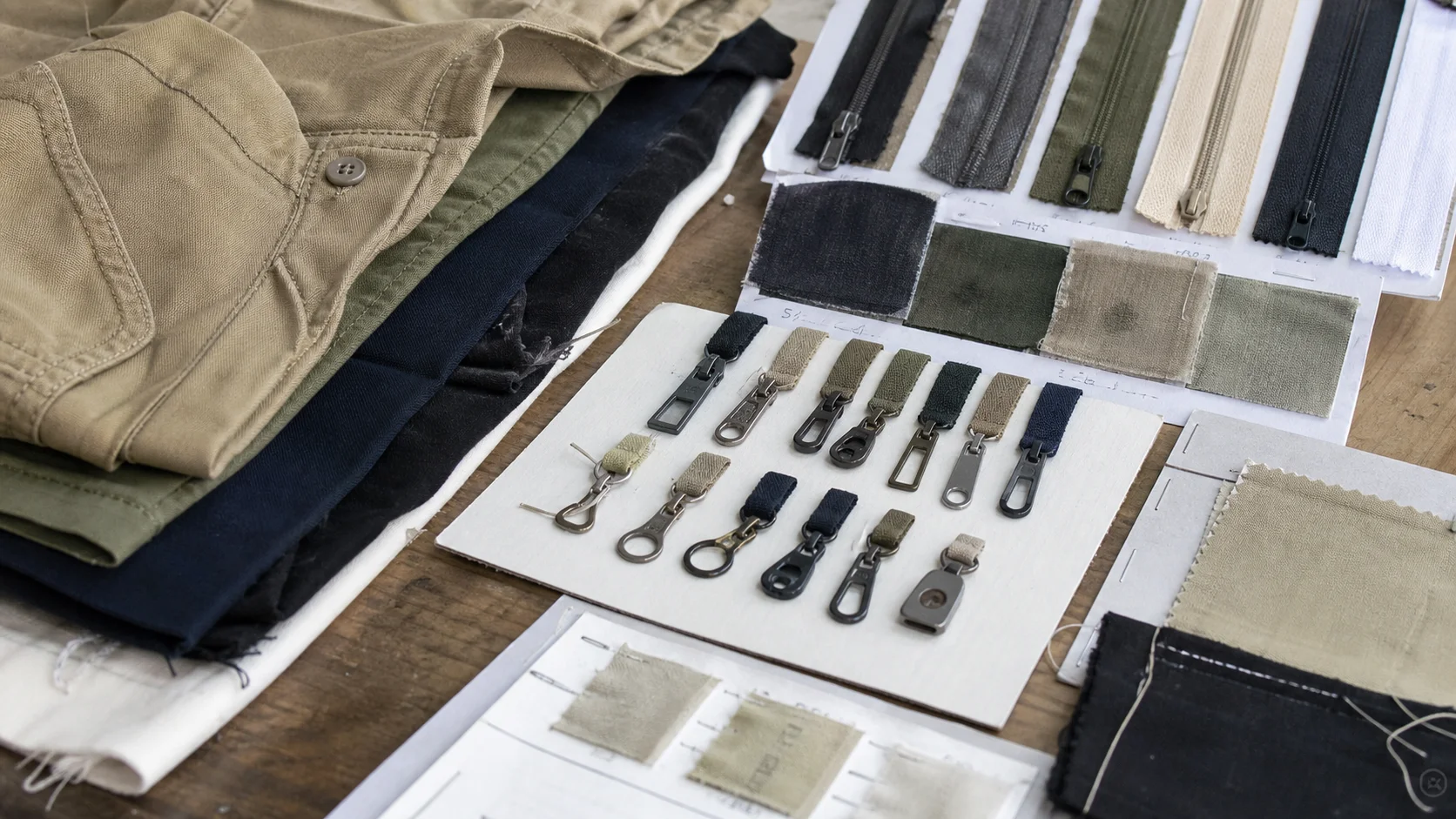
A practical audit framework for restaurant groups evaluating colorfastness on zip puller charms used in uniforms, aprons, outerwear, and branded...
Restaurant groups often focus on menu consistency, service speed, and front-of-house presentation. Uniforms and branded accessories sit in the same system, even if they are treated as a secondary purchase. A zip puller charm may look like a small detail, but in a restaurant environment it is exposed to friction, hand oils, cleaning chemicals, steam, heat, humidity, and repeated laundering. If the finish bleeds, fades, or transfers color, the problem shows up quickly across multiple locations.
A colorfastness audit for zip puller charms is not a decorative exercise. It is a procurement check that protects brand consistency and reduces reject rates after production starts. For restaurant groups, especially those ordering at scale, the audit should be written into the buying spec before samples are approved. That is the practical point: do not assume a small accessory can be approved on appearance alone.
Zip Puller Charm Colorfastness Audit for Restaurant Groups - Fabrikn production reference
A colorfastness audit checks whether the charm keeps its appearance when it is exposed to real-use conditions and normal manufacturing stress. For restaurant groups, that usually means color transfer, fading, staining, rub-off, surface cracking, and finish degradation. It also covers the visible consistency of a set, because a charm that passes a lab test can still look uneven if the lot control is weak.
The scope should be defined before you request quotations. That avoids comparing suppliers on different assumptions. A strong audit usually checks the following:
Not every charm needs every test. The right test set depends on the material and where the accessory is used. A metal charm with enamel faces different risks from a soft PVC or silicone puller. A printed charm on a woven pull tab has a different failure profile again. The audit should match the actual construction, not the sales sample.
Restaurant groups buy for consistency. A small accessory that varies from site to site weakens that consistency fast, especially when multiple outlets receive stock from different shipments. If a red charm turns slightly pink after wash testing, that may sound minor in a lab report. On a dining floor, it reads as a brand defect.
Colorfastness issues also create hidden cost. Returns and replacements are one layer. The bigger issue is the labor cost of sorting, rebagging, and redistributing stock across locations. If the group uses centralized procurement, one failed accessory can interrupt a uniform rollout or force a delayed launch for an opening.
There is also a hygiene and brand integrity angle. Surface degradation can trap dirt or make a charm look worn before its time. In hospitality settings, a worn-looking accessory communicates poor upkeep even when the core garment is fine. That is why the audit should be treated as part of the uniform spec, not as an optional finish check.
For branded restaurant accessories, the cheapest sample is rarely the lowest-risk buy. The correct comparison is not unit price alone. It is unit price plus failure risk, replacement cost, and the time lost in re-approval.
The base construction drives the audit. The term “zip puller charm” can include molded pieces, plated metal, printed tabs, silicone parts, embroidered tags, woven badges, leather-like components, and mixed-material assemblies. Each behaves differently.
Metal charms often rely on electroplating, powder coating, spray paint, or enamel fill. The main risks are surface abrasion, edge wear, corrosion, and color shift under cleaning exposure. Dark finishes can show rub wear quickly. Bright plated finishes can dull after repeated handling.
These are common for casual branded accessories because they are flexible and inexpensive at volume. The risks include ink migration, softening, tackiness, and color bleeding if the pigment is not stable. Heat and oil exposure are important here. Some colors can also vary across batches if the material formulation is not tightly controlled.
Printed graphics on textile straps or woven tabs need attention to dye stability, washing behavior, and edge fraying. The face print may look acceptable in a dry sample and fail once laundered. If the charm includes embroidery or heat transfer decoration, the adhesive layer becomes part of the risk profile.
Many restaurant group programs use a combination of materials, such as a metal ring, printed tag, and silicone emblem. Mixed assemblies create interface risks. One part may pass while another fails. A supplier spec should identify which element is being tested and which standard applies to each part.
A useful audit starts with a clear use case. State where the charm will be attached, how often it will be handled, and whether laundering is expected. A good supplier can only quote responsibly if the use environment is defined.
Write down whether the charm is for chef jackets, server aprons, bags, outerwear, or retail-style branded items. A charm on a zippered pouch carried by staff has a different risk profile from one worn on a washed uniform. If the item will not be laundered, the focus shifts toward rub resistance, UV exposure, and cleaning chemical resistance.
Ask for a full material breakdown. The answer should cover the base substrate, colorant type, coating, plating, print method, thread, adhesive, and any protective top layer. If the supplier cannot specify the composition, the audit cannot be complete.
For many restaurant groups, the relevant test set will include dry rub, wet rub, and wash testing. If the charm will be exposed to sun near windows or outdoor seating, add lightfastness. If it is likely to be cleaned with sanitizing agents, request chemical resistance screening. Do not over-test for the sake of it. Test the likely failure paths.
Colorfastness is only useful when the pass criteria are explicit. Use a simple approval matrix. Define acceptable shade variation, no visible transfer onto white cloth after rubbing, no cracking after bend cycles, and no peel or blistering on coated areas. If the supplier has in-house lab data, request it with photos and batch references.
Golden samples matter, but they are not enough. A charm can look right on a pre-production sample and drift during mass production. The audit should be repeated on pilot lots or first-batch production pieces, especially if the order volume is large or the product uses multiple color layers.
Restaurant groups often reorder accessories months later. If you do not keep the approved color standard, batch number, and test result, the next shipment may drift without anyone noticing until it reaches the floor. Keep a simple archive of approved samples and the tests used.
Sample approval should be more disciplined than a visual yes or no. The first sample is usually a concept check. The second sample should be closer to production materials. The third stage, if used, should confirm the final color and finishing process. For larger restaurant group programs, that sequence reduces confusion and gives the supplier a technical target.
Typical MOQ ranges for zip puller charms vary by material and process. Simple molded or printed pieces may start around 500 to 1,000 units per color or design. More complex plated or multi-part items often sit in the 1,000 to 3,000 unit range. Custom tooling, special color matching, or mixed materials can push the MOQ higher. The exact number depends on whether the supplier needs separate molds, plates, printing screens, or color batch setup.
Lead time also depends on process steps. A basic sample may take 7 to 14 days. Production lead time for a standard custom order often falls in the 20 to 35 day range after sample approval, but that is only a baseline. Tooling, color matching, raw material procurement, and inspection backlog can extend it. If the charm requires plating or multiple decoration stages, expect more variability.
Approval should happen only after the sample has been checked under practical conditions. Rub the sample against white cotton. Expose it to water and mild detergent if relevant. Check edge wear and surface transfer under bright light. If the product is for a restaurant group rollout, ask one or two site managers to review the visible finish under normal operating conditions. They will often catch practical issues that a procurement team may miss.
The more precise the spec, the fewer surprises later. A good purchasing brief for a zip puller charm colorfastness audit should include the following details:
Spec Item What to Define Why It Matters Base material Metal, PVC, silicone, woven, textile, mixed Determines test method and expected wear behavior Color reference Pantone, approved swatch, or physical master sample Prevents shade drift across batches Surface finish Gloss, matte, plated, painted, coated, printed Affects rub resistance and perceived quality Attachment method Ring, clip, thread loop, sewn tab, welded join Determines mechanical stress points Test standard Dry rub, wet rub, wash, light, heat, chemical exposure Defines the audit scope Acceptance criteria No visible transfer, no crack, no peel, no shade shift beyond tolerance Makes approval objective Packaging Bulk, individual bag, color-coded pack, moisture protection Reduces transit damage and contaminationFor decoration and printing projects, packaging is part of the quality system. If charms are packed loosely with abrasive hardware, the finish can be damaged before the customer ever opens the box. That damage may be blamed on colorfastness when the real problem is packing design.
If you are coordinating decoration, trimming, and garment branding through one supplier, the workflow on fabrikn.com/services/ can be used as a reference point for aligning sample development, decoration methods, and inspection checkpoints. For custom questions or program quotes, the route through fabrikn.com/contact-us/ is the cleaner option than sending a fragmented brief across multiple channels. Background on supplier capabilities and operating approach is usually easier to assess through fabrikn.com/about-us/.
Inspection failures in this category usually appear in predictable patterns. The issue is rarely one catastrophic defect. It is usually a cluster of small problems that become expensive at scale.
Color drift is one of the most common causes of rejection. It may come from raw material variation, inconsistent pigment mixing, or differences in curing temperature. Restaurant groups often notice this first when charms from different shipments sit side by side on the same uniform style.
If a charm transfers color onto a white shirt, apron, or towel, the unit is functionally defective even if the charm itself looks fine. This is especially important for dark reds, deep blues, blacks, and metallic finishes. Wet rub testing is worth the effort here because the problem often becomes worse with moisture.
Surface layers can fail after flexing, especially on soft substrates or parts with tight folds. A crack in a decorative coating is not only cosmetic. It can expose the base layer and create a visible quality drop within the first weeks of use.
Printing, embossing, or enamel fill that varies in position may not fail a strict colorfastness test, but it still causes brand inconsistency. For a restaurant group, that is a commercial problem. The charm must look like part of the uniform system, not like a sample lot.
Restaurant staff do not handle accessories with laboratory care. They wipe, wash, sanitize, and dry items as part of daily routines. If the finish cannot survive mild detergents or common cleaning agents, it is not suitable for the environment.
Inspection should include carton checks, sample checks, and random lot checks. If the supplier ships mixed colors in one pack, verify sorting accuracy before distribution. Rework at this stage is cheaper than site-level complaints after rollout.
It is tempting to focus on the visible sample and keep the specification light to move faster. That approach often backfires when the order reaches production. Better buying practice is to make a few tradeoffs explicit from the beginning.
First, choose between absolute visual sharpness and long-term durability. Some finishes look excellent on day one but degrade under cleaning and handling. Others look slightly less polished at first but hold up better across a long service cycle. For restaurant groups, durability usually wins unless the item is for limited promotional use.
Second, decide whether you want a single premium finish or a controlled mid-tier finish with tighter quality checks. A premium finish may carry a higher unit cost and longer lead time. A mid-tier option can be more stable if the supplier has solid process control. Do not assume higher price automatically means lower risk.
Third, align the specification with actual distribution scale. A 300-unit pilot does not behave like a 10,000-unit rollout across a regional chain. If the accessory will be reordered, lock the dye lot or color reference from the start. Reproducibility matters more than a one-off perfect sample.
If the project is part of a broader branded decoration program, it is usually worth consolidating approvals. One review cycle for the charm, print, trim, and packaging is more efficient than separate sign-offs that drift apart. That said, consolidating too much can also hide defects. Keep each component accountable to its own test and acceptance criteria.
A supplier brief for restaurant group zip puller charm colorfastness audit should be short, specific, and testable. Avoid vague requests like “make it durable” or “match the brand.” State the material, the use environment, the color target, and the required tests. If the supplier is worth working with, they will respond with questions that tighten the spec rather than broad promises.
Include these points in the brief:
A practical brief also states what will happen if the sample fails. Will the supplier revise the material, change the coating, or rerun color matching? Will the schedule reset? Those points should be agreed before tooling starts. That is the cheapest place to resolve risk.
For restaurant groups working across multiple locations, the best result usually comes from a conservative spec, a realistic MOQ, and a disciplined sample approval path. The goal is not to produce the flashiest charm. The goal is to deliver a branded accessory that stays consistent after handling, cleaning, and repeated service use.
Get a free quote from Fabrikn — your trusted B2B clothing manufacturer with 10+ years of experience. MOQ as low as 200 pieces.
Get a Free Quote →It checks whether the charm keeps its color and finish under real use conditions such as rubbing, washing, light exposure, and cleaning. For restaurant groups, the goal is to prevent shade drift, color transfer, and early wear across multiple locations.
Dry rub, wet rub, wash resistance, and lightfastness are the most common. If the item will be exposed to cleaning chemicals or heat, those should be added. The right test set depends on the material and where the charm will be used.
Typical MOQ ranges often start around 500 to 1,000 units for simple designs and can move to 1,000 to 3,000 units or more for complex, multi-material, or custom-finished pieces. Tooling, plating, and color matching can raise the minimum.
A basic sample may take 7 to 14 days. Production lead time often runs 20 to 35 days after sample approval, but this depends on tooling, raw material availability, finishing steps, and inspection workload.
Common causes include unstable pigments, weak coatings, poor curing, inconsistent batch mixing, and insufficient rub or wash resistance. Packaging damage can also create defects that look like colorfastness problems.
No. A pilot or first-production lot should also be checked. Sample approval confirms the concept. Production checks confirm that the supplier can repeat the result at scale.
Define the base material, color reference, finish, attachment method, test standards, acceptance criteria, packaging, and traceability requirements. The more specific the spec, the fewer downstream disputes.
For restaurant groups, the strongest purchasing decision is usually the least dramatic one: a clear spec, a practical test set, and a supplier that can repeat the result without relying on luck. That is what keeps a small accessory from becoming a large operational problem.