
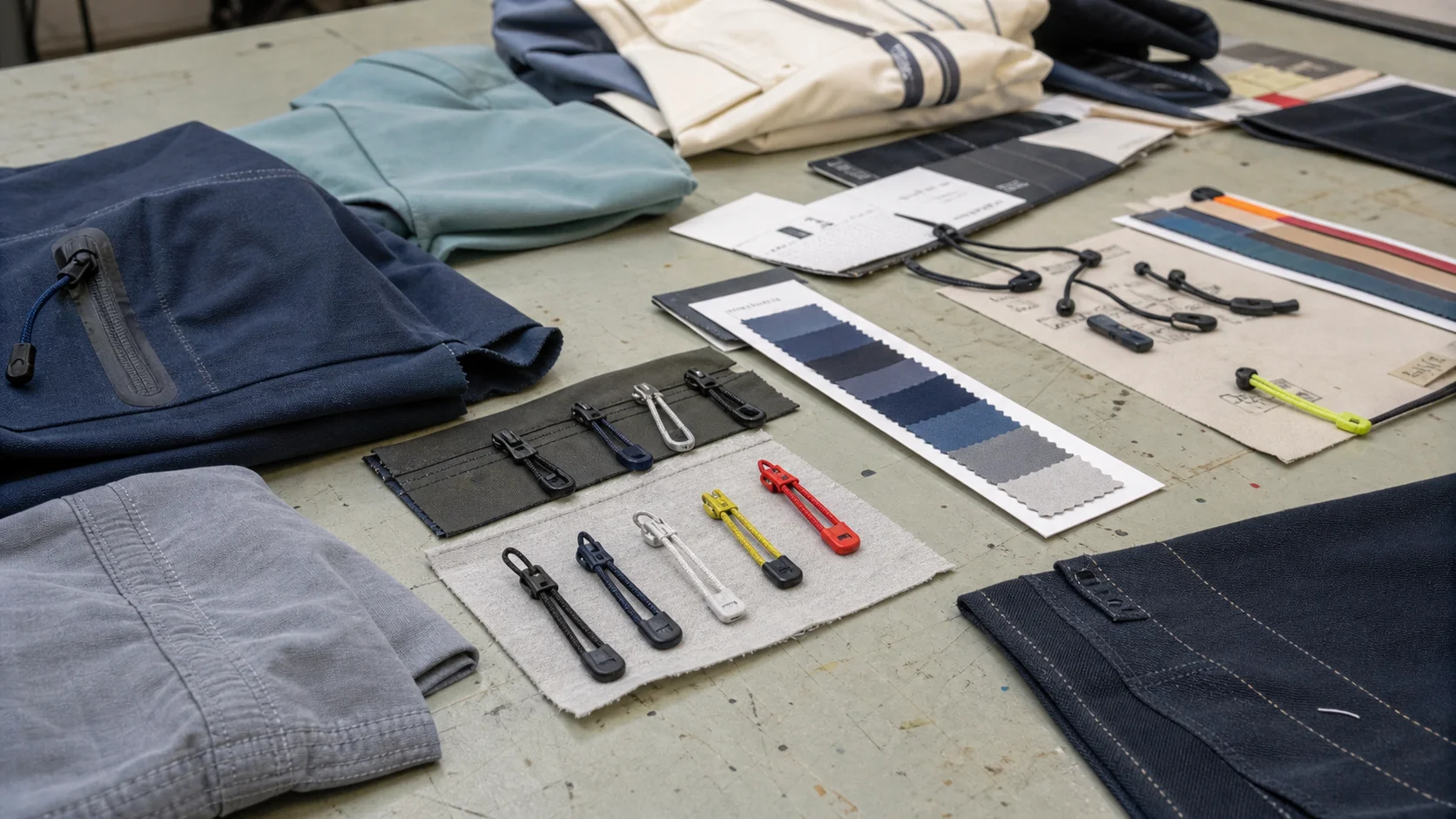
A practical SEO outline for event staffing teams to audit zip puller charm colorfastness, reduce fading risk, and confirm decoration durability before rollout.
Zip Puller Charm Colorfastness Audit for Teams - Fabrikn production reference
For event staffing teams, a zip puller charm can look like a small detail. In practice, it is one of the first branded components people touch, tug, and notice up close. If the charm carries color, a logo print, coating, enamel fill, or dyed finish, colorfastness becomes a sourcing issue, not just a decoration issue. A poor finish can rub off on uniforms, stain adjacent fabrics, or look faded after only a few shifts. That is a brand problem at ground level.
A proper zip puller charm colorfastness audit helps teams separate acceptable decoration from avoidable risk. The goal is simple: confirm that the color stays stable through wear, abrasion, sweat, moisture, cleaning, storage, and packing. For event staffing programs, where garments and accessories are often reused across many shows, the audit should be practical, repeatable, and tied to production specs rather than vague visual approval.
Event staffing teams operate in a difficult middle ground. Their apparel and accessories need to look polished, stay consistent across many wears, and survive fast turnover between assignments. A zip puller charm with unstable color can create a chain of issues:
The problem is more common than many teams expect. Decorative parts are often made from dyed polyester cord, painted alloy, plated zinc alloy, silicone, TPU, PVC, enamel-coated metal, or printed synthetic components. Each material handles color differently. A finish that looks rich on day one can become dull, sticky, or patchy after handling and cleaning.
For event use, the question is not whether the charm looks good in a sales sample. The question is whether it keeps its color under realistic wearing conditions. That is what the audit should answer.
A useful audit goes beyond a simple visual inspection. It should define where the charm will be used, how it will be worn, and what kind of finish is being evaluated. For event staffing teams, the audit scope normally includes the following:
The audit should also state whether the charm is a purely decorative item or a functional grip component. Functional pieces get more handling, more friction, and more visible wear. That distinction matters when deciding how strict the colorfastness requirement should be.
If any of those answers is uncertain, the risk level rises. That should be reflected in the approval process.
Colorfastness is tied to material choice. Two charms with the same visible color can perform very differently depending on the substrate and finish.
Material / Finish Common Strength Colorfastness Risk Dyed polyester cord Lightweight, flexible, low cost May bleed or fade if dyeing is weak or incomplete Printed TPU or PVC Bright colors, shape control Surface scuffing and ink transfer can occur Enamel-filled metal Sharp visual contrast, premium look Chipping or edge wear can expose base metal Painted alloy or zinc alloy Good for detailed shapes Paint adhesion and rub resistance vary widely Silicone Soft hand feel, durable shape Color can shift if pigments are not stable Plated metal with print Decorative, premium appearance Print wear and oxidation can affect color perceptionMaterial selection should be driven by use case, not only by appearance. For example, if the charm is attached to a jacket used at indoor conferences, a printed finish may be acceptable. If it will be used in outdoor promotions, a more stable dyed or molded-color approach is usually safer. When a supplier says a finish is “colorfast,” that should be treated as a claim that still needs to be verified.
There is no single universal test for every zip puller charm. The right choice depends on the material and the level of risk. Event staffing teams usually benefit from a small, targeted test package rather than an overcomplicated lab list that nobody uses in production.
Not every supplier can run every test in-house. That is normal. What matters is whether the production route matches the risk. If a charm is likely to rub against a white shirt collar, dry and wet crocking are more relevant than a formal wash test. If it will be packed and unpacked repeatedly, abrasion and surface transfer deserve attention.
A good audit does not ask whether the charm looked fine in a photo. It asks whether the color will stay put after handling, transport, and repeated use.
Acceptance criteria should be written before production starts. Vague approval such as “looks okay” often leads to disputes later. If the supplier cannot provide test results, the buyer should at least request sealed sample retention, batch traceability, and a clear fallback plan if rub-off appears during inspection.
Specs should be simple enough for the factory to follow and detailed enough to protect the buyer. For a zip puller charm colorfastness audit, the spec should include the decoration method, the color standard, the performance requirement, and the inspection method.
If the color is critical to the brand, a physical reference sample is often better than relying on a digital mockup. Screens vary, and color names are not reliable enough by themselves. A supplier can match a reference sample more accurately than a description like “bright teal” or “deep coral.”
It is also smart to specify the interaction with the garment. A charm that is suitable for a dark polyester jacket may not be safe for a white cotton shirt. In some cases, the buyer should ask the factory to test the charm against the actual target fabric, not a generic lab swatch.
The sample process is where many issues can be caught early, but only if the team treats it as a controlled approval stage. For decoration-heavy items, a single sample is not enough. A practical workflow usually includes three steps:
For event staffing teams, sample approval should include handling tests, not only visual checks. Rub the charm against a white cloth under dry conditions. Repeat with light moisture if the item is likely to see sweat or rain. If the sample leaves visible color on the cloth, that is a warning sign. It does not always mean rejection, but it does require a corrective action before bulk production.
Production should not begin until the supplier confirms the final colorant, print method, coating thickness, or cure process. Colorfastness issues often come from process variation, not just material choice. A correct formulation applied poorly can still fail.
MOQ is one of the first practical constraints in decoration and printing work. For custom zip puller charms, typical MOQs often range from 300 to 3,000 pieces depending on material, complexity, and tooling. Simple printed or molded designs may sit near the lower end. Multi-color enamel, plated metal, or custom molds usually push the MOQ higher.
Lead time also depends on process. A straightforward printed charm may be ready faster than a multi-step metal piece requiring molding, plating, filling, curing, and inspection. In many cases, sample approval can take 7 to 15 days, while bulk production may take 15 to 35 days or longer if the order needs custom tooling, special coatings, or third-party testing.
Teams need to judge the tradeoff between speed and risk. A faster finish may save time, but if the colorfastness data is weak, the event team may pay for it later through replacements or brand inconsistency. A more robust finish can cost more upfront and add days to lead time, yet reduce claims and reorders.
If the event calendar is fixed, build in approval time for correction rounds. Decoration items that fail a colorfastness check often need remaking from the decoration stage, not just a quick touch-up. That is where schedules get squeezed.
Final inspection should focus on the risks that actually cause field failure. A visual gloss check is useful, but it is not enough. Common issues include:
Inspection teams should compare finished items against the approved sample under consistent lighting. They should also check whether the packaging can scratch the surface. A good-looking charm can still fail if packed loose with metal accessories or tossed into abrasion-heavy cartons.
For event staffing teams, the safer approach is to treat the charm as part of the uniform system. That means reviewing the garment, accessory, packaging, and handling plan together. A strong finish on the charm is wasted if it damages the shirt it is meant to complement.
Teams handling many activations need a repeatable sourcing system. The best results usually come from a short, disciplined checklist rather than a large document nobody reads.
If the team is still defining its sourcing approach, it helps to work with a supplier that understands decoration, printing, and finish control as part of the same job. A clear brief can save time on the front end. Fabrikn’s service overview is a practical place to start if you need to compare production options and ask the right questions: https://fabrikn.com/services/
For programs with recurring seasonal orders, it is also worth keeping the approval chain short. Too many decision-makers can slow down sample sign-off and increase the odds of drift between batches. One person should own final sign-off against the gold sample, while others can review fit, branding, or budget.
When the brief needs tightening or the timing is tight, direct communication matters. You can reach out here: https://fabrikn.com/contact-us/
If your team needs to understand the broader production context before placing a custom decoration order, company background and capability pages can help frame expectations. See: https://fabrikn.com/about-us/
Before approving bulk production, make sure the following points are resolved:
This checklist sounds basic, but it catches many of the problems that show up later as returns, rework, or inconsistent event presentation. In decoration and printing, the small items are often the ones that make the biggest impression.
A zip puller charm colorfastness audit is not a niche exercise. For event staffing teams, it is a practical control on brand quality, garment safety, and replacement cost. When the finish is stable, the charm does its job quietly. When the finish fails, it is obvious immediately, especially on light-colored uniforms and under close customer contact.
The right approach is measured and specific: define the material, set the color reference, test the likely exposure risks, approve samples carefully, and inspect the shipment for rub-off or wear. That process protects the budget and keeps event uniforms looking consistent across the season.
For decoration and printing programs, the best suppliers are the ones willing to discuss process, testing, and tradeoffs in plain terms. That is usually a better sign than glossy sample photos alone.
Get a free quote from Fabrikn — your trusted B2B clothing manufacturer with 10+ years of experience. MOQ as low as 200 pieces.
Get a Free Quote →It is a review process that checks whether the charm’s color stays stable during use, handling, moisture exposure, friction, and cleaning. The audit helps prevent fading, bleeding, or color transfer onto garments and packaging.
Dry and wet rubbing, moisture exposure, and abrasion are usually the most relevant. If staff wear the item for long shifts or outdoors, sweat and light exposure become more important too.
Typical MOQs often range from 300 to 3,000 pieces, depending on material, tooling, and decoration complexity. Simple designs can be lower, while multi-step metal or enamel pieces often require larger minimums.
Development and pre-production sampling often takes 7 to 15 days, but timing depends on artwork complexity, material selection, and whether the supplier needs to remake the sample after changes.
Yes. A sample may look excellent at first glance yet still rub off, bleed, or fade after handling or exposure to moisture. That is why a handling test and written acceptance criteria matter.
When the risk is high, yes. Testing against the actual fabric gives a more realistic picture of staining or rub-off than using a generic swatch.