
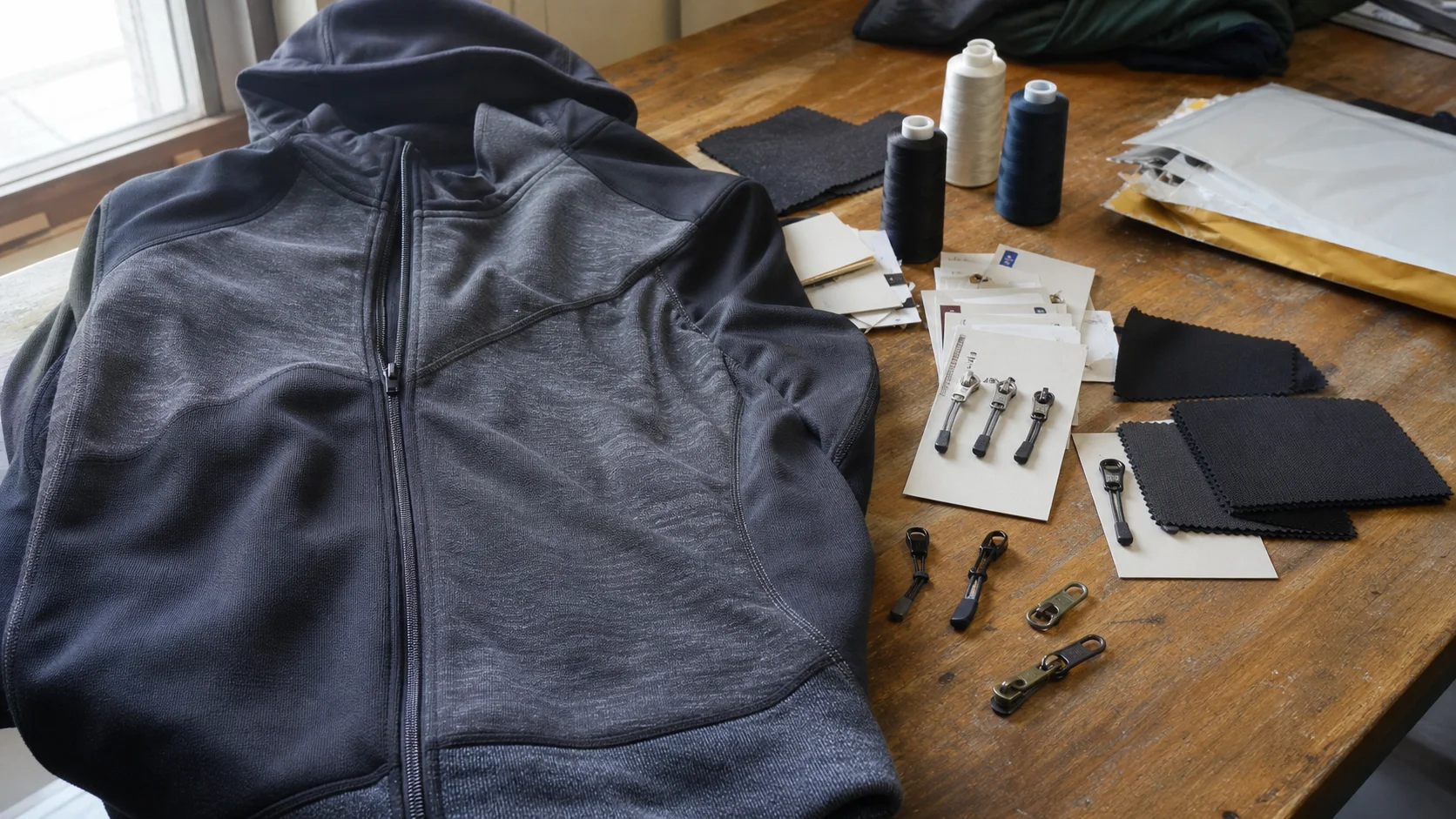
A buyer-focused compliance checklist for zip puller charms used in gym programs, covering materials, safety, testing, artwork approval, and production...
Zip Puller Charm Compliance Checklist for Gym Buyers - Decoration & Printing manufacturing guide
Zip puller charms look small on a gym product, but they carry a surprising amount of sourcing risk. A charm attached to a hoodie zipper, training jacket, gym bag, pouch, or warm-up vest is handled constantly, pulled under stress, exposed to sweat, washed repeatedly, and often treated as part of the brand identity. If the charm breaks, flakes, stains, catches on fabric, or fails restricted substance testing, the issue can affect the whole program rather than a single decoration component.
For gym program buyers, the right question is not only whether a supplier can make an attractive charm. The more useful question is whether the zip puller charm manufacturer can control materials, plating, color, attachment strength, sharp edges, labeling, testing, packing, and repeat orders across a full apparel or accessory rollout.
This checklist is written for sourcing teams, brand buyers, private-label gym programs, fitness chains, merchandising managers, and apparel developers ordering decorated garments or gym accessories at scale. It focuses on compliance and production judgment rather than design inspiration. The goal is to help buyers brief suppliers clearly, compare quotes fairly, and avoid preventable failures before bulk production starts.
A zip puller charm is usually treated as a trim, decoration, or branded accessory. In practice, it sits between decoration and functional hardware. That dual role is why it needs stricter review than a hangtag or flat print. A user pulls it with force, bends it, rubs it against skin and fabric, and may wash or sweat through it depending on where it is attached.
Gym buyers often use zip puller charms to give a product line a premium or coordinated look. They may appear on staff jackets, member welcome kits, retail hoodies, branded gym bags, team travel gear, yoga pouches, or event merchandise. In these programs, the charm is not an isolated detail. It supports brand consistency across multiple SKUs.
The compliance risk usually comes from four areas: unsafe materials, weak attachment, poor finish durability, and unclear documentation. A charm made from plated alloy may pass visual approval but fail nickel release, lead, cadmium, or coating adhesion requirements. A PVC or silicone charm may look clean in a sample but migrate color onto pale fabric after heat, moisture, or packing pressure. A metal ring may detach during pull testing. A sharp corner can damage mesh, fleece, or coated nylon.
Small components can also delay large programs. If the charm fails testing after garments are already sewn, replacement becomes expensive. The zipper pull may need to be removed manually, repacked, or replaced on finished goods. That is why gym buyers should approve the charm as early as possible, ideally before garment bulk cutting and before any final packaging plan is locked.
Not every gym program needs the same charm specification. A budget member giveaway pouch does not need the same hardware standard as a premium retail jacket. The compliance checklist should be scaled to the selling channel, target user, country of sale, and product lifespan.
Hoodies, track jackets, training jackets, quarter-zips, and warm-up tops often use branded pullers on front zippers or pockets. For apparel, weight and wash performance are major concerns. A heavy charm can distort lightweight knits or bounce during movement. A poorly plated charm can chip in home laundry. A rigid charm on a pocket zipper may scratch adjacent fabric.
Duffel bags, shoe bags, toiletry pouches, yoga mat bags, belt bags, and backpacks can tolerate larger charms, but attachment strength becomes more important. Bag users pull harder than apparel users, especially when a zipper is under load. The charm should be tested with the actual zipper slider and ring, not only as a loose component.
Fitness brands often use charms as part of launch kits, loyalty programs, seasonal drops, or event merchandise. These orders may have tighter delivery windows and more visible branding expectations. A color mismatch between charms, embroidery, labels, and packaging can weaken the program presentation, even when the item is technically functional.
Any product intended for children or youth programs needs extra caution. Small parts, detachable components, lead, cadmium, phthalates, and choking risk requirements vary by market. Buyers should not treat youth gym merchandise as ordinary adult apparel. The supplier must know the target age range and destination market before quoting.
A capable zip puller charm manufacturer should be able to explain material options, tooling limits, finishing methods, testing support, packing methods, and expected tolerances. A low quote without these details is not enough for a gym program with repeat orders or multiple SKUs.
Start by separating manufacturers from traders when that distinction matters. A trading company can still be useful, especially for consolidated apparel programs, but the buyer should know who controls tooling, molding, plating, printing, and assembly. If a supplier outsources plating, painting, or silicone molding, the compliance chain becomes longer. That is not automatically a problem, but documentation and accountability must be clear.
A supplier that cannot describe tolerances should be treated carefully. Charm production involves variation. Metal casting can show tiny surface pits. Soft PVC can have slight color bleed at raised edges. Silicone can attract dust. Epoxy doming may show small bubbles if process control is weak. Buyers need suppliers who can define acceptable and unacceptable variation before bulk.
For broader apparel development and trim coordination, buyers can review manufacturing support through Fabrikn services. A charm decision is easier when it is reviewed alongside zipper type, garment fabric, decoration placement, packing method, and final inspection requirements.
The material choice drives most compliance, durability, and price outcomes. Buyers should not approve a charm based on appearance alone. The same shape can be made in zinc alloy, brass, stainless steel, aluminum, soft PVC, silicone, TPU, leather substitute, woven tape, cord, or mixed construction. Each option has tradeoffs.
Zinc alloy is common for custom logo charms because it supports molded shapes, raised logos, plating, and enamel fill. It is usually cost-effective for medium and large runs, but buyers must pay attention to lead, cadmium, nickel release, plating adhesion, and corrosion resistance. Zinc alloy also adds weight. On lightweight gym apparel, a heavy charm can feel cheap rather than premium.
Brass and stainless steel can offer stronger performance for some applications, though they may increase cost. Stainless steel is useful when corrosion resistance is important, but it is less flexible for some molded logo effects. Aluminum is lighter, but the finish and perceived value depend heavily on process quality.
Soft PVC is popular for colorful raised logos and flexible shapes. It is often used on bags, youth merchandise, and promotional gym accessories. The main risks are phthalates, color migration, odor, and low-temperature cracking depending on formulation. Buyers should specify phthalate-free requirements when relevant and request testing aligned with the destination market.
Rubber-like materials vary widely. Some suppliers use PVC while calling it rubber. Others use silicone or TPU. The buyer should ask for the exact material name and compliance profile. Vague material descriptions create problems when testing begins.
Silicone is flexible, soft to touch, and useful for fitness products where skin contact or repeated handling is expected. It can be a good option for gym bags and casual apparel, especially where metal noise or scratches are concerns. Color consistency and dust attraction should be checked. Silicone charms may also need higher MOQs for custom molded shapes.
Woven tape, jacquard tape, paracord-style pullers, heat-transfer tabs, and molded cord ends can be practical for performance apparel. They are lighter than metal and often quieter in use. The risks shift toward fraying, dye migration, abrasion, and attachment strength. For sweaty gym environments, colorfastness to perspiration should be considered.
Leather or PU tabs can look premium on lifestyle gym bags and studio merchandise. They need testing for colorfastness, abrasion, and restricted substances. PU coatings can crack if low-grade material is used. Leather may not fit vegan or animal-free brand policies, so the material claim must be checked before approval.
Restricted substance compliance depends on the selling market, product category, user age, and brand policy. Gym buyers should not assume the charm is exempt because it is small. A failed trim can block shipment or force rework of finished goods.
Common areas to review include lead, cadmium, nickel release, azo dyes, phthalates, formaldehyde, PAHs, organotin compounds, heavy metals in coatings, and restricted flame retardants where relevant. Requirements may be driven by regulations such as REACH in the European Union, CPSIA in the United States for children’s products, California Proposition 65 warning considerations, and brand-specific restricted substance lists.
Charm Type Key Compliance Risks Suggested Buyer Action Plated zinc alloy Lead, cadmium, nickel release, plating adhesion, corrosion Request material declaration, plating details, and recent heavy metal or nickel test reports where applicable. Soft PVC Phthalates, odor, heavy metals in pigments, color migration Specify phthalate-free requirements and test actual colors used in production. Silicone Color consistency, dust attraction, odor, pigment compliance Approve physical color standards and check surface cleanliness after packing. Textile tape or cord Azo dyes, colorfastness, fraying, strength loss after wash Test colorfastness to washing, rubbing, and perspiration if used on apparel. PU or synthetic leather DMF, coating cracking, color transfer, brand material claims Confirm composition and test for abrasion and colorfastness.Testing should use production-intent materials. A generic report from a previous black PVC item does not automatically cover a new red charm with different pigment. A plating report for one finish may not cover another finish. If the charm has multiple materials, each material may require review.
Practical buying rule: if the charm touches skin, fabric, or a child’s product, treat it as a compliance component rather than a decorative afterthought.
Design review should happen before tooling. Once a mold is cut, changing the shape can add cost and delay. A logo charm that looks good in a flat artwork file may be too thin, too sharp, too heavy, or too detailed for stable bulk production.
Gym buyers should check the charm against the actual product. A jacket pocket puller has different requirements from a duffel bag puller. A yoga pouch used near delicate leggings should avoid rough metal corners. A training jacket worn during movement should not have a long hard charm that swings or taps.
Typical charm sizes vary by product. Apparel zipper pull charms are often around 15 mm to 35 mm in length, depending on the zipper and garment style. Bag charms may run from 25 mm to 60 mm or larger. These are not compliance limits, but they are useful starting points. Oversized charms may look premium in a photo and feel annoying in actual use.
Weight should be checked in grams per piece and tested on the finished product. For lightweight knits, even a few extra grams can matter. Buyers should ask the supplier to provide a sample weight and compare it across material options.
A zip puller charm is only as reliable as its attachment. Failures often happen at the jump ring, split ring, cord loop, molded hole, rivet, or connector rather than the main logo piece. That means the complete assembly needs testing.
Pull strength should be specified based on product use. A delicate apparel pocket pull may not need the same requirement as a loaded gym duffel zipper. Still, buyers should set a practical minimum with the supplier and test the actual assembly. A common internal target range for small apparel pullers may sit around 5 kg to 10 kg of pull resistance, while heavier bag applications may require higher values. The correct standard depends on the brand’s quality manual and product type.
Testing should include straight pull and angled pull where possible. Users rarely pull zippers perfectly straight. They tug at awkward angles, especially on overpacked bags or tight pockets. If the ring opens, cord slips, or molded hole tears, the design needs adjustment before bulk.
For products sold as gym or training gear, repeated stress matters more than one-time strength. A puller may pass a single tug and still fail after 500 uses. Buyers with premium or repeat retail programs should consider cycle testing, especially for bags and jackets positioned for daily use.
Finish quality is where many charm orders become difficult. A buyer may approve a clean development sample, then receive bulk goods with cloudy plating, enamel overflow, color mismatch, dull logo edges, scratches, or inconsistent epoxy domes. These are process-control issues, not just cosmetic preferences.
Color matching should use a physical standard. Pantone references are helpful, but molded PVC, silicone, enamel, woven tape, and printed coating all reflect light differently. A Pantone number on paper will not look identical on a raised rubber charm. Buyers should approve a real material swatch or pre-production sample under standard lighting.
For gym programs with multiple decoration methods, color coordination matters. A red charm, red embroidery, red heat transfer, and red woven label may all look different. Decide which component is the master color standard. Without that decision, suppliers may each match separately and create a mixed visual result.
Metal finishes such as nickel, gunmetal, matte black, antique brass, rose gold, and brushed silver need clear finish references. Matte coatings can scratch. Black plating can reveal silver base metal at edges. Antique finishes vary by batch. High-polish finishes show fingerprints and small scratches more easily.
Buyers should request coating adhesion checks, corrosion review, and packing protection for plated parts. For gym environments, sweat exposure should not be ignored. Sweat can accelerate tarnish or discoloration, especially with low-grade plating.
A charm must reproduce the logo at production scale. Very small text, thin lines, gradients, and complex icons may not work cleanly. Raised and recessed details need minimum line thickness. Printed logos may allow finer detail but can wear faster if not protected.
A practical supplier should advise when artwork needs simplification. If every supplier says a complex logo is easy at a very small size, buyers should be cautious. Tooling has physical limits.
A disciplined sample process prevents expensive rework. The sampling path should move from artwork confirmation to material sample, prototype, pre-production sample, and sealed bulk standard. For simple stock pullers, the process may be shorter. For custom molded charms, buyers should not skip approval stages.
Stage Buyer Review Risk if Skipped Artwork and technical drawing Size, thickness, logo position, material, finish, connector type Mold is made with wrong scale, weak areas, or poor logo detail. Material and color sample Hand feel, color, surface, weight, flexibility Bulk color or material does not match brand expectation. Prototype or mold sample Shape accuracy, edge safety, attachment compatibility Charm looks good alone but fails on the zipper or product. Pre-production sample Final material, final finish, final connector, final packaging Bulk production uses unapproved substitutions. Sealed approval sample Reference for inspection and dispute resolution Inspection standards become subjective.For a custom charm, sample lead time often ranges from 7 to 20 days after artwork approval, depending on tooling, material, and finish. More complex shapes, plated finishes, epoxy doming, multiple colors, or custom connectors can extend the timeline. Buyers should avoid placing charm development at the end of the garment calendar. Trim delays can hold up finished product shipments.
When approving samples, comments should be specific. “Make it better” is not useful. Better comments include “increase ring wire thickness,” “round the bottom corner,” “reduce charm weight by 20 percent,” “match approved black silicone swatch,” or “remove visible injection gate mark from front face.”
MOQ depends on material, tooling, color count, process, and supplier setup. Buyers should treat MOQ quotes as negotiable within reason, but very low MOQs may carry higher unit cost, limited color choice, or weaker customization.
Typical custom zip puller charm MOQ ranges are often:
These ranges are only practical benchmarks. A supplier may accept a smaller trial order with a tooling charge, or require higher MOQ for special plating, custom colors, or factory scheduling. The better comparison is total landed program cost, not unit price alone.
The cheapest charm is rarely the best choice for a gym program that expects repeat use. That said, premium hardware is not always justified. A short-run event pouch may be better served by a simple textile puller than a custom plated charm. A high-margin retail gym bag can justify custom molded branding if it improves perceived value and survives use.
For buyers still defining the full product program, contacting Fabrikn can help align charm selection with apparel, accessory, and decoration requirements before final supplier commitments are made.
Lead time for zip puller charms is not only production time. It includes artwork review, tooling, sampling, testing, buyer approval, bulk production, inspection, packing, and transit. Delays often happen because one step is missing from the calendar.
A simple stock puller may ship within a few days if inventory is available. A custom charm usually needs more time. Typical development and production timing may look like this:
Several factors can extend lead time. Custom plating can be slower than standard finishes. Multiple charm colors require separate setup and sorting. Peak apparel seasons can reduce factory capacity. Lab failures can trigger reformulation or rework. Buyer approval delays can be just as damaging as supplier delays.
The safest approach is to approve trims before garment production reaches the final sewing stage. If charms are attached during garment assembly, late charm arrival can stop the line. If charms are attached after sewing, the buyer should still allow time for manual attachment, inspection, and repacking.
Final inspection should include both visual and functional checks. A charm can look acceptable in a sealed bag and still fail when pulled. The inspection plan should reflect the product risk, order size, and sales channel.
AQL levels should match the buyer’s quality policy. Many apparel buyers use general inspection frameworks such as AQL 2.5 for major defects and AQL 4.0 for minor defects, but the correct level depends on brand standards and product risk. Safety issues, restricted substance failures, sharp edges, or detachable small parts on children’s items should not be treated as minor cosmetic problems.
Inspectors should compare bulk against the sealed approval sample. They should check dimensions with calipers where needed, test a sample of pull strength, review surface quality under adequate lighting, and confirm packing by SKU. For apparel, the charm should be checked on the garment, not only in a trim carton.
For wash-use apparel, buyers should consider testing samples after laundering. A charm may pass initial inspection and still chip, rust, crack, or bleed after wash. For gym bags, abrasion and zipper cycle checks are more relevant than laundering unless the bag is marketed as washable.
Inspection should not rely only on a front-facing product photo. The connector, back side, edge, and attachment point carry much of the failure risk.
Packaging protects both the charm and the finished product. Metal charms can scratch each other if packed loose. Soft PVC or silicone charms can attract dust, deform under pressure, or transfer color if packed tightly against pale materials. Painted or plated parts may need tissue, polybags, trays, or dividers.
If charms are shipped separately to an apparel factory, carton labeling must be precise. Labels should show style number, color, charm design, finish, quantity, purchase order, destination factory, and any special handling instructions. Mixed cartons are a common cause of production errors.
If charms are attached before shipment, final packing should prevent rubbing. A metal puller on a jacket can scratch coated fabric or snag mesh during transit if not positioned carefully. For premium retail goods, small protective sleeves or tissue placement may be justified.
Buyers should also decide who is responsible for shortage and overage control. Small trims are easy to miscount. A 2 percent shortage can stop production if the garment order needs one charm per unit and no buffer exists. Ordering a small overage is often sensible, especially for custom trims with long replenishment lead times.
Documentation should be requested before bulk production, not after a problem appears. The exact file set depends on the market and brand policy, but a basic compliance pack for zip puller charms should be structured and traceable.
Document Purpose Buyer Check Material specification sheet Confirms material, finish, dimensions, connector, and color Match against approved sample and purchase order. Bill of materials Lists charm body, coating, ring, cord, adhesive, paint, or packaging Check all components are included, not only the visible charm body. Restricted substance declaration States supplier commitment to relevant chemical limits Confirm it references the buyer’s market and product category. Third-party test report Supports chemical or performance compliance Check date, sample description, material, color, and test method. Inspection report Records final quality status before shipment Review defects, sample size, photos, and pass/fail criteria. Packing list Controls quantity by SKU and carton Match to production needs and factory receiving plan.Test reports should be read carefully. A report for “metal accessory” without a clear photo or description may not prove compliance for a specific custom charm. A report that is several years old may be less useful if the supplier changed material, coating, pigment, or subcontractor. Buyers should request updated testing when risk is high or when regulations, materials, or destination markets change.
For brand-level supplier evaluation, company background matters too. Buyers can review Fabrikn’s background when assessing broader apparel manufacturing support and sourcing alignment.
Clear questions reveal whether a manufacturer understands compliance or is only quoting decoration. The following list can be used in RFQs, supplier onboarding, or pre-sampling calls.
Good suppliers answer these questions directly. Weak suppliers often respond only with “yes” or “no” and avoid technical details. For gym program buyers, that lack of detail is a warning sign. The charm may be small, but the supplier still needs process discipline.
The checklist below can be adapted into an RFQ, product development form, or pre-production approval sheet.
Not every program needs the most expensive charm. Good sourcing is about matching the specification to the product promise. For a low-cost gym giveaway, a simple cord puller with a printed tab may be more appropriate than a custom plated metal charm. It reduces weight, cost, and compliance complexity. For a premium retail duffel or studio jacket, a custom molded charm can support the brand position if the finish and attachment are controlled properly.
Metal is often chosen for perceived value, but it brings plating, weight, corrosion, and scratch risks. Soft PVC gives strong color and dimensional branding, but chemical compliance and migration must be checked. Silicone feels modern and flexible, though it may need careful dust control and color approval. Textile pullers are practical and lightweight, but they may not deliver the same premium logo effect.
The best buying decision is usually the one that survives actual use. Ask for the charm on the product, pull it repeatedly, rub it against the fabric, wash it if the garment is washable, and check it after packing pressure. A charm that looks slightly simpler but performs consistently is often better than a complex design that produces defects in bulk.
Get a free quote from Fabrikn — your trusted B2B clothing manufacturer with 10+ years of experience. MOQ as low as 200 pieces.
Get a Free Quote →A zip puller charm is a branded or decorative component attached to a zipper slider. In gym products, it may be used on jackets, hoodies, bags, pouches, backpacks, or accessory kits. It can improve grip, add branding, or create a coordinated product look.
Typical MOQs range from about 300 to 1,000 pieces for many custom metal charms, 500 to 1,000 pieces for soft PVC charms, and 500 to 2,000 pieces for silicone charms. Stock options may start lower. MOQ depends on material, tooling, color count, finish, and supplier capacity.
There is no single best material. Metal can look premium but may add weight and plating risk. PVC supports colorful raised logos but needs chemical and migration checks. Silicone is flexible and soft, while textile pullers are lightweight and practical. The best choice depends on product type, price point, compliance requirements, and expected use.
Common tests may include lead, cadmium, nickel release, phthalates, azo dyes, colorfastness, corrosion, coating adhesion, pull strength, and sharp-edge review. The exact test plan depends on the material, destination market, user age, and brand restricted substance list.
Only with caution. The report should match the actual material, color, finish, and component construction. A report for a different pigment, coating, or charm type may not cover the new order. Updated testing is sensible when risk is high or when selling into regulated markets.
Custom development often takes 7 to 20 days for sampling after artwork approval, with additional time for testing and bulk production. Bulk production may take 10 to 30 days depending on quantity, finish, and factory schedule. Complex tooling, custom plating, and lab testing can extend the timeline.
Common failures include color mismatch, scratches, weak rings, sharp edges, plating defects, logo distortion, cracked molded holes, odor, color transfer, and incorrect SKU packing. Attachment failure is especially important because the charm is pulled repeatedly during use.
Both checks are useful. Loose trim inspection can catch material and surface defects before attachment. Finished goods inspection confirms the charm works with the actual zipper, garment, or bag. For apparel and bags, the final product check is important because use conditions change once the charm is attached.
Approve a technical drawing, test production-intent materials, review the charm on the actual product, confirm restricted substance requirements, set pull strength expectations, and seal a pre-production sample. Clear documentation before bulk production prevents many disputes later.
They can be, but the requirements are stricter. Buyers must consider small parts, choking risk, lead, cadmium, phthalates, sharp edges, and the destination market’s children’s product rules. Detachable charms on young children’s products need careful review before approval.