
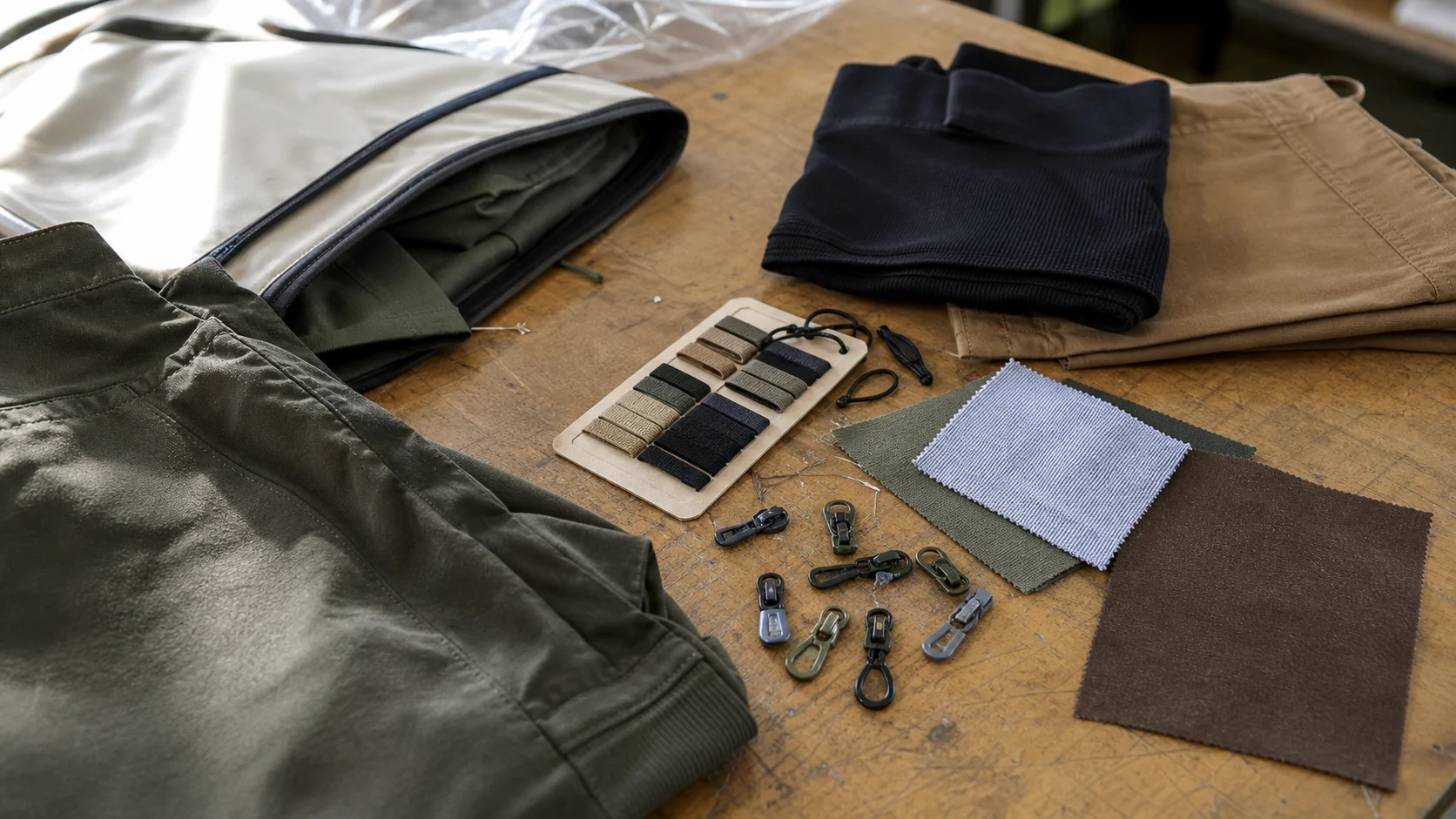
A retail operations checklist for custom zip puller charms covering safety, labeling, decoration durability, packaging, audits, and store-ready acceptance...
Zip Puller Charm Compliance Checklist for Retail Teams - Decoration & Printing manufacturing guide
Custom zip puller charms look simple on a sample rail. In bulk production, they become a compliance item that touches product safety, branding, packaging, labeling, warehouse handling, and customer returns. For retail operations teams, the risk is not only whether the charm looks attractive. The bigger question is whether every zip puller charm can survive normal use, meet the right restricted substance rules, avoid sharp or detachable hazards, and arrive consistently across all stores or e-commerce channels.
This checklist is written for retail, merchandising, sourcing, quality, and operations teams managing custom zip puller charms on apparel, bags, outerwear, children’s wear, sportswear, travel accessories, and promotional goods. It focuses on practical purchasing controls: what to specify, what to approve, what to test, and what to inspect before goods leave the factory.
A zip puller charm should be treated as a functional trim with decorative value, not as a loose accessory added at the end of production. The earlier it is specified, tested, and approved, the fewer surprises appear at final inspection.
A custom zip puller charm sits in a high-contact area. Shoppers touch it in store. Wearers pull it repeatedly. Children may bite or twist it. Warehouse teams may compress it during carton packing. If the charm cracks, tarnishes, detaches, stains the garment, or fails chemical limits, the issue can spread across an entire production lot.
For retail operations teams, the cost of a failed charm is usually disproportionate to the trim value. A low-cost metal or rubber part can trigger product holds, relabeling, rework, replacement parts, online complaints, or returns. A charm used on a jacket, backpack, hoodie, or pouch may also affect how the product is categorized for testing, especially when the item is intended for children.
The purchasing decision should not be based only on the cheapest unit cost. The better approach is to compare the full landed risk: mold cost, MOQ, testing cost, color stability, pull strength, replacement feasibility, production timing, and the supplier’s ability to keep records by batch.
Retail teams should first define where and how the custom zip puller charm will be used. A charm for a luxury outerwear zipper does not carry the same risk profile as a charm for a child’s backpack or an activewear pocket. The compliance checklist should be tied to the product category, destination market, age grade, and expected use.
This scope matters because testing requirements can change quickly. For children’s goods, small parts, torque, tension, sharp point, sharp edge, and restricted substance controls are usually more demanding. For adult apparel, the focus may lean more toward nickel release, heavy metals, colorfastness, corrosion resistance, and durability. For bags and travel products, pull strength and abrasion can be the main concern.
Teams building a wider retail trim program can review manufacturing capabilities and production categories through Fabrikn’s services page before briefing a supplier on decoration, trim, and finishing requirements.
Material choice is the foundation of zip puller charm compliance. Most quality issues begin when teams approve a nice-looking sample without locking the exact material, plating, coating, and attachment method. A proper specification sheet should make substitution difficult.
Substitution is a frequent risk. A supplier may sample with one plating bath, then bulk produce with another. A soft PVC charm may be sampled in phthalate-free material, then re-quoted with cheaper compound. A textile cord may be replaced with a similar-looking cord that bleeds dye. Retail teams should require written confirmation that bulk materials match approved samples and compliance test submissions.
A zip puller charm must look good, but it also has to withstand repeated handling. The charm is pulled, twisted, rubbed, squeezed, and sometimes used incorrectly. Retail teams should assume normal consumer use will be less gentle than a showroom review.
There is a direct tradeoff between decorative complexity and durability. Fine raised logos, tiny enamel sections, glitter fills, stones, soft-touch coatings, and layered charms can improve shelf appeal. They can also increase failure points. If the product is high-volume or used by children, simpler construction often performs better.
Custom zip puller charms often carry logos, icons, slogans, mascots, or seasonal graphics. Branding accuracy needs the same control as a printed garment graphic or woven label. The charm may be small, but the consumer reads it as part of the brand identity.
Small artwork does not always translate well into molded trim. Thin strokes may fill in. Tiny cutouts may become weak points. Fine serif text can look blurred in rubber. Deep debossing may trap dirt or appear uneven after plating. A practical supplier should flag these risks before mold cutting, not after the sample is produced.
Retail teams should approve color under consistent lighting. Metal plating is especially difficult because color shifts with base metal, polishing, plating chemistry, coating thickness, and viewing angle. A gold finish from one batch may appear warmer or greener than the next. Matte and brushed finishes can also vary between production runs.
For plastics and rubber, color can shift after heat exposure or aging. White, clear, pastel, neon, and translucent colors need extra caution. On light-colored garments, color migration from rubber, PU, or dyed cord should be checked before bulk approval.
MOQ depends on charm material, tooling, color count, finish, and supplier setup. Retail teams should request MOQ by design, color, and finish, not only by total order quantity. A supplier may quote a low total MOQ but require each color to meet a separate minimum.
These ranges are typical, not fixed. MOQ may rise when the buyer requests special plating, certified raw materials, multiple colors, low-cadmium alloy, custom packaging, or third-party testing by production lot. Small brands often prefer stock shapes with custom logo application for early orders. Larger retail teams usually benefit from custom tooling because consistency improves after the design is locked.
Skipping the fit test is a common mistake. A charm can pass visual approval on a desk and still perform badly on the final product. It may hit a seam, twist backward, rub against print, make noise, or feel too heavy on a lightweight zipper.
Zip puller charm lead time depends on design complexity and approval speed. Retail teams should not treat charms as last-minute add-ons unless they are using approved stock items. Custom tooling, testing, and color approval need calendar space.
Lead time is rarely controlled by the charm supplier alone. Delays can come from brand artwork revisions, missing compliance standards, late approval samples, unavailable plating colors, failed chemical tests, zipper supplier changes, or garment production moving faster than trim approval. Operations teams should connect the charm schedule to the overall production calendar.
A clear trim calendar helps avoid the most expensive outcome: garments finished and waiting for zip puller charms. Air freight may solve timing, but it does not solve failed testing, wrong color, or weak attachment construction.
Final inspection should check both charm quality and how the charm behaves on the finished product. Inspecting charms only in loose bulk form is not enough. A compliant loose charm can become a problem after attachment if the ring is bent, the slider hole is too small, or the garment factory uses the wrong installation method.
Inspection should include an agreed AQL plan or buyer-specific sampling method. Critical defects usually include sharp edges, small parts failures, prohibited substances, wrong charm, missing charm, or unsafe attachment. Major defects may include visible logo errors, color mismatch, weak attachment, plating defects, or surface damage. Minor defects can include small cosmetic marks within the agreed tolerance.
Retail operations teams need documentation that can be retrieved quickly if a product is questioned by customs, marketplaces, internal compliance teams, or regulators. Documentation should connect the approved sample, bulk batch, testing, and finished goods shipment.
Documentation should be reviewed for consistency. A test report is weak if it names a different material, different supplier, different color, or different production period. Reports should also be current enough for the buyer’s policy. Some retailers require testing by season, style, material change, supplier change, or production lot.
Market requirements differ, and retailer standards may be stricter than regulation. A responsible buying team should give the supplier the exact restricted substance list or buyer manual instead of asking for a vague “compliance certificate.”
Choosing a zip puller charm supplier is not only about unit price. The supplier should understand trims, decoration processes, and garment production timing. A factory that can make a good charm may still be a poor fit if it cannot provide traceability, stable plating, reliable color matching, or clear test documentation.
There are clear tradeoffs. A low-cost supplier may be acceptable for a short promotional run using stock parts. A high-volume retail program needs stronger documentation, consistent production controls, and better communication. A premium metal charm may lift perceived value, but it raises testing and corrosion questions. A soft PVC charm can deliver bright branding, but it needs tighter chemical and odor controls. A textile cord pull can reduce weight, yet fraying and dye bleeding must be managed.
Retail teams comparing trim sourcing partners can use Fabrikn’s about page to understand broader manufacturing support and supplier coordination before placing custom decoration or trim requirements into production.
Operations teams need a checklist that connects sourcing decisions to store execution and customer experience. A zip puller charm can pass production inspection and still create retail issues if it catches on hangers, damages nearby garments, confuses SKU identity, or breaks during e-commerce packing.
For e-commerce, packaging trials are worth the time. Products may be folded tightly, compressed, dropped, or shipped in mailers. A hard metal charm can press into fabric and leave marks. A painted charm can rub against a zipper tape. A bulky molded charm can distort a lightweight pouch. These issues are easier to prevent with packing instructions than to resolve through returns.
The cheapest zip puller charm is rarely the safest choice for a broad retail program. Cost is affected by more than size. Material, finish, color count, tooling, assembly, testing, packaging, and inspection all influence the final landed price.
Retail teams should compare options by risk level. A stock pull with a printed logo may be sensible for a trial order or small capsule. A custom die-cast charm is better for consistent brand presentation across a core line. A premium finish may justify itself on higher retail price products, but it needs stronger corrosion and abrasion testing. A low-cost flexible plastic charm should not be accepted unless chemical compliance is clear.
An approval matrix prevents confusion between teams. Zip puller charm decisions often cross departments, and unclear ownership leads to late-stage arguments over color, cost, compliance, or delivery.
Approval Area Primary Reviewer Key Decision Artwork and logo Brand or design team Logo accuracy, size, color, trademark use Product fit Technical or product development team Zipper compatibility, weight, pull comfort Material and finish Sourcing and quality team Supplier capability, durability, bulk consistency Compliance Compliance or QA team Restricted substances, age-grade safety, test reports Cost and MOQ Buying or sourcing team Unit cost, tooling cost, order minimums Packaging and retail handling Operations team Carton protection, store display, e-commerce shippingTeams that need support turning trim requirements into production-ready specifications can contact Fabrikn through the contact page with the product category, destination market, expected quantity, artwork, and compliance requirements.
Retail teams should pause before placing a bulk order if the supplier cannot answer basic compliance and production questions. A low quote is not useful if the charm cannot be traced, tested, or reproduced consistently.
Good purchasing judgment means rejecting risky samples early. A charm that fails at sample stage rarely improves in bulk without specific corrective action. If the charm is already marginal on pull strength, finish quality, odor, or logo clarity, mass production will usually expose the weakness more clearly.
A custom zip puller charm is a small trim with a large operational footprint. It affects product appearance, usability, compliance, packing, store handling, and customer satisfaction. Retail teams should manage it with the same discipline used for labels, prints, buttons, snaps, and other visible trims.
The strongest checklist starts before sourcing: define product category, destination market, age grade, material, finish, artwork, attachment method, MOQ, sample steps, testing requirements, and inspection criteria. Bulk approval should only proceed after the charm has been tested, fitted to the real product, documented, and compared against a signed approval sample.
For retail operations teams, the best trim is not always the most decorative or the cheapest. The best trim is the one that supports the brand, survives normal use, passes compliance review, ships on time, and creates no avoidable problems after the product reaches the customer.
Get a free quote from Fabrikn — your trusted B2B clothing manufacturer with 10+ years of experience. MOQ as low as 200 pieces.
Get a Free Quote →A zip puller charm is a decorative or branded trim attached to a zipper slider or pull tab. It may be made from metal, rubber, silicone, PVC, PU, textile cord, or a combination of materials. In retail production, it should be controlled as both a functional trim and a decorative branding element.
Common risks include lead, cadmium, nickel release, phthalates, sharp edges, small parts, weak attachment, color migration, plating corrosion, and coating failure. The exact requirements depend on the product category, destination market, age grade, and retailer policy.
Typical MOQs range from about 500 to 3,000 pieces for custom metal charms, 1,000 to 5,000 pieces for soft PVC or silicone charms, and 500 to 2,000 pieces for PU or faux leather pulls. Stock shapes with custom printing may have lower MOQs, often around 300 to 1,000 pieces, depending on supplier capability.
Third-party testing is often required when the charm is used on children’s products, exported to regulated markets, or covered by a retailer’s restricted substance policy. Adult products may still need testing for nickel release, heavy metals, colorfastness, corrosion, or durability depending on material and use.
Retail teams should approve artwork, technical drawings, material samples, pre-production samples, compliance test samples, fit samples on the actual product, and a final gold seal sample. Bulk production should be compared against the approved reference before shipment.
Sometimes it can, but not always. Different colors may use different pigments, coatings, dyes, or plastic compounds. High-risk colors and materials may need separate testing, especially for children’s products or strict retailer programs.
The most common inspection risks are missing charms, wrong logo direction, color mismatch, weak ring closure, sharp edges, scratched plating, cracked coating, odor, loose parts, and staining on adjacent fabric. Finished goods inspection should check the charm after it is attached, not only as loose trim.
Teams should lock artwork early, confirm compliance requirements before quoting, approve technical drawings before tooling, allow time for testing, and fit the charm on the final zipper before bulk production. Custom charms should be built into the trim calendar, not added after garment production has already started.