
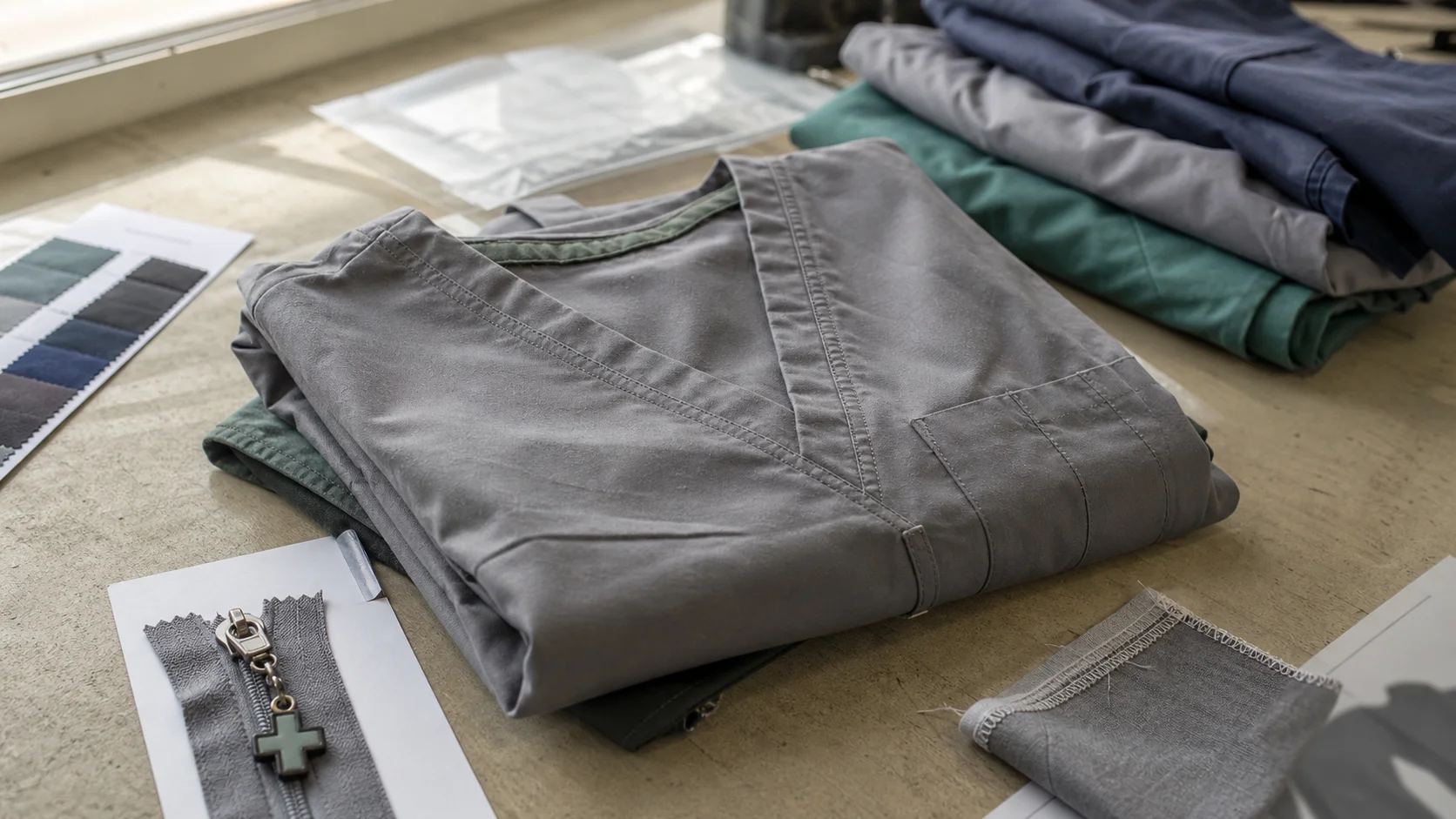
A focused SEO outline for buyers auditing shrinkage control in zip puller charm decoration and finishing areas, with special attention to cleaning crew...
Zip Puller Charm Shrinkage Control Plan for Buyers - Fabrikn production reference
Zip puller charms look simple on a finished garment, bag, or accessory, but they carry several production risks that buyers should not ignore. A charm may be made from PVC, silicone, rubber, TPU, metal, woven tape, leather patch material, or mixed components. It may be printed, embossed, debossed, plated, painted, heat-transferred, or assembled with a cord, ring, slider, or molded tab. Each material reacts differently to heat, humidity, washing, chemical exposure, storage pressure, and factory cleaning routines.
This article explains how buyers can build a practical zip puller charm factory shrinkage control plan for cleaning crews and production teams. The focus is not only dimensional shrinkage after washing. It also covers deformation, curling, coating failure, discoloration, adhesion loss, and contamination caused by poor cleaning control inside the factory.
For brands sourcing decorated trims, the best plan is built before bulk production starts. Buyers should define material specifications, approve reference samples, control cleaning chemicals near the production line, and inspect shrinkage at incoming, in-process, and final stages. The decoration may be small, but the claims risk can be large when thousands of garments leave the factory with inconsistent pullers.
Zip puller charms are often treated as minor decorative parts. In purchasing terms, that is a mistake. The puller is handled repeatedly by the end user, sits near zipper teeth and sliders, and is exposed to washing, sweat, friction, steam finishing, retail storage, and sometimes dry-cleaning chemicals. A small dimensional change can affect both appearance and function.
Shrinkage problems usually appear in one of five ways:
Buyers should consider these risks early because zip puller charms are often custom components. Once a mold is made or a print plate is approved, changing size, compound, logo depth, or coating can add cost and delay. If a garment factory discovers shrinkage during final inspection, rework is usually slow. Replacing pullers on finished garments may require unpacking, thread trimming, metal ring opening, retesting, and repacking.
In decoration and printing sourcing, the lowest unit price is rarely the safest price. A very cheap charm may use unstable plasticizer content, low-grade rubber compound, poor plating, weak coating, or insufficient curing time. These shortcuts may not be visible in the first counter sample. They often show up after heat, humidity, cleaning, or repeated handling.
A shrinkage control plan starts with material identification. Buyers should not approve a zip puller charm only by artwork and color. The material family, hardness, thickness, curing method, and surface treatment all influence performance.
Soft PVC is widely used for molded logos, cartoon shapes, sportswear trims, outdoor accessories, and promotional garments. It offers flexible shapes and strong color separation at a competitive cost. The tradeoff is sensitivity to heat, plasticizer migration, and chemical exposure.
For PVC pullers, buyers should specify:
Cleaning crews must be careful around PVC components. Strong solvents, degreasers, alcohol-heavy sprays, and certain disinfectants can soften the surface or draw out plasticizer. Even if the charm does not shrink immediately, the surface may become sticky or dull after storage.
Silicone and synthetic rubber options are used when buyers need a softer hand feel, temperature resistance, or a premium molded effect. Silicone is generally more stable under heat than standard PVC, but the actual performance depends on formulation and curing.
Poorly cured silicone or rubber may show post-curing shrinkage, odor, surface tackiness, or powder transfer. Buyers should ask whether the material is fully cured before packing and whether any post-curing process is required. For printed silicone pullers, ink adhesion testing is important because the surface can be difficult to print without proper treatment.
TPU and PU materials are common in fashion, sports, and technical accessories. They can look cleaner than PVC and may suit transparent, glossy, or high-frequency decoration styles. The risk is hydrolysis, softening, yellowing, or surface cracking if the wrong material grade is used.
TPU may also react to high heat during garment finishing. Buyers should define whether the puller will pass through tunnel finishing, heat pressing, steam ironing, garment washing, or tumble drying. A puller that performs well at room temperature may still deform under finishing conditions.
Metal charms do not “shrink” in the same way as plastic or rubber, but they can still fail dimensionally. Plating layers may peel, rings may open, holes may burr, and thin zinc alloy parts may bend under stress. If a metal charm is combined with enamel, epoxy, rubber inlay, or painted coating, the non-metal parts may shrink or detach.
For metal pullers, buyers should control:
Some zip pullers use woven tape, cotton cord, polyester cord, leather patches, microfiber, or mixed assemblies. Shrinkage control becomes more complex because each component behaves differently. A cotton cord may shrink in washing, a PU leather patch may curl under heat, and a metal ring may stain adjacent light fabric if plating is poor.
Mixed-material pullers require compatibility testing. Buyers should test the assembled charm, not only the individual parts.
A clear specification sheet is the buyer’s main defense against shrinkage disputes. If the purchase order only states “custom zipper puller with logo,” the supplier has too much room to choose lower-cost materials or vague tolerances.
The specification should include the following items:
Specification Item Buyer Requirement Why It Matters Material PVC, silicone, TPU, rubber, PU, metal, woven tape, leather, or mixed construction Different materials shrink, warp, stain, or react to chemicals differently Dimensions Length, width, thickness, hole size, ring diameter, cord length Needed for incoming inspection and post-test comparison Tolerance Example: length within 1 mm, thickness within 0.3 mm, hole diameter within 0.2 mm Prevents disputes caused by loose sample interpretation Shrinkage Limit Example: maximum 2% after approved wash or heat test Creates measurable acceptance criteria Color Standard Pantone reference, approved lab dip, or physical master sample Controls color drift after curing, cleaning, and storage Decoration Method Molded logo, screen print, pad print, heat transfer, embossing, debossing, plating, coating Each method has different adhesion and durability risks Testing Wash test, heat test, rubbing test, adhesion test, colorfastness, corrosion, pull strength Confirms the charm will survive garment processing and consumer use Cleaning Restriction Approved and banned cleaning chemicals near trims Reduces factory contamination and chemical damageThe shrinkage limit should match the product’s end use. For a fashion bag with no laundering, the test plan may focus on heat, humidity, abrasion, and color transfer. For washable outerwear or children’s apparel, the plan should include washing, drying, chemical safety, and pull strength. For workwear or outdoor gear, buyers may need more demanding performance standards.
For sourcing support across custom decoration, trims, and production planning, buyers can review the service structure at fabrikn.com/services/.
The phrase “shrinkage control plan” usually makes buyers think of material testing. Factory cleaning practice is just as important. Cleaning crews may spray chemicals near stored trims, wipe production tables with aggressive agents, expose pullers to water, or use heat blowers in a way that affects small decorative components. These risks are preventable with a written control plan.
Zip puller charms should not be stored near chemical cabinets, wet mops, floor drains, open windows, steam sources, or direct sunlight. Cleaning crews need clear zone markings. Trim shelves should be raised from the floor and covered when not in active use.
A practical factory rule is simple: no open cleaning liquids within the trim storage zone. If cleaning is required nearby, trims should be sealed or temporarily moved. This is especially important for soft PVC, PU, TPU, painted metal, and leather-like materials.
Factories often use disinfectants, alcohol sprays, detergent solutions, degreasers, stain removers, and floor cleaners. Some of these are harmless when used on floors, but damaging when oversprayed onto trims. Buyers should require the factory to maintain a list of approved and banned chemicals for areas where zip puller charms are stored, assembled, or inspected.
The plan should identify:
Strong solvent cleaners should not be used on tables where puller charms are placed unless the surface is fully rinsed, dried, and verified before production restarts. Alcohol-based cleaning may be acceptable for some hard surfaces but risky for certain coatings and prints. Buyers should not assume compatibility without a test.
Cleaning during production is common, particularly in decoration and assembly areas. The risk is that wet tabletops, damp trays, or chemical residue can transfer to trims. This may cause whitening, swelling, softening, color bleeding, or later shrinkage after drying.
A better practice is to schedule wet cleaning outside active production hours. If cleaning must happen during a shift, work-in-progress should be covered, moved, or sealed. Cleaning crews should not wipe directly over open trays of zip puller charms, cords, sliders, rings, labels, or printed panels.
Cleaning crews do not need to know every sourcing detail, but they do need practical rules. A one-page instruction sheet with photos is more useful than a long policy nobody reads.
The instruction sheet should state:
The purchasing judgment is straightforward: if a supplier cannot control basic cleaning behavior around decorative trims, the buyer should be cautious about approving complex printed or molded parts there. Good decoration quality depends on disciplined handling, not only good artwork.
For high-volume orders, cleaning records should be connected to production dates or trim lot numbers. The record does not need to be complicated. It should show when the area was cleaned, what chemical was used, who performed the cleaning, and whether trims were protected.
This helps when shrinkage or surface damage appears later. Without records, the buyer and supplier may argue whether the problem came from material formulation, curing, washing, storage, or factory contamination. Records narrow the investigation.
Sampling is where buyers should catch shrinkage risk. A nice-looking photo sample is not enough. The approval process should include dimensional measurement before and after exposure tests.
For molded charms, mold shrinkage should be expected and controlled by tooling adjustment. The supplier should not rely on guesswork once bulk production begins. If the approved sample is produced from a soft trial mold and bulk is produced from a different production mold, buyers should request another confirmation sample before releasing full production.
Printed pullers require ink adhesion confirmation. Pad printing, screen printing, and heat transfer can all fail if the surface is not prepared correctly. Buyers should use simple checks such as tape adhesion, dry rubbing, wet rubbing, and bending where appropriate. For more demanding products, third-party lab testing may be required.
MOQ depends on material, mold requirement, color count, production method, and supplier setup. Buyers should treat the following ranges as typical sourcing references, not fixed rules.
Zip Puller Type Typical MOQ Range Lead-Time Considerations Cost Tradeoff Soft PVC molded charm 500 to 3,000 pieces per design/color Mold making, color matching, curing, trimming Good for custom shapes; tooling cost and chemical control matter Silicone molded charm 500 to 2,000 pieces per design/color Tooling, curing, possible post-curing, print adhesion Better heat feel; usually higher cost than basic PVC TPU or PU puller 1,000 to 5,000 pieces per design/color Material availability, cutting, molding, surface finish Clean appearance; hydrolysis and heat resistance must be checked Metal charm 500 to 2,000 pieces per design/color Mold/die, plating, enamel or coating, corrosion testing Premium look; weight, plating, and nickel compliance affect cost Woven or cord puller 1,000 to 5,000 pieces per color Yarn dyeing, weaving/braiding, cutting, tipping, assembly Lightweight and flexible; shrinkage and fraying need controlTypical sample lead time may run from 7 to 20 days, depending on whether new tooling is needed. Bulk lead time is often 10 to 35 days after approval, but this can shift based on material stock, color count, plating capacity, curing time, and inspection requirements. Orders placed during peak apparel seasons may require longer planning.
Buyers should not compress curing or drying time to hit a shipping date. That shortcut can create later shrinkage, odor, coating transfer, or tacky surfaces. If the order is urgent, a safer compromise is to simplify the design, use an existing mold, reduce the color count, or approve a standard material already tested for similar use.
For brands that need to align trims with full garment development, supplier selection, and quality checkpoints, the background information at fabrikn.com/about-us/ may be useful.
Inspection should not only count pieces and check logo placement. Shrinkage control requires measurable tests and clear acceptance limits. The buyer should define which tests are mandatory and which are optional based on risk level.
When zip puller charms arrive at the garment factory, incoming QC should compare them against the approved sample. The inspection should include dimensions, color, surface condition, odor, flexibility, hole shape, attachment hardware, and packaging condition.
Common defects include:
A heat test is important if garments will go through steam pressing, tunnel finishing, heat transfer, or hot storage during transport. The test should record the sample dimensions before and after exposure. Buyers should define temperature, duration, cooling time, and acceptable dimensional change.
The exact temperature should match the garment process. A puller used on heat-pressed sportswear may need different testing from a puller used on a casual bag. Over-testing can reject a workable component and raise cost. Under-testing can lead to field complaints.
For washable garments, the puller should be tested with the garment or with a representative fabric panel. The test should follow the care label. If the garment is machine washable and tumble dry is allowed, the puller must be checked after those steps.
Post-wash inspection should cover:
Decorated pullers can stain light fabric, lining, pocketing, or packaging tissue. Dry and wet rubbing checks are useful for printed, coated, painted, dyed, and leather-like materials. Dark red, black, navy, fluorescent, metallic, and heavily pigmented colors deserve extra attention.
If the charm is used on children’s apparel, bags, school products, or outdoor gear, pull strength and small-parts risk may be important. The buyer should define whether the puller is decorative only or expected to function as the main zipper grip. A weak decorative piece can break when a user pulls the zipper under tension.
Purchasing judgment: approve a zip puller charm only after the complete assembly has been tested. A molded piece may pass on its own, while the ring, cord, glue, print, or coating fails after washing or cleaning exposure.
Packaging can protect the puller or create new shrinkage risks. Soft trims should not be tightly compressed for long periods if the material is prone to deformation. Printed surfaces should not be packed face-to-face without protection if ink transfer is possible.
Good packaging practices include:
Buyers should also consider transit conditions. Containers and trucks can become hot, especially during long shipping routes. If a puller is heat-sensitive, pre-shipment testing should reflect realistic storage and transport exposure. A component that survives a short room-temperature check may not survive weeks in a hot container.
A good zip puller charm supplier should be judged on more than sample appearance. Buyers need to evaluate technical control, documentation, cleaning discipline, inspection readiness, and corrective action ability.
Scorecard Area What Buyers Should Check Red Flags Material Control Material type, batch records, restricted substance compliance, hardness or thickness checks Supplier cannot confirm compound, grade, or lot traceability Tooling and Molding Mold approval, shrinkage allowance, cavity consistency, trimming quality Bulk pieces differ from approved sample without explanation Decoration Quality Print adhesion, logo clarity, coating consistency, color matching Ink rubs off, logo edges bleed, or color varies between cartons Cleaning Control Approved chemical list, trim protection, cleaning records, staff instructions Open chemicals near trims or wet cleaning during active production Testing Wash, heat, rub, pull strength, corrosion, colorfastness where needed No pre-bulk test data or no retained sample Packaging Lot labels, anti-deformation packing, moisture protection Loose mixed trims, crushed cartons, or unsealed bags Corrective Action Root cause review, sorting plan, replacement timing, prevention update Supplier only offers discount without fixing process causeThe scorecard does not need to be bureaucratic. It should help the buyer make faster sourcing decisions. If the charm is a low-risk promotional item, a basic checklist may be enough. If it is used on premium outerwear, children’s apparel, washable uniforms, or high-volume retail programs, the control plan should be stricter.
A written control plan should be practical enough for the factory to follow. It should not be a generic quality statement. It should name the actual product, material, inspection points, cleaning rules, and acceptance criteria.
Buyers should attach photos showing acceptable and unacceptable defects. Visual standards reduce arguments, especially for warping, surface dullness, coating scratches, and logo definition. Measurement standards should use calipers or templates when dimensions are critical.
If a problem is found, the first action should be quarantine. Do not allow the factory to keep using suspect pullers while waiting for a decision. Once defective trims are attached to garments, the cost of correction rises sharply.
Every shrinkage control decision affects cost, timing, or design freedom. Buyers should make those tradeoffs deliberately.
The best buying position is to decide which properties are non-negotiable. For example, a children’s jacket puller may need safety and wash durability more than an intricate multi-color logo. A fashion bag charm may prioritize appearance and plating quality but still needs storage and chemical resistance.
For sourcing discussions, buyers can contact the team through fabrikn.com/contact-us/ with the trim type, artwork, estimated quantity, material preference, and target delivery window.
Before placing a bulk order for zip puller charms, buyers should confirm the following:
A zip puller charm is small, but it sits at the intersection of decoration, printing, molding, hardware, garment finishing, and user handling. Buyers who control shrinkage only at final inspection are too late. The safer route is to build the shrinkage control plan into the quotation, sample approval, cleaning procedure, and production inspection from the start.
Get a free quote from Fabrikn — your trusted B2B clothing manufacturer with 10+ years of experience. MOQ as low as 200 pieces.
Get a Free Quote →It is a written quality plan that defines the material, dimensions, shrinkage limits, testing methods, cleaning restrictions, inspection points, and corrective actions for custom zip puller charms. It helps buyers prevent deformation, logo failure, and size changes before bulk production is completed.
Cleaning crews can unintentionally expose trims to water, solvents, disinfectants, heat, steam, or chemical residue. These exposures may cause softening, warping, discoloration, tackiness, coating failure, or delayed shrinkage. Simple cleaning-zone rules reduce this risk.
The acceptable limit depends on material, design, and end use. Many buyers set a maximum dimensional change such as 1% to 3% after the approved wash or heat test, but the limit should be confirmed against the garment’s function and appearance requirements.
Typical MOQs often range from 500 to 3,000 pieces for molded PVC or silicone charms, 1,000 to 5,000 pieces for TPU or cord pullers, and 500 to 2,000 pieces for metal charms. Actual MOQ depends on tooling, color count, material stock, and supplier setup.
Sampling commonly takes 7 to 20 days. New molds, special colors, plating, post-curing, and print testing can extend the timeline. Buyers should avoid approving bulk production before shrinkage and adhesion checks are complete.
For washable garments, wash and dry testing is essential. For heat-finished products, heat exposure testing is important. Printed and coated pullers should receive rubbing and adhesion checks. Functional pullers should also be checked for pull strength and attachment security.
Yes. Soft PVC can shrink, warp, soften, or become tacky if formulation, curing, heat exposure, or chemical contact is poorly controlled. Buyers should specify material requirements and test the approved sample under realistic garment processing conditions.
Silicone often has better heat resistance than basic soft PVC, but quality still depends on formulation, curing, surface treatment, and print adhesion. Buyers should test the final assembled puller rather than assuming silicone will always perform better.
The affected lot should be quarantined immediately. The buyer and supplier should compare measurements against the approved sample, review test conditions, check cleaning and storage records, and identify whether the cause is material, process, packaging, or chemical exposure.
Both can be useful, but the attached-garment test is more realistic. The complete assembly may reveal problems with rings, cords, sliders, color transfer, washing, drying, and finishing that do not appear when testing the charm alone.