
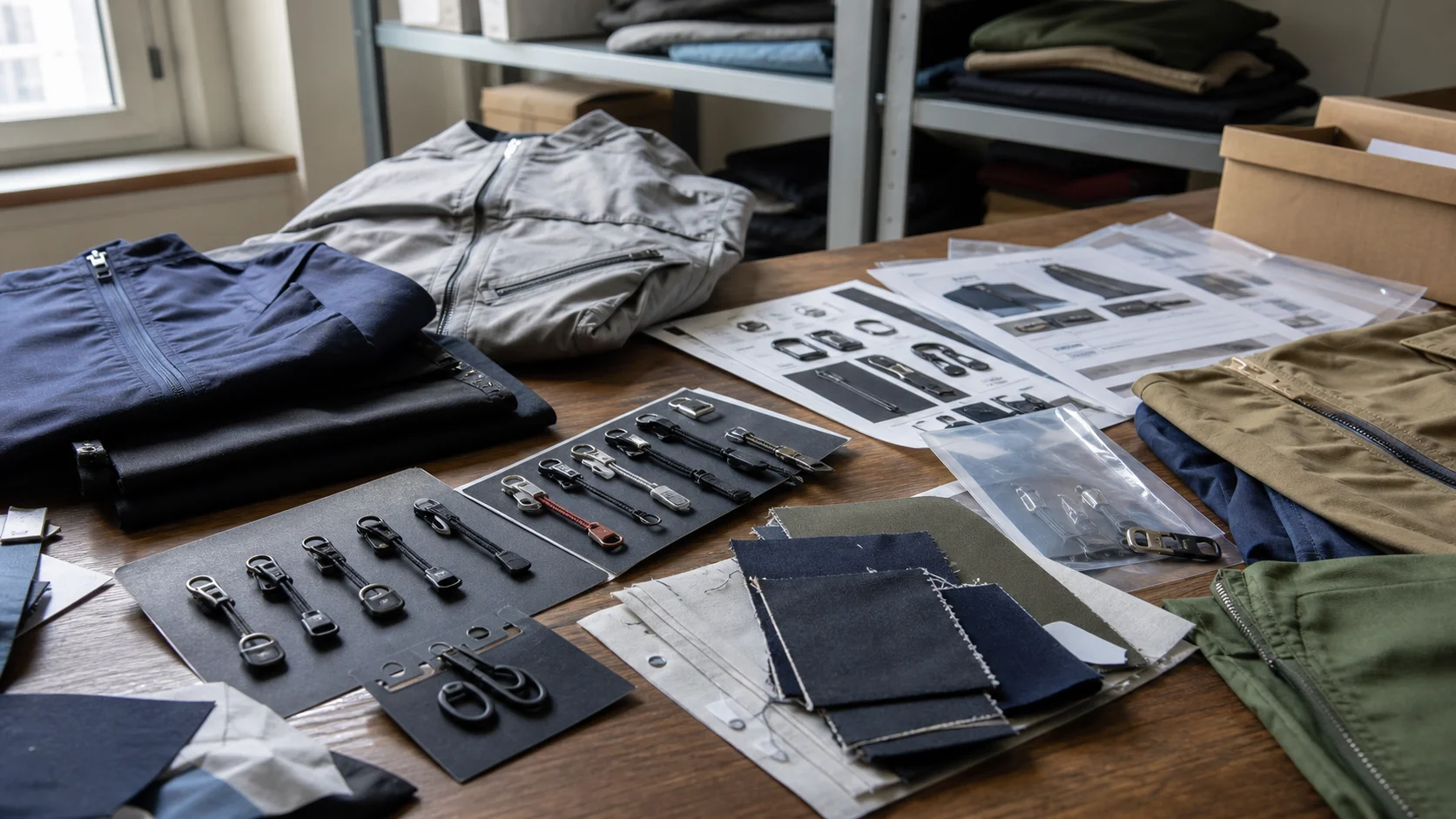
A practical quality control checklist for field service teams inspecting zip puller charms, covering attachment strength, finish, branding accuracy,...
Zip Puller Charm QC Checklist for Field Service Teams - Decoration & Printing manufacturing guide
Category: Decoration & Printing
Zip puller charms look like small accessory trims, but they carry more quality risk than many buyers expect. They are handled often, pulled under tension, exposed to abrasion, and placed in visible areas on jackets, bags, children’s apparel, uniforms, outdoor gear, beauty pouches, school products, and promotional items. A weak charm can break during use. A poorly plated charm can discolor quickly. A printed logo that rubs off after a few days can make an otherwise acceptable garment feel cheap.
For field service teams, the job is not to admire the sample. The job is to verify repeatable production quality under practical use conditions. That means checking material, color, surface finish, attachment strength, decoration durability, packaging accuracy, and safety risks before shipment or before products enter service channels.
Zip puller charms sit between accessory trim, branding component, and functional handle. The buyer should treat them as a controlled trim item, not as a loose decorative add-on. A checklist helps field teams catch defects early, document supplier performance, and give sourcing teams clear evidence for acceptance, rework, sorting, or rejection.
This article focuses on a zip puller charm quality control checklist for field service teams, especially for B2B apparel, bag, and accessory programs where Decoration & Printing quality matters. For buyers comparing decoration methods, supplier support, and production services, Fabrik’s apparel manufacturing services page is a useful place to review broader sourcing capabilities.
Field service teams usually inspect goods after development has moved into production or after finished products arrive at a warehouse, retail preparation center, service location, or distributor facility. By that point, large design changes are expensive. The inspection focus should be practical: does the charm match the approved sample, does it function safely, and does it meet the purchase order requirements?
The best field checks are not vague. “Looks fine” is not enough. A field technician should be able to confirm whether the charm is made from the specified zinc alloy, PVC, silicone, TPU, PU leather, woven tape, rubber, acrylic, or metal-plastic combination. They should also know whether the logo is engraved, debossed, embossed, heat transferred, screen printed, pad printed, epoxy domed, laser marked, or enamel filled.
Field service teams should not replace laboratory testing, but they can identify many defects before they become customer complaints. They can also confirm whether factory inspection records match real goods. A shipment that passes on paperwork but arrives with inconsistent plating or mixed logo colors still creates commercial risk.
Purchasing judgment: treat zip puller charms as functional branded trims. If they fail in use, the consumer rarely blames the charm supplier. They blame the garment, bag, or brand.
A field checklist starts with the product specification sheet. If the spec is incomplete, the inspection becomes subjective. Buyers should make sure each charm program includes measurable requirements before bulk production begins.
For most custom zip puller charm orders, typical minimum order quantities vary by process. Simple woven tape or cord pullers may start around 500 to 1,000 pieces per color if materials are available. Custom silicone, PVC, TPU, or rubber-molded charms often fall around 1,000 to 3,000 pieces per design because mold setup and color batching are involved. Metal charms with custom molds, plating, enamel, or logo engraving commonly start around 1,000 to 5,000 pieces depending on supplier policy, artwork complexity, and finish requirements.
Buyers should be careful with very low MOQ offers for fully custom charms. A low MOQ may be workable for sampling, promotional programs, or stock-shape customization, but it can also indicate manual handling, inconsistent decoration, limited testing, or higher unit cost. The tradeoff is simple: low MOQ improves flexibility, while higher MOQ normally gives better production efficiency, stronger price leverage, and more consistent color batching.
Many field failures begin before production. If the approved sample is loose, undocumented, or not aligned with the purchase order, the field team has no solid benchmark. The pre-production stage should create a clear reference for inspection.
A good approval process separates design preference from production quality. At sample stage, buyers can still adjust logo scale, hole size, plating tone, pull length, or grip texture. During bulk inspection, the field team should mainly check conformity and performance.
Lead time depends on more than factory capacity. Custom molds, plating queues, pigment matching, artwork revision cycles, trim sourcing, compliance testing, and final assembly all affect the schedule. A basic stock puller with printed logo may be ready faster than a custom molded silicone puller with multiple colors. A metal charm with antique plating, enamel filling, polishing, and protective coating can require more processing time.
Typical sampling may take 5 to 15 business days for straightforward designs, while custom mold development can take longer. Bulk production often ranges from 15 to 35 days after sample approval for many standard programs, but buyers should confirm case by case. Peak season, small-batch color matching, delayed trim arrivals, or failed decoration tests can extend the timeline. Field service teams should flag any supplier promising unusually short lead times for complex custom work without explaining the production route.
Incoming trim inspection is useful when the field team visits a factory, assembly location, or warehouse before final packaging. Once charms are attached to finished products, sorting becomes slower and more expensive. Incoming checks should focus on material identity, color consistency, and obvious defects.
Field teams should pull samples from multiple cartons, not only the top carton. Small trims are easy to mix, and carton-level variation is common when production is split across batches. If charms are supplied loose, count accuracy also matters. Short shipments can delay garment packing or create substitutions at the finishing line.
Buyers should define tolerances before inspection. For small charms, a tolerance of plus or minus 1 mm may be reasonable for certain dimensions, while molded or metal parts may require tighter or different tolerances depending on function. Cord length may allow a slightly broader tolerance, but too much variation looks unprofessional when products hang side by side.
Field technicians should measure a practical sample size with calipers, a ruler, or a gauge depending on the item. They should record minimum, maximum, and average readings if variation appears noticeable. A single measurement is not enough when checking bulk consistency.
Decoration and printing are the main reasons zip puller charms are customized. They are also where many rejects occur. The quality risks differ by method, so the checklist should match the approved decoration process.
Screen and pad printing are common for flat or slightly curved charm surfaces. They can work well for simple logos and clear brand marks, but they require careful ink adhesion and registration control.
The tradeoff is cost versus durability. Printed decoration is often economical and fast, but it may not survive heavy abrasion as well as molded, engraved, or debossed branding. For field service uniforms, outdoor gear, tool bags, and rental products, buyers should be cautious with surface-only prints on high-contact pullers.
Heat transfer and digital print can support more colors and gradients than simple spot printing. They are useful for promotional designs, character artwork, and small batch branding. The risk is edge lifting, poor bonding, and color variation between production runs.
Embossed, debossed, and engraved logos usually offer better long-term branding because the mark is formed into the material. They may cost more upfront due to mold, die, or tooling requirements, but they are often more reliable for frequent-use zip pullers.
Metal zip puller charms often use plating, enamel filling, or epoxy dome coatings. These finishes can look premium, but they need strong process control. A small charm with poor plating can corrode or discolor before the garment reaches the consumer.
For branded programs where the charm is a visible value signal, paying more for stable plating and controlled enamel work is often justified. For low-cost promotional products, buyers may accept simpler decoration, but they should not accept sharp edges, loose attachments, or finishes that stain fabric.
The attachment system is the functional core of the zip puller charm. A beautiful charm that detaches under normal use is a failed trim. Field teams should inspect both the charm body and the connection to the zipper slider.
Laboratory pull tests should be specified for safety-critical or high-performance products. Field service teams can still run practical checks using approved tools and limits. The method should be consistent, documented, and agreed before inspection.
Buyers should avoid over-testing saleable goods unless a destructive test allowance has been agreed. A puller that survives one heavy destructive pull may still be cosmetically damaged. AQL inspection plans should define how many pieces can be tested destructively and how those pieces are handled after testing.
For field service workwear, luggage, outdoor bags, and technician kits, the attachment requirement should be stricter than for light fashion pouches. The user may pull the zipper while wearing gloves, under load, or in cold conditions. The charm should be easy to grip but not so large that it catches on equipment.
Visual quality is not just appearance. It is a quick way to catch process instability. A charm with uneven color, sloppy printing, and rough edges may also have weak adhesion, poor curing, or rushed packing.
Field teams should avoid judging color in poor warehouse lighting only. If a color issue is suspected, compare samples under consistent white light and, where possible, daylight. Metallic plating can look different under warm and cool light. Fluorescent colors, translucent plastics, and rubber pigments may shift visually depending on background and lighting angle.
For buyer approval, the field team should photograph defects with scale reference and include at least one image beside the approved sample. Photos should not replace written observations. A close-up image without carton number, style code, or sample count can create confusion later.
Odor matters for PVC, rubber, PU, adhesive, ink, and coating processes. A strong chemical smell may indicate insufficient curing, inappropriate materials, or poor storage ventilation. Field teams should record odor issues carefully rather than making unsupported chemical claims. If restricted substances are a concern, the correct next step is formal testing through an approved lab.
Surface feel also matters. A zip puller charm should not feel sticky, oily, powdery, brittle, or sharp. Sticky surfaces can collect lint and dust. Oily surfaces can stain packaging or fabric. Brittle parts may crack during use or in cold storage conditions.
Packaging errors create expensive operational problems even when the charm quality is acceptable. Mixed colors, wrong counts, missing labels, and inconsistent assortment can slow garment finishing or warehouse allocation.
For finished garments or bags with attached puller charms, field teams should check orientation and quantity per product. A backpack may require several pullers in different positions. A jacket may require matching front zipper and pocket zipper pullers. A replacement or service kit may include specific assortments. The inspection report should state exactly what was checked.
Some buyers require individual polybags to prevent scratching, especially for polished metal, epoxy, or high-gloss charms. This improves cosmetic protection but adds packaging cost and waste. Bulk packing is cheaper and faster, but it increases rubbing risk. For premium retail products, protective packing is usually worth the extra handling. For low-cost internal-use items, controlled bulk packing may be acceptable if abrasion risk is low.
A clear report turns inspection findings into purchasing decisions. It should be simple enough for field use but detailed enough for supplier correction. The report should not rely on vague judgments such as “bad quality” or “not nice.” It should identify defect type, quantity, location, batch, and recommended action.
Field service teams should separate observations from conclusions. “Five pieces from carton 12 show logo print rubbing after ten dry rubs” is more useful than “printing is weak.” If the buyer requires a formal AQL system, the report should classify defects according to the approved critical, major, and minor criteria.
The classification should match the product end use. A minor surface mark on an internal service bag may be acceptable. The same mark on a luxury outerwear zipper pull may be a major defect. Purchasing teams should define this before inspection, not after the shipment is delayed.
Field findings should lead to direct action. The right decision depends on severity, quantity, repair feasibility, delivery schedule, and customer expectations. Some defects can be sorted. Some can be reworked. Some should trigger replacement or rejection.
Rework should be treated carefully. Reprinting over failed ink may create thicker, less durable decoration. Replating small metal charms can be difficult if the original surface is contaminated or uneven. Replacing rings or cords may be practical, but only if the reworked attachment is tested again. A supplier offer to “fix by hand” should come with a re-inspection plan.
For urgent orders, buyers sometimes accept borderline cosmetic issues to protect delivery. That can be reasonable for internal-use field service kits, spare parts, or non-retail programs. For retail apparel, uniforms, and branded products, visible charm defects can reduce perceived quality quickly. The charm is small, but the customer touches it every time they open the zipper.
The following checklist can be adapted for factory visits, warehouse receiving, service kit preparation, and finished product audits. It is intentionally practical rather than academic.
When a program includes both charm production and garment or bag assembly, buyers should align the trim supplier and final assembly supplier early. A charm can pass loose inspection but fail after attachment if the ring does not fit the zipper slider, the loop is too bulky, or the finished product packing crushes the charm. Teams planning new decoration and trim programs can use Fabrik’s about us page to understand the company context and sourcing approach, then discuss program needs through the contact page.
A good QC checklist is only useful if suppliers receive clear feedback. Field reports should show what failed, where it was found, how many pieces were affected, and what standard was used. The supplier should respond with root cause, containment action, rework proposal, and prevention plan.
For example, if printed logos rub off, possible causes may include unsuitable ink, poor surface preparation, insufficient curing, contamination, or incorrect drying time. If split rings deform, the issue may be wire thickness, metal hardness, poor ring design, or excessive gap. If plating stains appear, storage moisture, poor cleaning, thin plating, or contaminated bath conditions may be involved. Field teams do not need to prove every cause, but their evidence should help sourcing and QA teams ask the right questions.
Corrective action should include a re-inspection point. If a supplier replaces a batch, the new batch should be checked against the same standard. If the supplier sorts defects, the sorted goods should be audited again. If the supplier changes process, the buyer should request new samples or at least a confirmed production trial before accepting the next lot.
Buyers should decide early whether the charm is mainly decorative, functional, promotional, or premium branding. That decision affects material, MOQ, lead time, cost, and testing requirements.
For low-cost promotional pouches, a simple cord puller or molded PVC charm may be enough. For outdoor jackets, technician bags, travel gear, and uniforms, the puller needs better grip, stronger attachment, and more durable decoration. For premium retail products, plating quality, logo precision, and packaging protection deserve more attention.
Custom mold cost can be worthwhile when the design will repeat across seasons or across multiple product lines. For short runs, stock shapes with custom printing or laser marking may control cost and reduce risk. The buyer gives up some uniqueness but gains faster development and lower tooling exposure.
Color matching should be handled with caution. Pantone references help, but material affects color appearance. Silicone, PVC, TPU, cord, metal enamel, and printed ink can all show the same color differently. The safest route is to approve physical color samples in the actual production material before bulk production.
For field service teams, the most important discipline is consistency. Use the same checklist, the same defect definitions, and the same reporting format across suppliers and lots. This builds a useful quality history. Over time, sourcing teams can see which suppliers control plating well, which struggle with printing adhesion, and which need tighter packaging instructions.
A zip puller charm is a small trim with a large touchpoint value. It affects product appearance, daily usability, brand perception, and service durability. Field service teams should inspect it with the same seriousness they apply to zippers, labels, patches, snaps, and other functional trims.
The strongest checklist covers document verification, material identity, decoration quality, attachment strength, fit on the actual zipper, visual finish, packaging accuracy, and defect reporting. Buyers should define MOQ expectations, lead-time dependencies, sample approval steps, fabric or trim compatibility, and inspection risks before bulk production begins. That preparation makes field QC faster, clearer, and more commercially useful.
The best purchasing decision is not always the cheapest charm. It is the charm that matches the product use, survives handling, protects the brand mark, and arrives consistently from lot to lot.
Get a free quote from Fabrikn — your trusted B2B clothing manufacturer with 10+ years of experience. MOQ as low as 200 pieces.
Get a Free Quote →A zip puller charm QC checklist is a structured inspection guide used to verify material, dimensions, decoration, attachment strength, surface finish, packaging, and quantity before goods are accepted, shipped, or issued for field use.
Common defects include weak logo printing, wrong color, plating stains, scratches, bubbles, rough edges, weak split rings, fraying cords, incorrect dimensions, mixed designs, and wrong packaging labels.
Typical MOQ ranges from about 500 to 1,000 pieces for simple stock-based cord or tape pullers, around 1,000 to 3,000 pieces for custom molded rubber, PVC, TPU, or silicone designs, and about 1,000 to 5,000 pieces for custom metal charms with molds, plating, enamel, or special finishing. Actual MOQ depends on supplier, material, tooling, color count, and production method.
Field teams should follow the buyer’s approved pull test method. A force gauge is preferred when available. The test should check the actual use direction and identify whether failure occurs at the charm body, ring, cord, clasp, molded loop, zipper slider, or stitching.
The best method depends on the product use. Printed logos are economical for simple programs, while embossed, debossed, engraved, molded, enamel-filled, or laser-marked logos usually offer better durability. High-contact products need stronger decoration than light promotional items.
Both stages are useful. Loose trim inspection catches material, decoration, and packaging defects early. Finished product inspection confirms fit, orientation, zipper operation, attachment security, and final appearance after assembly.
The buyer should classify the defect, document evidence, and choose a disposition such as accept, sort, rework, replace, hold, or reject. Safety issues, attachment failures, wrong logos, and severe decoration failures usually require stronger action than minor cosmetic variation.
Packaging prevents scratching, mixing, miscounting, moisture damage, and assembly delays. Polished metal, epoxy, enamel, and high-gloss charms often need better protection than basic cord or matte rubber pullers.