
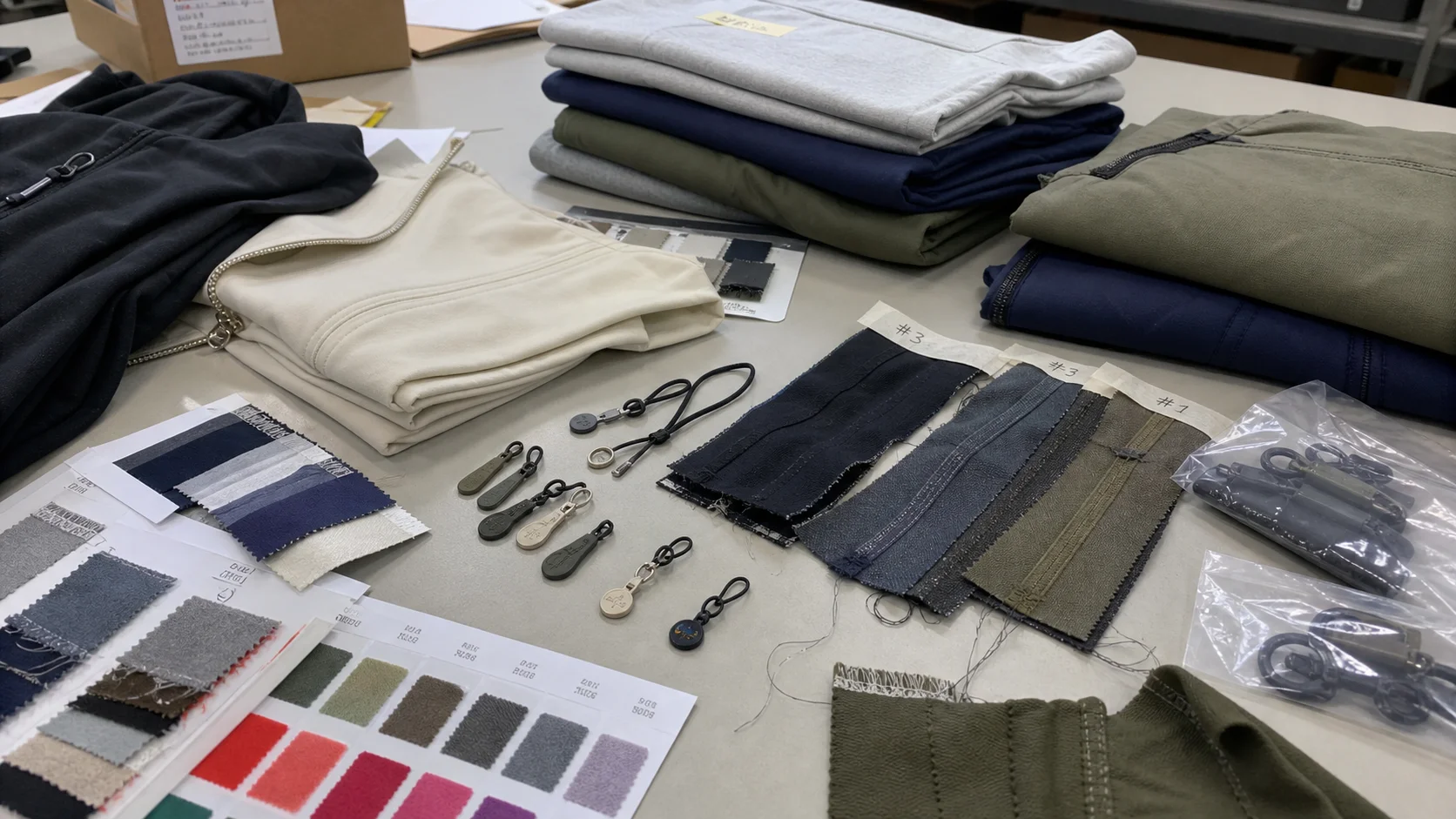
A product-specific SEO outline for evaluating zip puller charm seam strength on cleaning crew apparel, covering attachment methods, stress testing,...
Zip Puller Charm Seam Strength Review for Buyers - Decoration & Printing manufacturing guide
For cleaning crews, a zip puller charm is not just a decorative add-on. It is a small handling part that gets pulled, twisted, exposed to detergent residue, rubbed against uniforms or work bags, and sometimes used while wearing gloves. Buyers sourcing this item under the Decoration & Printing category should review it as both a branded accessory and a functional trim component.
The keyword is seam strength. A zip puller charm can look good in a showroom photo and still fail on site if the stitched edge tears, the loop detaches, the printed logo cracks, or the attachment point cannot tolerate repeated pulling. Cleaning crews usually work in fast, physical environments. Garments, pouches, utility bags, jackets, and tool organizers are opened many times during a shift. A weak puller becomes a complaint issue quickly because it affects daily use.
This review is written for buyers comparing suppliers, approving samples, or building a purchase specification. It covers typical materials, seam construction, decoration methods, testing points, MOQ expectations, lead-time variables, inspection risks, and practical tradeoffs. The goal is not to over-specify a simple charm. The goal is to prevent a low-cost accessory from becoming a repeated field failure.
Buying judgment: if the zip puller charm is for cleaning crews, prioritize attachment strength, wash and chemical resistance, and grip usability before logo complexity. A perfect logo on a weak puller is still a poor purchase.
Cleaning crew uniforms and gear face different conditions from standard promotional apparel. Workers may carry spray bottles, gloves, wipes, brushes, cloths, small tools, keys, and personal protective items. Zippers on jackets, vests, waist pouches, backpacks, laundry bags, and supply organizers are used repeatedly throughout the day.
A zip puller charm can help crews identify branded equipment, distinguish departments, improve grip, or make a zipper easier to operate with wet hands. It can also support a uniform branding program when matched with embroidered logos, printed patches, PVC labels, or woven trims.
The risk is that decoration buyers sometimes treat the charm as a novelty item. In a cleaning crew application, it should be reviewed more like a workwear trim. It must withstand pulling force, moisture, abrasion, detergent contact, temperature changes, and possible machine washing depending on where it is attached.
The intended use affects the required strength. A charm on a staff welcome pouch may not need the same performance as one installed on a daily-use chemical supply bag. Buyers should separate promotional, uniform, and equipment-grade applications before confirming material and construction.
A reliable sourcing process starts with a clear product definition. Suppliers can make zip puller charms in many ways: molded PVC, silicone, woven tape, leather-like PU, rubberized patches, embroidered fabric, metal tags, injection-molded plastic, or hybrid constructions with cord loops and metal rings. Each option has different strength limits and decoration behavior.
Before sampling, buyers should define the application, zipper type, attachment method, expected pull force, decoration artwork, color standard, and cleaning exposure. A vague request such as “custom zipper charm with logo” invites inconsistent quotations. One supplier may quote a soft PVC charm for promotional use, while another may quote a reinforced woven puller. The prices will not be comparable.
If the buyer cannot define a formal pull-strength requirement, the supplier should still be asked to provide internal test results or recommend a working standard. For cleaning crew gear, a charm that tears under light hand force is not acceptable. Repeated-use performance matters more than a single static pull.
Brands building a broader uniform or accessory program can review service capabilities through Fabrikn services to align decoration, trim development, and production planning before locking the accessory specification.
The material choice drives seam strength, print performance, hand feel, and cost. Buyers should not choose based only on appearance. A material that looks premium may perform poorly if the attachment point is thin or if the printed surface cracks after repeated bending.
Soft PVC is common for molded logo charms because it allows raised logos, recessed details, and bright colors. It is flexible, water-resistant, and suitable for cleaning crew branding when formulated properly. The weak point is usually not the body of the charm but the hole, loop, or connection area where the ring or cord passes through.
For cleaning crew use, buyers should request enough thickness around the attachment hole. Thin edges can split under repeated pulling. A typical thickness range may be around 2 mm to 5 mm depending on design size and softness. Very thin PVC charms can feel cheap and may not hold up well on work bags.
Silicone is soft, flexible, and comfortable to grip. It can work well for zipper pullers that need a rubber-like feel. It may resist temperature changes better than some plastics, but decoration detail and color separation can affect price. Silicone also stretches, which can be positive for comfort but negative if the attachment hole elongates over time.
Buyers should check whether the silicone grade is suitable for the expected environment. If the charm will be wiped with cleaning chemicals, request compatibility guidance. Do not assume all silicone parts perform the same with disinfectants, degreasers, or bleach-based products.
Woven tape pullers are practical for uniforms and bags. They can be folded through the zipper slider and stitched, bartacked, or heat sealed. They offer good pull strength when the tape quality and stitching are correct. Branding can be woven, printed, heat transferred, or paired with a small patch.
The main inspection risks are fraying edges, weak bartacks, poor stitch density, and print abrasion. For cleaning crews, woven tape can be a strong choice if the buyer accepts a more functional look and less sculpted logo detail.
PU puller charms can look more premium, especially for hospitality or front-of-house cleaning teams. Logos can be debossed, embossed, foil printed, or screen printed. PU is not always ideal for harsh cleaning environments. Edges can crack, layers can delaminate, and coatings can wear if exposed to repeated moisture and chemical residue.
Use PU only when the application is light to moderate and the appearance requirement is important. For heavy-duty cleaning crew gear, reinforced woven tape, molded PVC, or rubberized options usually offer better durability.
Metal charms provide a polished look and strong logo presence. They can be die cast, stamped, plated, enamel-filled, or laser engraved. The concern is weight, noise, scratching, corrosion, and safety. Metal may bang against equipment, scratch surfaces, or feel cold and slippery with wet hands.
For cleaning crews, metal is usually better for promotional kits or supervisor-level branded accessories than for high-frequency utility bags. If metal is chosen, plating quality and corrosion resistance should be reviewed carefully.
Material Best Use Main Strength Risk Buyer Judgment Soft PVC Branded, water-resistant zipper charms Attachment hole tearing Good balance of branding and durability if thickness is adequate Silicone Soft grip pullers Hole elongation or stretch Useful for comfort, but test chemical exposure Woven tape Workwear and utility bags Stitch failure or fraying Often the most practical heavy-use option PU Premium appearance Cracking or delamination Better for light-duty use than harsh cleaning environments Metal Promotional or executive accessories Corrosion, weight, scratching Attractive but not always practical for active cleaning crews“Seam strength” can mean different things depending on the construction. For a fabric puller, it may refer to stitch strength at the folded end. For a PVC charm sewn into a seam, it may refer to the fabric seam holding the inserted tab. For a charm attached with cord, it may refer to the knot, molded end, or loop connection. Buyers should define the failure point they care about.
In many cases, the zipper charm fails at the transition point between rigid and flexible components. A molded body may remain intact while the attachment hole tears. A woven tab may remain strong while the printed logo wears off. A cord may survive while the metal split ring opens. Seam strength review should cover the full assembly, not only the visible charm.
A basic pull test checks how much force the charm and attachment can withstand before breaking, tearing, slipping, or deforming. Buyers can request a supplier pull test using a simple tensile method or an internal fixture. The exact requirement depends on end use, but cleaning crew gear should not be approved without some form of pull resistance check.
For light decorative zipper charms, suppliers may only check by hand. That is not enough for workwear or utility bags. A more practical approach is to test several samples from bulk production and record the failure type. If one sample fails at a much lower force than the others, the issue may be inconsistent stitching, weak material, or poor assembly control.
A single pull test does not show how the charm behaves after hundreds or thousands of uses. Cyclic pulling or repeated manual operation gives a better picture. For cleaning crews, this is important because workers may open and close compartments frequently during a shift.
Buyers should ask for a repeated-use check during sample approval. This can be formal or practical. The charm should be pulled repeatedly at different angles, including straight, side, and twist pulls. After testing, inspect for tearing, stitch loosening, ring opening, logo cracking, and edge damage.
For fabric or tape pullers, the stitch construction is critical. A simple lockstitch may be acceptable for light use, but a bartack or reinforced box stitch is often better for higher stress. Stitch density, thread size, needle damage, and tape quality all matter.
Cleaning crew gear may be tugged quickly and roughly. If the puller is stitched into a bag seam, the surrounding fabric must also be strong enough. A strong puller sewn into a weak fabric edge can still fail. The buyer should inspect both the trim and the host product construction.
Many charms use small metal split rings, plastic loops, elastic cords, or nylon cords. These parts can become the weakest point. Split rings can open if the wire gauge is too thin. Elastic cords can lose recovery. Plastic loops can become brittle. Nylon cords can fray at the slider edge.
For cleaning crew applications, a non-elastic cord or reinforced loop is often safer than thin elastic. Elastic may feel convenient, but it can stretch out or snag. If elastic is required, test it after moisture exposure and repeated pulling.
Decoration must be chosen with the work environment in mind. The charm may contact wet gloves, chemicals, dust, cleaning carts, and rough storage surfaces. A decoration method that works on a retail hangtag may not survive daily operational use.
Screen printing can be cost-effective for simple logos and flat surfaces. It works best when the charm material accepts ink well and the artwork is not too detailed. The risk is abrasion and cracking, especially on flexible substrates. Buyers should request rub testing and bend testing if the printed area flexes during use.
Heat transfer is useful for multi-color logos on fabric or tape pullers. It can produce clean detail, but adhesion depends on temperature, pressure, material compatibility, and curing. For cleaning crews, test washing and rubbing. Transfer edges are often the first area to lift.
Embossed or debossed logos are durable because the branding is formed into the material rather than added as surface ink. This is common for PVC, silicone, PU, and rubber-like charms. The tradeoff is less color contrast unless filled or printed. For heavy-use cleaning crew gear, molded or recessed branding may last longer than fine surface printing.
Woven branding is suitable for fabric pullers and labels. It offers good durability but has limits on small text and fine gradients. If the brand mark has thin lines, the woven version may need artwork simplification. Buyers should approve a woven artwork simulation before sampling.
Laser engraving works on selected metal, PU, and coated materials. It can be durable, but contrast depends on the material surface. For cleaning crews, engraved metal may outlast printed metal, but corrosion and surface scratching still need review.
Decoration Method Durability Logo Detail Best Fit Screen printing Medium Good for simple art Budget programs with flat surfaces Heat transfer Medium if bonded well High Fabric tape pullers with multi-color logos Embossing/debossing High Medium PVC, silicone, PU, rubberized charms Woven logo High Medium Workwear-style pullers Laser engraving High on suitable materials Medium to high Metal or coated trimsFor buyers comparing decoration suppliers, it is useful to connect the zipper puller with the wider brand application. If uniforms also include printed patches, embroidery, labels, or heat transfers, the charm should match the same color and durability standard. A supplier profile and production approach can be reviewed through Fabrikn about us when evaluating broader apparel manufacturing support.
Small construction decisions decide whether a zip puller charm survives field use. Buyers often focus on artwork, but the engineering of the attachment point is more important for cleaning crew gear.
For molded charms, the attachment hole needs enough surrounding material. If the logo shape creates a narrow bridge near the hole, that area may tear. A circular or oval reinforced eyelet area is safer than a thin decorative extension.
Sharp or rough edges can irritate hands, catch on fabric, or cut into cords. PVC and silicone edges should be cleanly molded. Fabric tape edges should be heat sealed, folded, or woven to resist fraying. PU edges may need coating, but coated edges must be tested for cracking.
For sewn pullers, bartack stitching is generally stronger than a single straight seam. A box stitch can also work if the tape width is enough. Stitching should be neat, secure, and placed far enough from the edge to prevent pull-out.
Polyester thread is common for durability and resistance to moisture. Cotton thread is not recommended for cleaning crew applications because it can absorb moisture and degrade faster. Thread thickness should match the tape and stress requirement.
Small split rings look neat but may deform. Buyers should check wire thickness and opening resistance. If the ring is too stiff, it may be hard to assemble. If it is too soft, it may open during use. A practical ring should balance assembly speed and field strength.
A zipper puller for cleaning crews should be easy to grip. Very small charms can look refined but may be difficult to use with gloves. Oversized charms can snag on carts, shelving, and cleaning tools. A practical length is often in the 40 mm to 80 mm range, depending on product type, but the final size should match the zipper and user environment.
Minimum order quantities vary by material, tooling, decoration method, and supplier setup. Buyers should treat MOQ quotes as a function of customization level rather than a fixed industry rule.
Product Type Typical MOQ Range Notes Stock puller with printed logo 300 to 1,000 pieces Lower MOQ if stock colors and shapes are accepted Custom woven tape puller 500 to 2,000 pieces MOQ depends on tape width, artwork, and weaving setup Custom PVC or silicone molded charm 500 to 3,000 pieces Tooling cost and color setup affect order economics Custom metal charm 300 to 1,000 pieces Plating and enamel color requirements can raise MOQ Integrated puller attached to garments or bags Often tied to garment MOQ Factory production minimum may override trim MOQThese ranges are typical planning references, not guarantees. A supplier with existing materials may accept lower quantities, while a fully custom molded or color-matched item may require higher minimums. Buyers should confirm whether MOQ applies per design, per color, per logo, or total order.
Sampling can take a few days for simple printed stock pullers or several weeks for custom molded charms. Tooling, color matching, supplier workload, artwork revisions, and material availability all affect timing. If the charm is part of a garment or bag program, the trim approval must be aligned with the main production calendar.
Lead times depend on tooling, lab dips or color approvals, decoration complexity, order quantity, packaging, and inspection requirements. A simple stock charm with one-color print may move quickly. A custom molded charm with multiple Pantone colors, raised logo details, and reinforced attachment geometry will take longer.
Buyers should also account for re-sampling if the first sample fails strength testing. This is common when artwork creates thin points, when the attachment ring is underspecified, or when the decoration does not bond well. Building time for one revision is safer than assuming first-sample approval.
Practical purchasing view: if launch timing is fixed, use a proven stock shape or woven tape construction. If brand impact is the priority, allow more time for custom molding, color matching, and durability testing.
Zip puller charms are small, but inspection should not be casual. Minor defects can become large complaint volumes when the item is ordered in thousands. Buyers should request inspection criteria before production starts so the supplier understands what will be checked.
Packaging matters because small trims can tangle, scratch, transfer color, or deform during shipping. Metal charms may need separation to avoid rubbing. Soft PVC or silicone parts should not be packed under excessive heat or pressure if deformation is possible. Printed parts should be fully cured before packing.
Inspection should include random pull checks from bulk cartons, not only visual review. The buyer should compare the bulk shipment against the sealed sample for material feel, color, thickness, ring quality, and logo clarity. If the charm is supplied separately for later attachment, count accuracy is also important. Short shipment of small trims can delay garment or bag assembly.
Cost pressure is normal in decoration and trim sourcing. The key is knowing where cost can be reduced safely and where savings create failure risk. Cleaning crew zip puller charms are usually low-cost components, but failures are visible and annoying to end users.
The cheapest quote may be acceptable for a giveaway pouch, but it is risky for daily-use cleaning crew equipment. A slightly stronger ring, thicker molded edge, or better stitch reinforcement can add small unit cost while reducing field complaints. Buyers should compare total program risk, not only unit price.
If the buyer is unsure whether the charm should be sourced as a standalone decoration item or integrated into a full apparel and accessory program, the next step is usually to share artwork, use case, quantity, and delivery target through Fabrikn contact us for a more specific production discussion.
A clear spec sheet reduces sample revisions and quote confusion. It should be short enough for suppliers to follow but detailed enough to prevent weak substitutions. The following table can be adapted for RFQs and purchase orders.
Spec Area Recommended Detail Why It Matters Application Cleaning crew uniform jacket, utility bag, pouch, or promotional kit Defines durability level Material PVC, silicone, woven tape, PU, metal, or hybrid Controls strength, feel, and decoration method Size Length, width, thickness, and hole diameter Prevents snagging and weak attachment points Logo Artwork file, color references, placement, and finish Prevents branding disputes Attachment Split ring, cord loop, direct stitch, slider loop, or molded tab Often the main failure point Strength Pull test method, target force, and acceptable failure mode Turns durability into a measurable requirement Exposure Wash, moisture, detergent, disinfectant, UV, or abrasion Guides material and decoration selection Inspection AQL level, visual defects, functional checks, and carton sampling Protects against bulk inconsistencyApprove appearance only after confirming construction. A sample can be visually correct but structurally weak. For cleaning crew use, the sealed sample should include the final attachment system, not just the charm body. If the final production uses a different ring, cord, stitch, or slider connection, the sample approval is incomplete.
Buyers should also set tolerance for color and dimensions. Soft materials can vary slightly due to molding, curing, and trimming. Woven tape can vary by yarn lot. Metal plating can vary by bath conditions. Reasonable tolerances prevent unnecessary disputes, while critical functional dimensions such as hole thickness and attachment width should be controlled more tightly.
A reinforced woven tape puller with bartack stitching or a thick molded PVC charm with a strong non-elastic cord is usually the safer route. The design should avoid thin bridges, sharp corners, and delicate protrusions. Branding should be woven, molded, debossed, or printed with tested adhesion.
Custom molded PVC or silicone offers better shape and color branding. Use raised or recessed logo details instead of relying only on surface print. Keep the attachment area simple and reinforced. Accept that tooling and sampling may take longer.
A stock puller shape with one-color print can work if the use is light. Buyers should still confirm ring strength and print adhesion. This option is suitable for onboarding kits, promotional bags, or limited-use staff accessories rather than heavy-use equipment.
PU or metal can look more refined, but these options require a cautious review for cleaning crew environments. PU should be tested for cracking and moisture exposure. Metal should be checked for corrosion, weight, plating quality, and scratching risk.
The strongest buying approach is simple: define the working environment first, then select decoration. Cleaning crew zip puller charms sit between branding and utility. If a buyer treats them only as decoration, weak seam strength, poor ring quality, and surface print wear can be missed until the products are already in use.
A well-specified charm does not need to be expensive. It needs the right material, a reinforced attachment point, suitable decoration, realistic MOQ planning, and inspection that checks function as well as appearance. For cleaning crews, durability is part of brand presentation. A puller that stays attached, remains readable, and works easily with wet or gloved hands gives better value than a cheaper charm that fails after a few weeks.
Get a free quote from Fabrikn — your trusted B2B clothing manufacturer with 10+ years of experience. MOQ as low as 200 pieces.
Get a Free Quote →For heavy daily use, reinforced woven tape or thick molded PVC is usually more practical than delicate PU or thin metal charms. Silicone can also work if the attachment hole and chemical resistance are tested.
Typical MOQ ranges from about 300 to 3,000 pieces depending on material, customization, color count, and tooling. Stock shapes with simple printing may have lower MOQs, while custom molded PVC or silicone often requires higher quantities.
Buyers should test the complete assembly, including charm body, hole, ring, cord, stitching, and zipper connection. A basic pull test, repeated-use pulling, and angle pulling are useful for cleaning crew applications.
Screen printing can be acceptable on the right surface, but it should be tested for rubbing, bending, moisture, and chemical exposure. Molded, debossed, embossed, or woven branding may last longer in heavy-use environments.
Elastic cord can improve flexibility, but it may stretch out, snag, or lose recovery. For cleaning crews, non-elastic cord, reinforced tape, or a stronger ring connection is often safer unless elastic is specifically required and tested.
The most common risks are weak attachment holes, split rings that open, poor stitching, frayed tape, logo color errors, print abrasion, sharp edges, and packaging damage. Functional pull checks should be included in final inspection.
Some can, but this depends on material, attachment, and decoration method. Buyers should request wash testing if the puller is attached to garments that will be laundered regularly.
Embossing, debossing, molded logos, woven branding, and suitable laser engraving are generally more durable than surface printing. The best option depends on the chosen material and the required logo detail.
Simple printed stock samples may be available quickly, while custom molded or color-matched samples can take several weeks. Artwork changes, tooling, material approvals, and failed strength tests can extend the timeline.
For cleaning crews, strength should come first, followed by usability and decoration durability. Logo detail matters, but a weak zipper puller creates more complaints than a slightly simplified brand mark.