
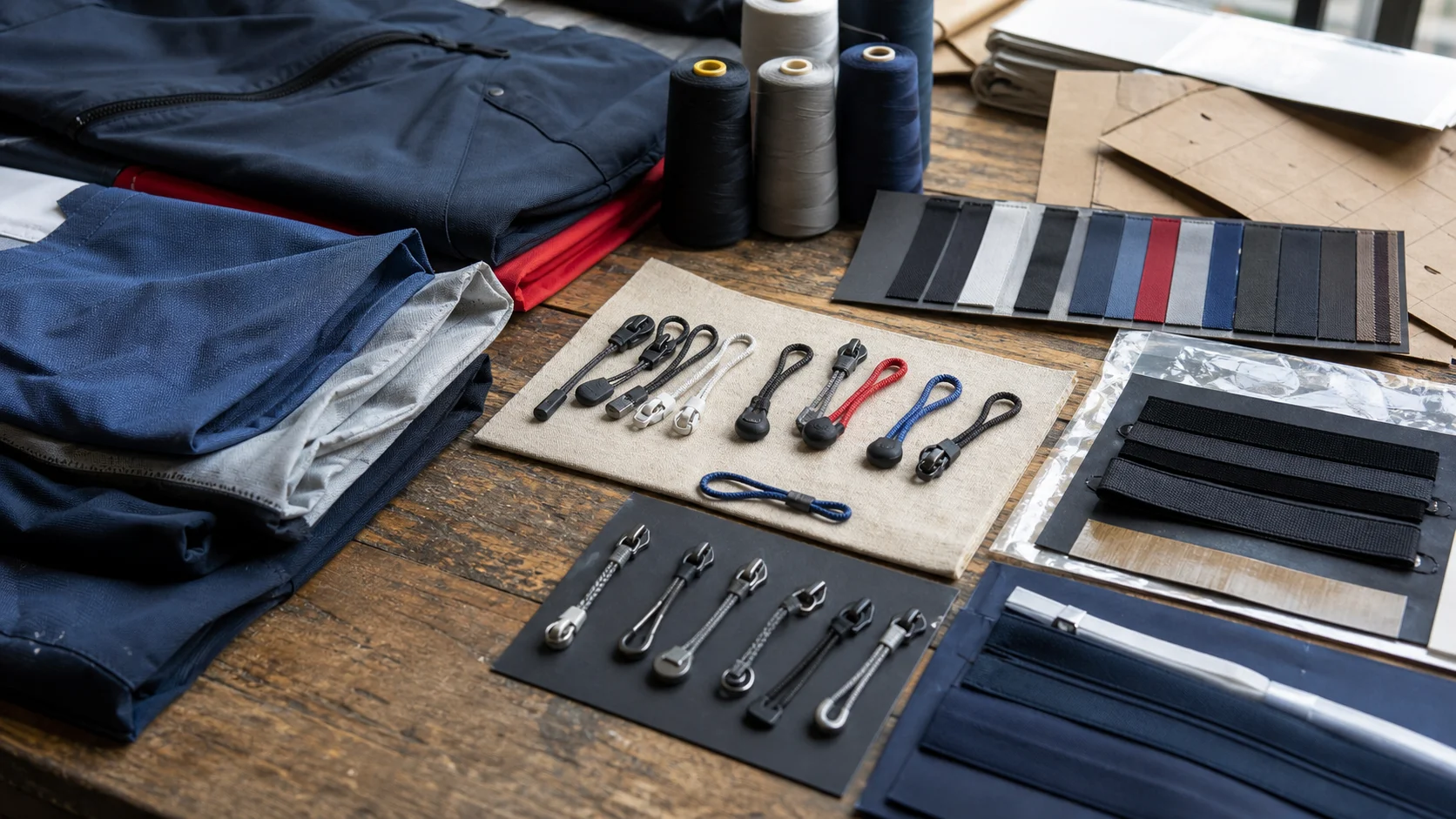
A product-specific SEO outline for marina operators reviewing zip puller charm manufacturers, trim materials, decoration methods, durability specs, and...
Zip Puller Charm Sourcing Review for Marinas - Decoration & Printing manufacturing guide
Zip puller charms are small trims, but marina operators should not treat them as throwaway decoration. In a marine environment, a zipper pull is handled with wet hands, exposed to salt air, dragged across canvas, and sometimes left in direct sun for months. A good puller charm can improve grip, support brand visibility, and make staff or guest gear easier to identify. A poor one can corrode, crack, stain fabric, or fall off before the season is over.
For marina operators, the sourcing question is not simply “who can make a cute charm?” The better question is whether the manufacturer understands trim performance, decoration durability, attachment strength, and outdoor exposure. This matters for branded dock bags, staff jackets, guest welcome kits, boat canvas accessories, dry pouches, retail merchandise, and marina uniforms.
The decoration and printing category is crowded with suppliers offering PVC patches, rubber labels, metal tags, woven pulls, silicone charms, and custom molded zipper accessories. Many look similar in a product photo. The differences show up in plating quality, mold accuracy, colorfastness, pull strength, packaging, and consistency from batch to batch.
Buying judgment: for marinas, prioritize corrosion resistance, grip, and attachment security before complex decoration. A trim that looks premium but fails in salt air is not a good purchase.
Operators sourcing broader apparel, accessories, or trim programs can review manufacturing support options through Fabrikn services. For custom development questions, the most useful early step is to send a technical brief through Fabrikn contact rather than requesting a quote from a photo alone.
A zip puller charm is an added grip or decorative element attached to a zipper slider. It may replace the standard metal pull tab, loop through the existing pull tab, or attach through a cord, ring, hook, or molded connector. In marina sourcing, the term can cover several trim types.
The right format depends on how the product will be used. A marina retail hoodie can accept a decorative PVC or silicone puller. A staff foul-weather jacket needs a larger grip, glove-friendly loop, and stronger attachment. A dockside dry pouch needs a puller that does not absorb water or leave dye on PVC-coated fabric.
Marina operators use branded trims for both operational and retail reasons. The strongest business case is usually not one item; it is consistency across a range of goods. A small zip puller charm can tie together uniforms, bags, guest packs, and seasonal merchandise without requiring a full custom garment program.
Staff jackets, fleece vests, softshells, and weatherproof layers benefit from upgraded zipper pulls because they are handled frequently. In wet or cold conditions, a larger puller is easier to use than a narrow metal tab. For uniforms, keep branding restrained. A single-color silicone tab or woven pull with a marina name often looks cleaner than a multicolor novelty charm.
Marinas that provide amenity pouches, key wallets, toiletry bags, or document cases can use custom pullers as a low-cost branding touch. The puller should match the product’s quality level. A cheap charm on a premium canvas pouch weakens the perceived value of the whole item.
For marina shops, zip puller charms work well on backpacks, cooler bags, cosmetic pouches, and hooded jackets. They can also be sold as small souvenir accessories, though this requires careful attention to packaging and safety standards. If children may purchase the item, ask about small-parts warnings and relevant market requirements.
Canvas covers, tool rolls, electronics pouches, and storage bags may need practical pullers more than decorative charms. Choose durable materials and avoid sharp metal edges that can scratch gelcoat, acrylic panels, or coated fabrics.
Material selection is the core sourcing decision. The marine environment punishes trims faster than normal retail use. Salt, UV, water, sunscreen, fuel residue, and repeated handling all affect performance.
Material Best Use Advantages Risks Soft PVC Colorful logo charms, promotional pulls Good color options, flexible molding, moderate cost May harden, discolor, or crack if formulation is poor Silicone Outdoor apparel, dry bags, premium grip pulls Soft touch, good flexibility, strong grip Higher cost than basic PVC, can attract lint Zinc Alloy Premium retail charms, yacht club merchandise Weighty feel, polished look, detailed logo options Plating and corrosion risk in salt air Stainless Steel Higher durability metal pullers Better corrosion resistance than many plated alloys Higher cost, fewer color decoration options Polyester Webbing Uniforms, canvas bags, utility products Lightweight, washable, practical Fraying, dye bleeding, weak logo clarity if poorly woven Nylon Cord Outdoor and utility pullers Strong, flexible, easy to grip May absorb moisture, ends can unravel if not sealedPVC is the common entry-level choice for custom charm programs because it supports molded logos, multiple colors, and relatively low tooling costs. It is suitable for promotional and seasonal items, but marina buyers should ask for phthalate compliance, colorfastness information, and evidence that the material remains flexible after heat and UV exposure.
Silicone is usually the safer functional choice for grip and comfort. It is flexible, clean-looking, and less likely to feel brittle. The tradeoff is cost. For a staff jacket or premium accessory, the added cost can be justified. For a one-season giveaway, PVC may be more practical.
Metal charms can look premium, but marine sourcing requires caution. Plated zinc alloy may tarnish or corrode if the plating is thin, scratched, or poorly sealed. Stainless steel is more durable but less flexible for colored logo effects. If the charm will contact light-colored fabric, request tests for staining and oxidation transfer.
Zip puller charms sit inside the decoration and printing category because branding is usually the reason they are sourced. The method must suit the material and the level of detail in the marina’s identity.
Molded logos are common on PVC and silicone pullers. The logo can be raised, recessed, or layered in multiple colors. This method is durable because the decoration is part of the trim structure, not just surface ink. It works best for bold icons, marina names, coordinates, boat silhouettes, simple waves, anchors, flags, and initials.
Screen printing can be used on webbing, silicone, PVC, or flat metal surfaces. It is cost-effective for simple graphics but can wear away with heavy handling. For marine use, ask whether the ink is suitable for outdoor exposure and whether a protective coating is available.
Embossed and debossed details create a subtle look. This is a good choice for upscale marina merchandise or club goods where loud branding is not desirable. The limitation is visibility. Fine text may disappear on small pullers, especially in dark colors.
Metal charms may use soft enamel, hard enamel, laser engraving, or plated finishes. These can look polished in retail packaging. The risk is environmental performance. Salt air can find weak points quickly, especially around recessed enamel edges, jump rings, and plating seams.
Webbing pullers can carry woven logos, jacquard text, or heat-transfer prints. Woven branding is more durable than printed branding, but small details blur. Heat transfers look sharp but need abrasion and wash testing before approval.
A clear trim specification prevents many sourcing problems. Do not approve a custom zip puller charm based only on an image, rendering, or supplier catalog code. The supplier should be able to confirm dimensions, materials, attachment method, color references, and performance expectations.
For zipper compatibility, check the slider size and pull-tab opening. A charm that fits a #5 coil zipper may not suit a #8 molded zipper used on heavier bags. The supplier should know whether the puller is being attached during garment or bag production, or retrofitted after goods are received.
Operators working with custom apparel or accessory programs can learn more about sourcing structure through Fabrikn’s company background. The key point is coordination. Trim choices should be reviewed at the same time as fabric, zipper, lining, and packaging decisions.
Minimum order quantities vary widely by material, customization level, and tooling. A supplier may advertise low MOQs, but custom molds and color-matched materials often require higher practical quantities.
Trim Type Typical MOQ Range Sample Notes Lead-Time Dependency Custom PVC charm 500 to 2,000 pieces Mold fee likely; color dip approval needed Tooling, number of colors, mold complexity Custom silicone puller 500 to 3,000 pieces Prototype may show surface and flexibility Material color matching, mold queue Metal charm 300 to 1,000 pieces Pre-production sample should include final plating Die casting, polishing, plating, enamel fill Printed webbing puller 1,000 to 5,000 pieces Strike-off needed for print clarity Webbing availability, print setup, cutting Stock puller with logo tag 100 to 500 pieces Fastest option if base trim is available Stock availability and simple branding methodThese ranges are not fixed rules. Smaller trial orders may be possible when using existing molds or stock puller shapes. New molds, custom colors, and retail packaging usually push quantities upward. If a quote looks unusually cheap, check whether the supplier has omitted mold cost, sampling fees, color matching, freight, or attachment labor.
Lead time depends on more than the factory’s production calendar. Artwork revisions, Pantone matching, mold changes, plating approvals, and packaging layout can each add days or weeks. For a custom molded charm, a cautious schedule is often two to three weeks for sample development and three to six weeks for production after approval. Faster timelines are possible for stock shapes or simple printed webbing, but rush work raises the risk of skipped checks.
Inspection is where small trims often get exposed. Since zip puller charms are low-cost components, some buyers skip detailed checks. That is a mistake for marina programs, especially when the pullers are attached to higher-value goods.
Metal parts need close review. Split rings, eyelets, hooks, clasps, and logo charms may use different alloys or plating. One part can corrode even if the main charm looks acceptable. Ask for salt spray testing if the trim will be used in high-exposure products. The exact test standard and duration should be agreed in advance, not assumed.
Dark cords, painted metal, printed webbing, and low-grade PVC can transfer color onto white jackets, pale canvas, vinyl bags, or light linings. Rubbing tests, wet crocking checks, and contact tests against the actual fabric are useful. Sunscreen and cleaning chemicals can also affect inks and coatings.
A zipper puller charm is handled repeatedly. Weak cords, poor knotting, brittle molded holes, thin rings, and loose crimps can fail quickly. For staff gear and outdoor accessories, request a defined pull force test. The acceptable force depends on the product, but the test should reflect real use rather than a light decorative tug.
Metal charms should be checked for burrs, rough plating, sharp corners, and uneven enamel. Molded trims should be checked for flash, bubbles, weak color separation, and rough gates. These defects are not only cosmetic; they can damage fabric or irritate users.
Small trims magnify minor artwork problems. Fine lettering may fill in. Thin lines may disappear. Pantone colors may shift between samples and production. Batch-to-batch variation is common when the supplier does not control raw material mixing or printing setup.
Inspection judgment: check the connection hardware as carefully as the charm itself. The logo piece may be perfect, while the ring or cord is the real failure point.
Pricing for zip puller charms is driven by tooling, material, number of colors, size, attachment hardware, packaging, and order quantity. A basic stock cord puller may cost very little. A custom silicone puller with a molded marina logo, Pantone-matched body color, retail card, and individual bagging will cost more. Metal charms with enamel and upgraded plating can rise quickly once polishing and quality control are included.
Marina buyers should compare total landed cost, not only unit price. Include mold fees, sample charges, artwork adjustments, packaging, freight, duties, inspection, and attachment labor. If the pullers are shipped separately and attached later, there may be local labor cost. If they are attached during bag or apparel production, coordination with the main manufacturer becomes important.
Choose PVC when the priority is colorful branding at a manageable cost. It is suitable for giveaways, event merchandise, youth sailing programs, seasonal pouches, and casual retail accessories. Avoid overcomplicated designs. Keep the logo bold and ask for compliance documentation if the item may be handled by children.
Choose silicone when grip, flexibility, and a more refined feel matter. It is a good choice for staff jackets, premium dry bags, branded cooler bags, and outdoor accessories. The cost is higher, but the functional benefit is clear.
Choose metal when the product needs a premium gift or club-merchandise look. Use caution for high-salt environments. Stainless steel or well-specified plating is preferable to vague alloy descriptions. Metal is less forgiving on soft fabrics and may scratch nearby surfaces if poorly designed.
Choose webbing or cord when function matters more than ornament. These pullers are easy to grip and suitable for utility bags, staff gear, and outdoor products. Logo visibility is more limited, but durability can be strong if materials are well selected.
A capable zip puller charm manufacturer should be able to discuss both decoration and performance. If the supplier only asks for a logo and quantity, the buyer may need to push for more detail.
For marina operators sourcing a full trim package, it is often better to align zip puller charms with other decoration elements: woven labels, rubber badges, printed patches, hangtags, zipper tapes, and packaging. This avoids mismatched branding and inconsistent color. A unified trim brief also improves leverage with suppliers and reduces repeated sampling rounds.
Fabrikn’s sourcing and production support can help organize these decisions across apparel, accessory, decoration, and printing categories. Start with the intended product, use environment, logo artwork, expected quantity, and delivery window. A clear brief will produce better quotes than a general request for “custom zipper charms.”
A useful buyer specification might read: custom silicone zipper puller for staff softshell jackets, 55 mm total length, navy Pantone-matched body, raised white marina logo, flexible but firm hand feel, molded hole with black polyester cord loop, compatible with #5 reverse coil zipper slider, minimum pull strength agreed before production, packed in bundles of 100 for garment factory attachment.
For a retail canvas pouch, the specification may change: molded PVC charm, 35 mm diameter, two-color raised logo, soft matte finish, split ring attachment, no sharp edges, no color transfer to natural canvas, packed individually with finished pouch. These two products should not use the same sourcing standard simply because both are “zipper charms.”
Zip puller charms can be a smart trim choice for marina operators, but only when sourced with the same discipline used for fabric, zippers, and labels. The best result comes from matching material to use case. PVC works for colorful promotional decoration. Silicone is stronger for functional grip and outdoor handling. Metal creates a premium look but needs careful corrosion review. Webbing and cord are practical choices for utility gear.
The main tradeoff is decoration complexity versus durability. Highly detailed logos, multiple colors, enamel fills, and special finishes add visual appeal, but they also add approval steps and failure points. For marine use, simple and robust usually wins. A clean logo, secure attachment, and tested material will serve a marina better than an ornate charm that does not survive a season.
Before placing an order, approve a physical sample on the actual product. Pull it, wet it, rub it against the fabric, check the zipper movement, and compare it to the sealed sample before production ships. Small trims can create a surprisingly strong brand impression, but they need practical sourcing control to perform in marina conditions.
Get a free quote from Fabrikn — your trusted B2B clothing manufacturer with 10+ years of experience. MOQ as low as 200 pieces.
Get a Free Quote →Silicone is often the best all-around choice for grip, flexibility, and outdoor handling. PVC is better for colorful promotional designs at lower cost. Metal can look premium, but it needs careful corrosion and plating review for salt-air exposure.
Typical MOQs range from 500 to 3,000 pieces for custom PVC or silicone pullers, 300 to 1,000 pieces for many metal charms, and 1,000 to 5,000 pieces for printed or woven webbing pullers. Stock shapes with simple branding may allow lower quantities.
A cautious timeline is two to three weeks for sample development and three to six weeks for production after approval. Lead time depends on tooling, artwork revisions, color matching, plating, packaging, and the supplier’s production queue.
Metal charms are suitable for premium retail items, club gifts, and higher-end accessories. They are less ideal for rough marine use unless corrosion resistance, plating quality, edge finishing, and staining risk are properly checked.
Important checks include pull strength, wet and dry colorfastness, abrasion resistance, corrosion review for metal parts, UV exposure where relevant, and fit testing on the actual zipper slider. Contact testing against light-colored fabric is also useful.
Yes, many pullers can be retrofitted using cord loops, split rings, hooks, or clasps. Compatibility depends on the zipper slider opening, pull-tab shape, trim weight, and how the item will be used.
Bold logos, short text, simple icons, coordinates, flags, waves, anchors, and initials usually work best. Fine lettering, complex gradients, thin outlines, and detailed illustrations often lose clarity when molded, printed, or woven at small scale.
Use a clear trim specification, approve physical samples, test the puller on the intended product, define inspection criteria, and compare production against a sealed sample. Avoid approving production from a rendering alone.