
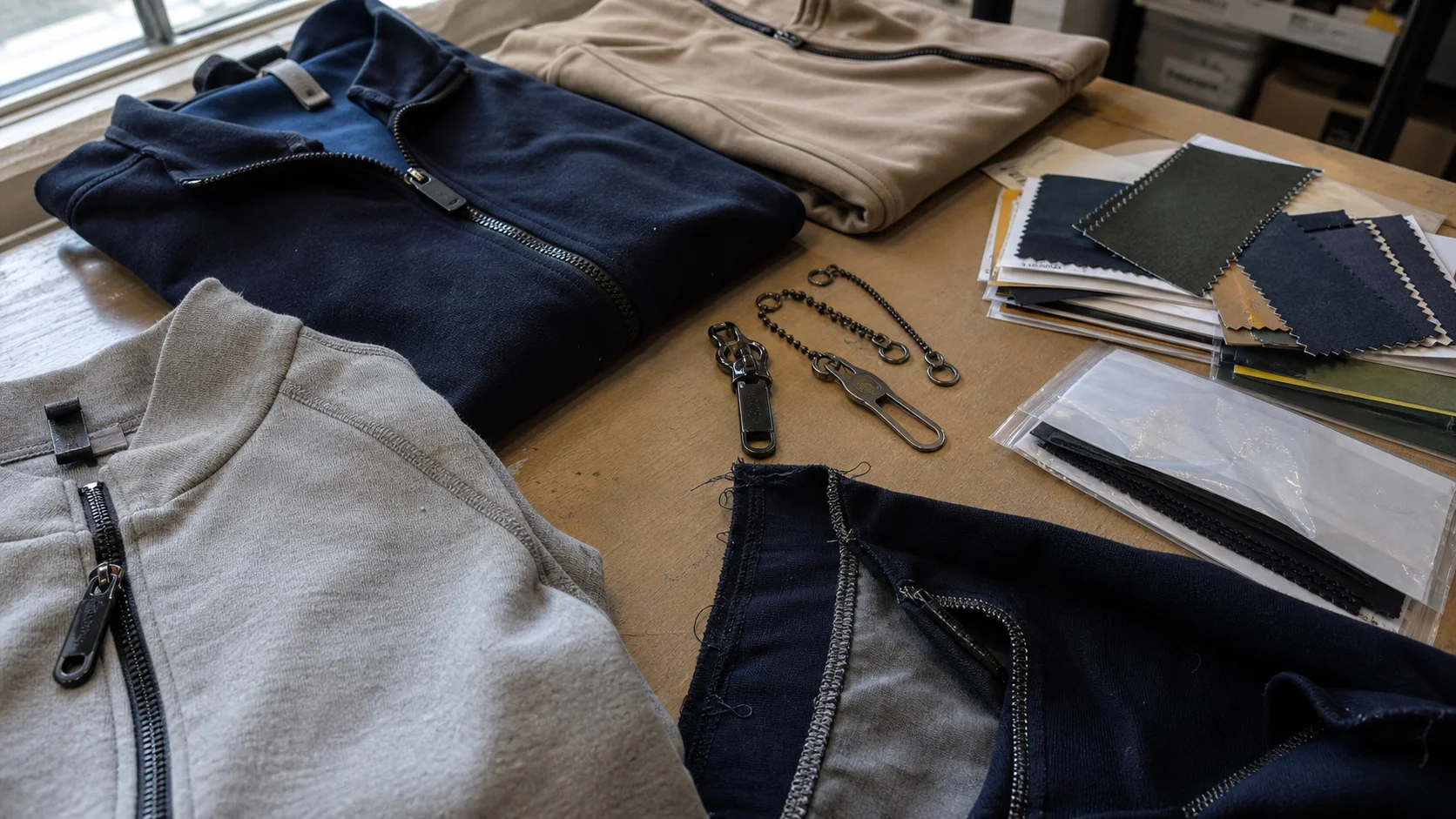
A sourcing-focused outline for restaurant groups evaluating custom zip puller charms as branded trim, covering materials, decoration methods, durability,...
Zip puller charms look small on a spec sheet, but they can carry more weight than many trim buyers expect. For restaurant groups, they sit at the intersection of branding, uniform consistency, wash durability, and cost control. The right puller can make jackets, aprons, host uniforms, and back-of-house garments feel finished. The wrong one can create snagging, plating defects, slow approvals, and replacement headaches across multiple locations.
This review is written for trim and sourcing teams buying for restaurant groups, not for fashion novelty. The real question is not whether a charm looks attractive in a sample photo. The real question is whether a zip puller charm can be repeated at scale, survive laundering, meet brand standards, and land at a price point that makes sense across a chain program.
For broader production support, it can help to compare trim sourcing with a supplier that already handles decoration and garment finishing work. Relevant pages at fabrikn.com include /services/, /about-us/, and /contact-us/.
Zip Puller Charms for Restaurant Trim Buyers - Fabrikn production reference
Zip puller charms are attached to zipper sliders as functional and decorative extensions. On restaurant apparel, they are usually used on outerwear, branded service jackets, chef layers, aprons with concealed zips, and seasonal pieces where a small branded touch improves perceived value. Some buyers use them to reinforce the brand identity through a logo, icon, color accent, or subtle metal finish.
In practice, the best zip puller charms do three jobs well: they improve grip, they communicate brand identity without clutter, and they stay intact after repeated use. That combination matters because restaurant clothing is not handled like display merchandise. Uniforms get folded, washed, steamed, hung, and worn hard.
A common mistake is treating the puller as an isolated decorative piece. It should be evaluated as part of the full trim system. Slider type, zipper tape, pull tab length, hole diameter, attachment method, and finish all affect the final result. A puller charm that looks clean on a prototype may fail on the actual production zipper if the loop is too small or the metal edges are too sharp.
Restaurant groups buy at scale, often across multiple concepts and uniform categories. Small trim decisions can multiply into large operational issues. A charm that costs a few cents more may still be justified if it reduces returns, improves durability, or prevents on-floor replacement work. A cheaper option that tarnishes quickly usually becomes more expensive over the program life.
Brand consistency is another reason these details matter. Guests notice trim more than internal teams expect, especially in front-of-house uniforms. A polished zipper pull on a hostess jacket, server layer, or branded outer shell can make the garment feel more deliberate. In hospitality, the details should feel intentional, not crowded. One strong trim element is usually better than several competing ones.
There is also a practical safety angle. Pullers should not snag easily on fabric, should not form sharp edges, and should not loosen under normal use. For kitchen-adjacent pieces, avoid excessive dangling length where a puller can catch on drawers, racks, or equipment. If the garment is intended for food service use, suppliers should be able to explain how the puller is secured and what testing they can support.
A proper supplier review goes beyond a product catalog. Trim buyers should ask for clear build details, not just visuals. The most useful suppliers are the ones that can speak in concrete terms about material composition, plating or coating method, dimensional tolerance, and sample approval workflow.
Request the base material, finish type, fixing method, and any restrictions on line thickness or logo detail. If the charm includes enamel, epoxy, engraving, embossing, resin fill, or laser marking, confirm which elements are structural and which are decorative. This matters for repeatability. Some finishes look strong in a render but show weak edges or color bleed in actual production.
Restaurant groups often reorder the same item months later for new openings, replacement stock, or seasonal refreshes. The supplier should be able to match previous production within reasonable tolerances. Ask whether the same mold, die, or tooling can be retained, and whether repeat orders are made from archived specs. If the answer is vague, expect variation.
Good trim sourcing depends on structured sample approval. A reliable sequence is first sample, revision sample if needed, pre-production sample, then bulk production. For complex metal charms, one round of revision is normal. Multiple revisions may signal that the design is too detailed for the selected process or that the supplier is not controlling tolerances tightly enough.
Loose-count trim creates avoidable errors. Restaurant groups need predictable quantities by style and size. Ask whether the supplier can pack charms by lot, by carton, or by bundle, and whether they can label SKUs clearly for distribution to multiple garment contractors or embroidery houses. Mixed cartons are a sourcing risk when several concepts are active at once.
Even for small trims, buyers should expect lot traceability. If a plating issue or breakage problem appears, the supplier must be able to isolate the affected batch. A supplier that cannot identify lot numbers or production dates creates unnecessary exposure when a program is tied to multiple store openings.
Material selection is where many trim programs either stay simple or become unnecessarily expensive. The right choice depends on the garment use case, budget, and desired look. For restaurant applications, buyers usually balance visual quality against durability and corrosion resistance.
Option Best Use Buyer Notes Zinc alloy Most decorative charms Common for molded shapes and logo detail; finish quality depends heavily on plating and post-polish work. Stainless steel High-wear or wash-heavy programs Stronger corrosion resistance; styling options may be more limited and unit cost can be higher. Brass Premium-feel hardware Good visual weight; finish consistency must be checked carefully across bulk lots. Aluminum Lightweight, simple forms Lower weight, but surface durability may be weaker unless the coating system is well controlled. Leather or PU tab with metal charm Fashion-led hospitality uniforms Can soften the look; watch for edge wear, water exposure, and stitching durability.Finishes deserve just as much attention as base metal. Satin nickel, antique brass, gunmetal, black nickel, polished silver, and matte black each create a different mood. For restaurant groups, muted finishes often age better visually than highly reflective ones. A bright chrome look can read as premium in small doses, but it also shows scratches and fingerprints more readily.
If the program uses enamel or color fill, confirm Pantone targets, gloss level, and whether the color is recessed or surface-applied. Surface color can chip under friction. Recessed fill usually performs better, provided the logo geometry supports it.
Attachment style matters too. Ring loops, split rings, stitched tabs, clasp systems, and direct zipper-tie attachment each have tradeoffs. A split ring can be strong but awkward to attach in production. A stitched tab looks clean but must be validated for seam strength and wash performance. The right answer depends on the zipper style and how much movement the puller should have in use.
For restaurant uniforms, a good trim is one that disappears into operations after approval. It should not need explanation, repair, or special handling at the store level.
Buyers often overestimate how simple a custom charm order should be. Tooling, plating, logo detail, color fill, and packaging all affect minimums and timing. Typical MOQ ranges for custom zip puller charms often start around 300 to 1,000 pieces per style, with higher minimums for more complex metal tooling or multi-color decoration. Very simple stock-style pullers may allow lower quantities, but that usually comes with limited branding control.
Sampling timelines depend on whether new tooling is needed. A plain sample from existing tooling may move quickly. A custom die or mold can extend the process. A practical timeline for first sample approval is often 7 to 14 days, then another few days if revisions are required. Production lead time can range from 15 to 35 days after sample approval, depending on factory load, finish complexity, and packaging requirements.
Lead time is rarely just a factory issue. For restaurant groups, it also depends on decision speed, color sign-off, and how quickly the internal brand team approves the final visual. Delays often come from weak sample feedback rather than manufacturing alone. Good feedback should specify what changed, what stayed acceptable, and what must be corrected.
Buyers should also ask whether the supplier can hold a repeatable shade and finish. Metal tone drift between lots is a common issue. If the project spans several openings, place a control sample in the file and approve against that physical reference, not just a photo.
Inspection for zip puller charms should focus on the defects most likely to affect daily use. Sharp edges, uneven plating, rough casting marks, weak attachment points, scratch susceptibility, and color mismatch are the issues that matter first. Cosmetic imperfections can become a brand problem when the pullers are visible at guest-facing areas.
For bulk approvals, ask for clear AQL expectations or equivalent inspection criteria. The supplier should know how to classify critical, major, and minor defects. A loose puller on a finished garment is not a minor issue if it creates a replacement cost at the store level. If the charm is attached to a zip on an apron or jacket used repeatedly during service, the failure rate tolerance should be conservative.
Wash testing should be part of the review when garments are meant to be laundered frequently. Even if the puller itself is metal, the attachment point may be fabric-based. Heat, detergent, mechanical movement, and repeated dry cycles can reveal weaknesses that a bench sample does not show. The garment contractor and trim supplier should align on wash assumptions before bulk release.
Packaging inspection also matters. Small hardware can scratch each other in transit if cartons are overfilled or individual protection is weak. A finish that survives production may still arrive damaged if the packing method is careless. For premium programs, individual polybags or separated compartments are worth considering, even if they add cost.
The best sourcing decisions are usually the least dramatic. Restaurant groups benefit from trims that are easy to repeat, easy to inspect, and easy to replace. A complex custom charm may be worth it for a flagship concept or premium front-of-house uniform. It is usually a poor choice for a high-volume back-of-house program where wash cycles are harsh and visual detail is less important.
Cost should be judged over the life of the program, not per unit only. A low-cost puller that tarnishes, loosens, or shows plating wear can create hidden expenses in store replacements and complaint handling. A slightly better finish, tighter tolerance, and better packaging can reduce those downstream costs. That is the real sourcing tradeoff.
For mixed uniform programs, consider segmenting trims by category. A branded metal charm may suit a guest-facing jacket. A simpler molded or woven tab may be a better fit for aprons, utility layers, or kitchen pieces. One universal puller across every garment is often operationally convenient, but it is not always the most rational specification.
When reviewing a supplier, ask whether they can support decoration and printing requirements across related trim categories, not just one hardware item. A vendor with broader trim capability is often better positioned to align zipper pullers, labels, patches, and decorative details under one standard. That coordination can simplify development. Useful starting points are the supplier’s services page and contact page.
For restaurant groups, a good zip puller charm supplier is not just a hardware source. It is a repeatability partner. The supplier should understand that small trim details affect the entire uniform program, from initial sample approval through multi-site replenishment. The strongest candidates can explain specs clearly, keep process control tight, and respond quickly when a chain program needs consistency across seasons and locations.
If the supplier cannot support that level of discipline, the risk is not only cosmetic. Weak trim sourcing can slow store openings, complicate reorders, and create unnecessary quality complaints. That is why zip puller charms deserve a proper sourcing review, not a casual accessory order.
Get a free quote from Fabrikn — your trusted B2B clothing manufacturer with 10+ years of experience. MOQ as low as 200 pieces.
Get a Free Quote →Typical MOQ ranges often start around 300 to 1,000 pieces per style, depending on the complexity of the shape, finish, and whether new tooling is required. Simpler stock-style pullers can sometimes be ordered in smaller runs.
First samples commonly take 7 to 14 days. A revision round can add time, especially if the design needs new tooling, a finish adjustment, or a change to the attachment method.
Muted finishes such as satin nickel, gunmetal, antique brass, or matte black often work well because they hide wear better than highly polished surfaces. The best choice depends on the brand image and the care cycle of the garment.
No. Guest-facing jackets and select branded layers may benefit from them, while back-of-house items often do better with simpler, lower-risk trims. The right specification depends on wear frequency, wash conditions, and brand visibility.
Watch for sharp edges, weak attachment points, plating wear, color mismatch, scratch damage in packing, and uneven logo detail. These issues often appear first in bulk or after laundering, not always in the initial sample.
Yes, if tooling, finish records, and approved physical references are kept properly. Buyers should confirm repeat-order control before the first bulk order, especially for multi-site restaurant programs.
Start with build clarity, sample discipline, repeatability, and packaging control. A supplier’s broader trim and decoration capability can also help when the program includes other branded details alongside the zip puller charm.