
A production-focused plan for restaurant groups to control zip puller charm shrinkage across multi-unit orders, from allocation and packing rules to...
Restaurant groups rarely lose margin in one dramatic event. Shrinkage usually comes from small gaps: missing uniforms, untracked giveaways, inconsistent reorders, incorrect trim substitutions, and the quiet cost of weak item control across locations. A zip puller charm is a small part, but it can still support order shrinkage control when it is managed as a controlled, spec-driven accessory rather than a decorative afterthought.
This article explains how zip puller charms fit into a restaurant group’s shrinkage control plan, what to specify before ordering, where the risks sit, and how to source them in a way that supports consistency across multiple outlets. For broader support in garment decoration and trim sourcing, see Fabrikn services, or use the contact page for project enquiries.
Zip Puller Charms for Restaurant Order Shrinkage Control - Decoration & Printing manufacturing guide
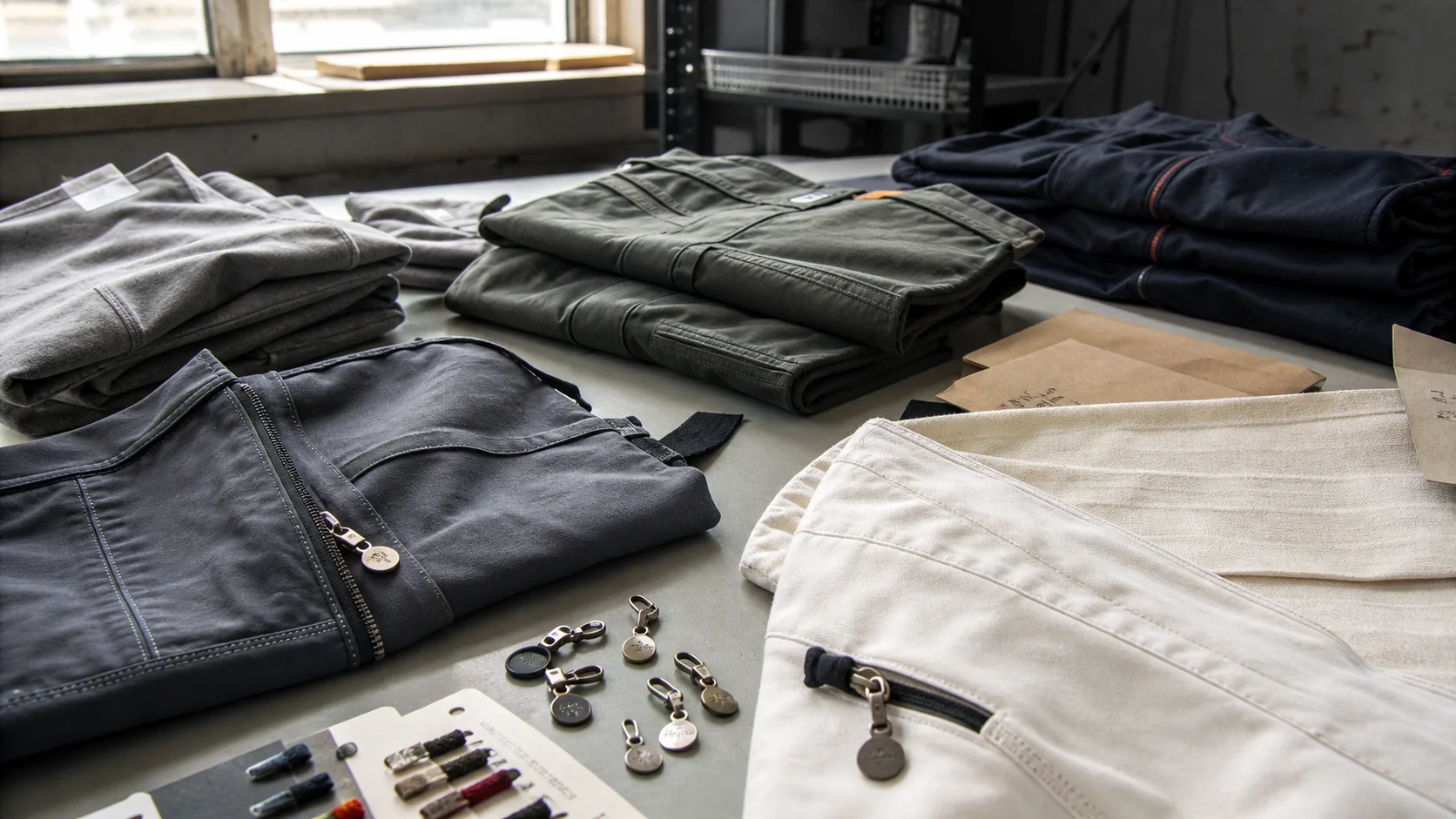
A zip puller charm is the visible end piece attached to a zipper pull. In restaurant apparel, that can mean chef jackets, server aprons with zip pockets, outerwear, hospitality uniforms, branded fleece, or utility garments used in back-of-house operations. The charm can be functional, decorative, or both. It improves grip, strengthens brand recognition, and can make a garment easier to use in fast-paced service conditions.
For restaurant groups, the value is not only visual. A controlled charm specification can reduce ad hoc substitutions and help standardize uniform presentation across stores. When the part is cheap, easy to source, and visually obvious, it is also easy to get wrong. That is where shrinkage begins. One location orders a different finish, another replaces a lost charm with a generic pull, and a third accepts whatever the supplier had in stock. The result is inconsistent branding and weak item control.
Shrinkage control in apparel is usually discussed in the context of fabric wastage, inventory loss, and unauthorized consumption. Trim items deserve the same attention. Zip puller charms are small, but the unit count can scale quickly when a restaurant group operates across multiple branches, undergoes seasonal staff turnover, or refreshes uniforms in batches.
The risk is not only loss after receipt. Shrinkage can happen at the ordering stage when no one has a locked specification. If the charm style is not coded, measured, packed, and approved the same way each time, the buying team ends up paying for repeat samples, correction shipments, and replacement orders. That is not a large-ticket problem on a single line item, but it becomes one once multiplied across a chain.
Restaurant purchasing usually benefits from disciplined, repeatable items. Zip puller charms are a classic example. They should sit inside a controlled item master with a fixed product code, approved artwork if any, confirmed finish, and a documented reorder process. That reduces “soft shrinkage,” where the business loses control of the item even if the physical stock is still on hand.
A low-value accessory does not deserve low discipline. Small trim items create large process waste when the spec is loose.
A workable order shrinkage control plan for restaurant groups should treat the charm like a managed component, not a casual accessory. The aim is to limit variation, prevent unauthorized substitution, and maintain accurate stock flow from approval to receipt to installation.
Start with a clear item description. Define the product by material, finish, shape, attachment method, dimensions, and any branding method. If the charm is to match a restaurant brand, specify whether the logo is etched, embossed, laser marked, printed, or left plain. The more precise the item name, the lower the risk of mismatch in repeat orders.
Every charm should have one approved reference number. Do not allow local branches to place open-market reorders based on photos alone. A photo is useful for recognition, not for control. The item code should link to the approved sample, the approved drawing, and the latest packaging instructions.
Restaurant groups often do best with a small buffer stock if the charm is easy to lose or if installation requires a replacement pool. A reasonable control approach is to hold a central reserve for replenishment and issue stock only against approved store requests. That reduces the chance that each site over-orders “just in case.”
Do not mix first-time distribution with replacement needs. First-time issue is part of rollout. Replacement is a consumption signal. If replacements rise too quickly, the business may have a fit problem, weak fastening, or poor staff handling. Separating the two helps identify whether the problem is demand planning or product failure.
One person or one team should approve the sample, confirm the final artwork, and release the PO. Shared ownership without a named decision maker usually leads to drift. For restaurant groups, the better choice is often a procurement lead working with brand or operations, with final approval documented before mass production.
For a charm this small, specification discipline matters more than most teams expect. A supplier can make a visually similar part that performs differently in daily use. Restaurant apparel needs repeated handling, frequent washing, heat exposure in some environments, and enough durability to survive routine wear.
Restaurant buyers should also ask whether the charm is expected to remain fixed through commercial laundering. If the garment will be laundered frequently, any plated or printed element needs testing against abrasion and moisture. A finish that looks good on a sample card may fail after repeated washing.
MOQ is a practical issue for restaurant groups, especially if the accessory is only used on a limited set of garments. Typical MOQ ranges can vary widely by material and customization level. For simple off-the-shelf charms, suppliers may accept smaller quantities. For custom metal charms with a dedicated mold, MOQ often moves into the low hundreds or more. Exact numbers depend on tooling, finish complexity, and packing requirements.
The safest approach is to treat sampling as a required stage, not a courtesy. A good approval process reduces the chance of mass production error and avoids hidden shrinkage through remakes.
When a buyer skips the pre-production stage, the first production batch can turn into an expensive correction cycle. That is especially true for restaurant groups that need to coordinate multiple locations at once. A sample that passes inspection in isolation can still fail once it is attached to the actual garment and used in service.
For broader sourcing coordination, it can help to work with a supplier that also understands the decoration side of apparel and trim management. A useful starting point is the about page to understand the supplier’s service orientation and fit for custom programs.
Lead times depend on material, customization, factory load, packing format, and approval speed. Buyers often underestimate the time lost in approval cycles rather than production itself. A simple charm can be manufactured quickly, but artwork sign-off, sample revision, and packaging confirmation can push the timeline longer than expected.
As a rule, lead time should be considered in three parts:
If the charm is tied to a seasonal menu refresh, staff uniform launch, or franchise rollout, the order should be placed earlier than the apparent production date suggests. Late approvals create a domino effect. The supplier may rush production, packing may become less controlled, and inspection may be compressed. Each of those raises the risk of shrinkage through mistakes or rework.
Inspection is where small trim orders are often either protected or lost. A low-cost item can still create expensive downstream issues if a batch is inconsistent. Restaurant groups should inspect not just quantity, but also fit, finish, and packaging integrity.
For metal charms, burrs and rough edges are a real issue because staff handle uniforms quickly and repeatedly. For soft charms, stitching strength and print durability matter more. In both cases, the item needs to survive normal service conditions, not just a tabletop visual check.
When the order is for multiple restaurant locations, count accuracy becomes a control issue, not just a logistics issue. A batch that arrives with the wrong split can force emergency redistribution and create tracking gaps. Those gaps are where shrinkage becomes hard to measure.
Restaurant groups should resist the temptation to buy the cheapest charm and assume the savings are meaningful. The real cost sits in replacement, handling, reissue, and brand inconsistency. The better purchase decision usually balances appearance, durability, and ease of control.
There are three common procurement approaches:
This is suitable when the charm is mostly functional and brand sensitivity is low. The tradeoff is limited brand differentiation and a higher risk of inconsistent substitutes if local teams reorder on their own.
This supports stronger visual identity and better control, especially if the chain wants a standard uniform look across sites. The tradeoff is higher MOQ pressure and a stronger need for sample approval and lead-time management.
This fits concept-led hospitality brands that want the zipper pull to act as a design detail. The tradeoff is cost. The benefit is stronger brand presentation and clearer item ownership, which can reduce casual substitution.
A practical sourcing decision should be based on where the charm sits in the uniform system. If it is a critical visible element, buy for consistency. If it is hidden or low impact, control the spec but keep the design simpler.
Buyers get better results when they brief the supplier in a structured way. A short, precise request reduces back-and-forth and gives the factory less room to interpret the requirement loosely.
If a restaurant group expects repeat orders, the supplier should also keep a stable production record and a maintained reference sample. That reduces the risk of drift when the item is reordered months later. Good trim suppliers understand that repeatability matters more than one-off perfection.
For teams that need a broader sourcing discussion across decoration, printing, and trim management, the best next step is often a direct project conversation through the contact page.
The strongest zip puller charm order shrinkage control plan is not complicated. It is disciplined. Fix the spec, approve the sample, document the code, control distribution, and separate replacement demand from rollout demand. The main failure point is usually not the charm itself. It is the absence of governance around a small item that everybody assumes is simple.
Buyers should ask one basic question before placing the order: will this item still be easy to track after the first rollout, the first replacement cycle, and the first reorder? If the answer is no, the spec is too loose.
For restaurant groups, that practical question is often more useful than chasing the lowest unit price. A well-controlled trim item saves time, reduces rework, and keeps the uniform program looking intentional across locations.
Get a free quote from Fabrikn — your trusted B2B clothing manufacturer with 10+ years of experience. MOQ as low as 200 pieces.
Get a Free Quote →It is a small accessory attached to a zipper pull on uniforms or branded garments. In restaurant use, it can improve handling, reinforce brand identity, and create a more polished uniform appearance.
It helps when it is managed as a controlled item with one approved spec, a fixed item code, documented samples, and restricted reorder authority. That reduces substitution, over-ordering, and branch-level inconsistency.
MOQ depends on the material and customization level. Simple stock items can be ordered in smaller quantities, while custom metal charms often require low-hundreds minimums or more because of tooling and setup requirements.
At minimum, a pre-production sample that matches the final material, finish, artwork, and attachment method. For garment applications, the charm should also be checked on the actual zipper type used in production.
Dimensional mismatch, weak attachment strength, rough edges, plating wear, logo inconsistency, and packaging errors are the main concerns. For multi-site restaurant orders, count accuracy and store allocation are also important.
Lead time varies by design complexity, sample approval speed, tooling needs, finish type, and factory workload. The approval stage often affects delivery more than the production stage itself.
It usually is when the charm is part of the visible uniform system and the restaurant group wants consistent branding across locations. If the piece is low visibility or highly utilitarian, a simpler spec may be better.
It depends on the distribution model. Individual packing is better for store allocation and count control. Bulk packing may reduce cost, but it increases handling and the chance of distribution mistakes.