
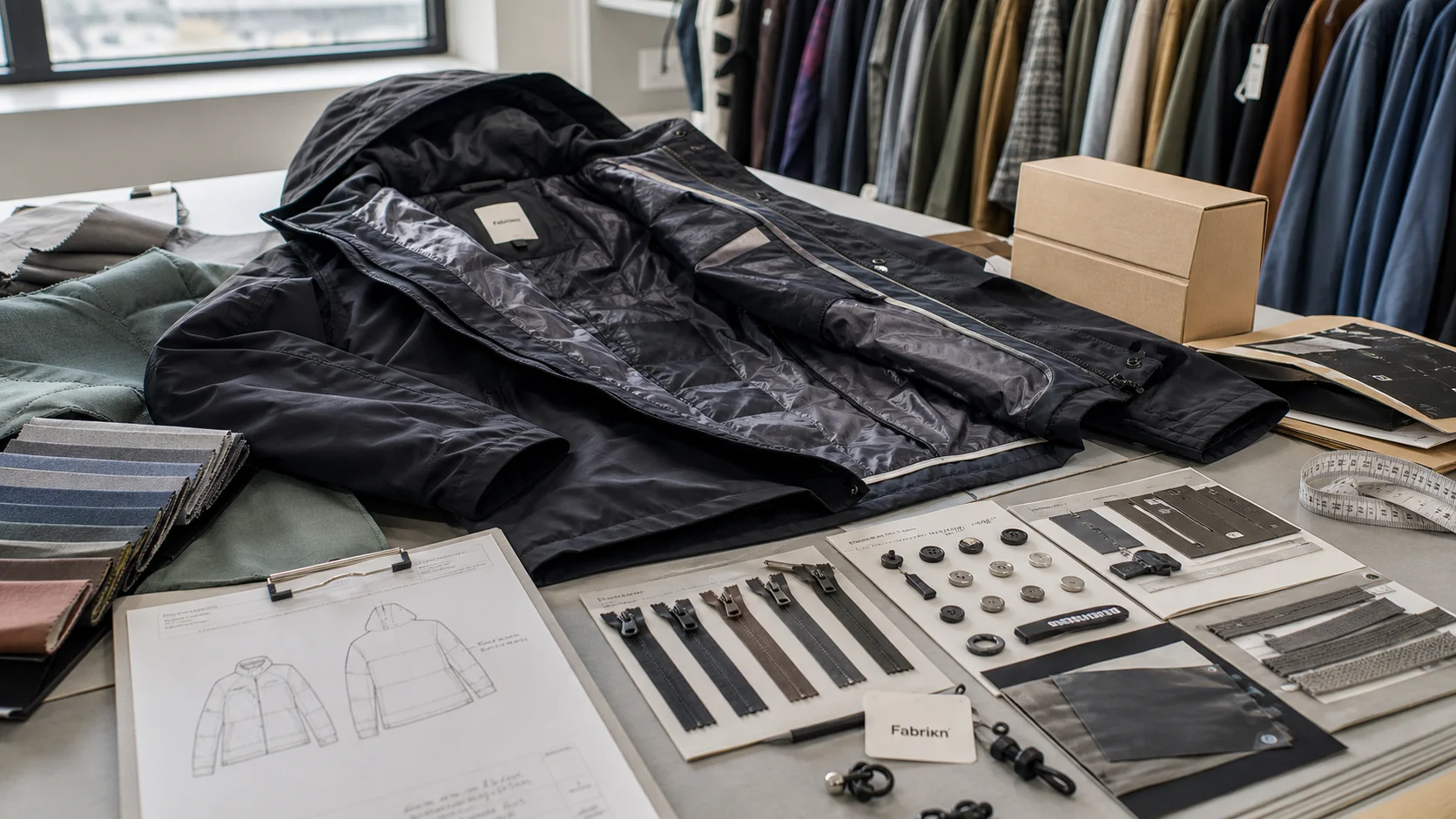
Unboxing Experience for Online Clothing Store Packaging with checks for samples, fit, MOQ, QC evidence, pricing terms, and delivery risk.
Fast answer: Unboxing Experience for Online Clothing Store Packaging: Material, Print, Packing Flow, and Cost should be judged by production evidence, not by a generic sourcing promise. The buyer needs sample proof, cost breakdowns, QC checkpoints, and delivery buffers in writing.
Ask for recent sample photos, measurement tolerances, fabric or print test assumptions, decoration test notes, packing examples, and a named inspection checkpoint. These details show whether the team can repeat an approved sample at bulk volume.
Separate garment cost, decoration, labels, packaging, sampling, testing, freight, and rush charges. When every cost line is visible, it becomes easier to reduce colorways, adjust size depth, or reserve more time for sampling.
I once watched a $18 tee get treated like a luxury item because the parcel arrived square, dry, and quiet. I’ve also seen a $220 blazer lose half its perceived value before the customer even touched the hanger. The best unboxing experience for online clothing store brands starts before the seal is broken, because the story is already underway at the doorstep. Industry surveys keep saying the same thing: 40% to 60% of shoppers share packaging on social media when the presentation feels intentional, while repeat purchase rates can rise by 15% to 25% when delivery feels reliable enough to trust.
Seven seconds. That’s the window.
Parcel arrival. Outer protection. Branded reveal. Tissue. Product placement. That sequence is the script, and factories break it in predictable ways: weak adhesive that pops in transit, crushed corners that make a rigid mailer look cheap, inserts that land crooked because the packing table is set up for speed instead of discipline. A shopper may not know the difference between a 200 GSM folded carton and a 28-micron poly mailer, but they know when a package feels sloppy. They also know when the garment is folded too tightly, leaving permanent creases before it has even cleared the warehouse.
Budget brands often win by being consistent, not elaborate. A plain poly mailer with one-color branding, a single tissue sheet, and a clean fold can signal care at $1.20 to $2.00 per order. Mid-market labels usually need a bit more structure, so a corrugated mailer, a branded sticker, and a simple thank-you card often land in the $2.50 to $4.50 range. Premium brands may use rigid boxes, dust bags, and molded inserts, but the best ones still keep the reveal fast. Nobody wants to fight through six layers to reach a cotton shirt.
When I visited manufacturers in Vietnam, India, and Portugal, the divide was clear. The strongest lines did not have the fanciest materials; they had better controls. Box compression specs were taped to walls. Glue guns were calibrated. Fold samples sat beside the production table. That discipline matters because customers read order, speed, and cleanliness as quality. The best unboxing experience for online clothing store brands is less about spectacle and more about control, consistency, and a quick reveal that feels effortless.
Expectations shift by price point, but they do not disappear. At entry level, shoppers want basic protection, no stains, and a garment that arrives in the right size. At mid-tier, they expect neat presentation and a package that does not look recycled three times over. At premium, they look for share-worthy details such as heavier paper, tighter folding, and a finish that feels deliberate. A $35 hoodie and a $350 coat are judged by different standards, yet both lose trust fast if the package arrives dented or overstuffed.
Region changes the brief. In North America, customers are often fine with lightweight mailers for tees and activewear, especially when shipping speed is two to five days and returns are easy. In Europe, shoppers show more sensitivity to recyclability labels, paper-based packaging, and reduced plastic content. Southeast Asia is more divided: urban shoppers in Singapore and Kuala Lumpur may want premium cues, while mass-market buyers in Indonesia and the Philippines respond well to lighter, cheaper packaging that keeps final delivery fees down. In China, presentation can be especially important for social sharing, but cost discipline still matters in wholesale and bulk orders.
Gender and age play a role, but not in the lazy way most brands assume. Younger shoppers often want something shareable, yet they also penalize waste faster than older buyers. Men buying basics tend to prefer minimal packaging and easy-open formats. Women buying occasionwear may appreciate tissue, dust bags, and a careful fold, especially when the garment is a dress or tailored piece. Across segments, the signal is the same: packaging should protect the product, not compete with it.
The thing nobody tells you: premium-looking packaging can irritate value shoppers if it adds waste, tears awkwardly, or creates three minutes of cleanup before they can try the clothes on.
I’ve seen this backfire with brands that over-index on ribbons, magnetic boxes, and layered inserts for commodity items. Return rates creep up when the unboxing feels more like disposal than discovery. A 2% to 4% reduction in returns can come from better clarity on size labeling and fewer packing errors, while social sharing often tracks more closely with neatness and camera-ready folds than with expensive extras. Trust grows when the package looks organized, not inflated.
Material choice starts with garment type. Tees and lightweight knits usually travel well in paper mailers or slim corrugated mailers, as long as the fold stays flat and the neck area is protected from pressure. Denim, structured outerwear, and dresses need more crush resistance, so a corrugated box or reinforced mailer makes sense. Accessories can be sent in small paper mailers, but belts, hardware, and shoes often need internal support to avoid scuffing. A 320 GSM French terry hoodie can survive a mailer; a silk blouse usually should not.
Rigid boxes signal premium, but they cost more in freight, storage, and labor. Corrugated mailers are usually the sweet spot for brands shipping 500 to 20,000 orders a month. Poly mailers still win on cost and weight, especially for basics, but they should be specified carefully if a brand wants better presentation. Paper mailers can be a good compromise for sustainability claims, yet they need the right tear resistance and seal strength or they fail at the seams. According to trade.gov packaging and logistics guidance, packaging tests should be matched to actual transport stress, not assumptions about a perfect warehouse run.
Tissue paper, stickers, and inserts are small, but they control the reveal. A one-color logo on 17 to 22 GSM tissue gives a cleaner first impression than a busy full-bleed print that bleeds through and cheapens the garment beneath it. A thank-you card can work if it is short and specific. Dust bags make sense for knitwear, shoes, and premium outerwear, while a security seal is useful when the brand wants to show that the item left the factory untouched. The best packs often use just three layers: outer shipper, inner wrap, and garment placement.
Material trade-offs matter more than the marketing copy. Recycled content is useful only if the paper still folds cleanly and the print stays sharp. Curbside recyclability is only a selling point if local recovery systems accept the format. Heavy ink coverage looks expensive, but it can hurt recyclability and slow drying time. Data from Textile Exchange shows the industry is under pressure to reduce waste, yet factories still need packaging that runs at speed. I’ve seen a beautiful paper mailer cut pack-out by 18% because the adhesive strip was too stiff for line workers wearing gloves.
That is where sourcing discipline matters. Brands building private label clothing services often focus on labels and fit, then forget packaging ergonomics. A pretty sample can hide a slow line. If the packer needs 12 seconds instead of 7 to close each unit, the cost compounds fast across 1,000 orders.
I like packaging budgets to be brutally honest. For a startup brand, a sensible per-order range is $0.70 to $2.25, depending on size mix and print volume. That usually covers a plain or lightly branded mailer, one tissue layer, a sticker seal, and a basic insert. At growth stage, the range moves to $2.25 to $4.75 because brands add custom tape, better paper stock, and more precise sizing. Premium labels can spend $4.75 to $9.50 per order, especially if they use rigid boxes, specialty finishes, or multi-piece presentation kits.
Volume changes the math fast. A 10,000-unit run of printed tissue may land at $0.06 to $0.14 per sheet, while a 1,000-unit run can be double that. Custom mailers often drop by 20% to 35% once orders rise above 5,000 pieces, but setup fees can erase savings if the design changes every season. High-ROI upgrades are simple: one-color printing, custom tape, sized mailers, and tissue that fits the fold count exactly. None of those require luxury-grade spend.
Hidden costs are where margins disappear. Dimensional weight can add $0.40 to $1.20 per parcel if the box is too large. Void fill increases freight and labor. Storage space matters too; rigid boxes can take 3 to 4 times the pallet volume of flat mailers. Labor is the silent killer. If packaging adds 20 seconds per order, that is almost 6 extra labor hours across 1,000 parcels. In a warehouse paying $18 to $24 an hour, the difference is not theoretical.
For low AOV basics, spend on protection and pack speed. For higher AOV and lower return frequency, invest in stronger presentation and fewer mistakes. Brands shipping dresses, tailored shirts, or premium knitwear can justify a heavier box because the perceived value is higher. Brands with high return rates should avoid overbuilding the experience, because too many layers create friction on the way back in. When a category has tight margins, packaging must work like operations, not decoration.
That is why cut and sew manufacturing partners should be asked about folding standards, carton fit, and pack-out timing as early as fit comments. Packaging and production are linked. If the garment is spec’d to ship flat, the mailer should be sized for that exact fold, not guessed after the fact.
A sample on a table can lie. Production tells the truth. I’ve seen a pristine mock-up with perfect logo placement turn into a messy run because the print file was sent at the wrong resolution and nobody checked the first 50 units. That is why QC for packaging has to be as structured as garment QC. The checks I use are simple: print registration, glue strength, tear resistance, fold accuracy, and insertion flow. If any one of those fails, the customer feels it before they read a care label.
Common failures are boring, which is exactly why they are dangerous. Color drift on kraft paper can make a brand mark look muddy. Off-center logos show up on the unboxing video immediately. Scuffed finishes happen when cartons are stacked before coatings cure. Weak closures create shipping damage that looks like negligence. I have seen factories in Turkey produce excellent fold consistency across 5,000-piece runs, while smaller workshops in other regions struggle with repeatability because they rely on manual packing and do not standardize the line. This is not about geography as a stereotype. It is about process control, staffing, and whether the supervisor checks the first shift against the approved sample.
Transit testing should be non-negotiable. Drop tests from 60 to 100 cm, humidity exposure for 24 to 48 hours, and simulated compression can expose problems that a showroom never will. If a box opens at the seam after a moisture cycle, it will probably fail in a rainy delivery hub too. ASTM shipping test methods exist for a reason, and they save brands from expensive embarrassment. I also recommend checking pack-out after 20, 50, and 100 units to spot drift before an entire batch is lost.
Brands that sell babywear, for example, need even tighter control because parents judge packaging cleanliness as part of product safety. That is where custom baby clothing manufacturing ties directly to package discipline. The clothes may be tiny, but the standards are not.
Start with an audit. Day 1 to 3: document every packaging component, from mailer size to sticker placement, and measure current damage rate, which should usually sit below 1.5% for most apparel categories. Day 4 to 7: decide the architecture. Choose one outer format, one inner wrap, one insert, and one sealing method. Do not add extras until the core flow is stable. I have seen brands waste two weeks debating ribbon color while their box size was still wrong by 15 mm.
Day 8 to 14: request samples from at least 2 suppliers and test them against 3 garment types, ideally a tee, a knit, and a heavier item like denim or a blazer. Ask the warehouse team to time pack-out. If the pack process exceeds 12 to 15 seconds per unit, revise the spec. Day 15 to 20: approve revisions, confirm print files, and lock the message copy. Day 21 to 25: train fulfillment staff on fold order, seal placement, and exception handling. Day 26 to 30: run a pilot of 200 to 500 orders before full launch.
Track five KPIs from the first shipment: damage rate, repurchase rate, social mentions, return friction, and pack-out time. A 5% improvement in pack-out speed can matter more than a fancy insert. If you are using a brand partner for development, ask for a factory sample and a production sample side by side before approving the run. That is also the right moment to get a free quote and compare total landed cost, not just the unit price.
Sequence matters. Finalize packaging architecture first, then size specs, then messaging, then warehouse SOPs. Do not reverse that order. The best unboxing experience for online clothing store brands is built by operations teams that respect the clock.
The brands that win long term are not the ones with the prettiest first launch. They are the ones that test small things and listen hard. I run low-cost A/B tests on insert copy, tissue color, fold orientation, and outer packaging format. A simple switch from a heavy box to a reinforced mailer can cut postage by $0.60 to $1.80 per order, while a different insert can change social sharing rates by 10% to 15% if the reveal is cleaner on camera.
Seasonal shifts matter. Holiday periods create more rush damage, so I usually specify stronger closures and simpler folds for November and December. Launch campaigns need a higher visual payoff, but sale periods should prioritize pack speed and low waste. If a brand ships 20,000 orders in a peak month, even a 4-second improvement in pack-out time can save hundreds of labor minutes. Warehouses notice that immediately. Customers do too, because fewer touches usually mean fewer mistakes.
I always combine three data sources: customer feedback, unboxing videos, and warehouse data. Feedback tells you what people remember. Videos show what they actually see. Warehouse data reveals where the process slows down or fails. Personalization should match price point. At $30 to $60, a short printed note is enough. At $150 and above, a custom card or limited-run sleeve can work, but only if it does not slow the line or create waste that shoppers notice.
Here’s what most people miss: packaging should earn its keep through retention, not vanity. If it does not reduce damage, improve repurchase, or lower friction, it is just expensive confetti.
My bias is clear. I would rather see a $2.10 pack that arrives perfectly than a $7.50 presentation kit that frustrates the buyer. The best unboxing experience for online clothing store customers is the one that survives shipping, delights fast, and keeps the brand honest about cost. Test it every season. Trim what fails. Keep what makes the customer come back.
The best version is clean, protected, and fast to open. Most brands can achieve it with a correctly sized mailer or box, one tissue layer, and a simple branded insert, keeping per-order cost around $1.20 to $4.50 depending on volume.
Budget packaging usually runs $0.70 to $2.25 per order, mid-tier packaging $2.25 to $4.75, and premium kits $4.75 to $9.50. Freight, storage, and labor can add another $0.40 to $1.20 if the package is oversized or slow to pack.
A practical rollout takes about 30 days. Sampling and revisions often take 10 to 14 days, production setup another 7 to 10 days, and warehouse training 3 to 5 days before a 200 to 500 order pilot.
Yes. Use recycled-content mailers, one-color printing, and right-sized packaging before adding premium extras. Those changes often cost less than decorative add-ons and can reduce shipping weight by 5% to 12%.
Start with fit and consistency. Choose one outer format, one tissue spec, and one sealing method, then test them on 3 garment types and 200 pilot orders. That usually delivers better results than buying expensive inserts first.