
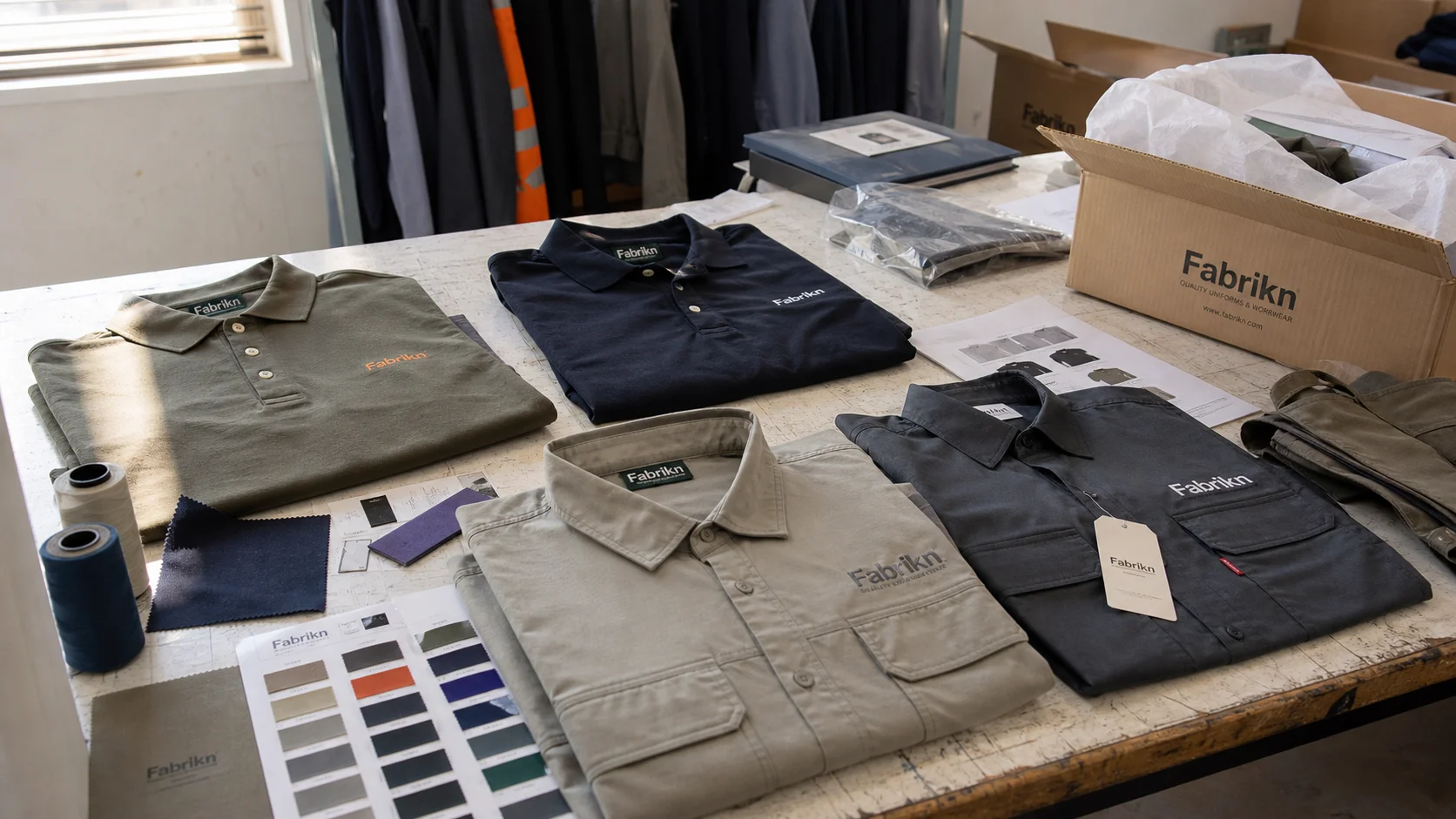
Branded Garment Mailers Care Checklist with checks for samples, fit, MOQ, QC evidence, pricing terms, and delivery risk.
Fast answer: Branded Garment Mailers Care Checklist: Material, Closure, Print, and Shipment Fit should be judged by production evidence, not by a generic sourcing promise. The buyer needs sample proof, cost breakdowns, QC checkpoints, and delivery buffers in writing.
Ask for recent sample photos, measurement tolerances, fabric or print test assumptions, decoration test notes, packing examples, and a named inspection checkpoint. These details show whether the team can repeat an approved sample at bulk volume.
Separate garment cost, decoration, labels, packaging, sampling, testing, freight, and rush charges. When every cost line is visible, it becomes easier to reduce colorways, adjust size depth, or reserve more time for sampling.
The parcel lands before the product gets a chance to speak, which is exactly why branded paper mailer bags for fashion startups matter so much. Packaging can shift repeat purchase behavior by double digits, and social sharing rises when unboxing feels considered rather than disposable. I’ve seen brands spend $1.80 on a rigid box and still lose the customer because the tee arrived creased, while a $0.42 paper mailer created a far cleaner first touch. The phrase sounds modest. The effect is not.
Customers judge the parcel before they judge the product. In the first 10 seconds, they notice the tear strip, the print sharpness, the weight in hand, and whether the packaging feels aligned with the garment inside. That matters at every price point.
A $25 T-shirt brand can gain more from visible eco cues than from luxury cues, because the shopper is already calibrating value against price. A $250 outerwear label benefits too, but for a different reason: paper mailers signal restraint, not cheapness. On factory visits in Portugal, Dhaka, Ho Chi Minh City, Guangzhou, and Istanbul, I kept seeing small brands overinvest in outer packaging before solving fit issues and damage rates. Backwards. A box with a dented hem still looks careless.
Paper mailers read premium when the finish is crisp and the print is disciplined. They also feel more aligned with fashion values than polyethylene bags, which many consumers now mentally file under waste. According to WRAP, packaging choices affect both disposal behavior and recyclability outcomes, which is why material selection matters more than a logo alone. A clean kraft mailer with a 120-160 gsm stock can communicate quality without pretending to be jewelry packaging.
I’ve worked with brands that sell ribbed tanks for $18 and wool coats for $320. Both used branded paper mailer bags for fashion startups. The tank brand needed color and clarity. The coat brand needed protection and a calm, expensive-looking unboxing. Different needs. Same material family. That is the appeal.
Most branded paper mailer bags for fashion startups are built from kraft paper, recycled paper, or laminated paper constructions. A manufacturer or factory may recommend kraft as the workhorse option because a 120-180 gsm mailer can handle tees, socks, and light knits with decent tear resistance. Recycled paper is often cheaper by 3% to 8%, but strength varies more because the fiber mix is less uniform. Laminated paper adds moisture resistance, yet it can complicate recycling if the laminate layer is too heavy.
GSM matters because it affects puncture resistance, fold memory, and how much abuse a parcel survives in transit. A 140 gsm mailer feels lean but can split at the corners if the seam glue is weak. A 170 gsm stock usually handles better for denim and heavier jersey. I’ve seen moisture ruin a shipment in monsoon season when the bag looked strong but had no coating at all. Dry paper is not the same thing as safe paper.
Finish changes how the bag reads on arrival. Matte prints look controlled and premium. Uncoated surfaces feel earthy, but they scuff faster during long sorting runs. Light coating sits between the two, giving some moisture protection without making the bag look plastic. For brands positioned at $30 to $80, matte kraft usually lands best. For mass-market basics under $20, a simpler uncoated look often feels more honest than faux-luxury gloss.
FSC-certified paper is widely requested, and it helps procurement teams document chain of custody. But the sustainability trade-off is not binary. Virgin fiber can be stronger at the same gsm, while recycled fiber can reduce sourcing pressure if the mill and local recovery system support it. Recycling rules vary by region, and multilayer paper that looks recyclable in one country may be rejected in another. Data from ISO shows why material standards and testing protocols matter, especially when export markets differ on recovery and contamination thresholds. Independent certification bodies such as OEKO-TEX are also useful references when evaluating inks, coatings, and textile-adjacent supply chains.
When I spec packaging for brands that also use custom bra manufacturer services or premium knit programs, I look for the same discipline: choose the structure that fits the product, not the prettiest sample on the table. Paper mailers are no different. I regularly ask for materials with GOTS certification, GRS recycled content claims, and WRAP-compliant mills to match the garment spec sheets, along with OEKO-TEX Standard 100 for inks and adhesives.
The machines used matter too. Flexo presses like the Mitsubishi Diamond for one- to four-color jobs keep registration tight on kraft, while a KBA Rota or Windmöller & Hölscher can handle up to eight colors with inline varnish. Automatic die-cutters with pneumatic clamps, such as the Heidelberg Dima, ensure consistent slotting for tear strips, and UV ovens cure aqueous inks quickly so the mailer doesn’t set off residue alarms during bagging. Glue units that use water-based, BSCI-approved adhesives keep seams strong without off-gassing, and foil stamping uses heated cylinders set at exactly 120–130°C to avoid scorching kraft faces.
The cheapest packaging quote is rarely the cheapest landed cost. At 500 units, a plain paper mailer might run $0.38 to $0.72 each, while a printed version lands around $0.58 to $1.05 depending on size and color count. Poly mailers sit lower, often $0.12 to $0.28 at the same volume. Rigid boxes usually start near $1.10 and can climb past $3.50 once inserts and finish are added. Those numbers shift quickly with freight, but the pattern holds.
At 1,000 units, branded paper mailer bags for fashion startups often fall into the $0.30 to $0.62 range for simple custom branding. At 5,000 units, you may see $0.20 to $0.45. At 10,000 units, a two-color kraft mailer can drop below $0.18 if the spec is standardized and the supplier is running efficiently. Poly mailers still undercut paper on unit price, but not on perceived value. Rigid boxes barely improve with scale unless the design is highly repeated.
Setup costs are where startups get trapped. Plates can add $60 to $180 per color. Cylinders cost more, often $150 to $400 depending on size and vendor. Artwork changes after approval can trigger a fresh plate or film charge. Then there is carton volume. Paper mailers take up more space than compressed poly, so freight per unit can rise by 10% to 25% if the packout is inefficient. I’ve watched brands save $0.07 on the bag and lose $0.19 on shipping.
Startups overspend in three predictable ways. They choose a heavy stock that is unnecessary for a 140 gsm cotton tee. They order oversized bags because they fear wrinkles, then ship excess air. They use too many print colors, which increases setup cost without improving conversion. One brand I audited printed five colors on a bag for a $28 sweatshirt line. The packaging budget hit $1.42 per order. The product margin could not carry it. Another set of clients negotiated a run with a Guangzhou converter that quoted $2.50-4.00 per unit at 500 MOQ for a laminated, foil-branded mailer that kept the garments dust-free and allowed the brand to drop the poly sleeve entirely.
If your core assortment is built through private label clothing, packaging should protect margin, not show off a buying decision. Target landed cost matters more than supplier poetry. Aim for the full number, not the sticker price. For market access and sourcing context, the U.S. Department of Commerce trade guidance can also help teams benchmark import conditions by region.
Match the bag to the garment category. Tees and tanks usually fit 250 x 350 mm to 300 x 400 mm mailers. Denim needs more depth, often 330 x 450 mm or larger, especially with folded jeans at 500-700 grams. Knitwear benefits from a bit more room to prevent hard creasing. Accessories can use smaller formats, while light outerwear may need gusseted paper mailers rather than flat ones.
A 5-10 mm fit buffer sounds tiny, yet it saves a lot of trouble. It reduces wrinkling, keeps seams from stressing, and avoids forcing staff to overstuff the parcel. I’ve seen automated packing lines in Ho Chi Minh City jig the mailer through a Servo-driven folding machine, which loved the tolerance because it reduced tear-trimming rejects by 17%. The buffer also limits the number of inserts needed—one brand swapped a laminated direction card for a printed one on heavier stock and trimmed 0.8 grams per parcel out of their total DIM weight.
Consider the finishing processes before you finalize the print. A 1-color matte black flexo job on kraft paper is much cheaper than a four-color process with spot varnish. If you plan to add foiling or embossing, make sure the calendered paper you select is compatible with the heat and pressure of the machine. Some converters in Dhaka and Istanbul charge a 12% premium when a job needs die-cut perforations because the equipment has to slow down to 70 meters per minute instead of the 120 m/min average for straight runs. Align the print spec, finish, and machine capability early.
When you need to fine-tune, sample multiple widths of adhesive tape or peel-and-seal strips from suppliers that follow BSCI and WRAP guidelines. Those certifications are easiest to find in very large hubs like Guangzhou and Dhaka, where you can verify on-site the machines used—typically a Bobst Expertcut for die-cutting and a KBA Rotocontrol for precise alignment. Choose adhesives that are solvent-free yet strong enough for automated sorters; otherwise, you’ll see premature opening during outbound QC checks.
Guangzhou converters remain the go-to for startups that need a blend of speed and precision. With wide access to 170 gsm kraft liners from Sappi and Dongguan mills, converters in Guangzhou can meet MOQ minimums of 2,000 units for as low as $0.25 per unit with simple two-color printing, and they offer flexo lines that run 60-80 meters per minute. Lead times typically sit between 18-22 business days, which includes inline printing, lamination, and QC. They also give you room to test both GOTS-certified and GRS-certified papers because they stock both domestic and imported fiber blends.
Dhaka suppliers keep costs at the lower end—$0.19 to $0.40 per bag at 5,000 units—because of their access to recycled pulp and government-subsidized power for folder-gluer lines. Their challenge is consistency, so they compensate with twice-daily quality checks using tensile testers and fold endurance machines. Many Dhaka houses now operate under BSCI and WRAP audits, ensuring that finishing operators work shifts compliant with international labor standards.
Ho Chi Minh City balances European aesthetics with Vietnamese agility. Their machines—MPS flexo presses with varnish units and MBO folding lines—deliver clean edges, and they often stock OEKO-TEX Standard 100 inks that meet apparel industry requirements. Their sweet spot is medium-volume orders (2,500-7,000 units) with budget ranges around $0.32 to $0.55 per custom-printed mailer. Because they are near major export ports, shipping batches to North America or Australia can be faster when the printer handles FCL consolidations.
Istanbul suppliers are ideal for brands targeting Europe. They can source both GF-certified adhesives and kraft from Mediterranean mills, producing gusseted mailers quickly with German-made automatic die-cutters. Prices hover between €0.25 and €0.44 per mailer for orders of 3,000 units, and their proximity to Istanbul Airport or Aliaga port reduces inland logistics by several days. They will usually secure a GRS certificate for recycled fiber content and can provide documentation for WRAP and OEKO-TEX audits.
If you need a quick second source or want to sample multiple finishes before scale, order 250-500 units of each spec, and test them internally before committing to a 5,000+ run. Always inspect the sample for consistent grain direction, ink density, and seam strength from the die-cut to the final seal.
Testing should include at least three steps: visual/aesthetic inspection, mechanical testing, and real-world stress scenarios. First, compare printed swatches to your Pantone or Pantone+ standards in natural daylight to evaluate opacity and gloss. Use a 45° lighting angle to check for haze, particularly when metallic inks or film laminates are involved.
For mechanical stress, run a sample through tensile and peel tests using a handheld dynamometer. Check the seam strength and adhesive pull to make sure your mailers stay closed during automated sortation. Many converters use a 15-20 N threshold for seal strength on 160 gsm kraft with water-based glue. You can duplicate this with a benchtop tester before the supplier ships the production run.
Finally, bundle the mailer with 2-3 typical garments (e.g., a 220 g/m² French terry sweatshirt, a pair of denim, and a ribbed tank) and drop the bundle twice from 30 cm onto a conveyor belt. Check for scuffing, bursting, or print damage. This real-world test mimics the conditions you’ll face in fulfillment centers and last-mile carriers, especially those in Istanbul and European rail nodes where handling can be rougher.
Start by listing your product dimensions, preferred materials (e.g., 150 gsm kraft with 20% post-consumer recycled content), and finish (matte, spot UV, foil, etc.). Share this spec sheet with at least two suppliers across different regions to compare lead times, certifications, and tooling costs. Request a pre-production sample run of 50-100 units so you can test fit, print, and adhesive performance internally before the final order.
Consider splitting your first order between two manufacturers—one local (maybe near your fulfillment center) for rapid replenishment, and one offshore (Guangzhou, Dhaka, Ho Chi Minh City, or Istanbul) for larger volume. Track the landed cost from each, including freight, customs, cartons, and warehousing.
The ideal timeline for a first production run is 18-22 business days, including material sourcing, printing, QC, and out-the-door shipping. Once you’re confident in the sample, negotiate a rolling order cadence that keeps your inventory at optimal levels without overcommitting to expensive overages.