
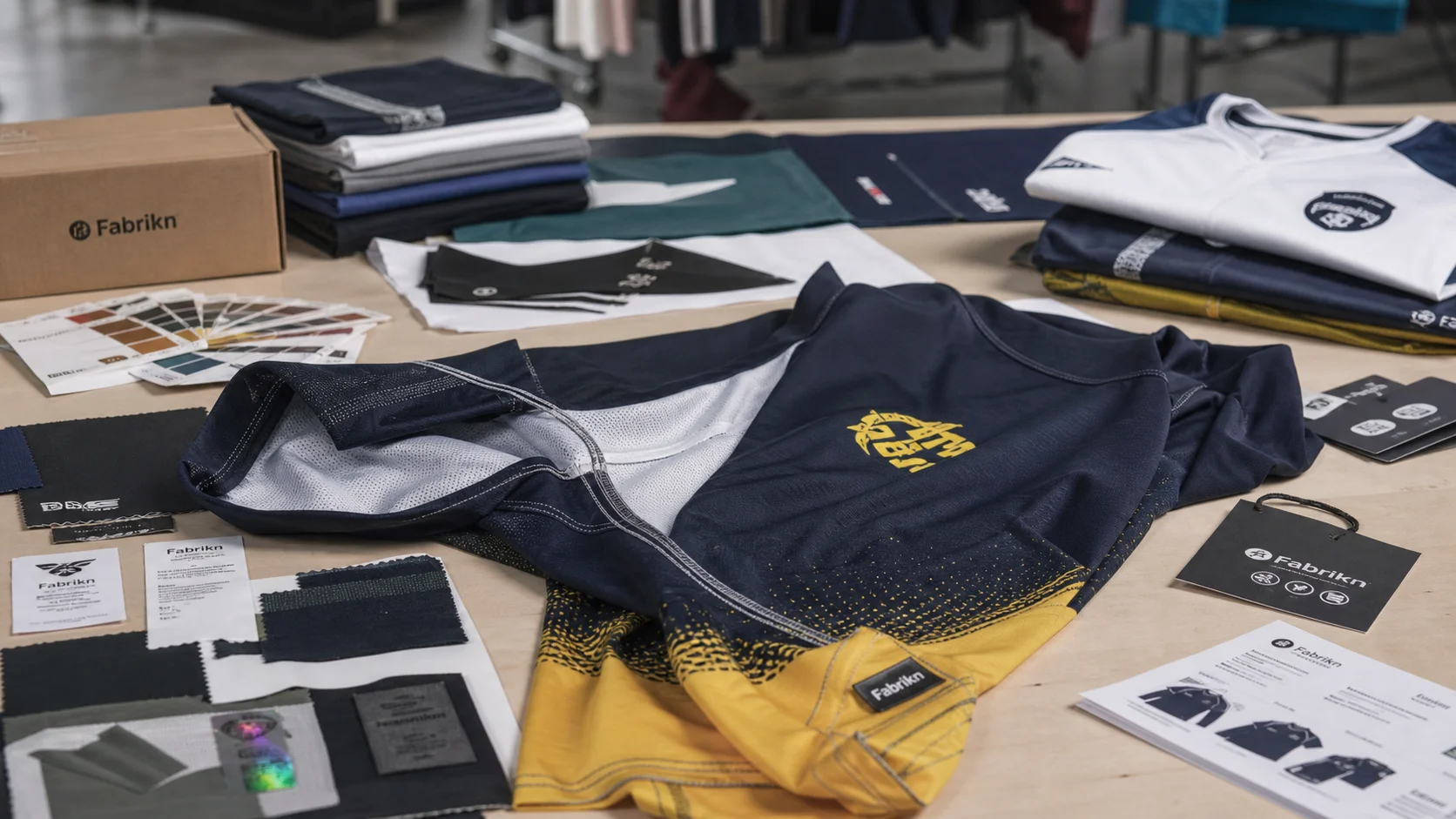
Sustainable Garment Mailers with checks for samples, fit, MOQ, QC evidence, pricing terms, and delivery risk.
Fast answer: Sustainable Garment Mailers: Material Claims, Seal Strength, Print, and Shipping should be judged by production evidence, not by a generic sourcing promise. The buyer needs sample proof, cost breakdowns, QC checkpoints, and delivery buffers in writing.
Ask for recent sample photos, measurement tolerances, fabric or print test assumptions, decoration test notes, packing examples, and a named inspection checkpoint. These details show whether the team can repeat an approved sample at bulk volume.
Separate garment cost, decoration, labels, packaging, sampling, testing, freight, and rush charges. When every cost line is visible, it becomes easier to reduce colorways, adjust size depth, or reserve more time for sampling.
Apparel shipping is bleeding plastic by the billion, and the packaging bill keeps getting longer. In factory audits across China, Vietnam, India, Turkey, Italy, and the United States, the choice of mailer keeps showing up in return rates, carton density, and perceived product quality. That is why eco friendly mailer bags for clothing shipment are no longer a branding garnish. They sit right in the middle of cost, damage, and margin.
Premium labels in Europe often pay more for FSC paper and printed compostable mailers because wholesale buyers want a visible sustainability story and less compliance paperwork. Mid-market brands in North America usually buy recycled polyethylene; they need 10,000 to 50,000 units, 4-6 week lead times, and bags that survive cross-country freight without swelling in humidity. Southeast Asia tells a different story. Labor is cheaper, export distances are longer, and factories care less about shelf appeal than whether a bag keeps a 200 GSM knit flat inside a 10 kg carton. For any clothing manufacturer or packaging supplier, the fit between garment and mailer is a production decision, not an afterthought.
Thicker plastic is not always safer. A 60-micron oversized mailer lets a tee slide around, fold badly, and arrive with a crushed corner. A right-sized paper or compostable bag holds the garment tighter and cuts overpacking. In one factory in Ho Chi Minh City, a switch from a loose 300 x 400 mm poly mailer to a 260 x 360 mm structured paper bag cut visible packing damage from 3.8% to 1.7% over a 12-week pilot. The material label mattered less than the fit.
Premium brands buy for perception. Mid-market brands buy for efficiency. Budget labels buy for freight math.
A $0.12 mailer that saves 0.3 cubic feet per carton can beat a $0.05 bag that forces a larger shipper. That is the real argument for eco friendly mailer bags for clothing shipment. They are a supply chain decision with packaging waste, damage rates, and customer trust attached.
Material choice starts with the garment. Tees and lightweight accessories usually travel well in 60-90 gsm FSC paper or 40-50 micron recycled polyethylene. Denim, especially 11-14 oz styles, often needs a stronger recycled plastic mailer or a paper mailer with a reinforced seam, because corners and rivets can punch through weaker stock. Knitwear and ribbed fabric behave differently again. A 320 GSM French terry hoodie compresses badly in an oversized mailer, which is why many factories now specify a gusseted format around 280 x 380 x 80 mm rather than a loose sleeve.
Compostable films sound ideal, but transit reality is less romantic. In humid warehouses in southern India and coastal Vietnam, compostable bags can soften, lose seal integrity, and scuff at the fold line after 2-3 weeks of storage. Recycled polyethylene with 30-50% post-consumer content held shape better on 30-40 day ocean routes and passed puncture checks more consistently. According to ISO guidance and packaging testing norms, moisture exposure is a real variable, not a footnote.
Paper has the cleanest shelf story and the easiest curbside perception, but it is not immortal. Wet docks, monsoon trucking, and cold-chain transfer points can turn an uncoated paper mailer into a wrinkled liability within 48 hours. Recycled plastic offers stronger barrier performance and longer shelf life, while compostable films depend on certified composting access that many markets still lack. In factory visits, brands shipping into Germany, the UK, and parts of Canada had a better claim pathway than brands shipping to secondary cities in the U.S. or inland India. For buyers comparing manufacturers and suppliers, Trade.gov market guidance can help benchmark import rules and destination-market expectations.
The thing nobody tells you: a compostable bag can be the weakest choice in a humid warehouse, while recycled polyethylene often performs better on long-haul export routes.
For DTC brands, three workable lanes keep coming up. Paper suits premium garments, gift-ready orders, and brands with lower moisture exposure. Recycled plastic fits marketplace fulfillment, wholesale replenishment, and cross-border parcels where tear resistance matters. Compostable films make sense only when the destination has real end-of-life infrastructure and the SKU is light, dry, and fast-moving. Reusable mailers work best for subscription boxes or closed-loop returns, but the reverse-logistics system needs to be in place first. Recycled-content claims are easiest to substantiate when the OEKO-TEX and other certification documents match the actual production lot.
The fastest way to overspend is to start with artwork, not dimensions. When I visited a cut-and-sew factory supplying a private label brand, the team was paying for an extra 18 mm of width on every mailer because the first sample had not been matched to the folded garment size. That tiny gap added 4-6% more freight volume across a 12,000-piece order. If you run private label clothing services, packaging should be drafted alongside size specs, not after production is already booked.
Ask suppliers for exact outer dimensions, gusset depth, basis weight for paper, micron thickness for film, recycled content percentage, and test evidence for seal strength. For paper, 100-120 gsm is common for apparel mailers, though heavier denim shipments may need 140 gsm plus a reinforced edge. For recycled plastic, 45-70 microns usually covers tees and knitwear, while 80 microns is safer for heavier items or mixed garment packs. Certification proof matters too: FSC for paper, GRS for recycled content, and chain-of-custody records when the claim appears on the bag. A serious manufacturer or factory should be able to show how production controls support the stated quality.
Print coverage can quietly inflate cost and damage recyclability. Full-bleed artwork, metallic inks, and laminated coatings often push a simple bag into a more expensive production line, and some converters need 5,000-10,000 units just to justify plate setup. Water-based inks, one-color logos, and restrained coverage keep both price and claims cleaner. I have seen a brand pay 22% more for a dark matte finish that made recycling harder and did nothing for pack-out strength.
Adhesives deserve the same scrutiny. A peel-and-seal strip should hold during a 7-10 day transit cycle, but not so aggressively that warehouse staff tear the bag and waste the order. If you are working with cut and sew manufacturing, request packing trials before approving the final seam and adhesive spec. A 2 mm change in seal width can raise yield by 1-2 points, which sounds tiny until it is multiplied across 100,000 units.
Custom size thresholds also matter. Many factories charge a tooling fee of $150-$400 for a new bag size, then expect a minimum order quantity of 3,000-5,000 pieces per SKU. If your order is smaller, it is usually cheaper to adapt one of the factory’s existing formats and adjust the artwork. That is the practical way to buy eco friendly mailer bags for clothing shipment without funding avoidable defect rates or minimum-order waste. For wholesale and bulk programs, ask the supplier to quote stock sizes first, then custom sizes as a second option.
Unit price looks simple until you add freight, storage, and claims. At 1,000 units, a basic recycled polyethylene mailer from China might land at $0.09-$0.14, while a paper mailer often lands at $0.16-$0.28 and a compostable film at $0.22-$0.38. At 10,000 units, those ranges tighten to roughly $0.06-$0.10, $0.11-$0.20, and $0.18-$0.30 respectively, depending on print and size. At 50,000 units, lower labor markets can shave another 8-15% off the ex-factory price, but only if the specs stay stable.
Vietnam and China are usually strongest on recycled plastic mailers because resin conversion lines are mature and lead times can sit at 3-5 weeks. India often offers competitive paper mailers, especially for brands already sourcing cartons or hangtags locally, with paper stock availability keeping lead times near 4-6 weeks. Turkey is useful for Europe-facing orders because trucking to EU distribution centers can cut transit by 7-12 days versus ocean freight from Asia, even if the unit price is 10-20% higher. For brands shipping from North America, local converters can beat imports once air freight and customs are included.
The cheapest mailer often becomes the most expensive. I have seen budget brands save $0.04 a unit and then lose $1.80 per return when the bag split, the garment creased, or the customer rejected a wrinkled premium knit. Add oversize shipping charges, and the gap widens. A mailer that is 12 mm too wide can force a larger carton, reduce carton density by 8-12%, and push parcels into a more expensive billing tier. That is not a theoretical issue. It shows up in the freight invoice.
Here is the comparison I use with buyers: per-unit cost, lead time, carton density, print cost, and disposal outcome. Paper usually scores well on perception and worse on moisture resistance. Recycled plastic wins on shipping efficiency and tear performance. Compostable materials win on story, but only if the destination can handle them and the warehouse climate is stable. If a brand has a 500-piece MOQ and needs 2-week turnarounds, stock sizes in recycled plastic usually beat bespoke paper every time.
Last year I worked with a brand that wanted custom baby clothing manufacturing packaging to feel premium but stay under $0.20 a unit. We moved them from a heavy custom paper mailer to a lighter recycled poly with a printed insert, and their total packaging cost fell 17% while damage claims dropped by 11% over two months. The wrong bag would have looked greener and cost more.
On-site audits reveal what catalog sheets hide. I start with raw material storage. Are paper rolls wrapped against humidity, or sitting open near a loading bay? Are recycled pellets or resins segregated by batch, or mixed across production runs? Are inks stored with date codes and MSDS sheets? These details matter because a bag can pass a sample test and still fail in week three of production if humidity or contamination drifts. In a 6,000-square-meter plant, that drift can change seal consistency by 2-3 points.
Buyers should ask for FSC, GRS, ISO 9001, and compostability standards only when the claim matches the material. For compostable products, ask for the exact standard used, such as industrial composting certification, not a vague “eco” declaration. According to Textile Exchange, chain-of-custody documentation is central to verifying recycled claims in global textile and packaging supply chains. I also ask for lot-level paperwork, because a single clean certificate does not protect against mixed sourcing across multiple shifts. A supplier with disciplined production records is usually a better long-term partner than a cheaper factory with loose quality control.
Testing should go beyond a pretty sample. Ask for drop tests from 1.2 meters, puncture resistance checks, seal peel strength, and a transit simulation that includes heat, compression, and vibration. Then pack real garments. A 180 GSM jersey tee, a 14 oz denim skirt, and a ribbed knit top will tell you more than a vacuum-packed demo. I prefer 30-50 sample packs shipped to three destinations: one dry, one humid, one long-haul.
Red flags show up fast. Vague sustainability claims. No test reports. Bags that vary in thickness from one pallet to the next. Mixed-material constructions that cannot be separated. A factory that cannot explain whether its paper coating is water-based or plastic-based is not ready for serious claims. If the sales team promises 7-day turnaround on custom sizes while the line is still changing die-cuts, you are buying optimism, not production.
A clean switch starts with sample approval, not a press release. I use a four-step rollout: approve dimensions and print, run a 500-1,000 unit pilot lane, train the warehouse team, then convert by SKU group. If a brand ships 20 SKUs, I usually move the lightest 5 first, then the heavy or fragile lines last. That keeps mistakes visible while volume is still small.
Inventory overlap needs discipline. Existing poly stock should be depleted in a planned window, usually 30-60 days, rather than scrapped for optics. If you have regional warehouses, phase the change by geography. Start with one distribution center, measure packing speed, and compare damage rates for 2-4 weeks. A half-trained team can destroy the economics of a good bag faster than a bad supplier can. I have seen that happen in under 10,000 parcels.
Marketing copy should be honest. Say “made with 30% recycled content” only if you can prove it. Say “industrial compostable” only if the standard and disposal route are real. Avoid vague phrases that imply total environmental innocence. Buyers are reading the label more carefully now, and regulators are doing the same. If you need help aligning the packaging story with your product line, get a free quote and ask the supplier to quote both stock and custom sizes side by side.
My checklist for purchasing, operations, and marketing teams is simple. Purchasing: lock the spec sheet, the MOQ, and the lead time. Operations: test one lane, one shift, one product family. Marketing: approve claims with proof, not adjectives. If your brand sells on fit, fabric, and finish, the bag should protect those promises rather than decorate them. That is especially true for brands using private label clothing services, where packaging is often the first physical proof of quality.
Small DTC brands and resale platforms usually benefit most from paper or recycled plastic, because parcel counts are manageable and the brand story is visible on every box. Subscription boxes need consistent sizing and easy packing speed, so a recycled mailer with a single-color print often outperforms a high-design paper option. Export-focused manufacturers shipping into Europe should pay close attention to recycled content claims and local recycling rules, because destination-market expectations are stricter than origin-market habits. That is why wholesale and bulk buyers often ask the supplier for multiple compliance documents before placing a China or regional order.
Climate changes the answer. In humid regions, I prefer recycled plastic for knitwear, activewear, and long-haul routes because the barrier is predictable. In colder markets with short last-mile legs, paper can work well for tees, light blouses, and accessories. Denim and coated fabrics need tougher seals and more puncture resistance, so a thicker recycled film or reinforced paper is usually the safer call. For brands that need sew-to-ship alignment, the packaging spec should mirror the garment spec.
Packaging should follow logistics reality, not just sustainability messaging. A bag that looks noble but collapses in transit helps no one. A bag that survives the warehouse, the truck, and the customer’s first impression is the one that earns repeat orders. Choose the format that fits the route, the fabric, and the budget, then test it hard before scaling.
Yes. Most suppliers offer 1-color to 4-color printing, with custom sizes usually starting around 3,000-5,000 pieces. Expect 7-15 days for artwork proofing and 3-6 weeks for production, depending on material and factory queue.
At 10,000 units, recycled plastic mailers often run $0.06-$0.10, paper mailers $0.11-$0.20, and compostable mailers $0.18-$0.30. Printed custom formats usually add 8-20% depending on ink coverage and number of colors.
Request drop tests, puncture resistance, seal peel strength, and a transit simulation with heat and compression. If the supplier claims recycled or compostable content, ask for certification documents and batch-level traceability before placing the order.
Stock sizes can ship in 7-14 days. Custom sizes usually take 3-6 weeks, and highly printed or laminated versions can take 6-8 weeks if tooling, certification checks, or raw material sourcing adds delay.
Recycled polyethylene usually performs best in humidity because it resists softening and seal failure. Paper can work if the route is short and dry, but compostable films need careful warehouse controls and faster turnover to avoid damage.