
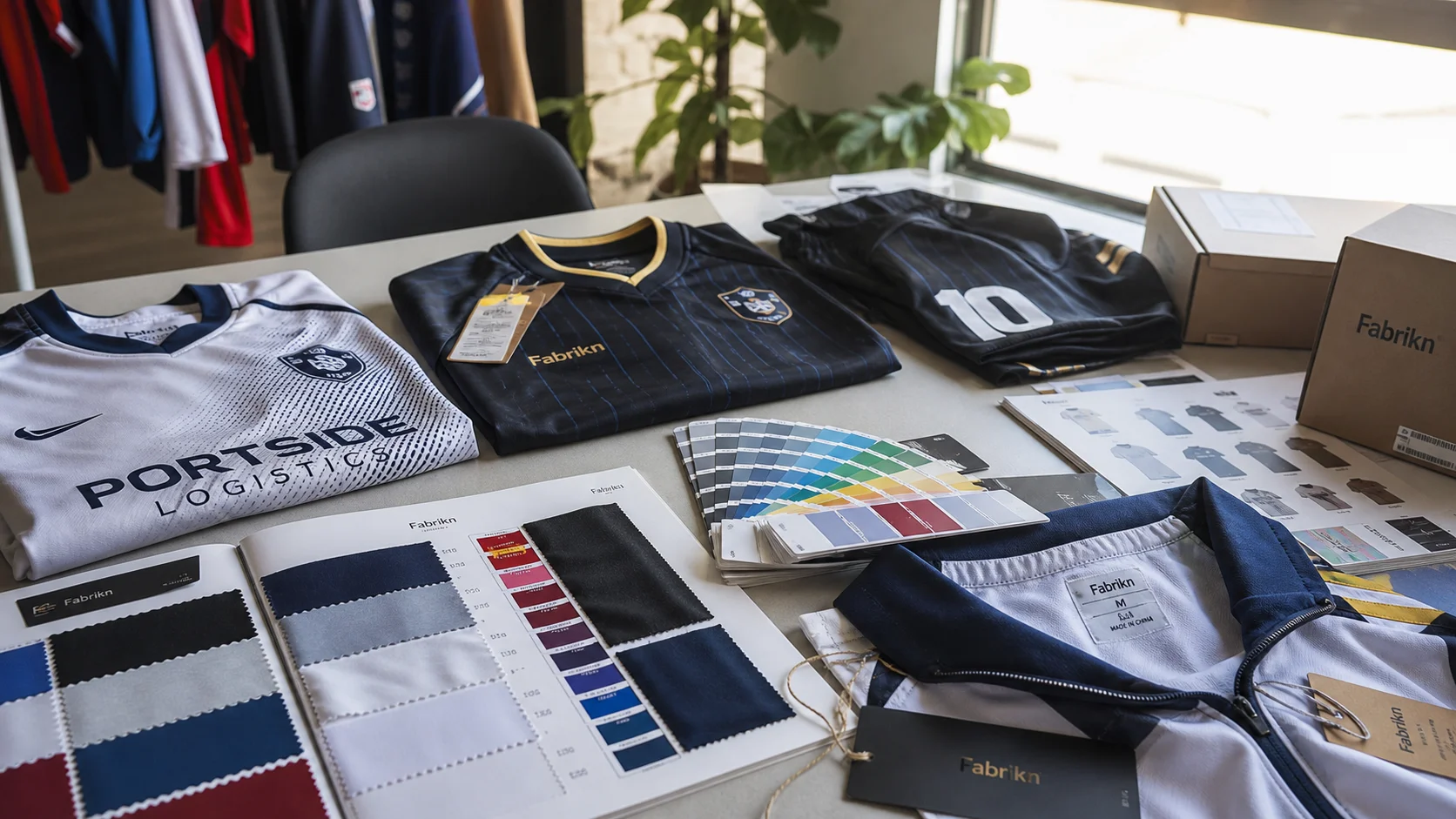
Wholesale Thank-You Cards with checks for samples, fit, MOQ, QC evidence, pricing terms, and delivery risk.
Fast answer: Wholesale Thank-You Cards: Paper, Print, Message, and Packing Flow should be judged by production evidence, not by a generic sourcing promise. The buyer needs sample proof, cost breakdowns, QC checkpoints, and delivery buffers in writing.
Ask for recent sample photos, measurement tolerances, fabric or print test assumptions, decoration test notes, packing examples, and a named inspection checkpoint. These details show whether the team can repeat an approved sample at bulk volume.
Separate garment cost, decoration, labels, packaging, sampling, testing, freight, and rush charges. When every cost line is visible, it becomes easier to reduce colorways, adjust size depth, or reserve more time for sampling.
The tiniest thing in the parcel is often the one that earns the return visit. Repeat purchase rates can rise by 5% to 10% from a better post-purchase experience, and branded thank you cards for clothing orders wholesale remain one of the cheapest ways to shape that moment. If you are weighing packaging options, a card often does more for perceived value than a heavier mailer, a ribbon, or a free sticker pack, especially on orders under $40. The card is not decoration. It is a signal.
When I visited factories in Portugal, Vietnam, and North Carolina, the same pattern kept showing up. A $2.50 tee with a clean 90 x 55 mm card felt more deliberate than a $28 blouse shipped with nothing but a barcode label. Low-AOV brands need this effect most, because every tiny reassurance matters when gross margin sits at 60% or less and return rates can eat 8% to 15% of revenue. Premium labels use cards to reinforce restraint. Marketplace sellers use them to look less anonymous.
The unboxing detail customers remember is usually not the loudest one. It is the thing they touch last. I’ve watched shoppers keep a thick uncoated card for weeks because the paper felt 350 gsm and the copy was short enough to read in 8 seconds. They rarely keep elaborate extras if those extras add clutter, cost, or recycling guilt. The card survives because it is useful, not theatrical.
Here’s what most people miss: a simple, well-printed card often outperforms a more expensive embellishment pack because consistency beats novelty. A foil edge can fail registration by 0.5 mm. A vellum wrap can crease. A die-cut tag can get bent in carton packing. A flat card printed on 300 gsm stock lands cleanly in 99 out of 100 parcels, which is exactly why it wins at scale. For brands testing 500 to 5,000 units, reliability beats drama.
That is especially true for categories like custom bra manufacturing and custom baby clothing manufacturing, where the buyer expects care and compliance more than spectacle. In those segments, branded thank you cards for clothing orders wholesale can improve trust without risking overproduction or sensitive claims. I’ve seen the same logic hold for loungewear, where a $4.00 card-and-envelope set can still preserve a premium feel.
Format changes how the card is used. A flat postcard in 148 x 105 mm is practical for high-volume basics because it slips into a polybag or folded tissue bundle without slowing pack-out. A folded A6 card gives you four panels, which works better for premium labels that need a thank-you, care note, and QR code without cramming. Tent cards look elegant, but they add assembly time and can cost 15% to 30% more in labor once you include folding and insertion.
Paper stock sends the first tactile message. Uncoated 350 gsm feels natural and prints well for brands that want warmth and a lower-impact look. Coated 300 gsm sharpens photography and color blocks, but it can feel slick, which is wrong for some sustainable labels. Recycled 320 gsm often has a visible speckle and slightly lower brightness; in a brown kraft aesthetic, that is a feature. In a luxury market, it can read as unfinished if the artwork is too pale.
I compare finishes by how they behave at the packing table, not how they photograph online. Spot UV looks good on a flat sample, yet on a 20,000-unit run it can create scuff risk if cartons rub during freight. Foil stamping is memorable, but it makes sense only when the brand’s average order value is high enough to absorb a $0.12 to $0.25 premium per card. Embossing adds tactility, though it can flatten tiny text and compromise readability at 6 pt.
For premium labels, matte laminate can protect dark backgrounds and keep fingerprints off the surface. For eco-led brands, I prefer a well-selected FSC paper over a pile of decorative effects. The best cards I’ve seen were not the fanciest. They had one strong brand mark, one line of copy, and one clear action. That discipline matters for private label programs too, especially when the same supplier is handling hangtags, polybags, and inserts for private label clothing.
The finish choice should match the product. French terry 320 GSM hoodies can carry a heavier, matte insert. Silk camisoles often suit a lighter, more refined card. If the garment cost is $12 wholesale, a 3-color uncoated card is usually enough. If the garment cost is $38 wholesale, a foil accent may be justified, but only if it does not push the pack total above 2% of landed cost.
Pricing starts with the difference between unit cost and setup fees. A card might run $0.08 to $0.18 each on a domestic 5,000-unit order, but prepress, plates, and proofing can add $60 to $250 before the first box ships. Overseas production may drop the unit price to $0.04 to $0.10, yet freight, import handling, and longer lead times can erase the savings if you only need 500 or 1,000 units. I’ve seen brands chase a 2-cent saving and lose it in reprint costs.
A clean framework helps. At 500 units, domestic sourcing often wins because setup is lighter and turnaround can be 7 to 10 days. At 5,000 units, offshore or nearshore pricing becomes competitive, especially if the printer can consolidate with other paper goods. At 50,000 units, the conversation shifts to carton efficiency, pallet counts, and storage. A card that costs $0.11 at 500 units may fall to $0.05 at 50,000, but warehousing 40 cartons for 6 months has its own cost.
Here is a simple benchmark I use on factory visits. For a mid-market tee brand selling at $28 retail, a thank-you card should stay under 0.4% of retail, or about $0.11. For a premium knitwear label at $120 retail, the insert can stretch to $0.40 if the pack experience supports it. For a marketplace seller with an average order value of $24, the ceiling is tighter. Anything above $0.08 starts to bite.
Hidden expenses matter more than suppliers admit. Color proofs can cost $25 to $75 each. Freight on paper goods has risen and fallen by 15% to 35% in a single season depending on origin. Reprints happen when trim tolerance slips by 1 to 2 mm or when the navy shade lands too purple. Storage also matters. A 10,000-card run can occupy 1.5 to 2 cubic meters once packed, which is easy to underestimate.
According to WTO trade data, small paper goods move through the same shipping channels as far larger packaging items, so the unit price on paper is never the full story. I price branded thank you cards for clothing orders wholesale the same way I price labels and swing tags: by landed cost, not factory cost. If the landed card is $0.09 and it helps lift repeat order rate by just 3%, it can pay for itself fast.
Short copy wins. I keep the front to 8 words or fewer: thank you, brand name, and one emotional cue. The back should carry the action. That means a QR code, a personalized note, or a simple care reminder. Avoid dithering with poetry or mission statements; customers read copy in 4 to 6 seconds during pack-out. Typeface size of 10 to 12 pt works at 90 x 55 mm. If you drop to 8 pt, legibility plummets and the card becomes waste.
Pair strong typography with high-contrast colors. A navy ink on soft white uncoated 350 gsm reads better than a copper metallic on salmon stock. For segmented campaigns—say, a Dhaka-based sustainable outerwear line versus a fast-fashion capsule from Guangzhou—you can use ink color to anchor the story: indigo for the former, bright coral for the latter. Keep metallics for premium segments only; they necessitate a foil stamp machine, usually a Heidelberg with a 30-ton press, which pushes lead times from 10 to 18 business days.
Include a tactile cue. A stripped-down emboss or a watermark created on a pre-press CTP (computer-to-plate) system can feel bespoke without the risk of failure that foil or hot stamping carries. Laminated edges are helpful when cards pass through automated bagging lines at the Ho Chi Minh City facility. Integration with production is critical: if the card slows the packer below 30 pieces per minute, it loses the ROI.
Test the call-to-action in realistic conditions. Add a QR code that links directly to a localized thank-you video hosted in Istanbul, and verify it scans in under 2 seconds from a phone camera at the packing table. A trackable discount code, like THANKS10, confirms that customers actually interact with the card; if custom codes drop below 3% redemption, reevaluate the messaging and CTA.
Marking a card “eco-friendly” without verifiable proof is risky. I look for GOTS, OEKO-TEX Standard 100, WRAP, BSCI, and GRS certifications when sourcing paper, and I expect the printer to share batch certificates from mills in Guangzhou or the Sindh region near Dhaka. A GRS-certified recycled stock from Ho Chi Minh City can cut the carbon footprint by as much as 20% over a standard virgin board while maintaining a smooth surface for CMYK printing.
The machines matter. A Fujifilm Acuity LED inkjet press leaves less volatile organic compounds (VOCs) than solvent-based systems, which helps maintain OEKO-TEX compliance. A Heidelberg Speedmaster with chilled rollers can handle uncoated 350 gsm without set-off, and it runs faster than a single-pass HP Indigo when you need 5,000 cards in 3 business days—provided the operator follows WRAP-approved labor practices.
Transparency does not stop at paper. Ink suppliers should disclose pigment origins and confirm that the formulas meet GOTS or OEKO-TEX thresholds for heavy metals. Finishing shops in Istanbul often add a matte aqueous spray that keeps the card fingerprint-free without compromising the recyclability marked by a Glassine window. Recyclability statements should reference local waste streams: “100% recyclable through Guangzhou municipal paper recycling” beats generic claims.
Finally, consider the supply chain footprint. A 2.50-gram card shipped from Dhaka adds a measurable weight load across containers, so consolidating the insert run with hangtags built on the same paper board can cut inbound FCL charges by $150 to $220 per container. Sustainability is about the full route—from pulp in central China to the final carton in a New Jersey fulfillment center—and the thank-you card should mirror that diligence.
Reliability boils down to communication, tolerance, and logistics. A supplier should publish lead times—18-22 business days for a custom 2.50-gram card run from Guangzhou, for instance—and stick to them. They should offer prepress checks in Adobe PDF/X-4 format and mockups on mock ReBoard so you can see how the card sits next to your garments. Expect them to clearly state that packing tolerance is ±0.5 mm for trim, ±1° for registration, and that they run a minimum quantity of 500 units to keep the $2.50-4.00 per unit pricing they advertise.
Ask about quality thresholds. A 3% acceptable defect rate is standard for die-cut cards. Look for explicit testing—rub tests on a 350 gsm board, scuff checks on matte laminate, water droplet tests if you plan to ship from Ho Chi Minh City during monsoon season. A truly reliable partner also builds in traceability: each batch should include a certificate of analysis noting the stock’s GSM, brightness, and finish, along with QR codes that tie back to the original order so you can audit compliance later.
Shipping transparency is next. A supplier should explain whether they freight from Istanbul via Ro-Ro (roll-on/roll-off) to European distribution centers or if they consolidate through the port of Savannah for U.S. shipments. Expect them to handle customs documentation, DDP or DDU, depending on your preference, and to keep you informed if there are delays—especially because paper goods can be held for moisture content checks during humid seasons.
Good partners also guard your brand voice. They archive die lines, Pantone references (e.g., Pantone 2955 C ink for navy), and approved font files (like TT Circa or Söhne) so future runs match current ones. They will not substitute materials without notice and will deliver a signed sample—photographed and shared through a secure portal—before mass production starts.
Start with a detailed brief: desired card dimensions, stock preference (e.g., 350 gsm uncoated, FSC-certified board with GRS claims), finishes, and messaging. Share Pantone references, imagery, and approved copy using collaborative tools like Dropbox or WeTransfer. Request a digital proof within 24 hours and a press check video if the run exceeds 5,000 units.
Confirm the MOQ and price grid. Most factories in Guangzhou and Ho Chi Minh City hold a 500 MOQ; some small houses in Istanbul or Dhaka will quote 250 if you accept longer lead times. Ask for a full landed cost quote that includes freight to a specific fulfillment center—skip the vague “FOB” number. If you need a rush order, bracket it with a 2- to 3-day expedited proof and add a buffer for the 18-22 business day run.
Finally, standardize the approval loop. Have a single decision-maker (designer, production director, or brand manager) sign off on trims, copy, and proof revisions so the supplier can lock files early. Confirm whether they offer secondary services—like thermoforming for embossing or digital numbering for limited drops—and ensure their machines (e.g., a Heidelberg Speedmaster XL 106 with aqueous coating, or a Polar 92 XT cutter) are calibrated for your job.
Q: What is the most cost-effective material for thank-you cards? A: A 320 gsm recycled board with a light matte finish printed in single-pass CMYK on an LED inkjet press is the sweet spot for cost and feel—especially in Guangzhou or Ho Chi Minh City. Add a single Pantone spot color for tonal depth without ballooning price.
Q: Can I print on both sides? A: Yes, and it is recommended. Front copy should be a concise thank-you (under 8 words), and the back should include care tips, QR codes, or discount codes. A double-sided print adds about $0.02 per card on a 1,000-unit order, which is minimal compared to the lift from a clear CTA.
Q: What certifications should I request? A: Always insist on GOTS, OEKO-TEX Standard 100, WRAP, BSCI, or GRS documentation if you claim sustainability. Suppliers should provide batch certificates and mill details to prove compliance. Without them, you cannot justify a premium or defend against greenwashing allegations.
Q: How should I store extra cards? A: Store them in a climate-controlled environment—between 18°C and 23°C with 40% to 55% relative humidity—and stack them flat, away from direct sunlight. In a fulfillment center, label each carton with SKU, run date, and Pantone code so you can pull the correct batch when fulfilling orders.
Q: Should I include a care instruction? A: Yes, but keep it simple: three bullet points at most. Pair it with a QR code that links to an animated guide recorded in Istanbul or Dhaka studios. The tactile card reinforces care, while the QR code handles the details without clutter.