
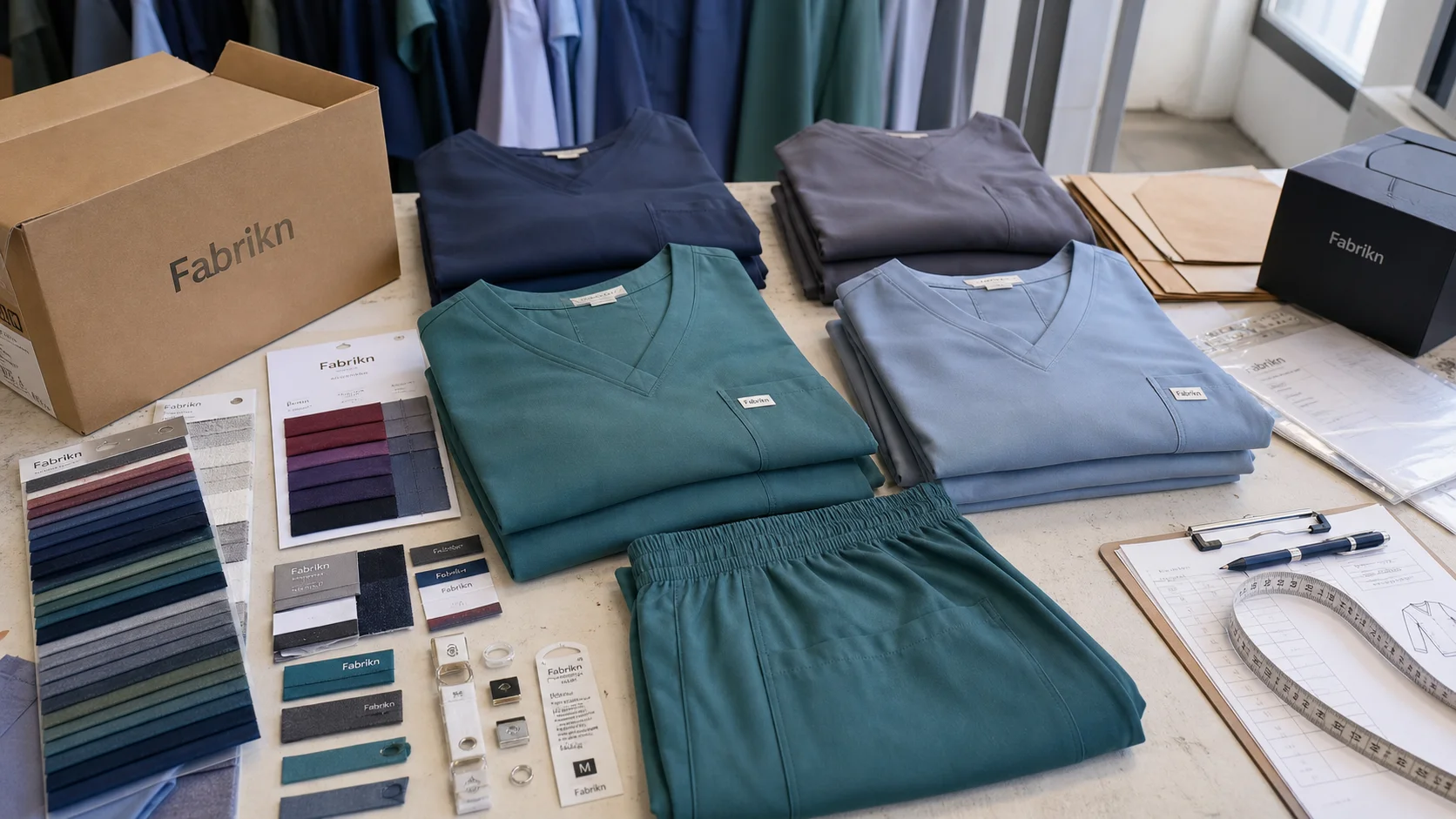
Branded Tissue Paper Shipments with checks for samples, fit, MOQ, QC evidence, pricing terms, and delivery risk.
Fast answer: Branded Tissue Paper Shipments: GSM, Ink, Fold Size, and MOQ should be judged by production evidence, not by a generic sourcing promise. The buyer needs sample proof, cost breakdowns, QC checkpoints, and delivery buffers in writing.
Ask for recent sample photos, measurement tolerances, fabric or print test assumptions, decoration test notes, packing examples, and a named inspection checkpoint. These details show whether the team can repeat an approved sample at bulk volume.
Separate garment cost, decoration, labels, packaging, sampling, testing, freight, and rush charges. When every cost line is visible, it becomes easier to reduce colorways, adjust size depth, or reserve more time for sampling.
Some packaging earns its keep before the shopper even sees the garment. Six seconds on a factory floor from Portugal to Vietnam was enough to prove it to me: color, sound, wrinkle control, and that first careful landing in the box have already done the heavy lifting. branded tissue paper for clothing shipments still matters for that reason, even when cartons are crowded with barcodes, inserts, and return labels.
I watched teams pack $18 jersey tees and $480 cashmere knits with the same ritual: fold, wrap, seal, align. The paper creates a sequence. First the rustle. Then the reveal. Then the brand impression. If the sheet is crisp and the fold holds, the product feels controlled. If the paper tears, slides, or looks greasy, shoppers notice that before they notice the stitch count.
Premium perception is not reserved for luxury. A DTC basics label shipping 500 units a week can use branded tissue paper for clothing shipments to signal order and consistency, while a knitwear brand selling 150-piece capsule drops can use the same tool to soften the price shock. I have seen a $32 cotton shirt wrapped more elegantly than a $220 blazer because the lower-priced brand understood presentation discipline.
Regional expectations vary sharply. In Japan and South Korea, the standard is tighter: alignment, crease precision, dust-free wrapping. A misfold of 5 mm can read as sloppy. In parts of Europe and North America, shoppers often accept a more practical look, especially if the carton is recyclable and the shipping insert is clear. Still, presentation gets judged in seconds, not minutes, and return intent rises fast when the box looks careless.
When I visited factories serving private label clothing programs, packaging teams said the same thing after 200 cartons a day. Customers rarely describe tissue paper as a feature. They describe it as a feeling. That feeling can make a 1,000-piece order look considered, or make a 100,000-piece program feel generic.
Start with paper grade, not artwork. The core specs are GSM, opacity, softness, sheet size, fold style, and whether the paper is acid-free or recyclable. Most apparel tissue sits between 17 GSM and 25 GSM. Below 17 GSM, tearing becomes a packing problem. Above 25 GSM, cartons fill quickly and labor rises because the sheet resists folding.
Opacity matters more than many teams expect. A 20 GSM sheet with high opacity hides the garment better than a cheaper 22 GSM sheet with poor fiber consistency. I have seen a manufacturer in China and a factory in Turkey run identical logos on paper that looked fine on the proof but showed the hanger shape through the sheet once folded around a rib knit. That is a production problem, not a design problem.
For print methods, flexo works well for repeats and spot colors, especially at 5,000 sheets and up. Offset gives tighter detail and cleaner brand marks when a logo has fine lines, but setup costs are higher. Digital printing makes sense for small runs, usually 500 to 2,000 sheets, or when buyers want frequent artwork changes. The trade-off is speed versus consistency. Pantone accuracy also varies by method, and repeat orders can drift if the supplier does not lock down ink recipes.
Sheet size affects labor in ways spreadsheets miss. A 70 x 50 cm sheet can wrap a blouse with one fold sequence. A 100 x 75 cm sheet may look generous, but it can add 10% to 15% more paper waste and slow packing by several seconds per unit. Over 20,000 pieces, that becomes real money. In one Bangladesh plant, oversized sheets added nearly 18 cartons of extra freight per 10,000 garments.
Quality issues show up fast under inspection lights. Ink rub-off stains white tees. Weak paper tears at the corners during folding. Color drift between batches can make a blush pink become salmon by the third reorder. I have also seen odor problems from poorly cured inks, especially on low-cost runs tied to custom baby clothing manufacturing, where chemical sensitivity matters more than in adult apparel.
When you source branded tissue paper for clothing shipments wholesale or in bulk, ask for a sample set before approving a custom run. A reliable supplier or factory should confirm MOQ, sheet count, and production tolerances in writing, especially if you are ordering from China for export programs.
The price curve is steep at the low end and calm at scale. For 1,000 sheets, a simple one-color print often lands around $0.18-$0.35 per sheet, but setup fees can add $80-$250, which distorts the real unit cost. At 10,000 sheets, that same style may drop to $0.06-$0.14 per sheet. By 100,000 sheets, well-run programs can move near $0.03-$0.08, depending on paper grade and freight.
Full-bleed art costs more. Expect a 20% to 45% premium over a single-color repeat because ink coverage rises, drying time increases, and waste during registration checks goes up. Metallic inks or heavy coverage can push the price even further. If the design uses four colors plus a large repeat, I have seen quotes jump from $240 per 10,000 sheets to $420 or more, before shipping.
Sticker seals look cheaper at first glance, usually $0.01-$0.04 each, but they do not replace the visual field that tissue creates. Preprinted poly mailers often run $0.10-$0.25 each and carry a bigger freight penalty because of volume. Cotton dust bags can cost $0.90-$2.50 per unit, which makes sense for premium accessories but not for every sweater. Branded tissue sits in the middle: low enough to scale, visible enough to matter.
Here is the procurement trap I see most often. Buyers compare paper quotes and ignore freight, storage, and minimum order quantity. A 5,000-sheet order may need a $150 shipping charge, 2 cubic feet of warehouse space, and a 3-4 week lead time. A 50,000-sheet order can lower the paper cost but raise cash tied up in inventory. That is why the cheapest quote is often the most expensive mistake.
For brands that manage multiple product lines, especially custom bra manufacturing or technical intimates, the right packaging budget is usually 0.6% to 1.5% of COGS, not a random line item. I have seen a brand spend $0.07 on tissue and save $0.40 on reduced damage claims simply because the fold prevented abrasion in transit.
Eco language is easy to print. Proof is harder. Buyers should ask for recycled content percentage, FSC documentation, and whether inks are soy-based or petroleum-based. A recycled claim without a percentage is marketing, not data. I want to see numbers like 30%, 60%, or 100% recycled fiber, plus the certificate number tied to the mill or converter.
Coatings and finishes matter more than most people admit. Gloss lamination, heavy varnish, and metallic foils can interfere with recyclability even if the base paper is recycled. A shiny sheet may photograph well, but it can end up screened out by material recovery facilities. According to FSC, OEKO-TEX, and standard recycling guidance from local municipalities, what happens after the carton leaves the warehouse depends on the entire structure, not only the fiber source.
Regional recycling rules are uneven. In one market, uncoated tissue with water-based ink is accepted with mixed paper. In another, the same item is diverted because of dye load or contamination concerns. I have seen packaging deemed “recyclable” on a supplier spec sheet and rejected by a German sorter because the print coverage was too dense. Standards matter, but local collection rules matter more.
Data from trade.gov and packaging compliance discussions at WRAP point to a broader truth: the cleanest package is usually the one that uses less material in the first place. Reducing sheet size from 75 x 50 cm to 60 x 40 cm can cut paper use by roughly 36% before you touch the print file. Cutting print coverage from full bleed to a border repeat can reduce ink load, drying time, and waste. That is often greener than adding another eco badge.
Last year I worked with a brand that switched from a loud foil logo to a 1-color recycled sheet. They cut paper cost by 12%, reduced reprints by 8%, and eliminated a coating that had been causing scuff marks in humid transit. The sustainability win came from restraint, not decoration. That lesson held across outerwear cartons and lightweight knits alike.
My checklist starts before any money moves. Ask for a physical paper sample, a digital proof, a Pantone target, overrun tolerance, carton packing details, and moisture protection specs. You also need confirmation of sheet count per ream, inner poly wrap, and whether the cartons are lined for humid routes. A clean spec sheet saves days of revision.
Lead times break into stages. Artwork approval can take 1-3 days. Plate making or file preparation usually takes 2-4 days. Printing and drying run 3-7 days, depending on coverage and method. Slitting and packing add another 2-3 days. Domestic suppliers can move in 7-10 days for simple repeats. Offshore sourcing often runs 3-5 weeks, and sea freight can add 2-6 weeks more depending on port congestion.
Speed is not the only variable. Offshore factories can lower unit costs by 20% to 35%, but communication friction can eat that advantage if proofs are not precise. Domestic sourcing reduces transit risk and shortens revision cycles, which matters when a capsule drop has a fixed ship date. For brands using cut and sew manufacturing, aligning fabric approvals and tissue approvals on one timeline can prevent the packaging from arriving after the product.
Inspection reports usually flag the same defects. Misregistration makes the logo look blurry. Smudging transfers onto garments. Weak folds cause the sheet to open inside the carton. Odor suggests poor drying or bad ink choice. Damaged edges mean poor slitting or rough handling. I have rejected pallets for minor issues because minor becomes major when 12,000 sheets reach a warehouse in monsoon humidity.
The smartest buyers test a pilot run inside real cartons, using the same garment, same fold, and same transit route. A 48-hour compression test and a simple color-transfer wipe test can tell you more than a glossy PDF. If the tissue fails after two parcel scans, it was never ready for 2,000 orders.
If you are comparing a manufacturer, a factory, and a supplier, ask each one to show recent QC photos from a branded tissue paper for clothing shipments order. That is often the fastest way to separate polished sales language from actual production capability.
Packaging does not exist in a vacuum. A tissue treatment that feels premium in a $40 basket can feel undercooked in a $400 one if the carton, insert card, and fabric quality do not match. The shopper reads the entire system. One clean element does not rescue three weak ones.
Fast fashion often uses thin tissue, light print coverage, and short-run repeat logos because the goal is speed and low touch cost. Mid-market brands get more room to signal maturity with cleaner fold lines, better opacity, and coordinated color choices. Luxury buyers notice restraint. A single-color sheet in ivory or charcoal can feel more expensive than a busy pattern because it leaves visual space around the product.
The thing nobody tells you: some of the most expensive brands I visited used the simplest tissue. One monochrome logo. One fold direction. One paper grade at 17 GSM with excellent opacity. Meanwhile, overdesigned sheets with loud gradients often looked cheaper because they exposed registration flaws and distracted from the garment. That was especially true in occasionwear and gift sets.
Category matters. Basics can survive pragmatic packaging. Outerwear can tolerate heavier tissue because the garment already feels substantial. Gifts and premium knitwear need more care because the unboxing moment carries a bigger emotional charge. A box of socks wrapped like jewelry can work. A cocktail dress wrapped like office stationery cannot.
For wholesale buyers, the best branded tissue paper for clothing shipments is the one that matches your price point without inflating your MOQ or pushing the order into costly bulk inventory. In practice, that means balancing custom print ambition with realistic production and freight budgets.
Start with a 7-day plan. Day 1: define print count, paper grade, annual forecast, and target carton size. Day 2: request quotes from three suppliers with the same spec. Day 3: compare setup fees, freight, and overrun tolerance. Day 4: approve one digital proof. Day 5: request physical samples. Day 6: pack real garments. Day 7: test for rub, fold recovery, and moisture response.
Ask every supplier for a spec sheet, certification copies, packing details, and a dated production timeline. If the answer is vague on GSM, sheet size, or ink type, move on. A clear quote should tell you price per sheet, MOQ, lead time, and whether reorders keep the same plate or require new setup.
Before placing a full order, run the tissue inside the same carton you ship today. Shake it. Stack it. Ship it across two transit points if you can. Check for transfer onto white fabric, edge tearing, and whether the fold still looks clean after compression. If it fails in testing, the savings are fake.
For long-term planning, build a simple scorecard: quality, price, production consistency, communication, and flexibility. That makes it easier to compare a local supplier with a China-based factory and choose the option that fits your timeline instead of just chasing the lowest quote.
At 1,000 sheets, expect roughly $0.18-$0.35 per sheet for a simple one-color run, plus $80-$250 in setup fees. At 10,000 sheets, pricing often falls to $0.06-$0.14 per sheet, and at 100,000 sheets it can reach $0.03-$0.08 depending on paper grade and freight.
Many suppliers start around 1,000 to 5,000 sheets for digital or basic repeat printing. Flexo and offset often prefer 5,000 to 10,000 sheets because setup costs are spread better across the run. If a factory offers a very low MOQ, check whether the per-sheet price includes hidden setup or artwork fees.
Simple domestic orders can take 7-10 days. Offshore orders usually need 3-5 weeks for production, then 2-6 more weeks for sea freight if you are not air shipping. Complex artwork, metallic inks, or heavy coverage can add several days for drying and inspection.
Flexo is efficient for repeats and spot colors at larger volumes. Offset suits tighter detail and cleaner graphics, while digital is best for smaller runs or frequent artwork changes. If you need exact Pantone matching, ask for a printed sample because proofs can differ from the final run by noticeable shades.
Yes. The cheapest sustainability gains usually come from using a smaller sheet size, reducing print coverage, and choosing recycled or FSC-certified paper with water-based or soy-based inks. A 60 x 40 cm sheet instead of 75 x 50 cm can reduce material use by about 36%, which often saves money rather than adding cost.