
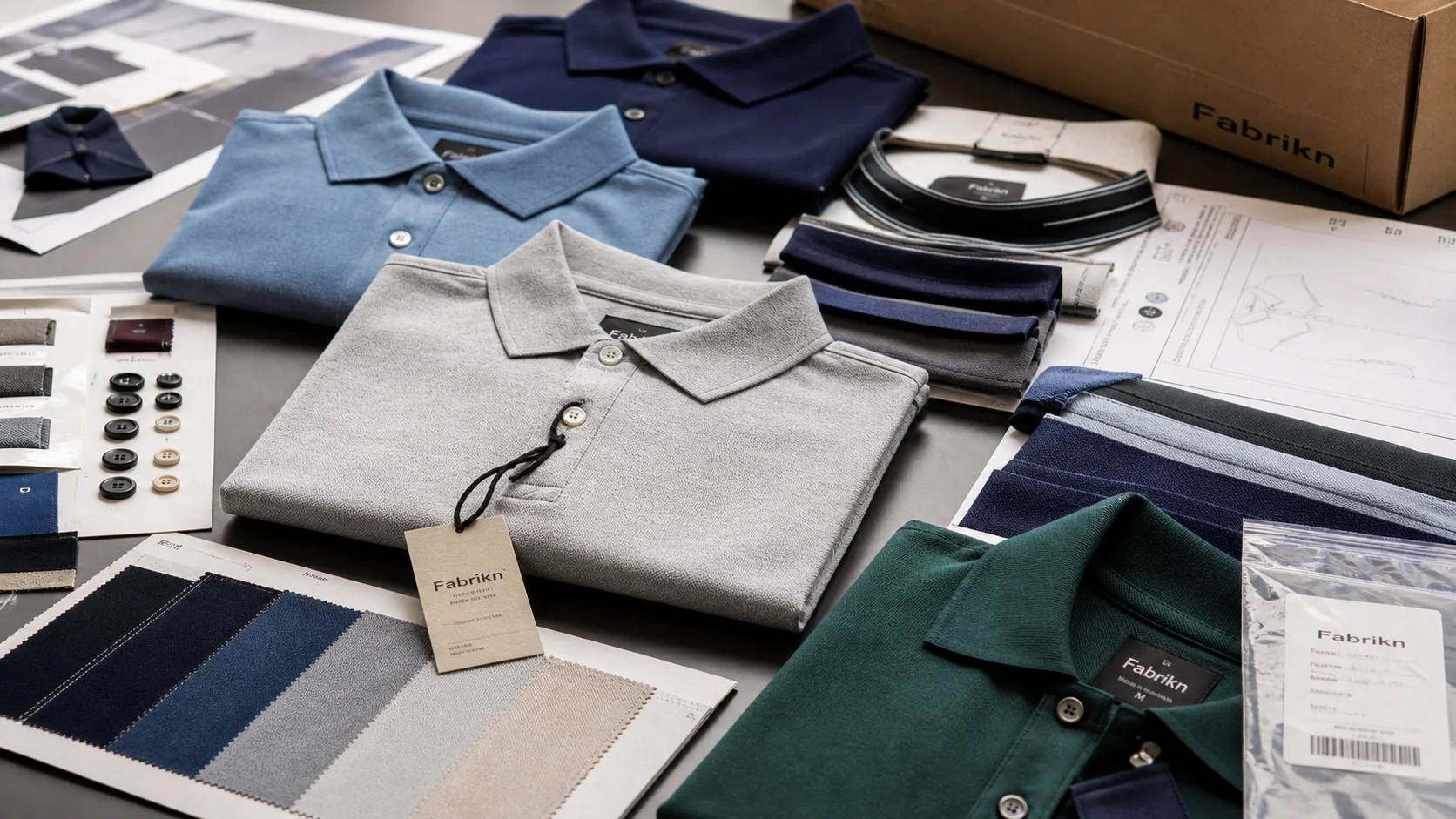
Online Clothing Order Tissue Paper with checks for samples, fit, MOQ, QC evidence, pricing terms, and delivery risk.
Fast answer: Online Clothing Order Tissue Paper: GSM, Ink, Fold Size, and Packing should be judged by production evidence, not by a generic sourcing promise. The buyer needs sample proof, cost breakdowns, QC checkpoints, and delivery buffers in writing.
Ask for recent sample photos, measurement tolerances, fabric or print test assumptions, decoration test notes, packing examples, and a named inspection checkpoint. These details show whether the team can repeat an approved sample at bulk volume.
Separate garment cost, decoration, labels, packaging, sampling, testing, freight, and rush charges. When every cost line is visible, it becomes easier to reduce colorways, adjust size depth, or reserve more time for sampling.
The first flick of the box lid is where a brand either feels considered or forgettable. That is why branded tissue paper for online clothing orders matters so much. It is the first visible cue that someone thought beyond checkout.
From Dhaka to Porto, the pattern repeats: a neatly wrapped shirt, a printed sheet, and one crisp fold can make a £30 top feel closer to a £90 purchase. Same cloth. Different story. In one factory audit, a brand selling French terry hoodies at $42 watched buyers call the item “premium” after adding a branded wrap costing 8-12 pence per order.
Rational? Maybe not at first glance. Yet the unboxing sequence works like a brand signal, and it lands fast because the eye reads order, care, and consistency before the brain starts checking fibre content or stitch count. A loose poly mailer screams discount. A tight stack of tissue says control. On a first-time purchase, that control matters almost as much as the product itself.
Factory visits make the effect even clearer. Small packaging upgrades often shift premium perception more than a fabric upgrade worth $1.50 per unit. I watched one mid-market knitwear label in Turkey move from plain sacks to 17 gsm printed tissue, then add a single sticker seal. Packaging spend rose by 4%, while customer comments about “luxury” and “carefully packed” jumped within three weeks. The garment stayed the same. The story did not.
Online apparel has a structural problem: people buy through a screen, then judge with their hands. Tissue closes that gap. It creates a retail moment inside a courier box, and that moment arrives before the garment is even touched.
Packaging rarely gets credit for revenue, which is strange because I have seen branded tissue paper for online clothing orders outperform paid social on repeat purchasing by a mile. Presentation lowers friction. Buyers trust the brand faster. Reviews soften. The next order feels less risky.
The psychology is plain. Presentation signals process, and process signals reliability. That matters when fit anxiety is already high. Open a satin blouse wrapped in customised tissue and the brand suddenly looks like it will also handle returns, exchanges, and sizing questions with care. Customer service teams have shown me fewer “is this authentic?” emails after switching to printed tissue, especially on first orders under £75.
Data from ISO quality management standards backs the broader point: visible consistency builds confidence. Tissue alone does not drive retention, but I have audited brands where post-purchase language changed quickly. “Beautifully packed” and “felt expensive” showed up more often. Complaints about crumpled goods dropped by 12-18% in the first two months. Shareability climbed too. People photographing the unboxing are advertising the package as much as the product.
Mid-market labels often gain more than luxury houses. A £28 dress brand can create a bigger perceived upgrade by spending 15-20 pence on branded tissue paper for online clothing orders than a £280 brand can, because the contrast feels dramatic. Luxury already has permission. Value-led brands have to earn it. One contemporary basics label I worked with moved from plain white tissue to two-colour prints and saw repeat purchase rate edge up by 6% over one quarter, with no change in discounting.
That is the bridge. Online clothing orders need a physical retail cue to replace the store associate, the folded shelf, and the neat paper wrap. Tissue does the job quickly and cheaply.
Most buyers start with design. Wrong starting point. Material decides how the packaging behaves. Tissue for apparel usually sits between 17 gsm and 28 gsm. At 17-18 gsm, you get soft handfeel, decent opacity, and lower freight weight. At 22-24 gsm, the sheet feels more substantial, but the cost rises and the fold can get bulky inside smaller mailers. Heavier is not always better.
Across manufacturers in China, Portugal, and the United States, print quality varied more by press control than by price. Asia often gives tighter pricing on large runs, around $0.03-0.07 per sheet at scale, while Europe tends to deliver stronger colour consistency on short runs. North American suppliers are usually faster on domestic replenishment, sometimes within 5-7 working days, but the sheet price can run 10-15% higher after freight.
Choices split into plain stock, printed stock, and special finishes. Plain tissue is cheapest and can still look refined if paired with a strong sticker or ribbon. Custom printed tissue adds identity through repeat logos, pattern grids, or border marks. Special finishes, such as metallic ink or spot varnish, can look sharp in small doses, and they also create more failure points. I have seen metallic coverage crack when folded too tightly in humid warehouses.
Sustainability needs paperwork, not buzzwords. Recycled content, FSC certification, soy inks, and compostability are not interchangeable. FSC certifies forest sourcing, not recycling. Soy ink lowers some petroleum input, but it does not make weak tissue durable. Compostable claims need evidence, ideally backed by testing and disposal guidance. According to OEKO-TEX chemical safety standards, chemical transparency and restricted substances matter as much as the paper itself if a brand wants to reduce risk.
Small box? Go lighter and cleaner. A 20 gsm sheet with 15% ink coverage often looks more expensive than a 26 gsm sheet with heavy flood printing. The eye likes restraint.
Cost is where packaging fantasies meet the spreadsheet. Plain stock tissue can land at $0.01-0.03 per sheet in bulk, depending on size and origin. One-colour custom tissue usually moves into the $0.03-0.08 range, and full-coverage branded tissue paper for online clothing orders can climb to $0.08-0.20 per sheet once setup, print waste, and freight are included. For a brand shipping 5,000 orders a month, that means roughly $150 on the low end or $1,000-plus on the high end every month.
MOQ shifts the picture again. Smaller labels often face 2,000-5,000 sheet minimums for digital work and 10,000-20,000 sheets for flexo or offset. Larger retailers can absorb 50,000-sheet runs, which lowers unit cost but raises storage pressure. I visited one UK warehouse where 18 pallets of tissue sat for four months because the design changed after a rebrand. Real cost. Storage was £240 per pallet per month, and obsolescence hurt more than the print bill.
Lead times differ by process. Digital print can take 2-3 weeks plus 7-14 days shipping. Flexo commonly needs 3-5 weeks before freight. Offset may need 4-6 weeks, especially if there are complex colour matches or a custom die for sheet size. Add 5-30 days for shipping, depending on region and mode. Air freight is fast and rough on margin. Sea freight is slower and kinder to cost, if your calendar can take it.
Hidden costs pile up. Proofs may be free on paper and expensive in reality if you need three rounds of colour correction. Plates can cost $80-250 per design. Freight sometimes doubles when cartons are oversized. Then there is wastage: 3-8% can disappear to registration errors or shade shifts. Buyers comparing suppliers should ask for landed cost, not just ex-factory price.
I also ask where the tissue will live. A brand with 800 orders a week can tolerate a three-month buffer. A start-up with 80 orders a week cannot. That is why supplier briefs for private label clothing programs should include storage limits, seasonal colour changes, and reorder cadence from day one.
The production path is simple on a slide and fiddly in real life. Pulp sheets are converted, dried, cut to size, printed, rechecked, wrapped, then packed into cartons. Every step can introduce defects: dust, cockling, colour drift, edge tearing, moisture damage.
In Ho Chi Minh City, the most important machines were not the printers. Humidity control. Anti-static systems. Tissue is thin enough to pick up dust like a magnet, and one fibre trapped under print can show through a stack of 250 sheets. Warehouses with 55-65% humidity performed better than drier sites on sheet flatness, while uncontrolled storage created curl and poor fold memory.
Print consistency depends on registration and repeat control. A good supplier checks edge alignment within 1-2 mm, monitors colour against a master standard, and tests every carton for compression damage. One low-cost facility I audited in India beat a pricier European supplier on repeat colour accuracy across three batches. The reason was boring and excellent: tighter in-line checks. Off-shade sheets were rejected before packing. Price did not predict discipline.
Brand teams should ask for test sheets, batch samples, and a defect threshold before signing off. I recommend at least 20 sample sheets from each colour position, plus a live photo of the packed carton and the pallet wrap. If the supplier cannot show you how they protect against moisture, I would not place a full order. For apparel programs linked to cut and sew manufacturing, that discipline matters because packaging, garment QC, and ship dates all collide in the same week.
Sustainability in tissue is easy to fake and easy to improve. White virgin tissue looks clean, but it usually carries a higher fibre burden than recycled unbleached tissue. Dyed tissue can be striking, yet heavy colour coverage means more ink, more cost, and harder recycling in some municipal systems. Recycled unbleached tissue often looks more honest, though some brands fear it feels too plain. They should fear waste more.
According to Textile Exchange sustainability guidance, recycled and preferred fibres only matter if the chain of custody is verifiable. For tissue buyers, that means asking for certification documents, origin statements, and clear end-of-life instructions. A supplier saying “eco-friendly” without paperwork is selling a mood, not a material.
Small design changes can cut impact. A sheet that is 3 cm smaller on each side uses less paper across every order. Dropping from three wraps to two can save thousands of sheets a quarter. Minimal ink coverage lowers both material input and visual clutter. I have seen brands print only a border mark and a logo repeat, then pair that with a recyclable mailer. Cleaner than some luxury packs. Less noise, more presence.
Do not overpromise compostability unless you know where the customer lives and what waste stream they actually use. In many markets, paper tissue goes to standard recycling or general waste, not a backyard compost bin. Clear instructions beat vague virtue. That is how sustainability stays credible.
Start with a supplier brief that removes guesswork. Include sheet dimensions, target gsm, artwork files, colour references, order volume, delivery destination, preferred shipping mode, and whether the tissue will wrap one garment or multiple items. If you produce category-specific ranges, note that too. A buyer sourcing garments that sit near lingerie may need softer tissue, while a label working on childrenswear may prioritise durability and low-ink finishes; I have seen custom baby clothing manufacturing teams choose lighter, cleaner wraps than premium outerwear brands.
Run a pilot with 2-3 colour samples and a live packing test. Put the tissue through the same folding, sealing, and box compression your warehouse uses on a normal day. Then ask packing staff for two numbers: how long it takes per order and how many sheets tear or misalign. If the tissue slows the line by more than 5 seconds per parcel, you need a different spec. That is also the point where brands tied to custom bra manufacturing often discover that smaller, softer sheets improve fit in compact boxes.
After the first shipment, review three signals: warehouse feedback, customer photos, and return comments. If the packaging gets mentioned positively in at least 1 in 20 reviews, the tissue is doing real work. If staff keep flagging dust, curl, or colour mismatch, fix the spec before scaling. Use branded tissue paper for online clothing orders as a core packaging standard if it supports brand recognition, speed, and margin. Use it as a seasonal upgrade if the volume is volatile, the design changes often, or storage is tight. Either way, let the numbers decide.
Most apparel brands settle on 17-24 gsm. I usually recommend 18-20 gsm for lighter garments and 22-24 gsm for premium or larger items, because it balances handfeel, opacity, and packing efficiency.
Plain stock tissue can cost $0.01-0.03 per sheet in bulk, while custom printed tissue often lands at $0.03-0.08. Full-coverage designs and small MOQs can push costs to $0.20 per sheet once setup and freight are included.
Digital print usually takes 2-3 weeks before shipping, flexo often needs 3-5 weeks, and offset can take 4-6 weeks. Add another 5-30 days for transport, depending on origin and whether you ship by air or sea.
Yes, if it is made from recyclable paper and does not use excessive foil, laminate, or heavy coatings. Recycled unbleached tissue is often the simplest option to recycle, but customers still need clear disposal guidance because local rules vary.
Look for digital print suppliers willing to work at 2,000-5,000 sheet minimums and ask for sample cartons before you commit. Smaller brands should also confirm storage limits, because a short run with fast replenishment is often cheaper than buying a large batch that sits for months.