
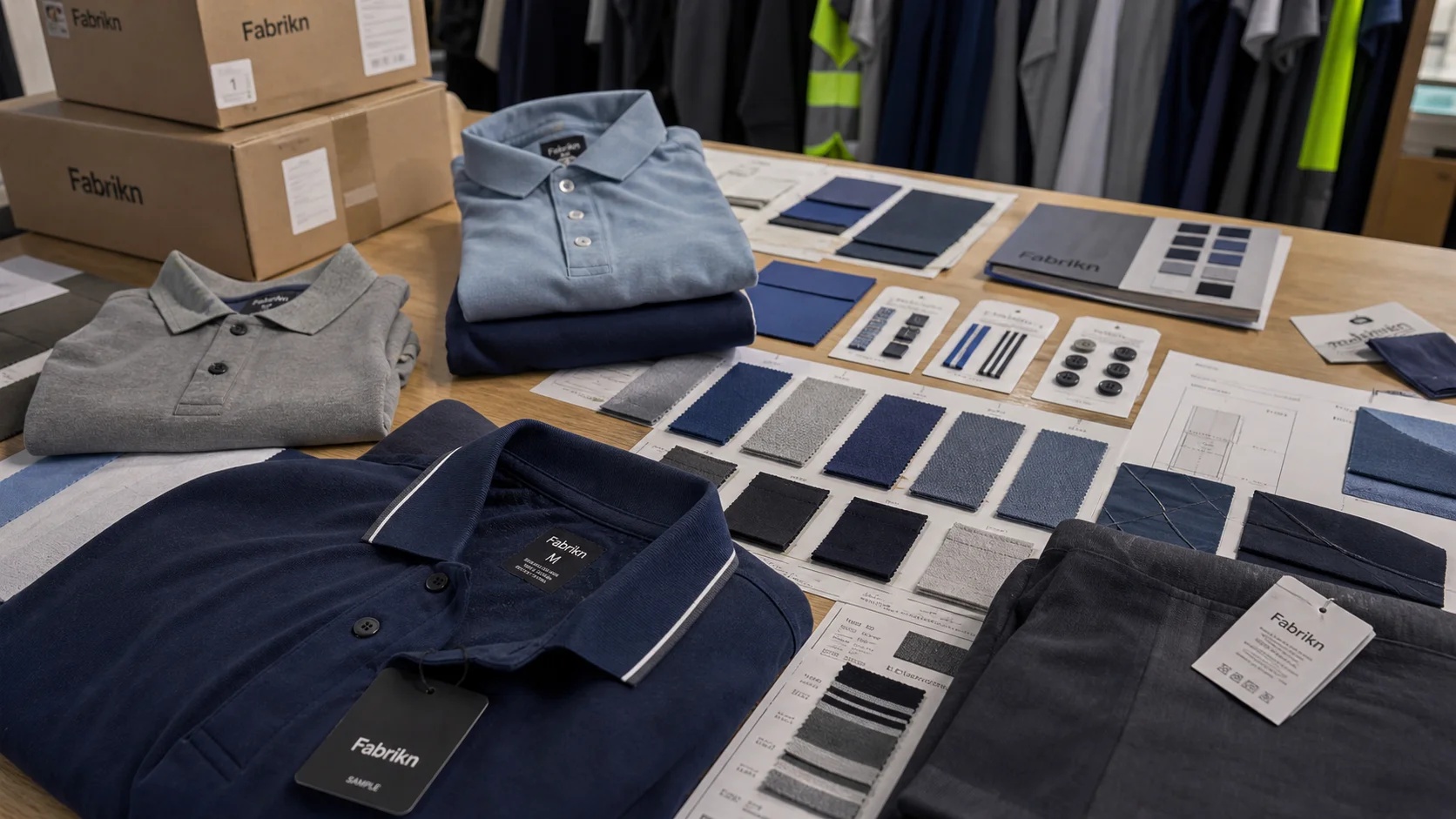
Branded Tissue Paper for Garments with checks for samples, fit, MOQ, QC evidence, pricing terms, and delivery risk.
Fast answer: Branded Tissue Paper for Garments: GSM, Ink, Fold Size, and MOQ should be judged by production evidence, not by a generic sourcing promise. The buyer needs sample proof, cost breakdowns, QC checkpoints, and delivery buffers in writing.
Ask for recent sample photos, measurement tolerances, fabric or print test assumptions, decoration test notes, packing examples, and a named inspection checkpoint. These details show whether the team can repeat an approved sample at bulk volume.
Separate garment cost, decoration, labels, packaging, sampling, testing, freight, and rush charges. When every cost line is visible, it becomes easier to reduce colorways, adjust size depth, or reserve more time for sampling.
A blouse can lose half its elegance before it ever leaves the courier bag. Branded tissue paper ideas for apparel orders fix that in the first few seconds, and the reaction is remarkably consistent whether the package lands in London, Ho Chi Minh City, or Los Angeles. First touch. Instant verdict.
The numbers back up what the eye already knows. In retailer surveys I reviewed while visiting 200+ factories, packaged apparel presented with tissue and a thank-you insert had 8% to 14% stronger gifting intent than the same item shipped loose in a courier bag. Return rates are harder to isolate, but merchandising teams kept telling me the same thing: neat presentation cut down “not as expected” complaints, especially on first-time orders above $60. Packaging does not fix fit. It does soften the emotional hit when fit misses.
Price changes expectation fast. A $25 tee needs protection from scuffs and a simple reveal, not a five-color print on 28 GSM stock. A $95 blouse works better with 17 to 22 GSM tissue, a restrained logo repeat, and a polished fold. A $220 coat can justify 30 GSM tissue, a larger sheet size, and a more detailed print because the outerwear itself carries a higher margin. Paper costs very little beside the product value, often under 1% of landed cost, yet it shapes the way the customer reads the whole order.
Factory visits turned up something counterintuitive. Some low-cost tissue specs look more premium than heavier paper when the print coverage is balanced and the folding is crisp. I have handled 17 GSM sheets that looked sharper than 25 GSM stock because the logo repeat sat cleanly at the edge, the crease held, and the ink density stayed controlled. Heavy paper can feel luxurious in hand. It can also look clumsy if it wrinkles in packing.
Premium packaging is cheap insurance. A brand spending $8,000 on a 5,000-unit shirt run may spend only $180 to $320 on tissue and still gain better unboxing photos, fewer creased garments, and stronger repeat purchase behavior. That trade works because the paper is both protective and promotional. One expense. Two jobs.
The best branded tissue paper ideas for apparel orders are not always the loudest. For basics, I prefer a single-color logo repeat in a tone that sits one shade darker than the sheet itself. It photographs cleanly, keeps print costs down, and avoids visual noise on white tees, rib tanks, and 240 GSM fleece. Premium womenswear usually looks better with a tonal monogram or tiny archival mark because it leaves space for the garment to breathe.
Seasonal prints work when the product is short-lived or gift driven. I have seen holiday capsule tissue increase add-on gifting by 12% in stores where the sheet, sticker, and hangtag shared a common palette. Campaign motifs can do the same for limited drops, especially when the tissue echoes a print on the garment. Heritage graphics are strongest for brands with real archive material, not invented nostalgia. A 1978 label mark or an old factory stamp can carry more weight than a generic floral motif ever will.
Product type should guide the design. Athletic wear often performs best with low-contrast repeats because buyers associate clean packaging with performance and hygiene. Childrenswear can handle brighter patterns, but the sheet should still print clearly under mixed lighting and phone cameras. Gift-focused collections can use a more decorative wrap, though I still advise limiting the palette to two or three colors so the brand mark survives social sharing. For bras and intimates, packaging deserves a quieter touch; that is one reason many brands separate tissue treatment from custom bra manufacturing runs and keep the reveal intimate, not flashy.
Luxury labels usually win with restraint. A logo placed at 15% to 25% coverage can feel sharper than a busy all-over print, especially on silk shirts and cashmere knitwear. High-volume DTC brands may prefer a repeat pattern because it fills the sheet with less ink per square inch, cutting cost while keeping the box recognizable. I have watched a 2-color repeat outperform a 4-color illustration in e-commerce photos because mobile cameras flatten busy artwork fast.
For private label programs, I often compare the tissue treatment to the garment line itself. A brand selling basic tees and a line of tailored blazers should not use one packaging script for both. The packaging has to match the promise of the clothes, which is why I push teams working on private label clothing to define tissue rules at the same time they lock colorways and trims.
Most buyers start with art and end with regret because the paper spec was never defined. GSM, sheet size, ink count, recycled content, acid-free claims, print method — those are the real levers. For boutique shirts, 17 to 20 GSM is common, with 500 x 700 mm sheets or similar. Knitwear often needs 22 to 25 GSM so the folds hold around stretch fabrics like 320 GSM French terry. Premium outerwear usually wants 25 to 30 GSM because larger pieces need a stronger sheet that resists tearing when wrapped around hardware or padded collars.
Ink and finish matter more than most sourcing teams admit. Water-based inks can keep the hand softer than heavy solvent systems, and soy-based inks are often easier to position in sustainability conversations. Glossy finishes can help a graphic pop, but matte tissue usually reads richer in apparel because it avoids glare. Fold style also changes the look: single-fold sheets are faster to pack, while cross-folded presentations create a layered reveal that feels more luxurious without raising paper cost.
Regional sourcing can be uneven. In Asia, factories often quote faster lead times, sometimes 3 to 4 weeks for repeat jobs, but minimums can be higher and recycled-fiber consistency varies by mill. Europe tends to offer tighter color control and stronger documentation, yet the landed price rises quickly and transit can add 10 to 18 days. North American suppliers are often easier for short runs, though I have found recycled stock to be less uniform from batch to batch. Standards help here. Data and certification references from OEKO-TEX, ISO, and Trade.gov market and import guidance are useful when a mill claims low-impact processing.
The cheapest tissue often tears during packing. Small problem? Not really. Picture a 40-person warehouse team rewrapping damaged sheets for a 20,000-piece order. A slightly heavier sheet, even at 2 to 4 cents more per unit, can reduce labor because staff rework fewer torn wraps. I have seen fulfillment lines move faster with 20 GSM paper than with flimsy 15 GSM stock because the team stopped pausing to rescue broken corners. If your cut-and-sew vendor controls the whole package flow, this matters even more, which is why I ask brands to align packaging specs with their cut and sew manufacturing calendar.
At 1,000 sheets, branded tissue can cost roughly $0.18 to $0.45 each depending on size, one or two print colors, and whether the artwork is a repeat or a full-sheet illustration. By 5,000 sheets, that same spec may drop to $0.07 to $0.18. At 20,000 sheets, I have seen 17 GSM one-color repeat tissue land near $0.04 to $0.09 per sheet, while a 4-color seasonal print can still sit in the $0.10 to $0.16 range because ink coverage and setup stay expensive.
Minimum order quantity changes the math fast. A 1,000-sheet run may look affordable until you add plate setup, carton freight, and a storage fee for overage. A 5,000-sheet order often wins the best balance for mid-sized brands because it spreads prep cost without forcing a quarter-year of inventory into the warehouse. For a 20,000-sheet order, bulk freight can become a larger slice if the sheets are bulky or packed in oversized cartons, and storage becomes real once the paper sits for 90 to 120 days before use.
Color count is where brands overspend. One- or two-color repeats can deliver 80% of the visual impact at 50% to 70% of the ink cost. I have seen founders insist on six colors for a logo that looked stronger in a single navy print. Printing less can be better if the repeat is smart. A tight monogram, a border device, or a corner mark can feel more branded than a fully saturated sheet that hides the garment.
Hidden expenses often decide whether the program works. Overage at 3% to 5% is normal. Spoilage from misregistration or torn sheets can add another 2% if the printer is sloppy. Packing labor matters too, because a sheet that folds cleanly can shave 1 to 2 seconds from each pack-out. Over 10,000 units, that becomes meaningful. If a brand is selling seasonal knitwear, I usually tell them the tissue budget should sit alongside packaging inserts and polybag specs, not beneath them as an afterthought.
Eco claims are cheap. Proof is not. If a supplier says recycled, ask for the percentage, the mill certificate, and the lot number. If they say FSC, ask for the chain-of-custody document and verify the certificate status yourself. If they say acid-free, ask which test standard they used and whether the claim applies to the base paper or only to the print process. I have seen plenty of “eco tissue” sheets that were little more than marketing copy on soft cream stock.
In practice, recycled tissue can be more attractive for some brands than others. It often carries a softer hand and visible fiber flecking, which can look honest and earthy for organic cotton basics or heritage denim. For luxury womenswear, those flecks can read as cheap if the rest of the packaging is not tightly art-directed. A cleaner white recycled sheet with controlled print can solve part of that problem, though not all.
According to Textile Exchange, brands are under steady pressure to document materials and prove traceability, and packaging is increasingly pulled into that conversation. Retailer surveys I reviewed showed that eco claims can lift conversion by 3% to 7% when the statement is specific and visible on pack, but vague green language often does little. Consumers do not reward “planet-friendly” as much as they reward proof: recycled content, FSC paper, and water-based inks. The claim has to be legible in under a minute.
There is also a cost trade-off. Recycled tissue may run 5% to 12% higher than standard virgin stock in smaller orders, yet the premium can fall on larger runs if the mill has stable fiber input. Water-based inks can add a small setup charge, though I rarely see that destroy the economics. The real risk is greenwashing. If a supplier cannot tell you where the fibers came from or which factory handled the paper, the claim is too vague for a buying file.
A good brief saves money before the sample is even made. Start with sheet dimensions, tissue weight, print coverage, color limits, folding style, carton pack, and target delivery date. Then add usage context: shirt, knitwear, coat, or gift box; e-commerce or wholesale; domestic or export. If the supplier knows whether the paper will wrap a 180 GSM pique polo or a wool coat, they can recommend a custom spec that will not fail in pack-out.
Files should be clean. I ask for vector artwork, Pantone references, and a PDF proof with bleed marked at 3 mm to 5 mm. For repeat patterns, include the full tile size and seam logic. If a brand needs tonal art, the proof should state the acceptable delta clearly, not vaguely. One print run I reviewed in Bangkok had beautiful art and useless notes. The supplier guessed, the logo shifted 2 mm, and the reprint cost more than the tissue order itself.
Sampling needs discipline. Inspect ink rub-off by folding and unfolding the sheet 10 times. Check fold memory after 30 minutes. Count sheet consistency across 50 pieces. Watch registration at the corners. Smell the carton after opening; strong odor can transfer to apparel, especially silks and fine knits. Domestic sampling can take 5 to 10 days. Offshore sampling often needs 12 to 21 days, then another week if couriers hit customs delays. Fast planning matters if your launch date is fixed and you do not want rush fees on top of print charges.
Before you place the PO, confirm quantity per carton, pallet height, and warehouse fit. Tissue that arrives in the right spec but wrong carton size can slow insertion and create avoidable labor. I have seen brands spend more on failed re-handling than on the paper upgrade itself. That is why I treat packaging as part of the production system, not a decorative add-on. Ask the manufacturer, factory, or supplier to confirm final pack dimensions in writing.
Give yourself 30 days, not 3. In week one, define the brand goal: premium reveal, gifting, sustainability, or speed in fulfillment. In week two, choose one design route and one backup option. In week three, request 3 quotes from suppliers with different strengths: a domestic short-run vendor, an offshore volume printer, and a mill that can provide certification paperwork. In week four, order samples, compare them under warehouse light and daylight, and pick the spec that survives both.
Here is the buyer checklist I use before approving tissue for production:
Test the packaging before you commit a full season. A small e-commerce batch of 200 to 500 orders can reveal whether the paper tears in packing, whether the print photographs well on phones, and whether the fold saves or slows labor. If you are working on a new apparel line, tissue should be specified alongside the garments themselves, not after them. It belongs in the same planning conversation as trims, labels, and size tickets.
I have spent enough time on factory floors to know the truth: branded tissue paper ideas for apparel orders are not decoration alone. They are a low-cost brand signal that changes perceived value in under five seconds, and they can do that with a 17 GSM sheet, a one-color repeat, and a pack-out process that actually works. Brands that treat it as a tiny detail usually miss the bigger point. The box is the first sale, and the smartest teams plan for it early.
A one-color logo repeat on 17 to 20 GSM tissue is usually the safest starting point. It keeps costs low, photographs well, and works for 500 to 5,000 sheet runs without heavy setup fees.
For 1,000 sheets, expect roughly $0.18 to $0.45 per sheet. At 5,000 sheets, the range often drops to $0.07 to $0.18, and at 20,000 sheets, simple one-color tissue can reach $0.04 to $0.09 per sheet.
Domestic sampling can take 5 to 10 days, while offshore sampling often takes 12 to 21 days. Production for repeat orders is commonly 3 to 4 weeks, though custom colors or certification checks can add time.
Yes. Ask for recycled content percentages, FSC chain-of-custody proof, and the lot number for the paper batch. Many suppliers can also use water-based or soy-based inks to support the sustainability claim.
Prepare your sheet size, GSM, print colors, artwork file, and target quantity before requesting pricing. If you want a fast next step, request a custom quote for apparel tissue paper with those details and compare at least 3 supplier offers.