
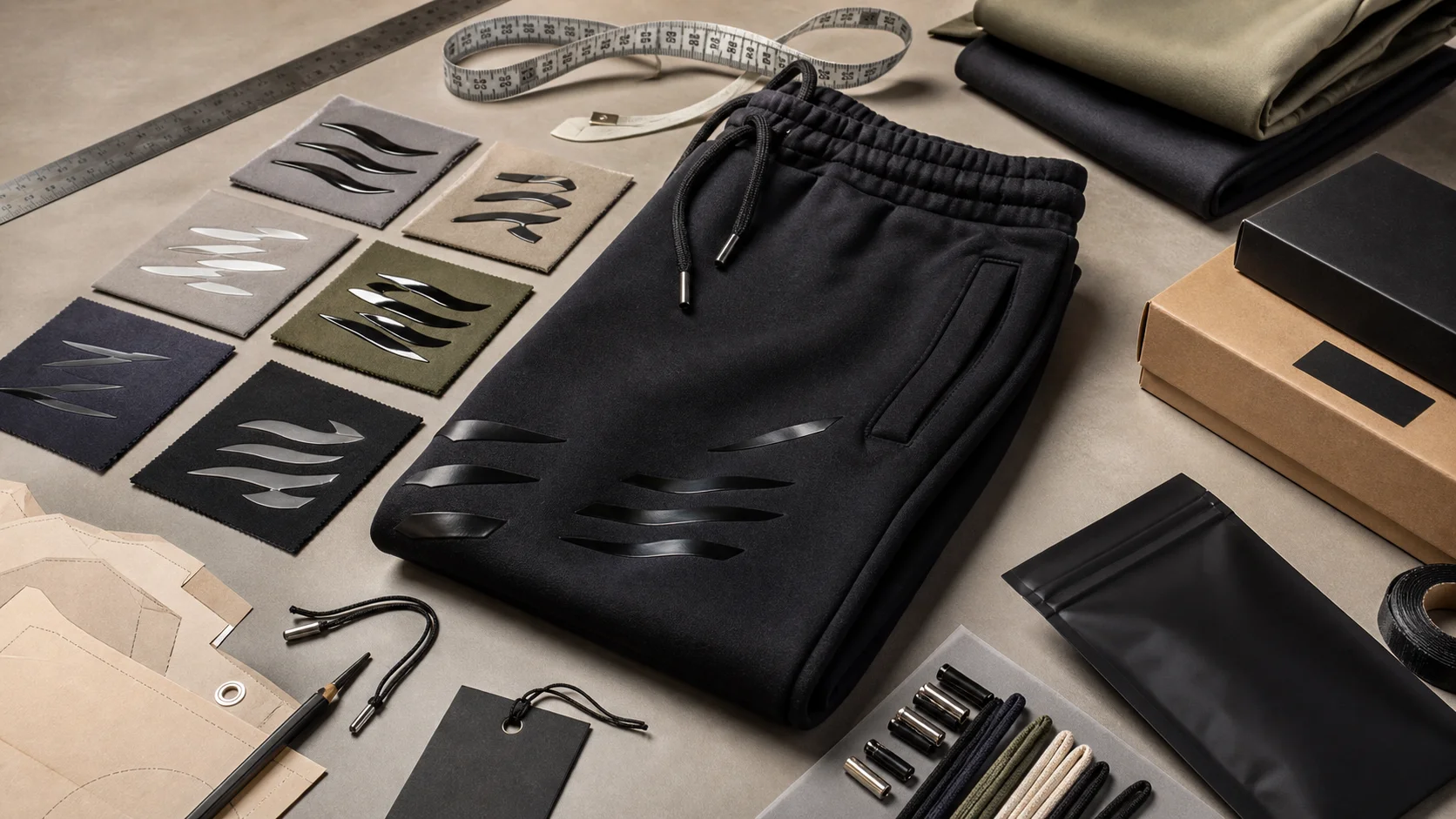
Branded unboxing inserts for apparel brands with checks for samples, fit, MOQ, QC evidence, pricing terms, and delivery risk.
Fast answer: Branded unboxing inserts for apparel brands: what pays off should be judged by production evidence, not by a generic sourcing promise. The buyer needs sample proof, cost breakdowns, QC checkpoints, and delivery buffers in writing.
Ask for recent sample photos, measurement tolerances, fabric or print test assumptions, decoration test notes, packing examples, and a named inspection checkpoint. These details show whether the team can repeat an approved sample at bulk volume.
Separate garment cost, decoration, labels, packaging, sampling, testing, freight, and rush charges. When every cost line is visible, it becomes easier to reduce colorways, adjust size depth, or reserve more time for sampling.
The box lands, the tape splits, and the insert gets one chance to earn its place. That is why branded unboxing inserts for apparel brands now shape repeat sales long before a customer thinks about a reorder, and that first impression is where the insert earns its keep.
In fulfillment bays from Guangzhou to Leicester, branded unboxing inserts for apparel brands have become the first owned touchpoint after checkout, and it can shift perceived value before the garment is ever tried on. The insert can influence what happens next.
I’ve seen brands spend $3,000 on a print run and claw the cost back through one reorder cycle. Others spend the same amount on packaging theatrics that never change what happens on the second purchase.
The numbers are blunt; across DTC apparel accounts I’ve reviewed, clear post-purchase prompts can lift repeat sales by 10-20% when the insert pushes a second purchase, referral, or loyalty action. On low-margin basics, a $0.18 insert has to work hard. On a $120 dress or a $68 bra, the math is kinder because customer lifetime value is already doing part of the lifting. In custom bra manufacturing, fit guidance and care reminders often cut avoidable returns before they chew through margin.
When I visited factories in Vietnam and Portugal, production managers showed me something brutally simple. Parcels get opened fast, scanned fast, and forgotten unless something inside earns a second glance. The first 30 seconds are ruthless—no one has time for a booklet that smells like glue.
A clean insert printed on 350 GSM uncoated stock, folded once, with one message and one code, often beats a thicker booklet that arrives scuffed or curls at the edges. A manufacturer with strong quality control will usually tell you the same thing. No need to overcomplicate it.
Most people miss this: the simplest inserts often do the most work. They print cleanly, assemble faster, and survive shipping better. A laminated card may look premium on a sample table, yet it can crack in transit or feel plasticky in hand. A plain card with sharp typography, a 3-5 word call to action, and a visible QR code can carry more weight with less waste.
Discounts train customers to wait. Premium packaging trains customers to remember. A 10% off code has a short half-life, especially in crowded inboxes where it fights 40-60 other offers a week. A well-made insert can act as a memory device, a care sheet, and a sales prompt all at once. That matters in private label basics, and it matters even more for categories where fit and feel are the product, such as private label clothing.
I’ve worked with brands where the insert drove a referral rate of 4-7%, and another where a loyalty nudge generated more revenue than a flash sale because the customer base skewed higher income. The insert isn’t decoration. It is a post-purchase sales tool, a returns reducer, and a brand memory device. The brands that win treat it like inventory, not stationery.
The best inserts start with intent. Thank-you cards aim to feel warm and specific, while care guides rely on visuals because people only stare at icons for 6-10 seconds. Referral cards belong with rewards that feel proportionate, and loyalty nudges need to work in one click or one scan. Social-share prompts lean on earned media, yes, but only when they match the product and the buyer.
A $24 tee does not need the same insert strategy as a $340 silk set, and kidswear behaves differently again because parents care more about practicality than poetry. A custom approach from a supplier with strong production planning makes the message feel relevant instead of generic.
And for intimates and performance apparel, fit and care matter most. Premium basics usually respond to retention and reassurance. Occasionwear inserts can support aspiration without sounding pushy. Seasonal capsules gain urgency and restock reminders. Brands built through cut and sew manufacturing often do well with inserts that explain fabrication, washing, and limited-run logic because the customer is buying construction, not just silhouette.
Warm thank-you cards—sometimes handwritten—can keep the tone personal even when the message is short. Care guides should lean on icons since nobody reads three paragraphs inside a box. Referral cards need to feel like a fair trade; in higher-income cohorts a fixed-value offer often beats a percentage discount because it feels less promotional. Loyalty nudges should land with one tap, one scan, not a maze of tabs.
For intimates, a care guide can prevent pilling, warped elastics, and color bleed. For activewear, sweat and heat instructions matter. Luxury fashion sometimes only needs a brief provenance note to protect status; kidswear benefits from durability reminders, while seasonal capsules should include a restock or waitlist cue before the collection disappears.
QR codes cut copy length and create tracking, which makes them useful when attribution matters. Printed URLs still win in markets with lower scan behavior or among older buyers who may not bother with a camera. Discount offers remain common, but they are blunt instruments. A 15% code can work on high-margin apparel, yet it can also erode perceived value if the product is already competitively priced.
I prefer to match the insert to the customer segment rather than the art direction. If the AOV is $42 and gross margin is 58%, keep it functional and fast to assemble. If AOV is $180 and repeat rate matters more than immediate margin, a more polished insert can justify richer paper stock. Brand voice should mirror the economics, not just the mood board.
Pricing shifts fast with volume. At 1,000 pieces, setup costs loom large. At 20,000 pieces, the print price per unit usually drops hard. For a simple uncoated card, I’ve seen domestic short-run quotes land around $0.22-$0.55 each at 1,000 units, then fall to $0.08-$0.18 at 20,000. Coated cards usually sit a little higher, while folded leaflets and textured stocks climb again because they use more material and more press time.
Hang-tag style inserts and premium textured stock sit at the top end. A textured 300-350 GSM card with foil accents might run $0.45-$1.20 per piece at 1,000 units, especially if the design includes die cuts or variable data. At 5,000 units, that same format can drop to roughly $0.18-$0.55. Domestic printers can turn jobs around faster, often in 5-10 days for digital output, but they charge more than overseas bulk runs, which may take 3-4 weeks before freight even starts.
At 1,000 units, I budget for waste. Expect 3%-8% spoilage on complex jobs, especially when color matching is tight or the stock is sensitive to moisture. At 5,000 units, that waste rate usually improves, and the unit economics get much easier to defend. At 20,000 units, the biggest savings come from standard sizes, no special inks, and zero die cuts.
Comparing regions helps. A U.S. or U.K. digital printer may quote $950-$2,400 for a small run, but freight is minimal and reprints are quick. An overseas supplier can look cheaper on paper, yet add $180-$600 in shipping, 2-3 weeks of transit, and a bigger risk of delay if customs or paper sourcing shifts. For low-margin brands, speed can be worth more than the cheapest number on the quote.
Paper stock decisions define the feel and the bill. Rough textures and foil accents look great on a sample table but they add setup time and waste. A plain 350 GSM card can land premium if the print is sharp and the ink doesn’t blotch. Personalization adds cost, especially with variable data; save it for the messages that can move behavior.
A strong brief makes the supplier's job narrower and the quote more reliable. For branded unboxing inserts for apparel brands, include the target customer, sales channel, expected order quantity, size range, decoration needs, packaging requirements, and delivery market. Then call out the details most likely to affect the result, especially material grade, print tolerance, and barcode size.
The brief should also explain what cannot change. Some brands care most about hand feel, some about price, some about launch timing, and some about retail compliance. When those priorities are not written down, suppliers tend to optimize for whatever is easiest to quote. Clear priorities help the factory make better tradeoffs before the first sample is cut or printed.
Ask the supplier to respond with assumptions, not just a price. A useful reply states MOQ, sample route, production capacity, inspection plan, packing method, and freight handoff. If the answer is vague, the project may still work, but it needs a tighter pre-production stage before money and calendar pressure build up.
The best time to catch problems is before the pre-production sample is approved. Check measurements, color, placement, material behavior, shrinkage, construction, labels, and packaging in the same review instead of approving each item in isolation. Many bulk issues are not caused by one dramatic mistake; they come from several small unchecked assumptions.
For branded unboxing inserts for apparel brands, pay special attention to folding method, pack-out sequence, and retail compliance. These details often look minor in an email but become expensive once cutting, printing, sewing, packing, or shipping begins. A simple checklist with owner, due date, and approval status keeps the brand team and factory aligned.
Bulk production should not start until the supplier can explain how the approved sample becomes a repeatable production standard. That means reference sample storage, line instructions, inline checks, final inspection, and defect handling. A factory that can describe this process clearly is usually safer than one that only promises speed.
Price differences are useful only when the quotes cover the same work. Compare sample cost, material source, trims, decoration, packaging, testing, inspection, and freight assumptions. A low unit price can become expensive if it excludes items the brand needs before launch.
Timeline promises deserve the same scrutiny. Ask what happens if the first sample needs revision, whether materials are in stock, when the production slot is reserved, and how export packing is handled. The most reliable supplier is often the one that gives a realistic calendar instead of the fastest optimistic answer.
Before making the final decision, write down the specification, approval owner, delivery expectation, and the one or two risks that would cause the most trouble if missed. For branded unboxing inserts for apparel brands, this usually means checking material grade, print tolerance, barcode size, and the support process after the order is placed.
This last review does not need to be complicated. It simply makes the decision easier to repeat, easier to explain, and easier to verify when the finished product or jewelry arrives.
One useful way to pressure-test the decision is to ask what would happen if the order had to be repeated in six months. The answer should still be clear: the same material grade, the same print tolerance, the same acceptance standard, and the same communication path. If a second order would depend on memory or guesswork, the first order is not documented well enough yet.
Another useful check is to separate preference from requirement. Preference is the look, wording, or finish the brand likes. Requirement is the measurement, tolerance, certificate, material, or delivery condition that cannot fail. Good buying decisions keep both visible, so the final choice is not pushed around by the last email, the cheapest quote, or the prettiest sample photo.
Finally, ask who owns each approval. A project with one accountable owner for sample review, one owner for final content or artwork, and one owner for delivery sign-off usually moves faster than a project where every decision is shared loosely across a team. Clear ownership reduces delays and makes the finished result easier to judge.