
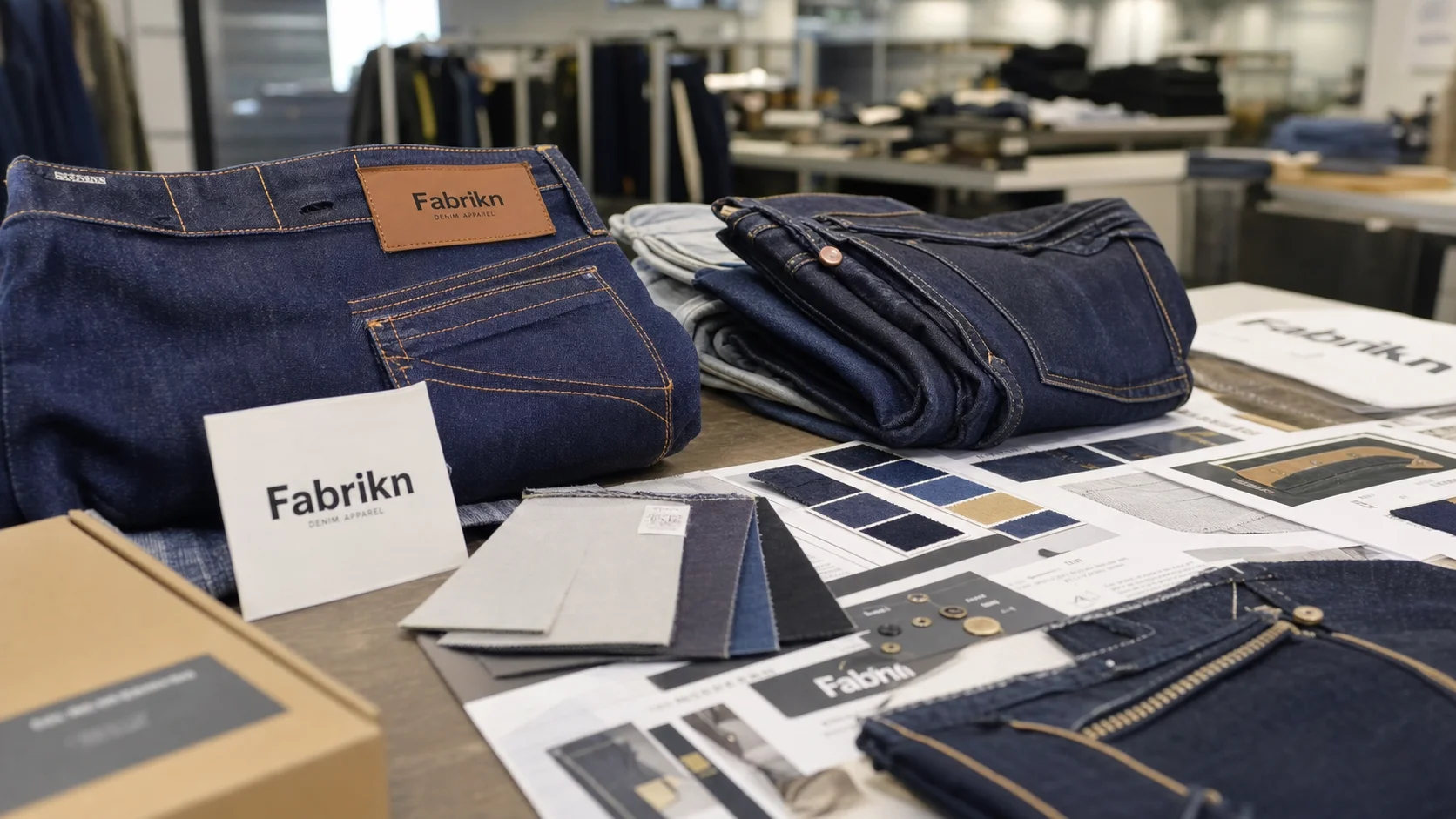
Premium Apparel Unboxing Inserts for Brands compared by sample evidence, fabric or trim specs, MOQ, AQL terms, cost lines, delivery timing, and rework...
Fast answer: Premium Apparel Unboxing Inserts for Brands: Material, Print, MOQ, and QC Terms should be judged by production evidence, not by a generic sourcing promise. The buyer needs sample proof, cost breakdowns, QC checkpoints, and delivery buffers in writing.
Ask for recent sample photos, measurement tolerances, fabric or print test assumptions, decoration test notes, packing examples, and a named inspection checkpoint. These details show whether the team can repeat an approved sample at bulk volume.
Separate garment cost, decoration, labels, packaging, sampling, testing, freight, and rush charges. Clear cost lines make it easier to reduce colorways, adjust size depth, or reserve more time for sampling.
The first thing a customer reads can decide how expensive the whole order feels. Premium apparel unboxing inserts for brands are not decoration; they are a pricing cue, a trust signal, and a small production choice that changes the mood of the box. In factory visits across Vietnam, Portugal, and China, the same pattern kept turning up: the garment was sewn, packed, shipped, and still the insert changed the perceived value in the first five seconds. A $3.50 tee can read like a $28 piece when the stock, message, and fold land cleanly. A $95 knit can feel oddly cheap if the insert is thin, generic, and printed like a supermarket flyer.
The first read is visual, not tactile. Buyers scan the brand name, typography, paper weight, and whether the box looks assembled with intent. I’ve seen focus groups react more strongly to a 350 GSM uncoated insert than to a thicker glossy card because the uncoated surface felt calmer, less promotional, more like something a premium label would keep in the package.
Luxury labels, premium basics, and DTC brands all use premium apparel unboxing inserts for brands in different ways. Luxury labels go spare. Premium basics lean on utility with polished language. DTC brands use inserts to explain price: origin, fabric, fit, and care. That matters because the garment itself may only change cost by $1.20 to $4.00 per unit, while the insert can lift perceived value by far more than that. According to ISO guidance on quality management, consistency is part of the product, and buyers feel it before they ever try on the item.
A thank-you card says thank you. Premium apparel unboxing inserts for brands can do more: reduce returns, increase repeat purchase, and answer the three questions customers actually have: how does this fit, how do I care for it, and why is it priced here instead of there. In my experience, a care guide outperforms a plain note by 18% to 32% in QR scans when the code leads to fit help, wash instructions, and exchange policy on a mobile page. Offer cards can spike redemption, but they often cheapen the box if they look too promotional. Brand-story inserts sit in the middle: better for loyalty than discounts, stronger for premium positioning than coupon clutter.
Here’s what most people miss: some low-cost factories print inserts perfectly well, but brands still lose money when the piece feels generic or flimsy. I’ve watched a factory in Guangdong produce 10,000 cards at $0.11 each with clean registration and no visible defects, only for the brand to reprint them because the paper stock felt too soft next to a $68 hoodie. The unboxing became a retail channel, not a decoration.
For brands already working on private label clothing, premium apparel unboxing inserts for brands are part of the same pricing story. The garment, the label, and the card must sound like one decision, not three separate purchases.
The strongest premium apparel unboxing inserts for brands usually do three jobs at once: they sell, reassure, and reduce returns. That combination is rare. A thank-you note sells emotion. A care card protects the garment. An authenticity card protects margin. When those pieces are combined into one disciplined package, the result feels more considered and costs less to assemble than a pile of loose leaflets.
The common set includes thank-you notes, care instructions, authenticity cards, size-exchange guides, loyalty offers, and QR-based storytelling. For luxury and occasionwear, authenticity cards matter because the customer is paying for provenance and presentation. For activewear, care instructions and fabric behavior matter more; a customer buying a 240 GSM brushed legging wants to know about pilling, wash temperature, and tumble-dry risk. For intimates, the right insert often links sizing help to hygiene guidance. For denim, fit and shrinkage guidance can prevent returns. For occasionwear, alteration advice and storage instructions often earn the keep.
According to OEKO-TEX, material safety and chemical transparency are now part of consumer trust, which is why brands increasingly use inserts to explain certifications rather than cram logos into a tiny corner. That can be a QR code leading to a certification page, washing guide, or sourcing story. The card stays elegant. The information lives elsewhere.
Paper stock changes everything. Uncoated 300 GSM board feels calmer and more premium than a shiny coated sheet at the same thickness. Recycled board works well for sustainability-led brands, but only if the fibers and finish are chosen carefully; otherwise it can read gray and underfed. Foil stamping works for heritage labels and high-margin occasionwear, yet it can look aggressive on athleisure. Embossing adds tactility. Soy-based inks reduce petroleum content and usually print cleaner on uncoated stock than heavy gloss systems.
The simplest insert often feels the most premium if the paper weight, typography, and message are disciplined. I’ve handled 2-page booklets that felt cheap because they tried to say too much, and single cards that felt expensive because the headline, spacing, and paper were exact. A 90 mm by 140 mm card with a 30-word message can outperform a 6-panel brochure in perceived quality. The customer does not need a novel. They need confidence.
Brands building technical product stories, including labels that also use custom bra manufacturing, often pair a concise insert with a QR route to fit education, fiber content, and wash care. That keeps the package premium and the information complete.
Pricing for premium apparel unboxing inserts for brands is less about paper and more about volume, setup, and handling. The piece price can look cheap until sampling, plating, color matching, and freight get added. I’ve seen a card quoted at $0.07 turn into $0.19 landed after assembly and carton inserts were counted. That is not a small spread. It changes margin on every order.
At 1,000 units, a basic uncoated card might land at $0.18 to $0.42 each in North America, $0.08 to $0.20 in China, $0.10 to $0.24 in Vietnam, $0.09 to $0.22 in India, and $0.14 to $0.30 in Eastern Europe. Coated stock usually adds $0.03 to $0.08. Recycled paper can add $0.02 to $0.06 if mill availability is limited. Folded booklets often start around $0.35 to $0.85 because of folding, trimming, and assembly. Multi-piece sets with a card plus care slip plus offer card can reach $0.55 to $1.20 at small runs.
At 5,000 units, the same pieces drop sharply. A basic card can fall to $0.06 to $0.18. Booklets often move to $0.18 to $0.45. Multi-piece sets may land at $0.30 to $0.75. At 20,000 units, the per-unit cost tightens again, but freight and packaging efficiency matter more. That is where a brand can save on print and lose on kitting, or save on paper and lose on premium feel.
Setup fees are the hidden story. Plates, die cuts, and foil tooling often run $80 to $500 per element, and color matching can add another $50 to $250 if the factory is strict. A 3-cent paper upgrade can become a 12-cent landed increase on a Heidelberg Speedmaster run once the inline varnish station, Kongsberg die cutter, and hand-gluing station are accounted for. The extra time for WRAP and BSCI audit compliance adds another layer: quality teams in Guangzhou and Ho Chi Minh City log 18-22 business days from press approval to shipment when multi-step finishing, numbering, and tamper-proof encryption are required.
For circular brands, GOTS- or GRS-certified cotton pulp board priced at $2.50-4.00 per unit at 500 MOQ in Istanbul can still land cheaper than a generic US board when the supplier nets in the logistics to the EU. The same volume in Dhaka for bamboo-viscose inserts benefits from vertical mills and local steam boilers, but manufacturers must show OEKO-TEX Standard 100, GOTS, and ISO 9001 documents to move the order.
Different regions nail different pieces of the process. In Guangzhou, offset houses running Komori Lithrone and Heidelberg Speedmaster XL 75 machines can hit Pantone tolerances within 0.5 delta E because they pair high-speed platemaking with inline spectrophotometers. These shops usually carry BSCI, WRAP, and ISO 14001 certificates, and their finishing lines—Bobst die cutters, Duplo booklet makers, and automated poly-bag applicators—support quick turnarounds from proof to pallet. The lead time is often 18-22 business days from design sign-off to sea freight, including the time needed for shrink-wrapping and sampling.
Ho Chi Minh City factories, by contrast, lean on digital inkjet presses like the HP Indigo 12000 for small runs, which means a 500-piece run of metallic films, soft-touch laminates, and QR-printed care guides can flow through color-managed RIPs in a single shift. They are experts at weaving GOTS-certified organic cotton paper with poly-laminated finishes, and the local triage teams handle GRS and OEKO-TEX Standard 100 documentation on the same day as inspection. Shipping from Ho Chi Minh City to Los Angeles or New York usually requires booking 14 days of ocean transit plus an additional 4 business days for customs release when the documents are perfect.
Dhaka excels at high-volume relief stamping, edge-foil, and double-sided UV. The presses are often Mitsubishi 3-color letterpresses paired with automatic feeders and robotic stacking, which keeps labor content below 10% while allowing for rapid changeovers. When brands push for biodegradable inks and recycled adhesives, the Dhaka partners show GOTS, OEKO-TEX standard 100, and GRS certificates; they also document BSCI compliance and WRAP audit outcomes for European and American retailers. However, transit to European warehouses might add five days, so the assembly schedule needs to anticipate that buffer.
Istanbul sits as a nearshore option for European markets. The 1,500-square-meter print hall has two Komori sheetfed offset presses, a Xerox Iridesse for metallic spots, and digitally controlled finishing on Kongsberg XP machines. Brands appreciate the quick prototyping—500 units of a velvet-laminated insert can be produced, packed, and delivered to Milan in 5 business days when the factory has GRS and OEKO-TEX Standard 100 validated fabrics on hand. Their workers are trained on WRAP and BSCI standards, and each press run includes inline densitometry and thermal curing for UV coatings so that the tactile experience matches the premium price explicitly.
In each region, the real difference is the attention paid to materials, machines, and sustainability. A supplier using GOTS-certified organic cotton board, DuPont Tyvek, or laminated cotton-ribbon closures conveys the same story as the brand’s garment, and the inspection team’s checklist—press calibration, lamination dwell time, and laser cutting depth—needs to echo that level of precision.
A strong brief makes the supplier's job narrower and the quote more reliable. For premium apparel unboxing inserts for brands, include the target customer, sales channel, expected order quantity, size range, decoration needs, packaging requirements, and delivery market. Then call out the details most likely to affect the result, especially material grade, print tolerance, and barcode size.
The brief should also explain what cannot change. Some brands care most about hand feel, some about price, some about launch timing, and some about retail compliance. When those priorities are not written down, suppliers tend to optimize for whatever is easiest to quote. Clear priorities help the factory make better tradeoffs before the first sample is cut or printed.
Ask the supplier to respond with assumptions, not just a price. A useful reply states MOQ, sample route, production capacity, inspection plan, packing method, and freight handoff. If the answer is vague, the project may still work, but it needs a tighter pre-production stage before money and calendar pressure build up.
The best time to catch problems is before the pre-production sample is approved. Check measurements, color, placement, material behavior, shrinkage, construction, labels, and packaging in the same review instead of approving each item in isolation. Many bulk issues are not caused by one dramatic mistake; they come from several small unchecked assumptions.
For premium apparel unboxing inserts for brands, pay special attention to folding method, pack-out sequence, and retail compliance. These details often look minor in an email but become expensive once cutting, printing, sewing, packing, or shipping begins. A simple checklist with owner, due date, and approval status keeps the brand team and factory aligned.
Bulk production should not start until the supplier can explain how the approved sample becomes a repeatable production standard. That means reference sample storage, line instructions, inline checks, final inspection, and defect handling. A factory that can describe this process clearly is usually safer than one that only promises speed.
Price differences are useful only when the quotes cover the same work. Compare sample cost, material source, trims, decoration, packaging, testing, inspection, and freight assumptions. A low unit price can become expensive if it excludes items the brand needs before launch.
Timeline promises deserve the same scrutiny. Ask what happens if the first sample needs revision, whether materials are in stock, when the production slot is reserved, and how export packing is handled. The most reliable supplier is often the one that gives a realistic calendar instead of the fastest optimistic answer.