
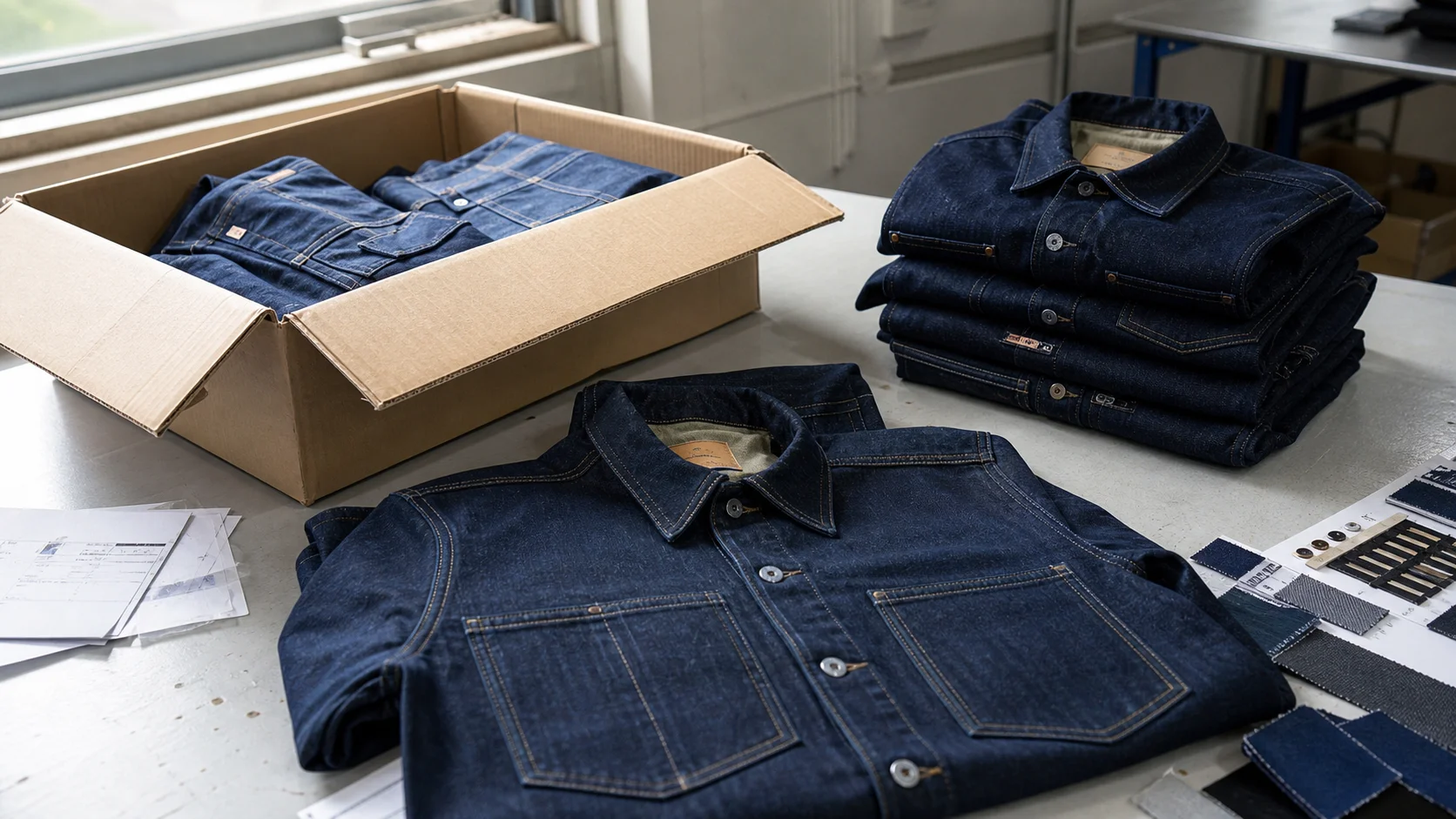
A product-specific outline for startup gymwear brands sourcing bulk activewear sets and the trims that affect cost, fit, branding, and production readiness.
Bulk Activewear Sets With Trim Sourcing Quotes - Fabrikn production reference
Bulk activewear sets with trim sourcing for startup gymwear brands is not just a garment buying question. It is a product engineering question, a cost control question, and often a launch timing question at the same time. Many new gymwear labels spend most of their attention on fabric weight, stretch, and fit, then discover too late that trims can delay production, push up MOQ, or create avoidable quality claims.
That matters even more when the category overlaps with outerwear and jackets. A simple bra-and-legging program may use elastic, care labels, heat transfer logos, and polybags. A jacket set or tracksuit can add zippers, zipper pulls, cords, cord ends, toggles, eyelets, drawstrings, branded tape, hook-and-loop closures, silicone patches, and woven labels. Every added component creates another sourcing path, another color approval point, and another place where quality can drift.
For startup buyers, the most useful approach is usually not chasing the cheapest trim quote line by line. The better approach is balancing brand presentation, factory compatibility, reorder flexibility, and failure risk. In practice, a slightly higher trim cost can be the smarter purchase if it reduces delivery delays, shade mismatch, or high defect rates in bulk.
If your team is building a first collection and needs a clearer production path, it helps to review sourcing support options early rather than after design lock. A general manufacturing overview can be found at https://fabrikn.com/services/, especially if you are still shaping your development and production workflow.
Most startup gymwear brands are not launching with deep SKU counts. They usually begin with a focused range: leggings, sports bras, fitted tops, shorts, and one or two layering pieces such as zip jackets, lightweight outerwear, or warm-up tops. That small range creates pressure to get each style right, because one failed style can affect a large share of total launch revenue.
Trim sourcing becomes critical here for three reasons.
Startup brands also tend to over-customize early. That is a common mistake. A first production run does not always need custom-molded zipper pullers, bespoke toggles, and fully branded elastic across every style. In many cases, stock trims in approved colors are the more practical option for launch, while custom trim programs can be introduced after sell-through is proven.
That is the tradeoff buyers need to judge clearly: custom trims improve brand recognition, but they also raise complexity, lock in MOQs, and can lengthen lead times by several weeks.
When suppliers quote bulk activewear sets, the factory and buyer should define exactly what the “set” includes. This sounds basic, yet quote comparisons often become misleading because one supplier includes more components than another.
A typical activewear set may include:
The trim package can include both mandatory and optional components. Mandatory trims are usually care labels, size labels, main labels, sewing thread, elastic, and packaging basics. Optional trims may include branded zipper pullers, reflective prints, silicone logos, contrast binding, snap buttons, bungee cord systems, hanger loops, and retail swing tags.
Buyers should ask suppliers to separate the quote into at least four parts:
Without that separation, it is difficult to see whether a price increase is coming from fabric yield, sewing difficulty, or trim sourcing.
Trim sourcing quotes are rarely fixed at first pass. They usually start as estimates based on tech pack details, expected consumption, stock availability, color requirements, and order quantity. The more detailed the tech pack, the more accurate the quote.
For activewear and outerwear sets, suppliers often need the following before issuing a reliable trim quote:
A sourcing quote for trims may include one of three models:
Stock trims are usually fastest and lowest risk. Semi-custom trims can be a good middle ground for startup brands. Fully custom trims make sense when volume supports the investment and repeat orders are likely.
Purchasing teams should also confirm whether trim loss allowances are included. Some factories add a waste factor for testing, defects, and production shrinkage. Others quote pure consumption only and invoice overages later. That distinction affects landed cost accuracy.
Trim cost in activewear is influenced by more than logo decoration. The biggest cost drivers often come from construction, not branding.
A soft brushed waistband elastic is not priced like standard knitted elastic. A water-resistant reverse coil zipper is not priced like a basic nylon zipper. Bonded drawcord tips, reflective tapes, and performance mesh inserts also carry different sourcing requirements.
Custom jacquard elastic, molded logo pulls, debossed toggles, and branded silicone badges usually require higher MOQs. Tooling charges may apply on top of unit price. For startups, these charges can distort unit economics unless spread across enough pieces.
Matching trims to dyed activewear fabrics can be harder than many new buyers expect. Black and white are usually simplest. Seasonal fashion shades are harder, especially when one style combines zippers, elastic, binding, and heat transfers from different vendors.
If the trim must survive stretch recovery, sweat exposure, repeated washing, or outdoor wear conditions, quality specifications become more demanding. That often means higher trim cost, but it also reduces claim risk.
Most trim suppliers become more competitive when orders consolidate across styles or colors. Splitting small quantities across too many colorways is one of the fastest ways to raise trim cost.
MOQ is one of the main pressure points in bulk activewear sets with trim sourcing for startup gymwear brands. There is no single standard across the market, but typical ranges can still help buyers plan realistically.
Here is the practical buying judgment: if your launch order is small, reserve customization for the trims customers actually notice. Main labels, swing tags, or a clean logo transfer often deliver enough brand presence. Spending heavily on hidden trims that do not affect sell-through is usually not the best early-stage use of budget.
Sampling is where trim sourcing problems should be exposed, not hidden. A proper approval flow protects both buyer and supplier.
Trim cards are especially useful for startup gymwear brands. They allow the buyer to review zipper finish, elastic hand feel, logo execution, label placement, and packaging details in one controlled step. That is far better than approving the garment generally while leaving trim substitutions vague.
Buyers should confirm whether the pre-production sample uses real bulk trims or near-equivalent placeholders. That distinction matters. Approving a sample with a stock zipper and then running bulk with a lower-grade replacement can lead to avoidable disputes.
A sample is only a reliable approval tool when the fabric, trims, construction method, and finishing standard are close to the intended bulk order.
Lead time for activewear production depends on the longest dependency, not the fastest one. In many cases, trims become the bottleneck.
Typical timelines vary by product and supplier load, but startup buyers can use these broad planning ranges:
Outerwear and jacket styles can take longer because of zipper sourcing, panel complexity, lining, and finishing details. A startup launching matching activewear sets plus jackets should not assume all styles can move at the same speed.
The better strategy is often to classify trims into critical path and non-critical path items. Custom logo zipper pulls, reflective transfers, and branded elastics usually sit on the critical path. Plain care labels or generic size stickers usually do not.
For brands trying to align launch dates, it helps to discuss sourcing timelines with a manufacturing partner before finalizing design details. Contact routes such as https://fabrikn.com/contact-us/ are useful when you need to compare feasibility, not just pricing.
Trim defects in activewear often create complaints that customers interpret as overall garment failure. A good fabric and good fit can still be undermined by a peeling transfer, a rough zipper, or a twisted elastic waistband.
Inspection planning should reflect the trim profile of the style. A simple seamless set does not need the same inspection focus as a zip jacket with cords, toggles, bonded logos, and multiple label applications.
One buying mistake appears often: approving visual appearance without performance testing. That is risky in gymwear because trims are exposed to stretch, heat, friction, laundering, and sweat. Appearance approval alone is not enough.
Although the search topic centers on activewear sets, the outerwear and jackets category is highly relevant. Many startup gymwear collections now include layering pieces such as running jackets, pump covers, windbreakers, fleece zip-ups, and technical warm-up tops. These items carry higher trim complexity than leggings or bras.
Jackets and outerwear usually rely on trims as both functional and visual features. Zippers, toggles, elastic cords, stop locks, binding tape, hook tabs, snaps, and lining labels all need tighter sourcing control. When buyers move from core activewear into outerwear, the trim sourcing challenge increases faster than many expect.
This is also where quote comparisons can become misleading. One supplier may quote a low jacket price using generic zippers and light-duty hardware, while another includes stronger components with better finish consistency. The cheaper quote is not automatically the better buy if it increases return risk or weakens perceived product value.
Startup brands should treat outerwear trims as a product performance issue, not a cosmetic afterthought. A jacket that looks sharp in photos but fails at zipper function or cord durability can damage brand trust early.
There is no perfect universal trim strategy, but there are sensible early-stage purchasing rules.
The strongest purchasing position comes from clarity. If your bill of materials is vague, your quote will be vague. If your quote is vague, your risk during production rises.
It also helps to work with teams that understand how sourcing, development, and bulk execution connect across categories. A company background page such as https://fabrikn.com/about-us/ can help buyers assess whether the fit is operational, not just promotional.
For most startup gymwear brands, the best outcome is not the most heavily customized first drop. It is the first drop that ships on time, fits correctly, performs well, and leaves room for profitable reorders. Trim sourcing should support that outcome, not complicate it.
Bulk activewear sets with trim sourcing for startup gymwear brands requires more discipline than many first-time buyers expect. Fabric and fit remain central, but trims often decide whether the collection runs smoothly or becomes delayed, over-budget, or quality-sensitive in bulk.
The most practical path is usually to simplify where possible, customize where it truly matters, and demand clear approvals before production starts. MOQ, lead time, testing, and trim compatibility should all be reviewed as part of the buying decision. That is especially important when the range includes outerwear and jackets, where trim complexity rises quickly.
In short, smart sourcing is not about adding the most details. It is about choosing the right details, at the right volume, with the right supplier controls behind them.
Get a free quote from Fabrikn — your trusted B2B clothing manufacturer with 10+ years of experience. MOQ as low as 200 pieces.
Get a Free Quote →They are coordinated gymwear products ordered in production quantities, such as leggings with sports bras, or jackets with joggers, usually prepared for retail launch or brand scaling.
Common trims include elastic, care labels, size labels, woven labels, heat transfer logos, zippers, drawcords, toggles, reflective elements, silicone badges, and packaging components.
Many suppliers work within roughly 100 to 300 pieces per style per color at the lower end, though complex products or specialized factories may require more. Custom trims often carry separate MOQs.
They can be, but only when used selectively. Visible brand trims may help product identity, while excessive customization can strain budget and delay launch.
Stock trims may be ready in about 1 to 2 weeks. Semi-custom trims often take 2 to 4 weeks. Fully custom trims can take 4 to 8 weeks or longer depending on tooling and approvals.
Performance failure is often the biggest issue. That includes peeling transfers, weak zipper operation, poor elastic recovery, corrosion, or shade inconsistency after wash and wear.
Outerwear usually uses more functional trims than basic activewear. Zippers, toggles, cords, snaps, and tapes affect both appearance and product durability, so sourcing errors have a larger impact.