
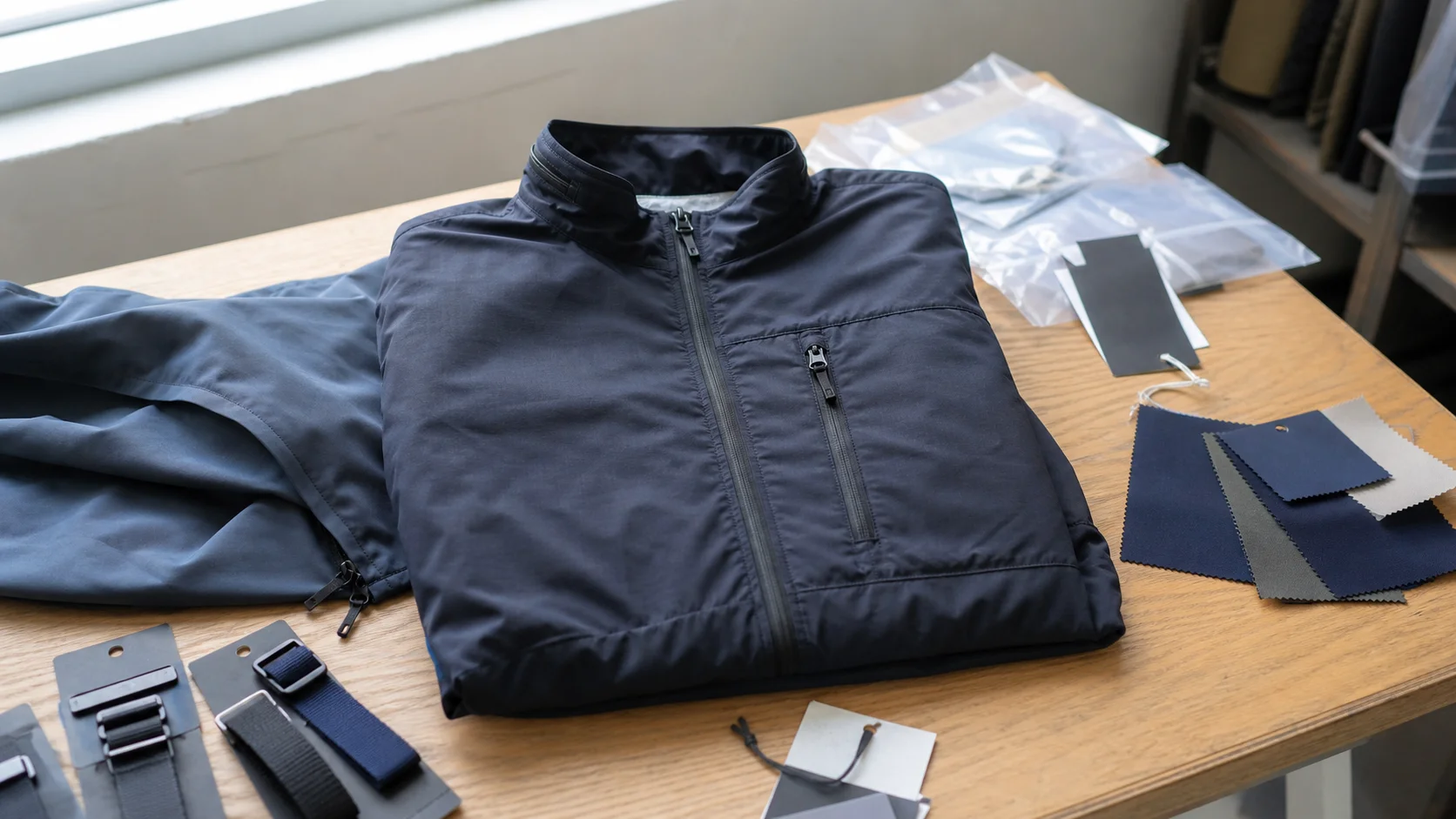
An SEO-focused outline for hospitality outerwear buyers sourcing custom jackets with branded trim, built around trim options, production details, and...
Custom Jackets With Trim Sourcing for Hospitality Buyers - Fabrikn production reference
For hospitality outerwear buyers, the jacket itself is only part of the purchasing decision. The trims often decide whether a program looks premium, wears well in daily operations, and survives repeated laundering and rough handling. In practical terms, trim sourcing covers the non-fabric components that complete the jacket: zippers, snaps, drawcords, cord locks, labels, patches, reflective details, piping, elastic, Velcro, toggles, lining accents, and branding applications.
In hospitality, those details are not decorative extras. They affect speed of dressing, comfort during long shifts, branding consistency across properties, and replacement rates over time. A front desk team may need lightweight branded softshell jackets for arrival areas, while valet, concierge, housekeeping supervisors, event staff, and outdoor service teams may need heavier outerwear with different storage, weather resistance, and visibility features. The trim package has to support the job, not just the look.
Buyers sourcing custom jackets with trim development should pay close attention to function, appearance, and replenishment stability. It is easy to approve a jacket sample that looks sharp in a showroom and still encounter trouble in production. The usual pain points show up later: zipper shade mismatch, peeling heat-transfer logos, snaps that corrode after cleaning, drawcord ends that fail, or inconsistent embroidery placement across size sets.
This is why hospitality outerwear sourcing benefits from a disciplined approval process. It also helps to work with a manufacturer that can coordinate decoration, garment construction, and trim procurement under one program. Buyers comparing sourcing options can review service capabilities at https://fabrikn.com/services/ before moving into development discussions.
Hospitality buyers rarely purchase outerwear on style alone. Their decision matrix is broader and more operational than standard retail buying. The best supplier conversations start with role-specific use, site conditions, and brand standards.
Most hospitality jacket programs center on five priorities.
That list matters because trim sourcing is where many of these objectives meet. A metal zipper may look premium, but it can add weight, cost, and corrosion risk depending on use conditions. A molded plastic zipper may be lighter and more practical, but it can look too casual for luxury hospitality settings if the finish is not carefully chosen. A printed logo may reduce cost versus embroidery on some styles, but the print method must match the shell fabric surface, stretch, and wash expectations.
Buyers should also separate front-of-house and back-of-house needs. Front-of-house outerwear often leans toward a cleaner silhouette, more discreet branding, and polished trim finishes. Operational teams may need more pockets, reinforced closures, storm flaps, or visibility accents. Trying to force one trim strategy across every role often creates compromise garments that satisfy nobody.
The strongest hospitality outerwear programs usually standardize core fabrics and base jacket patterns, then adjust trim and decoration packages by staff role. That approach controls cost while keeping function aligned with the work.
Not all trims carry equal sourcing risk. Some are easy stock items. Others are highly customized and can slow development or create reorder problems if not locked early.
Zippers are one of the first items buyers should scrutinize. For hospitality jackets, common options include nylon coil, molded plastic, and metal-look finishes. Nylon coil is flexible, widely available, and usually the safest choice for lightweight and midweight programs. Molded zippers can suit heavier jackets or casual service uniforms. Premium-looking plated or branded zipper pulls can improve appearance, though they increase component complexity.
Points to confirm include tape color, tooth finish, puller shape, auto-lock versus non-lock slider, two-way front zipper requirements, and spare supply for repeats. If the jacket shell is navy, charcoal, or black, small shade differences in zipper tape can still be visible under lobby lighting. That mismatch is a common quality complaint.
Snaps and button systems influence both styling and ease of use. Hidden snap plackets can give hospitality jackets a cleaner presentation. Exposed snaps may suit utility-led designs. Metal snaps need finish durability testing, especially where garments face moisture, cleaning chemicals, or coastal environments. Plastic snaps reduce corrosion risk but may not suit every brand aesthetic.
Hook-and-loop closures remain useful for cuffs and adjustable tabs, though they should be chosen carefully. Lower-grade hook-and-loop can lose grip, snag knitwear, and collect lint. In upscale hospitality environments, noisy closures can also be a practical nuisance.
These trims are common on hooded jackets, waist adjustments, and hem controls. Buyers should look at recovery performance, not just appearance. Weak elastic loses shape quickly, especially in staff garments worn across long shifts. Drawcord diameter and tip finish should be specified clearly. Cord locks need grip reliability and should be tested under repeated use.
There is also a safety and aesthetics balance here. Oversized sport-style drawcords may not fit refined hospitality branding. Very fine cords look cleaner but can be harder to use with gloves or cold hands in outdoor service roles.
Woven main labels, size labels, care labels, locker loops, branded zipper pulls, silicone badges, and hem tabs are small items that often become approval bottlenecks. Buyers should decide early which branding trims are essential and which are optional. Too many custom components can push up MOQ requirements and delay repeats.
If the goal is a clean corporate image, minimal external branding often works better than loading the garment with badges and tabs. That does not mean branding should disappear. It means every visible trim should justify its position and function.
Some hospitality roles need subtle visibility support, especially valet, security, shuttle, and outdoor event teams. Reflective piping, reflective heat transfer, or segmented reflective trim can improve safety. Placement matters. Small reflective elements can be discreet in daylight and functional at night. Large silver trims may feel too industrial for luxury-facing roles.
Because this topic sits within Decoration & Printing, buyers should evaluate trim sourcing alongside branding application methods. The shell fabric and trim package affect which decoration route will perform best.
Embroidery remains common for hospitality jackets because it looks established and durable when done well. It works especially well on fleece, softshell, twill, and many woven shells. The tradeoff is weight and stiffness. Dense embroidery on lightweight or bonded fabrics can pucker the face fabric or distort waterproof membranes. Left chest logo embroidery is standard, but large back embroidery can create hand-feel and drape issues.
Heat transfers offer clean detail, fine lettering, and good consistency. They are often useful for performance shells where embroidery would puncture or distort the surface. The risk is adhesion failure if the transfer type is not matched to fabric texture, finish, and wash conditions. DWR-coated shells, stretch fabrics, and low-surface-energy materials need careful testing. Buyers should request wash tests and adhesion checks before bulk approval.
Screen printing can be cost-effective for larger logo areas and promotional outerwear programs. It is less common on structured hospitality jackets unless the style is casual or event-based. The finish can crack or feel heavy if ink systems are not chosen well for the fabric. Placement over seams, pockets, or textured surfaces is usually a bad idea.
Woven patches, embroidered badges, TPU patches, and silicone emblems can add dimension and help separate departments or properties. They also add approval steps and more trim inventory complexity. Buyers should ask whether badges will be stitched, heat-applied, or combined with both methods. Edge lift, needle damage, and inconsistent placement are common failure points.
The right choice depends on the jacket’s end use. A premium concierge jacket may suit restrained embroidery or a tonal badge. An outdoor operations jacket may benefit from a more visible transfer or patch. There is no universal best method. The better question is which method fits the fabric, care cycle, and brand environment with the lowest long-term risk.
For buyers who need support across decoration planning and garment execution, a direct inquiry page such as https://fabrikn.com/contact-us/ can streamline early technical discussions.
Custom jackets with sourced trims should move through a structured development path. Skipping steps usually shows up later as delay, cost creep, or preventable quality issues.
A practical approval process often includes the following:
Buyers should insist that the pre-production sample reflects actual bulk trims, not “similar available” substitutes. That point matters most for customized zipper pulls, logo labels, branded snaps, reflective trims, and print applications. A strong-looking proto can create false confidence if bulk components are still unresolved.
One useful discipline is to maintain a trim approval sheet with item codes, colors, dimensions, supplier references, and approved photos. This gives the buyer a practical benchmark when repeat orders happen months later.
MOQ and lead time for hospitality outerwear vary widely depending on fabric complexity, number of custom trims, and decoration routes. Buyers should expect different thresholds for the jacket itself and for individual trim components.
Component Typical MOQ Range Lead-Time Considerations Basic custom jacket body 100 to 300 pcs per style/color Depends on fabric availability, pattern complexity, and decoration method Custom woven labels 1,000 to 3,000 pcs Usually moderate; artwork approval required Custom zipper pulls 500 to 2,000 pcs Mold/tooling or finish approvals can extend timing Custom snaps or branded hardware 1,000+ sets Finish matching and corrosion testing may add time Heat transfer logos 100 to 500 pcs per logo setup Fabric compatibility testing is important Embroidered patches 100 to 500 pcs Depends on stitch count and border typeThese ranges are common planning references, not fixed rules. Stock trims can reduce MOQs and speed up repeats, while heavily customized trim packages tend to do the opposite. Buyers should be cautious about locking in too many custom components unless the program volume supports it.
Lead times often break down into three stages: development, trim procurement, and bulk production. Development may take several weeks if approvals are prompt. Trim lead times can become the critical path, especially with custom labels, zipper pullers, silicone badges, or branded hardware. Bulk sewing timelines depend on line capacity, inspection standards, and whether the factory handles decoration in-house or through outside subcontracting.
A sensible buying approach is to identify which trims must be bespoke and which can be sourced from stable stock programs. This reduces exposure when reorders are needed fast for seasonal staffing or new property openings.
Hospitality buyers should review quality risk at trim level, not only garment level. Many preventable claims start with small components.
Inspection should include visual checks, measurement checks, trim function checks, and basic wear simulation where possible. For jackets, random pull tests on snaps and attachments are useful. Zipper cycling should be checked repeatedly. Decoration placement tolerance should be defined, not assumed. Left chest logo drift across sizes is a frequent complaint in uniform programs.
Buyers should also ask whether final inspection occurs before or after pressing and packing. Some trim issues only become obvious once garments are fully finished. Pressing heat can affect certain transfers, badges, and synthetic trims if processes are not controlled.
A weak tech pack is one of the fastest routes to confusion in trim sourcing. Good hospitality buyers do not need to overcomplicate the file, but they do need enough precision to avoid interpretation gaps.
A strong tech pack for custom jackets should include:
Color standards deserve extra attention. “Match body fabric” is not specific enough for many trims. Dye lots and substrate differences can create visual mismatch even when suppliers try to match by eye. Pantone references, physical standards, or approved swatches are much safer.
Another useful addition is a trim substitution rule. For example, buyers can state that no trim substitution is allowed without written approval, even if the substitute is similar in function. This protects the consistency of future repeat orders.
Not every apparel supplier is equally strong at trim-heavy outerwear. Hospitality buyers should ask practical questions that reveal process control, not just price.
Buyers should also judge whether the supplier gives balanced advice. A reliable manufacturing partner will usually point out tradeoffs instead of agreeing to every idea. That is especially important when the requested jacket combines delicate branding expectations with heavy-duty field use. Some trim packages look attractive on presentation boards and are not well suited to uniform life.
Company background and production orientation can help buyers assess fit before sampling. A starting point for that review is https://fabrikn.com/about-us/.
Cost pressure is normal in hospitality uniform buying. The mistake is cutting visible or functional components without understanding what those cuts do to replacement rates and brand presentation.
There are better ways to control cost:
Buyers should think in total program cost, not only unit price. A jacket that saves a small amount upfront but fails earlier in service is usually more expensive over the life of the program. The same logic applies to decoration. A cheaper transfer that peels can damage brand image faster than a modestly higher-cost method that stays clean through repeated use.
It is also worth planning for reorders from the start. If a program is likely to need top-up quantities, choose trims with better continuity. Heavily customized low-volume components can become a procurement headache later, especially if the original trim source changes or discontinues a finish.
Custom jackets with trim sourcing for hospitality buyers require more than selecting a good-looking outerwear style. The strongest programs are built around role-specific function, decoration compatibility, and trim continuity. Zippers, closures, labels, badges, reflective accents, and adjustment components all influence appearance, durability, and reorder stability.
For hospitality outerwear buyers, the safest purchasing approach is usually disciplined rather than flashy. Start with the use case. Match fabric and decoration to real care conditions. Customize only the trims that meaningfully improve the brand or the job performance. Lock approvals carefully. Then make sure the pre-production sample reflects the actual bulk trim package.
That process may feel slower at the beginning, but it typically reduces claims, avoids inconsistent repeats, and produces jackets that work in service instead of only working in presentation. In hospitality, that is what good sourcing should do.
Get a free quote from Fabrikn — your trusted B2B clothing manufacturer with 10+ years of experience. MOQ as low as 200 pieces.
Get a Free Quote →The highest-impact trims are usually zippers, snaps, labels, drawcord systems, badges, and reflective details where needed. These affect daily function, appearance, and durability more than many buyers expect.
A common starting point for custom jackets is around 100 to 300 pieces per style and color, though that can change with fabric complexity and decoration method. Individual custom trims may require higher MOQs than the garment itself.
There is no single best method. Embroidery works well for many structured jackets, while heat transfer can be better for technical shells or fine-detail logos. The right choice depends on fabric type, care conditions, logo design, and the visual standard of the property.
Use a detailed tech pack, approve actual trim samples, require a pre-production sample with final components, and set inspection checkpoints for decoration placement, zipper function, closure strength, and appearance consistency.
A mixed approach is often the most practical. Use custom trims where branding impact matters, and stock trims where continuity, speed, and cost control are more important. That balance usually supports easier reorders.
The usual causes are missing approval records, trim discontinuations, shade variation, or undocumented substitutions made during the first order. Keeping precise trim specifications and approved references helps reduce that risk.