
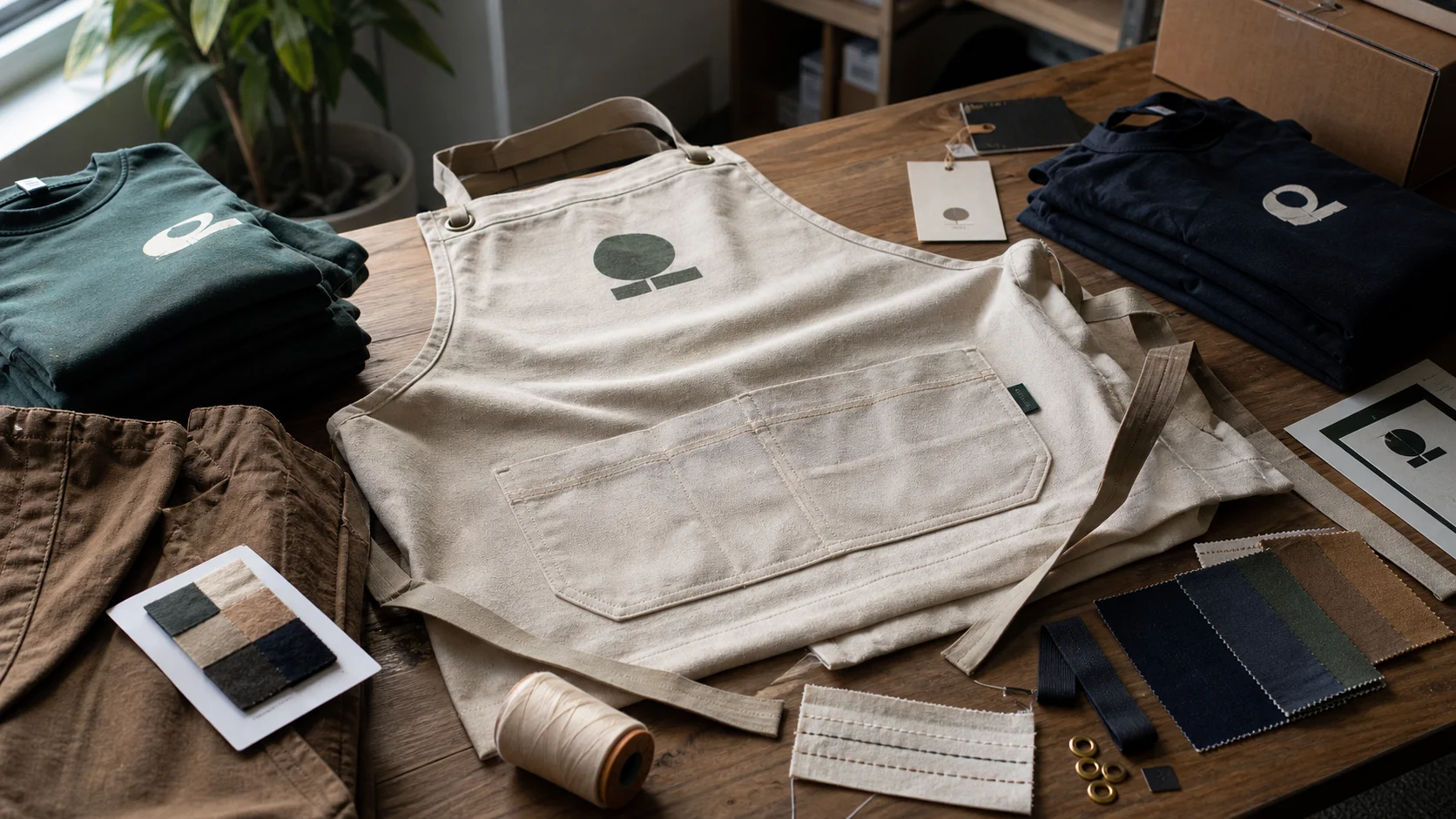
A focused outline for sports retailers launching private label tracksuits, covering compliance testing, decoration choices, production specs, and...
Private Label Tracksuits With Compliance Testing - Fabrikn production reference
Private label tracksuits with compliance testing are not just a sourcing preference for sports retailer launches. They are a practical requirement when a new collection needs to move from concept to shelf without avoidable delays, claims, or relabeling costs. Tracksuits sit at the intersection of performance apparel, decoration, trim complexity, and consumer safety expectations. That mix creates more testing variables than many buyers initially expect, especially when one set combines a brushed-back knit, coil zipper, elastic waistband, drawcord, heat-transfer logo, and multiple contrast panels.
For a sports retailer launch, the pressure is usually concentrated in three areas: visual consistency across the set, reliable fit across size scales, and documentation that supports market-entry requirements. A tracksuit may look straightforward, but once it includes brushed knits, zipper closures, drawcords, heat transfers, screen prints, embroidery, silicone badges, or contrast taping, the compliance profile becomes more demanding. In practice, buyers commonly ask for wash colorfastness, crocking, dimensional stability, seam slippage, and restricted-substance screening on the finished garment, with extra checks on prints and trims if there is metallic ink, reflective film, or rubberized branding.
Testing also matters because retailer launches are deadline-driven. If colorfastness fails after bulk fabric is dyed, or if a print cracks during wash testing after purchase orders are placed, the recovery window can narrow quickly. The cost is not only in rework. It can also show up in missed floor-set dates, split shipments, markdown exposure, and strained distributor relationships. A failed bulk re-dye or reprint commonly adds 10 to 20 calendar days, while replacing a custom molded zipper puller or silicone badge can add another 7 to 14 days depending on tooling and courier timing.
Buyers planning private label sportswear programs should treat compliance testing as part of product development, not a final checkpoint. That means aligning material selection, artwork application, labeling, and production controls from the start. Teams that do this well usually protect margin better than teams that try to test at the end and correct problems under time pressure. As a common benchmark, fabric lab dips are often approved before bulk knitting or dyeing, pre-production samples are submitted in bulk-intended fabric, and at least one round of third-party testing is booked before final packing rather than after goods are already cartonized.
For companies evaluating launch-ready development support, it helps to review a supplier’s broader process across sourcing, product development, and manufacturing coordination. A useful starting point is the service overview at /services/. Buyers also commonly ask whether the supplier can coordinate mill test reports, trim declarations, and social-compliance records such as WRAP or BSCI audit status in one file set instead of collecting them vendor by vendor.
Most sports retailer launches do not start with a single generic tracksuit. They start with a line plan. That usually includes at least two to four coordinated silhouettes, often built around a men’s set, women’s set, and sometimes youth sizing if the launch is aimed at family or club-oriented retail channels. A common launch ratio is 2 core carryover colorways such as black and navy, plus 1 or 2 seasonal colors that use the same base block to reduce fit risk and simplify replenishment.
Common private label tracksuit configurations include:
In practical sourcing terms, the launch product is usually expected to satisfy both style and replenishment logic. Retailers often want a hero item that carries strong branding and a cleaner follow-up style that can be reordered with lower risk. That changes how compliance testing should be prioritized. The higher the decoration density and the more color combinations involved, the more preproduction validation is needed. For example, a simple embroidered chest logo on a black interlock set is usually lower risk than a multi-color chest print, leg print, reflective tape, and silicone badge applied across two fabric bases.
There is also a category-specific issue with tracksuits: buyers expect the top and bottom to match in shade, hand feel, and shrinkage behavior. That sounds basic, but matching becomes more difficult when fabric lots differ, dye houses vary, or the jacket body and pant panels use different constructions. If the garment is sold as a set, visual mismatch becomes a retail problem immediately. Common controls include cutting jacket and pant from the same dye lot where possible, approving shade bands under D65 light, and limiting acceptable top-to-bottom color deviation to the retailer’s standard rather than relying on visual judgment on the sewing floor.
For launch programs, many buyers place initial orders in moderate volumes rather than deep commitments. Typical private label MOQ ranges can begin around 300 to 600 sets per colorway for simpler cut-and-sew programs, while more specialized constructions or heavily customized trims may push practical minimums closer to 800 to 1,500 sets per style-color combination. Those are not fixed rules. Fabric availability, dyeing method, decoration setup, and packaging requirements all influence the threshold. As a common price reference, a basic 100% polyester tricot set with standard embroidery and stock zipper may land around $12.00 to $18.00 per set at 500 to 1,000 sets per color, while a 280 gsm poly-spandex interlock set with multiple panels, branded drawcord, silicone transfer, and custom polybag or hanger requirements can move into the $20.00 to $32.00 per set range before duty and freight.
Compliance testing for private label tracksuits should be defined in a written test matrix before bulk production begins. Waiting until goods are nearly finished creates unnecessary exposure because some failures are rooted in material choice rather than workmanship alone. Buyers commonly attach the test matrix to the tech pack and list the laboratory method, pass criteria, component owner, and submission stage so there is less confusion between the garment factory, knit mill, printer, and trim vendors.
The exact testing scope depends on the destination market, retailer requirements, age grade, and product claims. Still, several categories appear repeatedly in sportswear programs:
Retail buyers should also separate mandatory compliance from optional performance claims. A jacket marketed as moisture-managing, anti-odor, water-repellent, or stretch-recovery focused may need extra validation beyond baseline safety and care testing. Every claim adds documentation pressure. If the factory, mill, or decoration vendor cannot support the claim consistently, it is usually better to simplify the launch message than to risk challenge later. Common examples include AATCC-style moisture management or wash durability checks for wicking finishes, spray testing for water repellency, and repeated stretch-recovery evaluation on knit cuffs and waistbands made with elastane or covered elastic.
A useful sourcing discipline is to map each test back to a component. Fabric mills affect composition, shade, and dimensional stability. Print suppliers affect adhesion and chemical compliance. Trim vendors affect zipper corrosion, puller durability, and metal content. Packaging suppliers can also create issues if retailer packaging rules are not clearly communicated. Typical checkpoints include fabric GSM verification before cutting, lab confirmation of azo dyes or phthalate restrictions where relevant, and needle-detection or metal-fragment controls if metal trims are used.
This is one reason experienced buyers ask early questions about supplier coordination rather than only garment pricing. If vendor management is fragmented, compliance failures tend to surface late. Buyers sourcing cotton-rich or sustainability-positioned programs also often request chain-of-custody or certification support such as GOTS for organic textiles, OEKO-TEX Standard 100 for harmful-substance screening, and WRAP or BSCI records for social-compliance review where required by the retailer.
Private label tracksuits intended for a sports retailer launch need a disciplined approval path. Sampling should not be reduced to one fit sample and a final thumbs-up. The more reliable route is a staged process where each approval closes a specific risk. Typical development calendars allow 5 to 7 business days for an initial proto if the pattern block already exists, 7 to 10 business days for a revised fit sample, and 10 to 15 business days for a pre-production sample once bulk-intended materials are in hand.
A typical sample flow looks like this:
For tracksuits, sample approval should focus on interaction between top and bottom, not just each garment separately. Waistband recovery, cuff tension, zip wave, collar stand shape, and pocket opening stability can all look acceptable in isolation but weak when worn as a coordinated set. Retail presentation matters here. A launch item that photographs well but performs poorly on body often produces avoidable returns. Common review points include measuring waistband extension and recovery after repeated stretch, checking whether the front zipper ripples after fusing and topstitching, and confirming the pant hem opening still sits correctly over trainers after washing.
Buyers should insist that the pre-production sample includes final decoration methods, final label construction, and final packaging details. Substituting a temporary zipper, alternate drawcord tip, or simplified print process in approval samples can hide problems that only appear during bulk. That is especially risky when compliance testing will be conducted on finished garments. A common best practice is to submit the pre-production sample with the same zipper brand/specification, same rib or self-fabric cuff construction, same heat-transfer film, same woven main label, and same polybag warning print that will be used in production.
Teams that need structured development support or supplier communication can usually save time by centralizing approvals and specification management through an experienced production partner. General company information is available at /about-us/. In sourcing terms, centralization usually reduces approval lag on lab dips, strike-offs, size sets, and packaging mockups, which can otherwise stretch development by 2 to 3 extra weeks.
Because this category sits within decoration and printing, it is worth being direct: many tracksuit problems are created by artwork application decisions rather than pattern engineering. Buyers often focus on logo appearance and overlook the wash, stretch, and chemical implications of the chosen decoration method. On stretch knits, the same artwork may pass on a stable tricot body but fail on a high-elastane cuff panel unless the transfer film, curing temperature, and stretch rating are matched to the substrate.
Common decoration options for private label tracksuits include screen printing, heat transfer graphics, silicone transfers, embroidery, applique, reflective prints, and woven or TPU badges. Each option carries different sourcing and compliance implications. Screen printing on cotton-poly fleece often uses plastisol or water-based systems and requires controlled curing, commonly on an automatic carousel press, to avoid under-cure and wash failure. Heat transfers and silicone transfers need peel, stretch, and laundering checks because cracking often appears first at edges or over seam transitions. Embroidery on lightweight interlock may need backing or topping to prevent puckering, while reflective prints and films should be checked against retailer visibility and wash-durability expectations. Typical inspection checkpoints include artwork placement tolerance, adhesion after wash, no edge lifting, no migration on dark polyester, and no strike-through or puckering around dense embroidery areas.
Tracksuit programs tend to perform better when the material spec is written in enough detail to control both aesthetics and test outcomes. Buyers commonly specify not just “polyester” or “fleece,” but fiber content, knit structure, target GSM, finish, stretch direction, and shrinkage tolerance. For example, a standard tricot set may be specified as 100% polyester warp-knit tricot at 220 to 260 gsm with brushed inside, while a performance set may be 90/10 polyester-spandex interlock at 240 to 280 gsm with 4-way stretch and moisture-management finish. Brushed-back fleece programs are often 60/40 cotton-poly or 80/20 cotton-poly at 280 to 340 gsm, with compact-singeed face and sueded or brushed interior depending on the hand-feel target.
Trim detail matters just as much. Common low-risk zipper choices include nylon coil front zippers with auto-lock sliders rather than decorative metal zippers that add weight and corrosion concerns. Waistbands are often built with 35 to 45 mm knitted elastic enclosed in self-fabric, while cuffs may use 1x1 or 2x2 rib with elastane for recovery. Drawcords should be specified by diameter, material, tip construction, and length, and youth sizes often require drawcord removal or alternative waistband construction to meet safety expectations. Typical checkpoints include zipper tape shade match, bartack reinforcement at pocket openings, pull-force on snaps if used, and confirmation that all trims meet the retailer restricted-substances list.
Buyers with sustainability or premium-positioning requirements also often define certification or material documentation at the component level. Common examples are GOTS-certified organic cotton for cotton-rich fleece, OEKO-TEX Standard 100 declarations for dyed fabric and some trims, and recycled polyester with transaction certificates if the brand is making a recycled-content claim. When these claims are part of the sales message, the certificates should be checked before bulk purchase orders are released, not after cutting starts.
MOQ and lead-time planning for tracksuits depend heavily on whether the program uses stock fabric, custom-dyed fabric, or specially developed trims. A basic program using mill-stock black or navy tricot, standard coil zippers, and one embroidery placement may be workable from about 300 to 500 sets per colorway. A custom pantone-dyed interlock set with branded zipper pullers, molded drawcord tips, heat transfers, and custom packaging more commonly needs 800 to 1,500 sets per style-color to spread setup and trim-tooling costs.
Lead times also move with the approval path. Common timelines are 5 to 10 business days for lab dips, 7 to 12 business days for embroidery or print strike-offs, 18 to 22 business days for bulk fabric knitting and dyeing on standard colors, and 25 to 40 business days for cut-make-trim after all approvals are in place. If a style uses custom-molded trims or requires third-party testing on finished garments before shipment, buyers should typically allow another 7 to 15 business days. In practical terms, a straightforward repeat style might ship in roughly 45 to 60 calendar days from deposit and final approval, while a first-time custom program is more often 70 to 100 calendar days depending on sampling rounds and test outcomes.
Cost tradeoffs are usually most visible in fabric choice, decoration count, and packaging. As a typical range, a simple poly tricot jacket-and-pant set at 500 MOQ might cost around $12.00 to $16.00 per set FOB-equivalent before freight assumptions, while a heavier 280 gsm interlock set with contrast paneling, two print locations, one embroidery, and custom trims may rise to $18.00 to $28.00 per set. Unit cost can also increase by $0.25 to $0.80 per set for individually folded branded tissue, printed zip bags, or retail hanger packs, and third-party compliance testing is commonly budgeted separately rather than hidden in CM pricing.
Quality control for tracksuits should cover fabric, cutting, sewing, decoration, measurement, and packing rather than relying only on a final random inspection. Common in-line checkpoints include fabric shade continuity by lot, GSM and width verification before spreading, panel matching on left-right sleeves and legs, print registration, embroidery tension, and zipper installation quality. On the sewing line, inspectors typically watch for zip waviness, twisted side seams, uneven cuff openings, skipped topstitching, unsecured bartacks, and waistband elastic twisting inside the tunnel.
Before launch, buyers commonly schedule at least one pre-final or final inspection based on AQL, often using size-run checks and set matching because tops and bottoms are sold together. Useful checkpoints include measurement tolerance on key points such as chest, body length, inseam, and waistband relaxed and stretched; shade matching between jacket and pant; carton assortment accuracy; and wash appearance on a retained sample. If the retailer requires presentation consistency, the inspection should also confirm fold method, tissue placement, barcode label placement, polybag suffocation warning, and whether the zipper is half-closed or fully closed in packed condition to avoid collar distortion.
When decoration is involved, finished-garment QC should include simple stress checks before shipment. Common examples are a manual stretch test on printed areas, tape test or edge-lift review on transfers, zipper open-close cycling, and pull checks on attached badges or labels. If a factory uses needle control, metal detection, or broken-needle logs, those records should be reviewed as part of shipment release, especially on higher-volume retail programs where one late-found defect can affect thousands of units.
For a retail launch, the supplier decision should go beyond price per set. Buyers usually need a partner that can manage knit sourcing, decoration vendors, trim approvals, test scheduling, and production timing in one coordinated workflow. A useful sign is whether the supplier can explain the exact approval path for lab dips, strike-offs, pre-production samples, and top-of-production review instead of speaking only in general terms.
It also helps to verify operating discipline through documents and process detail. Common questions include whether the supplier works with mills that can provide composition and colorfastness reports, whether they can support OEKO-TEX or GOTS documentation when relevant, and whether they maintain current social-compliance records such as WRAP or BSCI audit reports. Buyers should also ask which processes are done with standard equipment such as automatic spreading, straight-knife cutting, overlock, flatlock, coverstitch, heat press, and embroidery machines, because machinery affects consistency on performance knits and decorative applications.
From a sourcing-risk perspective, strong suppliers usually provide clear answers on MOQ by fabric type, expected replenishment timing on carryover colors, and what happens if bulk test results fail. A practical benchmark is whether they can break down lead time into sampling, fabric procurement, lab-dip approval, trim development, sewing, inspection, and shipment release rather than quoting one broad number. That level of detail usually indicates they have run similar launch programs before.
What is a typical MOQ for private label tracksuits?For simpler programs using stock or commonly available fabric and standard trims, 300 to 600 sets per colorway is common. For custom-dyed fabric, branded trims, or multiple decoration techniques, 800 to 1,500 sets per style-color is a more typical working MOQ.
How long do tracksuit orders usually take?A repeat or low-complexity order can sometimes move in 45 to 60 calendar days after approvals. A first-time custom program commonly takes 70 to 100 calendar days, with the biggest variables being sample revisions, fabric dyeing, custom trim development, and finished-garment testing.
Which certifications matter most?That depends on the product and retailer, but common requests include OEKO-TEX Standard 100 for harmful-substance screening, GOTS for organic cotton programs, and WRAP or BSCI for social-compliance review. If recycled-content claims are made, buyers also usually ask for supporting transaction certificates from the material supplier.
What are the most common compliance failure points?Typical problem areas are colorfastness on dark shades, print cracking or edge lifting after wash, excessive shrinkage on brushed fleece, inaccurate fiber-content labels, and trim issues such as zipper failure or non-compliant drawcord construction on youth sizes.
Private label tracksuits with compliance testing are not just a sourcing preference for sports retailer launches. They are a practical requirement when a new collection needs to move from concept to shelf without avoidable delays, claims, or relabeling costs. Tracksuits sit at the intersection of performance apparel, decoration, trim complexity, and consumer safety expectations. That mix creates more testing variables than many buyers initially expect, especially when one set combines a brushed-back knit, coil zipper, elastic waistband, drawcord, heat-transfer logo, and multiple contrast panels.
For a sports retailer launch, the pressure is usually concentrated in three areas: visual consistency across the set, reliable fit across size scales, and documentation that supports market-entry requirements. A tracksuit may look straightforward, but once it includes brushed knits, zipper closures, drawcords, heat transfers, screen prints, embroidery, silicone badges, or contrast taping, the compliance profile becomes more demanding. In practice, buyers commonly ask for wash colorfastness, crocking, dimensional stability, seam slippage, and restricted-substance screening on the finished garment, with extra checks on prints and trims if there is metallic ink, reflective film, or rubberized branding.
Testing also matters because retailer launches are deadline-driven. If colorfastness fails after bulk fabric is dyed, or if a print cracks during wash testing after purchase orders are placed, the recovery window can narrow quickly. The cost is not only in rework. It can also show up in missed floor-set dates, split shipments, markdown exposure, and strained distributor relationships. A failed bulk re-dye or reprint commonly adds 10 to 20 calendar days, while replacing a custom molded zipper puller or silicone badge can add another 7 to 14 days depending on tooling and courier timing.
Buyers planning private label sportswear programs should treat compliance testing as part of product development, not a final checkpoint. That means aligning material selection, artwork application, labeling, and production controls from the start. Teams that do this well usually protect margin better than teams that try to test at the end and correct problems under time pressure. As a common benchmark, fabric lab dips are often approved before bulk knitting or dyeing, pre-production samples are submitted in bulk-intended fabric, and at least one round of third-party testing is booked before final packing rather than after goods are already cartonized.
For companies evaluating launch-ready development support, it helps to review a supplier’s broader process across sourcing, product development, and manufacturing coordination. A useful starting point is the service overview at /services/. Buyers also commonly ask whether the supplier can coordinate mill test reports, trim declarations, and social-compliance records such as WRAP or BSCI audit status in one file set instead of collecting them vendor by vendor.
Most sports retailer launches do not start with a single generic tracksuit. They start with a line plan. That usually includes at least two to four coordinated silhouettes, often built around a men’s set, women’s set, and sometimes youth sizing if the launch is aimed at family or club-oriented retail channels. A common launch ratio is 2 core carryover colorways such as black and navy, plus 1 or 2 seasonal colors that use the same base block to reduce fit risk and simplify replenishment.
Common private label tracksuit configurations include:
In practical sourcing terms, the launch product is usually expected to satisfy both style and replenishment logic. Retailers often want a hero item that carries strong branding and a cleaner follow-up style that can be reordered with lower risk. That changes how compliance testing should be prioritized. The higher the decoration density and the more color combinations involved, the more preproduction validation is needed. For example, a simple embroidered chest logo on a black interlock set is usually lower risk than a multi-color chest print, leg print, reflective tape, and silicone badge applied across two fabric bases.
There is also a category-specific issue with tracksuits: buyers expect the top and bottom to match in shade, hand feel, and shrinkage behavior. That sounds basic, but matching becomes more difficult when fabric lots differ, dye houses vary, or the jacket body and pant panels use different constructions. If the garment is sold as a set, visual mismatch becomes a retail problem immediately. Common controls include cutting jacket and pant from the same dye lot where possible, approving shade bands under D65 light, and limiting acceptable top-to-bottom color deviation to the retailer’s standard rather than relying on visual judgment on the sewing floor.
For launch programs, many buyers place initial orders in moderate volumes rather than deep commitments. Typical private label MOQ ranges can begin around 300 to 600 sets per colorway for simpler cut-and-sew programs, while more specialized constructions or heavily customized trims may push practical minimums closer to 800 to 1,500 sets per style-color combination. Those are not fixed rules. Fabric availability, dyeing method, decoration setup, and packaging requirements all influence the threshold. As a common price reference, a basic 100% polyester tricot set with standard embroidery and stock zipper may land around $12.00 to $18.00 per set at 500 to 1,000 sets per color, while a 280 gsm poly-spandex interlock set with multiple panels, branded drawcord, silicone transfer, and custom polybag or hanger requirements can move into the $20.00 to $32.00 per set range before duty and freight.
Compliance testing for private label tracksuits should be defined in a written test matrix before bulk production begins. Waiting until goods are nearly finished creates unnecessary exposure because some failures are rooted in material choice rather than workmanship alone. Buyers commonly attach the test matrix to the tech pack and list the laboratory method, pass criteria, component owner, and submission stage so there is less confusion between the garment factory, knit mill, printer, and trim vendors.
The exact testing scope depends on the destination market, retailer requirements, age grade, and product claims. Still, several categories appear repeatedly in sportswear programs:
Retail buyers should also separate mandatory compliance from optional performance claims. A jacket marketed as moisture-managing, anti-odor, water-repellent, or stretch-recovery focused may need extra validation beyond baseline safety and care testing. Every claim adds documentation pressure. If the factory, mill, or decoration vendor cannot support the claim consistently, it is usually better to simplify the launch message than to risk challenge later. Common examples include AATCC-style moisture management or wash durability checks for wicking finishes, spray testing for water repellency, and repeated stretch-recovery evaluation on knit cuffs and waistbands made with elastane or covered elastic.
A useful sourcing discipline is to map each test back to a component. Fabric mills affect composition, shade, and dimensional stability. Print suppliers affect adhesion and chemical compliance. Trim vendors affect zipper corrosion, puller durability, and metal content. Packaging suppliers can also create issues if retailer packaging rules are not clearly communicated. Typical checkpoints include fabric GSM verification before cutting, lab confirmation of azo dyes or phthalate restrictions where relevant, and needle-detection or metal-fragment controls if metal trims are used.
This is one reason experienced buyers ask early questions about supplier coordination rather than only garment pricing. If vendor management is fragmented, compliance failures tend to surface late. Buyers sourcing cotton-rich or sustainability-positioned programs also often request chain-of-custody or certification support such as GOTS for organic textiles, OEKO-TEX Standard 100 for harmful-substance screening, and WRAP or BSCI records for social-compliance review where required by the retailer.
Private label tracksuits intended for a sports retailer launch need a disciplined approval path. Sampling should not be reduced to one fit sample and a final thumbs-up. The more reliable route is a staged process where each approval closes a specific risk. Typical development calendars allow 5 to 7 business days for an initial proto if the pattern block already exists, 7 to 10 business days for a revised fit sample, and 10 to 15 business days for a pre-production sample once bulk-intended materials are in hand.
A typical sample flow looks like this:
For tracksuits, sample approval should focus on interaction between top and bottom, not just each garment separately. Waistband recovery, cuff tension, zip wave, collar stand shape, and pocket opening stability can all look acceptable in isolation but weak when worn as a coordinated set. Retail presentation matters here. A launch item that photographs well but performs poorly on body often produces avoidable returns. Common review points include measuring waistband extension and recovery after repeated stretch, checking whether the front zipper ripples after fusing and topstitching, and confirming the pant hem opening still sits correctly over trainers after washing.
Buyers should insist that the pre-production sample includes final decoration methods, final label construction, and final packaging details. Substituting a temporary zipper, alternate drawcord tip, or simplified print process in approval samples can hide problems that only appear during bulk. That is especially risky when compliance testing will be conducted on finished garments. A common best practice is to submit the pre-production sample with the same zipper brand/specification, same rib or self-fabric cuff construction, same heat-transfer film, same woven main label, and same polybag warning print that will be used in production.
Teams that need structured development support or supplier communication can usually save time by centralizing approvals and specification management through an experienced production partner. General company information is available at /about-us/. In sourcing terms, centralization usually reduces approval lag on lab dips, strike-offs, size sets, and packaging mockups, which can otherwise stretch development by 2 to 3 extra weeks.
Because this category sits within decoration and printing, it is worth being direct: many tracksuit problems are created by artwork application decisions rather than pattern engineering. Buyers often focus on logo appearance and overlook the wash, stretch, and chemical implications of the chosen decoration method. On stretch knits, the same artwork may pass on a stable tricot body but fail on a high-elastane cuff panel unless the transfer film, curing temperature, and stretch rating are matched to the substrate.
Common decoration options for private label tracksuits include screen printing, heat transfer graphics, silicone transfers, embroidery, applique, reflective prints, and woven or TPU badges. Each option carries different sourcing and compliance implications. Screen printing on cotton-poly fleece often uses plastisol or water-based systems and requires controlled curing, commonly on an automatic carousel press, to avoid under-cure and wash failure. Heat transfers and silicone transfers need peel, stretch, and laundering checks because cracking often appears first at edges or over seam transitions. Embroidery on lightweight interlock may need backing or topping to prevent puckering, while reflective prints and films should be checked against retailer visibility and wash-durability expectations. Typical inspection checkpoints include artwork placement tolerance, adhesion after wash, no edge lifting, no migration on dark polyester, and no strike-through or puckering around dense embroidery areas.
Tracksuit programs tend to perform better when the material spec is written in enough detail to control both aesthetics and test outcomes. Buyers commonly specify not just “polyester” or “fleece,” but fiber content, knit structure, target GSM, finish, stretch direction, and shrinkage tolerance. For example, a standard tricot set may be specified as 100% polyester warp-knit tricot at 220 to 260 gsm with brushed inside, while a performance set may be 90/10 polyester-spandex interlock at 240 to 280 gsm with 4-way stretch and moisture-management finish. Brushed-back fleece programs are often 60/40 cotton-poly or 80/20 cotton-poly at 280 to 340 gsm, with compact-singeed face and sueded or brushed interior depending on the hand-feel target.
Trim detail matters just as much. Common low-risk zipper choices include nylon coil front zippers with auto-lock sliders rather than decorative metal zippers that add weight and corrosion concerns. Waistbands are often built with 35 to 45 mm knitted elastic enclosed in self-fabric, while cuffs may use 1x1 or 2x2 rib with elastane for recovery. Drawcords should be specified by diameter, material, tip construction, and length, and youth sizes often require drawcord removal or alternative waistband construction to meet safety expectations. Typical checkpoints include zipper tape shade match, bartack reinforcement at pocket openings, pull-force on snaps if used, and confirmation that all trims meet the retailer restricted-substances list.
Buyers with sustainability or premium-positioning requirements also often define certification or material documentation at the component level. Common examples are GOTS-certified organic cotton for cotton-rich fleece, OEKO-TEX Standard 100 declarations for dyed fabric and some trims, and recycled polyester with transaction certificates if the brand is making a recycled-content claim. When these claims are part of the sales message, the certificates should be checked before bulk purchase orders are released, not after cutting starts.
MOQ and lead-time planning for tracksuits depend heavily on whether the program uses stock fabric, custom-dyed fabric, or specially developed trims. A basic program using mill-stock black or navy tricot, standard coil zippers, and one embroidery placement may be workable from about 300 to 500 sets per colorway. A custom pantone-dyed interlock set with branded zipper pullers, molded drawcord tips, heat transfers, and custom packaging more commonly needs 800 to 1,500 sets per style-color to spread setup and trim-tooling costs.
Lead times also move with the approval path. Common timelines are 5 to 10 business days for lab dips, 7 to 12 business days for embroidery or print strike-offs, 18 to 22 business days for bulk fabric knitting and dyeing on standard colors, and 25 to 40 business days for cut-make-trim after all approvals are in place. If a style uses custom-molded trims or requires third-party testing on finished garments before shipment, buyers should typically allow another 7 to 15 business days. In practical terms, a straightforward repeat style might ship in roughly 45 to 60 calendar days from deposit and final approval, while a first-time custom program is more often 70 to 100 calendar days depending on sampling rounds and test outcomes.
Cost tradeoffs are usually most visible in fabric choice, decoration count, and packaging. As a typical range, a simple poly tricot jacket-and-pant set at 500 MOQ might cost around $12.00 to $16.00 per set FOB-equivalent before freight assumptions, while a heavier 280 gsm interlock set with contrast paneling, two print locations, one embroidery, and custom trims may rise to $18.00 to $28.00 per set. Unit cost can also increase by $0.25 to $0.80 per set for individually folded branded tissue, printed zip bags, or retail hanger packs, and third-party compliance testing is commonly budgeted separately rather than hidden in CM pricing.
Quality control for tracksuits should cover fabric, cutting, sewing, decoration, measurement, and packing rather than relying only on a final random inspection. Common in-line checkpoints include fabric shade continuity by lot, GSM and width verification before spreading, panel matching on left-right sleeves and legs, print registration, embroidery tension, and zipper installation quality. On the sewing line, inspectors typically watch for zip waviness, twisted side seams, uneven cuff openings, skipped topstitching, unsecured bartacks, and waistband elastic twisting inside the tunnel.
Before launch, buyers commonly schedule at least one pre-final or final inspection based on AQL, often using size-run checks and set matching because tops and bottoms are sold together. Useful checkpoints include measurement tolerance on key points such as chest, body length, inseam, and waistband relaxed and stretched; shade matching between jacket and pant; carton assortment accuracy; and wash appearance on a retained sample. If the retailer requires presentation consistency, the inspection should also confirm fold method, tissue placement, barcode label placement, polybag suffocation warning, and whether the zipper is half-closed or fully closed in packed condition to avoid collar distortion.
When decoration is involved, finished-garment QC should include simple stress checks before shipment. Common examples are a manual stretch test on printed areas, tape test or edge-lift review on transfers, zipper open-close cycling, and pull checks on attached badges or labels. If a factory uses needle control, metal detection, or broken-needle logs, those records should be reviewed as part of shipment release, especially on higher-volume retail programs where one late-found defect can affect thousands of units.
For a retail launch, the supplier decision should go beyond price per set. Buyers usually need a partner that can manage knit sourcing, decoration vendors, trim approvals, test scheduling, and production timing in one coordinated workflow. A useful sign is whether the supplier can explain the exact approval path for lab dips, strike-offs, pre-production samples, and top-of-production review instead of speaking only in general terms.
It also helps to verify operating discipline through documents and process detail. Common questions include whether the supplier works with mills that can provide composition and colorfastness reports, whether they can support OEKO-TEX or GOTS documentation when relevant, and whether they maintain current social-compliance records such as WRAP or BSCI audit reports. Buyers should also ask which processes are done with standard equipment such as automatic spreading, straight-knife cutting, overlock, flatlock, coverstitch, heat press, and embroidery machines, because machinery affects consistency on performance knits and decorative applications.
From a sourcing-risk perspective, strong suppliers usually provide clear answers on MOQ by fabric type, expected replenishment timing on carryover colors, and what happens if bulk test results fail. A practical benchmark is whether they can break down lead time into sampling, fabric procurement, lab-dip approval, trim development, sewing, inspection, and shipment release rather than quoting one broad number. That level of detail usually indicates they have run similar launch programs before.
Get a free quote from Fabrikn — your trusted B2B clothing manufacturer with 10+ years of experience. MOQ as low as 200 pieces.
Get a Free Quote →What is a typical MOQ for private label tracksuits?For simpler programs using stock or commonly available fabric and standard trims, 300 to 600 sets per colorway is common. For custom-dyed fabric, branded trims, or multiple decoration techniques, 800 to 1,500 sets per style-color is a more typical working MOQ.
How long do tracksuit orders usually take?A repeat or low-complexity order can sometimes move in 45 to 60 calendar days after approvals. A first-time custom program commonly takes 70 to 100 calendar days, with the biggest variables being sample revisions, fabric dyeing, custom trim development, and finished-garment testing.
Which certifications matter most?That depends on the product and retailer, but common requests include OEKO-TEX Standard 100 for harmful-substance screening, GOTS for organic cotton programs, and WRAP or BSCI for social-compliance review. If recycled-content claims are made, buyers also usually ask for supporting transaction certificates from the material supplier.
What are the most common compliance failure points?Typical problem areas are colorfastness on dark shades, print cracking or edge lifting after wash, excessive shrinkage on brushed fleece, inaccurate fiber-content labels, and trim issues such as zipper failure or non-compliant drawcord construction on youth sizes.