
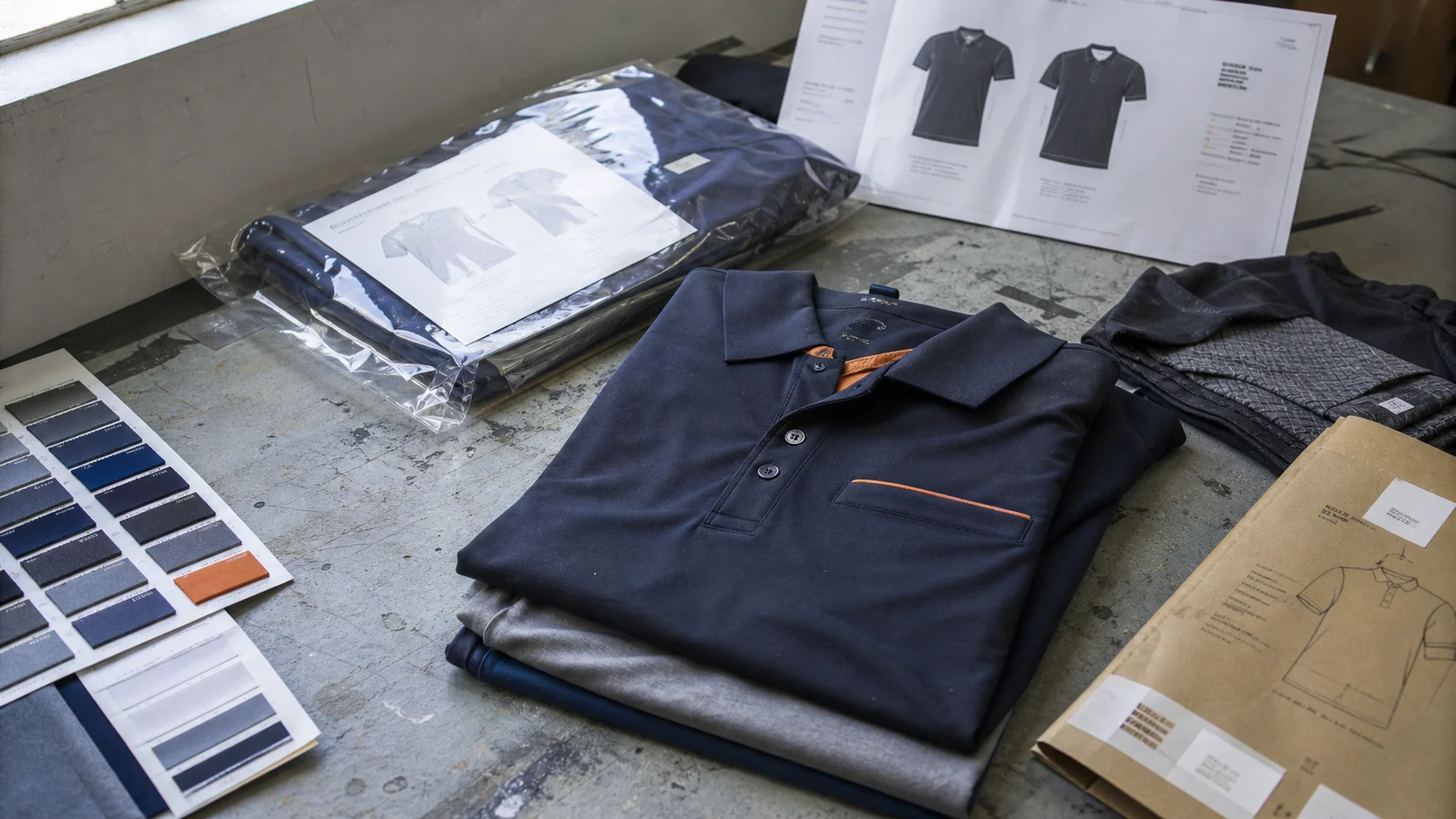
A focused outline for startup fitness brands sourcing OEM activewear sets, with emphasis on size grading, fit consistency, tech packs, sampling, and...
OEM Activewear Sets Size Grading for Startups - Fabrikn production reference
For a startup fitness brand, size grading is not a back-office technical detail. It is one of the clearest drivers of returns, customer trust, review quality, and repeat purchase rate. In OEM activewear sets, grading affects how a collection performs across the full size run, not just how a single fit sample looks on one body.
Many early-stage brands spend most of their attention on fabric handfeel, logo placement, color matching, and launch timing. Those areas matter, but grading mistakes create a more expensive problem because the issue multiplies through every size ordered. A flattering size medium proto does not guarantee a balanced extra small or extra large. In activewear, small grading errors become obvious fast because stretch fabrics, compression expectations, and movement testing expose weak pattern scaling.
Buyers sourcing oem activewear sets size grading for startup fitness brands should treat grading as part of product strategy. It shapes who the product is really built for, what return reasons are likely to appear, and whether matching sets feel consistent across bras, leggings, shorts, and tops.
A startup that gets grading right can compete well even without huge order volumes. A startup that gets grading wrong often ends up discounting inventory, rewriting size charts, and rushing remake samples while launch calendars slip.
In this category, OEM usually means the supplier manufactures products to the brand’s specifications rather than selling blank stock styles with a private label. That often includes custom patterns, branded trims, color development, fabric selection, packaging details, and size specs. For activewear sets, OEM work can range from light customization of an existing factory block to full custom pattern development.
This distinction matters because grading responsibility changes depending on the development route.
That is why brands sourcing through an OEM model should ask early whether the supplier handles pattern engineering in-house, relies on a freelance pattern room, or adapts existing graded nests from prior developments. The answer affects speed, consistency, and revision control.
Brands comparing partners can review broader development support through pages such as /services/ and use that as a starting point for technical discussions, not just costing conversations.
Size grading is the process of increasing or decreasing a base pattern to create a full size range. In activewear, that sounds simple on paper but is more technical in execution because the product has to stretch, recover, and stay stable during movement.
Most factories begin with a base size, often S or M, depending on the target market. Once the fit sample is approved, grade rules are applied to critical points of measure such as bust, underbust, waist, hip, front rise, back rise, inseam, thigh, leg opening, sleeve opening, and body length.
There is no universal grading template that suits every activewear brand. Grade increments depend on several factors:
A supportive sports bra and a lightly compressive yoga bra should not share identical grade logic. The same goes for leggings intended for studio wear versus high-impact training. Even when the visual design matches, the pattern engineering may need to diverge.
For startups, the key judgment is this: copying a competitor’s visible silhouette is easy; reproducing its size balance is not. The brand should request a full measurement spec sheet, grading rules by size, and tolerance standards before bulk approval. If the supplier cannot present those clearly, the risk of fit inconsistency rises.
Choosing the correct base size is one of the most overlooked early decisions. If the brand’s target customer sits closer to a size small but the factory develops from a medium block, the grading may still work, but repeated corrections can slow development. Base size should reflect where the brand expects the highest sales concentration and where fit accuracy matters most commercially.
Many startup brands order a size run weighted toward core sizes such as S, M, and L. In that case, the fit sample should be anchored to the size that best represents the center of that run. For extended-size plans, a single base size is often not enough to confirm performance across the range. Additional pre-production checks on top and bottom extremes become more important.
Grade rules should be practical, not theoretical. Factories sometimes apply standard increments from adjacent categories, but activewear sets need more nuance. A 2 cm grade on one point may be fine for a relaxed tee and completely wrong for a high-compression legging waist.
Buyers should ask which measurements are graded proportionally and which are adjusted manually for shape retention. This is especially important around underbust bands, crotch depth, waistband height, and cup-related components. Mechanical scaling alone can create distortion in technical garments.
OEM activewear sets are usually sold as coordinated stories, but each piece brings different grading risks. Startups that approve all parts using the same review discipline tend to catch problems earlier.
Sports bras combine fashion fit with support engineering. Grading issues often show up in strap placement, neckline gaping, underbust tension, armhole comfort, and cup volume balance. If cup pads are removable, the pocket opening and internal mesh construction also need checking by size.
Important specs to review include:
A common startup mistake is approving a bra based mainly on appearance. In production, support level complaints appear because the grading did not maintain the intended hold across the size range.
Leggings are often the highest-risk item in an activewear set because customers expect both comfort and a visibly flattering fit. Grading problems affect camel-toe risk, waistband roll, back yoke distortion, seam torque, opacity under stretch, and inconsistent compression from one size to another.
Critical review points include front and back rise, hip width, thigh balance, inseam grading, gusset shape, and waistband construction. Fabric weight and stretch recovery matter just as much as pattern dimensions. A legging that fits well in static standing posture may fail in squats, lunges, or seated movement if the rise and hip grading are too shallow.
Crop tops, fitted tees, and lightweight zip jackets add another layer of complexity. Armhole grading, sleeve pitch, body length, and hem tension can affect both appearance and movement. With zip styles, front opening wave and zipper buckling are common issues if the pattern is not balanced against fabric recovery.
Matching sets should also feel visually proportional. If the bra scales aggressively while the legging scales conservatively, the set can look mismatched on body even if each piece technically measures within tolerance.
Startups rarely have unlimited time or budget for multiple rounds of fit correction, so the sourcing process has to be disciplined. The earlier grading expectations are documented, the easier it is to control revisions and prevent assumptions from creeping into production.
Before requesting graded samples, define whether the set is intended for yoga, gym training, running, lounge-to-street wear, or teamwear crossover. Activity level influences fit ease, fabric compression, and seam construction. A low-impact set can tolerate different fit tradeoffs than a high-support training set.
Also define body profile expectations. A brand targeting petite customers, curve-focused customers, or broad cross-market sizing should not rely on generic factory assumptions.
Grading cannot be assessed properly if the fabric is still changing. A switch from 75% nylon 25% spandex interlock to 78% polyester 22% spandex brushed jersey can alter recovery, weight, and fit behavior. The same issue appears when waistband elastic, bra underband elastic, power mesh, or binding quality changes after sample approval.
Useful fabric and trim checkpoints include:
When suppliers quote an OEM activewear set, buyers should ask whether the costing is based on a confirmed fabric or a substitute development fabric. That difference can affect both fit and final margin.
Some startups create ambitious size charts for brand positioning, then discover the actual graded product does not map cleanly to those numbers. The size chart should reflect what the pattern and fabric combination can deliver consistently. It is better to launch with a narrower but reliable size range than claim broad coverage with unstable fit results.
If needed, a factory partner can help review whether the planned size range is commercially realistic. Brands looking for that type of technical discussion often start with a development inquiry through /contact-us/.
A clear spec pack is the backbone of size grading control. For startup fitness brands, it does not need to be overloaded with unnecessary pages, but it does need to be precise where fit risk is highest.
Tolerance setting deserves careful thought. Tight tolerances look strong on paper, but if they are unrealistic for the fabric and construction, the factory may struggle in production and inspection failure rates can rise. Loose tolerances reduce rejection risk but may allow visible fit inconsistency at retail.
For many cut-and-sew activewear programs, commercial tolerances often sit in modest ranges such as around 0.5 cm to 1.5 cm depending on the measurement point, fabric stretch, and garment size. Some points require stricter control than others. Underbust band measurements, waistband width, and front rise are usually more sensitive than less structural dimensions.
Even approved grading can drift in production if cutting, bundling, sewing, or finishing controls are weak. Common inspection risks include:
For startup orders, bulk quantities may be too small to command the same production priority as larger accounts, which makes inspection planning more important. Ask whether garments are measured after proper relaxation time and whether tops and bottoms from the same set are checked for shade continuity.
Purchasing judgment: if a supplier offers very low pricing but cannot explain measuring method, tolerance logic, or shade control for sets, the price advantage usually disappears later through returns, remake requests, or discounting.
The sample process should move in stages. Startups that skip stages often end up paying for speed with confusion.
A size set sample is especially important for OEM activewear sets size grading sourcing for startup fitness brands because it reveals whether the approved base size translates properly across the run. Some suppliers try to move directly from fit approval to PP sample. That can work for simple products, but activewear sets usually deserve a size set review if the order supports it.
Review the set on forms, on-body if possible, and by measurement against the approved spec. Check not only dimensional accuracy but also visual proportion, support consistency, and compression feel. A size set should answer practical questions:
Keep comments disciplined. Mark whether a correction is a pattern issue, a sewing issue, or a fabric behavior issue. Mixing those categories slows revisions and leads to unclear accountability.
MOQ and lead time planning influence grading decisions more than many startups expect. Full customization with a broad size run increases complexity, especially when multiple colors and matching set combinations are involved.
MOQ varies widely by factory type and product complexity, but startups often encounter rough benchmarks such as:
Some suppliers calculate MOQ by total order quantity while others apply it by individual SKU. That distinction matters when a set includes bra, legging, short, and top options in several sizes.
Lead time is driven by more than sewing capacity. It depends on fabric knitting or booking, dyeing, printing if any, trim sourcing, sample revisions, pattern correction cycles, and inspection scheduling. A practical range for OEM activewear development and bulk can stretch from several weeks for a simple repeat style to several months for a fully custom launch with fresh materials and multiple fit rounds.
Startups should ask suppliers to separate development lead time from bulk production lead time. A short sewing lead time means little if fabric approval and grading revisions are still unresolved.
There is usually no perfect triangle of low MOQ, low price, and deep customization. One side gives way. If the brand wants refined grading, custom performance fabric, and several sample rounds at a very small MOQ, the unit cost will rise. If the brand prioritizes entry price, it may need to use a closer-to-stock block and narrower customization scope.
That tradeoff is not a flaw in sourcing. It is a normal part of product development. Smart buyers decide where precision matters most and spend there first.
Startup brands often worry that once production moves offshore or into a supplier-managed development system, they lose visibility over fit and grading. The better approach is to build a simple control structure rather than trying to micromanage every technical step.
Start with clear documentation, version control for comments, and agreed approval gates. Confirm who owns pattern revisions, who updates the spec chart, and what triggers a new sample round. Ask for measurement reports, not just sample photos.
It also helps to understand the supplier’s operating model and development capabilities before placing the first production order. Pages like /about-us/ can help buyers frame the right questions, but the final decision should still come from technical communication quality, not branding alone.
Direct purchasing judgment is straightforward here. If a supplier is strong on fabric sourcing and pricing but weak on grading communication, use extra caution before scaling size runs. If a supplier is slightly more expensive but can show pattern logic, sample discipline, and QC structure, that often gives a startup better long-term economics.
Those questions are not excessive. They are basic controls for any startup trying to build a credible activewear line.
OEM activewear sets size grading for startup fitness brands sits at the intersection of pattern engineering, sourcing discipline, and commercial judgment. The process is not only about making larger and smaller sizes. It is about preserving support, compression, coverage, movement comfort, and visual consistency across a coordinated set.
For startups, the most reliable path is to lock the base size carefully, confirm fabric and trim specs early, review grade rules before bulk, and insist on a structured sample process that includes size set validation when possible. MOQ pressure and launch deadlines are real, but poor grading is usually more expensive than one extra correction round.
Brands that treat grading as a strategic sourcing issue tend to launch with fewer avoidable fit problems and a stronger foundation for repeatable production. In activewear, that is not a small technical win. It is part of the brand itself.
Get a free quote from Fabrikn — your trusted B2B clothing manufacturer with 10+ years of experience. MOQ as low as 200 pieces.
Get a Free Quote →Size grading is the process of scaling an approved base pattern into a full size range. In OEM activewear sets, it covers tops and bottoms such as sports bras, leggings, shorts, and fitted tops, with attention to stretch, support, and visual balance across sizes.
Many startups see MOQ ranges around 100 to 500 pieces per style per color, depending on the factory, customization level, fabric program, and construction complexity. Sports bras with special support features or custom-dyed fabrics may require higher minimums.
A size set sample shows whether the approved fit works across the planned size range. This step helps catch grading problems such as uneven compression, poor support, rise imbalance, or distorted seam placement before bulk production.
Lead time depends on fabric sourcing, trim approvals, sample revisions, and factory scheduling. A simple repeat style may move quickly, while a fully custom startup launch with several fit rounds and custom materials can take several months from development start to shipment readiness.
Common risks include waistband stretching during sewing, underband inconsistency, measurement drift after finishing, shade mismatch between top and bottom pieces, and fit variation caused by unstable fabric recovery. These issues are easier to control when specs, tolerances, and inspection methods are defined early.
They can, but it should be reviewed carefully. A factory standard chart may be a useful starting point, yet it may not match the brand’s target customer, compression goals, or product positioning. Custom adjustment is often needed before bulk approval.