
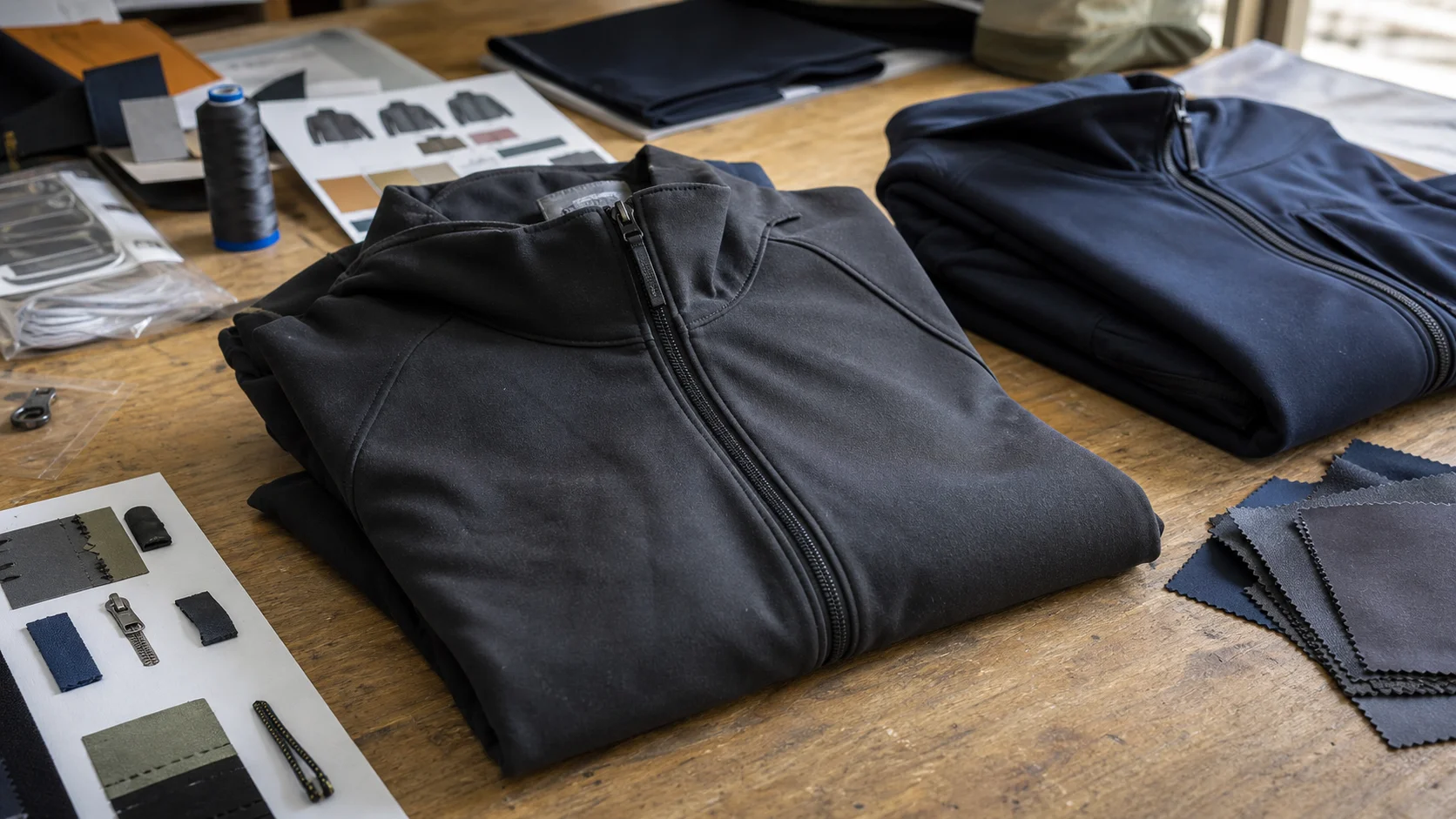
A focused outline for startup gymwear brands sourcing bulk activewear sets with coordinated trims, covering set design, trim choices, costing, sampling,...
Bulk Activewear Sets With Trim Sourcing for Startups - Fabrikn production reference
Bulk activewear sets with trim sourcing for startup gymwear brands are attractive for one simple reason: sets are easier to merchandise than isolated pieces. A coordinated sports bra and legging pair, or a jacket-and-jogger combination, gives a new label a cleaner product story and a more predictable average order value. For startups entering the market with limited capital, that matters. In many entry-level production programs, matching sets also reduce development cost because one color standard, one fabric family, and one trim card can cover 2 to 4 SKUs instead of being approved separately.
In practical sourcing terms, activewear sets also make planning more efficient. Factories can align fabric purchasing across multiple pieces, trims can be standardized, and color approval can be managed as a package rather than as disconnected SKUs. That does not automatically make production cheap. It does make it easier to control consistency if the line is built carefully from the beginning. As a common benchmark, using one 75% nylon / 25% spandex interlock across leggings, bras, and fitted jackets can help a startup reach dye-lot minimums that are often around 80 to 150 kg per color at the mill level.
For gymwear startups moving into the Outerwear & Jackets category, sets often include lightweight zip jackets, cropped warm-up tops, training pullovers, or sleeveless layering pieces paired with core bottoms. Outerwear in this segment is not just seasonal protection. It is often part of the brand image, especially when buyers want a matching top layer for commuting, warm-ups, and studio-to-street use. Typical starter constructions include 240 to 300 gsm double-knit jackets, 180 to 220 gsm stretch woven shells with mesh panels, or 280 to 320 gsm brushed scuba-style layers with reverse coil center-front zips.
The sourcing challenge is that activewear sets combine performance expectations with fashion-level finishing. Buyers expect stretch recovery, squat-safe opacity, secure seams, and trims that feel intentional rather than generic. Startups cannot treat trims as an afterthought if they want the finished product to look retail-ready. Common inspection checkpoints include fabric opacity under extension, shade matching between top and bottom within the same dye lot, seam extension on overlock and coverstitch areas, and zipper wave or puckering at the jacket front.
When startup founders hear “trim sourcing,” they often think only about labels or zippers. In activewear manufacturing, the trim package is broader and more important than that. It usually includes care labels, size labels, heat-transfer labels, drawcords, zipper tapes, zipper pullers, elastic bands, silicone grippers, toggle systems, reflective transfers, binding tape, hook-and-loop closures where used, snap fasteners for outer layers, and branded packaging components if those are supplied through the factory. For export programs, buyers commonly ask the factory to confirm fiber-content labeling, wash-care labeling, and barcode or size-sticker requirements before bulk trim booking.
In bulk activewear sets, trim sourcing becomes more complex because every component has to match the intended use of the garment. A jacket zipper for a training set needs different consideration than a decorative zipper used on casual apparel. Coil zippers are common for lightweight performance jackets because they are flexible and less bulky, with #3 or #5 reverse coil being typical. Vislon-style molded zippers may suit heavier outerwear or more structured silhouettes. Elastic quality matters just as much. Waistband elastic that rolls, twists, or loses recovery quickly can damage the reputation of an otherwise acceptable garment. A common spec for leggings is 35 to 60 mm brushed or jacquard waistband elastic, tested for recovery after repeated extension.
Trim sourcing also affects minimums. Fabric mills may support relatively accessible order volumes, while branded zipper pullers, custom jacquard elastic, and printed drawcord tips can push MOQs upward. That is where startup planning needs discipline. A founder may want every visible component customized from day one, but the wiser commercial move is often selective branding: customize the most visible trims and simplify the rest. Typical MOQs are often 2,000 to 5,000 pieces for custom metal or molded pullers, 1,000 to 3,000 meters for custom jacquard elastic, and 500 to 1,000 sheets for silicone or heat-transfer logos depending on size and color count.
If a startup is still deciding how to structure development support, a manufacturing partner with integrated sourcing guidance can help reduce avoidable trim mistakes. A clear overview of capabilities and process is usually more valuable than a low headline quote. Pages such as /services/ and /about-us/ are often the first places buyers review when comparing development support. It is also common to ask whether the factory works with certified supply chains such as OEKO-TEX certified fabrics, GOTS certified organic cotton programs where applicable, or social compliance frameworks like WRAP and BSCI for the sewing facility.
Although leggings and bras are the obvious anchors of many gymwear lines, outerwear is often where a startup can create a more premium impression. A well-executed zip jacket, cropped shell, or fitted training layer gives the collection structure. It also opens better margin possibilities than basics alone, provided the construction and trims justify the price. In common startup sourcing, leggings may land around $6.50 to $11.00 per unit at 300 to 500 pieces, while a fitted zip jacket in the same program may range from roughly $10.50 to $18.00 depending on fabric weight, pocket count, and zipper quality.
Outerwear pieces in activewear sets usually rely on more components than base layers. That means more sourcing coordination. A simple legging may need fabric, thread, waistband elastic, care label, and brand transfer. A jacket can require shell fabric, pocket lining, zipper, zipper guard, elastic binding or cuff finish, branded puller, neck tape, hang loop, drawcord or toggles, logo application, and packaging specs. Every added part increases both visual differentiation and production risk. From a construction standpoint, common machines include 4-thread overlock for panel joining, flatlock for chafe reduction, coverstitch for hems, bartack machines at pocket corners, and heat-press application for reflective or silicone logos.
For startups, this does not mean outerwear should be avoided. It means outerwear should be edited carefully. A clean silhouette with one or two strong trim details often performs better than a feature-heavy jacket that stretches development timelines and approval costs. If the target customer values sleek studio wear, invisible pockets and bonded hems may be worth exploring. If the target is entry-level gymwear, a standard zip-front jacket with reliable stitching and modest branding can be the stronger buying decision. Bonded hems, laser-cut ventilation, and seam taping generally raise both sample cost and defect risk, so they are more common once volume is proven.
There is also a category overlap worth noting. Some “activewear outerwear” is really lightweight layering apparel rather than true weather-resistant outerwear. That distinction affects fabric sourcing, testing expectations, and claims language. If a startup intends to market water resistance, wind blocking, thermal retention, or compression support, those claims should be aligned with actual material performance and not assumed from the look of the garment. Common checkpoints include DWR finish confirmation on woven shells, hydrostatic or spray test data where claimed, brushed-back thermal knit weight in gsm, and stretch-recovery results after wash testing.
MOQ is one of the first pressure points in bulk activewear sets with trim sourcing for startup gymwear brands. The difficult part is that there is rarely one single MOQ. There is usually a garment MOQ, a color MOQ, a fabric MOQ, and sometimes separate trim MOQs for custom components.
For startup-level production, typical garment MOQs may fall in the range of 150 to 300 pieces per style, sometimes split across sizes and limited colors. Some suppliers may offer lower trial runs around 80 to 120 pieces per style, but that often comes with compromises such as fewer colorways, stock trims instead of custom trims, or higher unit pricing. More developed activewear factories may prefer 300 to 500 pieces per style per color, especially where custom-dyed fabric and branded trims are involved. In practical terms, a bra-and-legging set at 200 pieces per style often prices 12% to 25% higher per unit than the same program at 500 pieces because marker efficiency, trim wastage, and machine setup are spread across fewer units.
Fabric minimums can complicate the picture. A nylon-spandex or polyester-spandex interlock, brushed jersey, or warp knit fabric may require a dye-lot minimum that exceeds the startup’s first order size. If a set uses the same fabric across leggings, jackets, and tops, that can help absorb the mill minimum. If the jacket uses a separate shell or lining fabric, total exposure rises. Common mill minimums for custom dyeing are often around 80 to 150 kg per color for knits, while specialty stretch woven or laminated outerwear fabrics may require higher commitments or stock-supported color selection.
Trim MOQs often catch inexperienced buyers off guard. Custom zipper pullers may require a few thousand units. Jacquard waistband elastic with brand lettering can carry a substantial minimum length. Printed heat transfers may be manageable at lower volumes, but color matching and application consistency still need control. This is why many startups launch with a hybrid trim strategy:
That approach is not glamorous, but it is commercially sound. Early-stage brands usually benefit more from dependable fit and fabric performance than from expensive trim customization that customers may barely notice. A common startup buy might be 200 leggings, 200 bras, and 150 jackets, with stock trims and one custom heat-transfer logo, rather than 100 units each across six heavily customized styles.
Fabric and trim decisions should be made together, not sequentially. In activewear sets, these elements work as a system. A jacket shell with poor recovery, paired with a heavy zipper and unstable binding, can distort at the front opening. A compressive legging fabric combined with weak waistband elastic can create a mismatch in wear performance. As a common sourcing rule, fabrics above 220 gsm paired with #3 lightweight coil zips can sometimes create front-edge waviness, so many suppliers move to a better-supported zipper tape or a #5 reverse coil for heavier jackets.
Common fabric choices for startup gymwear sets include 75% nylon / 25% spandex interlock for a smoother hand feel and more premium touch, 78% polyester / 22% spandex brushed jersey for print friendliness and cost control, and brushed performance knits for softness. Outerwear layers may use double-knit fabrics, scuba-like structures, lightweight woven stretch shell fabrics in the 140 to 220 gsm range, or warp-knit tricot-backed materials where more structure is needed. For compression leggings, 220 to 280 gsm is common; for bras, 240 to 300 gsm with power mesh lining is typical; for lightweight jackets, 180 to 260 gsm is a frequent starting point depending on silhouette and opacity needs.
Construction details also affect performance. Flatlock seams are widely used to reduce seam bulk on close-fitting garments, while 4-thread overlock with coverstitch finishing remains common for cost-efficient production. Gusset panels improve movement and help reduce front-rise stress on leggings. Sports bras often use brushed underband elastic, removable cup openings, and 100% polyester power mesh stabilizers. On jackets, chin guards, zipper garages, and self-fabric zipper shields are typical details that improve comfort and reduce returns.
Trims should be specified by function, not just appearance. Silicone grippers on cropped tops should be tested for adhesion and wash durability. Reflective transfers should be checked for cracking after stretch and laundering. Drawcords for joggers or jackets are commonly polyester or nylon with dipped or metal tips, but metal trims can trigger corrosion concerns during wash testing if plating quality is poor. Buyers commonly request OEKO-TEX compliant trims for skin-contact items and ask whether any cotton-based components can be sourced under GOTS certified programs if sustainability claims are part of the brand position.
Cost differences can be meaningful. Stock dyed elastic may add only a modest amount, while custom jacquard elastic can add $0.30 to $0.90 per garment depending on width and MOQ. Standard heat-transfer logos are often more economical than woven badge applications, and bonded hems can add both labor and reject risk compared with standard coverstitch hems. A typical startup-level active legging in a stock nylon-spandex fabric might cost around $6.50 to $9.50 at 300 MOQ, while the same silhouette with custom-dyed fabric, jacquard waistband, and multiple reflective transfers can move above $10.50 to $13.00.
Before bulk production starts, most activewear programs move through several sample stages rather than one single prototype. A common sequence is development sample, fit sample, revised fit sample, size set, pre-production sample, and sometimes a sealed sample retained by both buyer and factory. For startups, each round usually takes 7 to 12 business days if materials are in-house, but custom-dyed fabric, molded trims, or revised patterns can extend that timeline.
At fit stage, the useful sourcing detail is not just silhouette approval but measurement control. Buyers typically check bust, waist, hip, inseam, rise, sleeve length, and opening measurements against the spec sheet, then review stretch tolerance because activewear can pass static measurements yet fail in wear. A common tolerance range is +/- 1.0 cm on major body measurements and tighter on visible trim placements such as logo position or zipper length.
For size sets, startups should confirm grading across at least 3 core sizes and not rely only on a sample size medium. Inspection checkpoints commonly include waistband recovery after extension, bra underband tension, pocket opening symmetry, topstitch SPI consistency, and color continuity between shell fabric and dyed trims. If removable pads are used, cup opening size and pad shifting should also be tested during wear.
The pre-production sample is where trim and packaging details should be frozen. Typical approvals include care-label content, polybag size, barcode placement, fold method, carton ratio pack, and logo artwork size. If the factory uses heat-transfer application, buyers often ask for application temperature and dwell-time confirmation because poor heat-press settings are a common cause of logo peeling in early orders.
Lead times in bulk activewear are usually driven by fabric availability, trim customization, sample approvals, and line booking. For a startup program using stock fabric colors and stock trims, bulk production commonly takes 18 to 25 business days after pre-production sample approval. If the order uses custom dyeing, custom jacquard elastic, or branded zipper pullers, total production timing more often lands in the 35 to 55 day range, not including development samples.
Fabric is usually the longest dependency. Stock greige fabric that can be dyed quickly may move faster than a specialty brushed knit, laminated woven, or recycled performance fabric that has to be reserved in advance. A common delay point is waiting for lab dips, strike-offs, or bulk fabric handfeel approval. Custom color approval alone can add 5 to 10 business days, and if a shade has to be corrected and re-dipped, that can add another full round.
Trim dependencies also matter. Stock YKK-compatible coil zipper chains in basic colors are generally easier to secure than custom pullers, molded cord ends, or branded elastic. Reflective transfers, silicone logos, and woven labels can each add separate supplier lead times. A practical sourcing checkpoint is to ask which components are booked only after deposit and which are reserved earlier, because this affects whether the factory can truly hold the ship window.
Delays are also commonly caused by incomplete tech packs, missing graded specs, late artwork release, or changing packaging after pre-production approval. Startups often underestimate how much time is lost when the logo size changes after heat-transfer films, labels, and polybags have already been prepared. If air shipment is later required to recover timing, freight can erase much of the margin benefit gained in production.
Quality risks in activewear are usually a mix of fabric behavior, sewing control, and trim execution. The most common bulk issues include seam popping at high-stretch points, grin-through on overextended seams, color shading between pieces from different dye lots, misaligned panels, twisted side seams, and logo transfers that crack or peel after washing. In jackets, zipper waviness, uneven pocket placement, and poorly bonded hems are recurring failure points.
Inspection should be planned by stage, not just at final packing. Common checkpoints include fabric inspection before cutting, panel shade segregation at cutting, in-line sewing checks, measurement audit during sewing, and final random inspection using an AQL standard such as 2.5 major / 4.0 minor. For activewear, a useful in-line test is seam extension by hand at crotch, armhole, and waistband joins to catch skipped stitches before too many units are completed.
Material-specific risks should also be addressed. Brushed fabrics can show shade variation more easily than smooth interlock. High-spandex fabrics can experience heat damage if press settings are wrong. Mesh panels can pucker if differential feed is not adjusted correctly on the overlock machine. Silicone grippers may yellow or lose grip if the formulation is weak. These are common reasons buyers ask the factory about machine capability, operator experience with stretch fabrics, and wash-test history on similar styles.
Certification and compliance checks are also relevant. OEKO-TEX is commonly requested for skin-contact fabrics and prints, GOTS may be relevant where organic cotton components are used, and WRAP or BSCI are frequently reviewed as part of social compliance screening. These certifications do not replace product inspection, but they are common sourcing filters for startups selling into retail or online marketplaces that require documented compliance.
Most startups cannot optimize price, speed, and customization all at once. In practice, they usually choose two. If speed matters most, stock fabrics and stock trims are the usual route, with unit costs that may be slightly higher than fully optimized bulk but with fewer delays. If branding matters most, startups should expect longer lead times and higher MOQs, especially for custom elastic, hardware, and packaging.
A commercially practical first launch often uses one hero fabric, 2 to 3 core colors, and limited trim customization. For example, a startup may launch a matching bra, legging, and jacket in black, espresso, and navy using the same nylon-spandex base fabric, stock reverse coil zippers, and a single-color silicone logo. That approach usually controls shade risk, reduces trim inventory, and simplifies reorders if one color sells faster than the others.
Price discipline also requires understanding where branding is most visible. A custom molded zipper puller that costs an extra $0.18 to $0.40 per jacket may be less valuable than upgrading fabric weight or improving removable cup quality in the bra. Similarly, a premium mailer or printed tissue adds perceived value, but many startups are better served by investing first in fit consistency, opacity, and accurate grading. Returns driven by fit or fabric complaints usually cost more than modest packaging upgrades save.
The useful sourcing detail is to ask suppliers for side-by-side costing: stock trim version versus custom trim version, and 200-piece pricing versus 500-piece pricing. This makes tradeoffs visible. It is common to see only a small increase for a better zipper or stronger elastic, while custom dyeing, bespoke packaging, and multi-process logo applications create the biggest jumps in both lead time and cost.
Working with a manufacturing partner is usually easiest when responsibilities are clearly divided from the start. Startups should confirm who is responsible for pattern development, fabric sourcing, trim booking, testing, labeling compliance, packaging specs, and final inspection. A factory that can explain these steps in sequence is often a safer choice than one that simply offers a low FOB price without clarifying process.
In activewear, it is especially useful to ask what machinery and construction methods are already standard on the factory floor. Common relevant equipment includes flatlock machines, 4-thread and 6-thread overlock machines, coverstitch machines, bartack machines, automatic fabric spreaders, CAD marker systems, and heat-press stations for transfer logos. If the style needs bonded seams, laser cutting, or seam taping, the buyer should confirm whether those processes are done in-house or through a subcontracted specialist, because that affects both lead time and quality control.
Buyers should also ask what inspections are built into the process. Common answers to look for include fabric shrinkage testing before cutting, GSM verification, colorfastness checks, print adhesion checks, in-line measurement audits, metal detection where required, and final AQL inspection before shipment. Even for startup volumes, these checkpoints are common signs of a process-oriented supplier.
From a compliance standpoint, many buyers now ask whether the facility or supply chain can support WRAP, BSCI, OEKO-TEX, or GOTS-related requirements, depending on the product mix. Not every activewear program needs every certification, but asking early prevents the common problem of developing a style that cannot later support the brand’s retail or sustainability claims.
Get a free quote from Fabrikn — your trusted B2B clothing manufacturer with 10+ years of experience. MOQ as low as 200 pieces.
Get a Free Quote →What is a typical MOQ for a startup activewear set?Common starting points are 150 to 300 pieces per style, with some trial programs at 80 to 120 pieces. If custom-dyed fabric and branded trims are involved, many suppliers prefer 300 to 500 pieces per style per color.
How long does bulk production usually take?For stock fabric and stock trims, a typical bulk window is 18 to 25 business days after pre-production approval. With custom dyeing, custom elastic, or custom hardware, 35 to 55 days is more common.
Which fabrics are most common for startup gymwear?Typical options include 75% nylon / 25% spandex interlock for smooth compression, 78% polyester / 22% spandex brushed jersey for softer hand feel and print flexibility, and 180 to 220 gsm stretch woven shells for lightweight jackets.
What trims are worth customizing first?Most startups begin with visible, lower-risk items such as heat-transfer logos, woven labels, or neck tape. Custom zipper pullers and jacquard elastic often have higher MOQs, commonly 2,000 to 5,000 pieces for pullers and 1,000 to 3,000 meters for elastic.
What quality checks matter most for activewear?Useful checkpoints include opacity under stretch, seam strength at crotch and armhole, waistband recovery, logo adhesion after wash, zipper smoothness, measurement tolerance, and shade consistency between matching set pieces.
Which certifications are commonly requested?OEKO-TEX is common for skin-contact fabrics and prints, GOTS is relevant for organic cotton components, and WRAP or BSCI are frequently reviewed for social compliance in the manufacturing facility.