
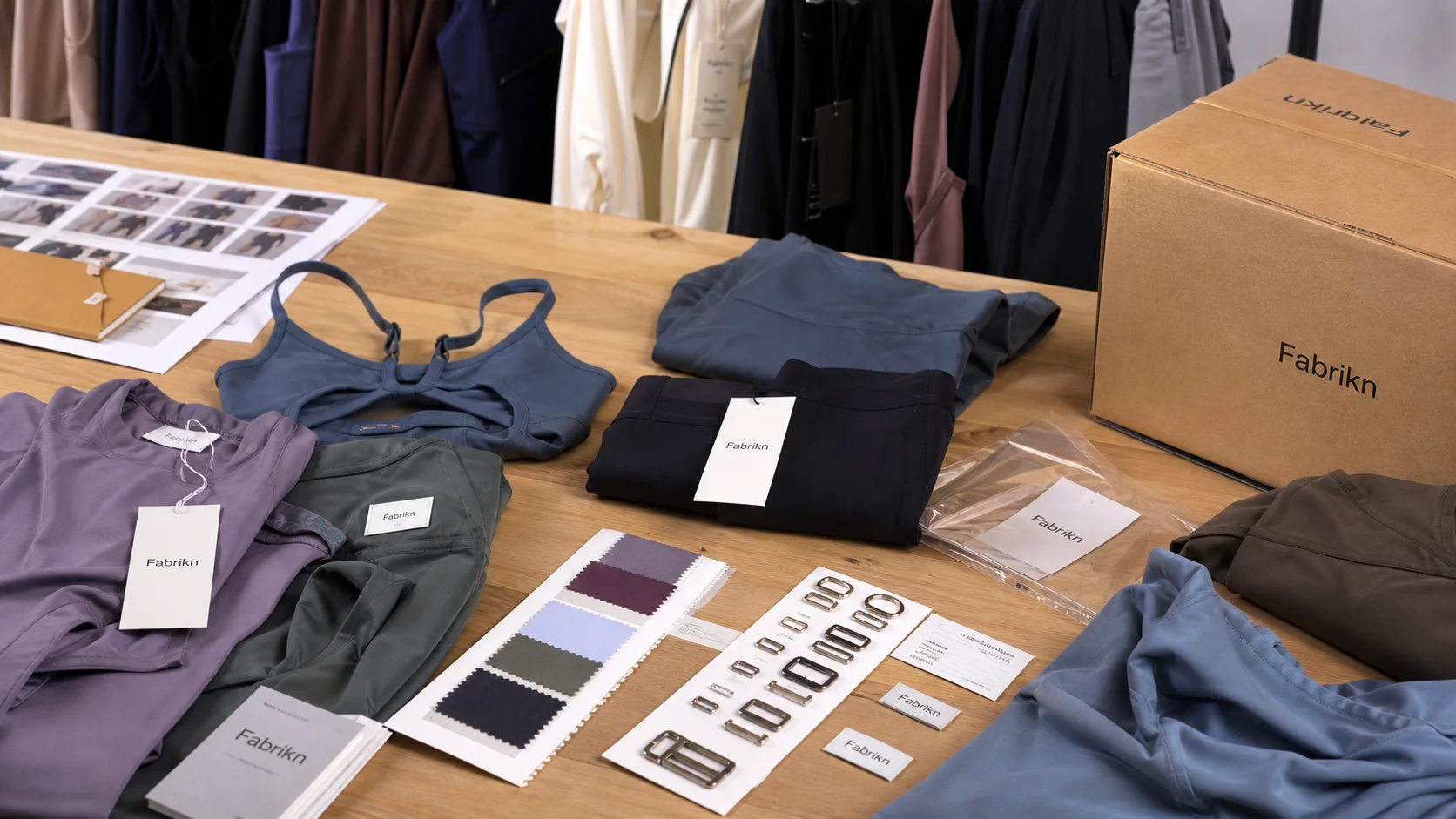
A detailed outline for league merchandise buyers evaluating bulk cut and sew tracksuit pricing, with sections focused on construction choices, cost drivers, sampling, decoration, and order planning for teamwear programs.
Bulk Cut and Sew Tracksuit Pricing for Buyers - Fabrikn production reference
For league merchandise buyers, bulk tracksuits sit in an awkward but important category. They are more complex than standard printed tees, more size-sensitive than simple fanwear, and more exposed to fit, fabric, and finishing mistakes than many basic promotional products. That matters because cut and sew pricing is never just a fabric calculation. It reflects pattern work, panel cutting, stitching time, decoration method, trim count, packaging, and the factory’s willingness to run your order efficiently.
When buyers search for bulk tracksuits cut and sew pricing, the real question is usually broader: what should a fair price look like for a league-ready product that can carry logos, survive repeat wear, and still fit within a merchandise margin target? The answer depends on quantity, fabric weight, style complexity, size ratio, and how disciplined the product development process is before production starts.
A practical sourcing approach starts by separating cheap pricing from usable pricing. A low quote on paper can become expensive once you add revised samples, upgraded zippers, logo application changes, missed delivery windows, or claims from poor sizing consistency. Buyers responsible for teamwear or league merchandise need price visibility early, but they also need to understand where factories tend to underquote and where costs legitimately rise.
Cut and sew tracksuits typically involve custom patterns or modified base blocks, separate jacket and pant production, multiple panels, elastic or rib components, branded trims, and at least one decoration process. That makes them far less straightforward than off-the-shelf stock garments. If the goal is differentiated league merchandise rather than generic warm-up wear, custom manufacturing often makes sense. Buyers comparing options can review broader production capabilities through services pages before requesting quotations.
This guide breaks down how bulk cut and sew tracksuit pricing works for league merchandise buyers, what numbers usually move the needle, where hidden costs appear, and how to judge supplier offers without overpaying for the wrong features.
The biggest pricing mistake buyers make is assuming tracksuit cost is driven mainly by fabric consumption. Fabric is a major component, but not the only one, and not always the most volatile. In many custom teamwear programs, construction complexity and order efficiency have just as much impact on the final quote.
At a high level, factory pricing is shaped by five commercial factors.
A simple tracksuit with a brushed tricot or interlock polyester, standard zip jacket, tapered pants, and one embroidery placement will usually price more efficiently than a fully paneled design with contrast inserts, zipper pockets, silicone badges, custom drawcord tips, and individual polybag labeling for e-commerce fulfillment.
League merchandise buyers should also pay close attention to size distribution. Extended sizes can increase fabric yield and sometimes reduce cutting efficiency. The effect is rarely dramatic in a balanced size range, but it becomes noticeable when a program includes a high share of 2XL to 4XL garments, especially in heavyweight fabrics.
Decoration decisions can also swing cost quickly. Embroidery may be manageable for chest logos in modest stitch counts, while large back logos, tackle twill appliqué, heat transfer stacks, or all-over sublimated panel work can change labor and rejection rates. A factory quote that looks aggressive at first glance may be built around a very basic logo assumption, not the finished merchandising standard the buyer expects.
Exact numbers vary by region, capacity, fabric market conditions, and order structure, so no responsible buyer should treat any online price range as universal. Still, a realistic framework helps during supplier comparison.
For a custom bulk cut and sew tracksuit set made for league merchandise, buyers often see pricing built from the following components:
In practical sourcing terms, a straightforward adult polyester tracksuit set in bulk may land in a broad range such as roughly US$18 to US$35 per set at moderate volumes, while more premium or design-heavy programs can move above that. That is not a quote. It is a buying reference range for evaluating whether a supplier is in the expected zone or is quoting unusually low or high. Lightweight entry programs with simplified trims can come in below that range, while bonded fabrics, specialty finishes, or low-volume custom runs can exceed it easily.
Buyers should be skeptical of unit pricing that is dramatically below market without a clear explanation. The missing value usually appears somewhere: lighter GSM than expected, cheaper zipper quality, less stable rib, weak colorfastness, decoration shortcuts, or looser tolerance control. A low first quote can also exclude pattern cost, sample charges, carton markings, freight to port, or spare pieces.
MOQ is one of the most misunderstood pieces of cut and sew tracksuit buying. Buyers often ask for the MOQ as if it is a fixed number for all programs. It rarely is. MOQ depends on fabric booking, color count, trim customization, and whether the factory can run your order alongside related programs.
For custom tracksuits, typical MOQ ranges often start around 100 to 300 sets per style-color for smaller programs, with more favorable pricing becoming realistic around 500 to 1,000 sets or more. Some factories will quote lower MOQs, but the tradeoff is usually a higher unit cost, fewer custom options, or a narrower fabric choice. If the buyer wants custom dyed fabric, branded trims, and several size splits, the practical MOQ may rise.
League merchandise programs often perform better when buyers consolidate demand rather than fragment it. For example, splitting one season order into too many colorways or micro-runs may hurt pricing more than expected. Fabric minimums, zipper color matching, and label setup all become less efficient. A buyer may gain visual variety but lose margin.
This is where purchasing judgment matters. If the league wants a hero color program with two reliable core styles and deeper volume, the price per set often improves enough to offset reduced style breadth. If the objective is fan-choice breadth across many clubs or divisions, higher unit cost may be commercially acceptable, but only if the retail pricing model supports it.
Fabric selection is usually the first serious cost lever. For teamwear and league merchandise, common tracksuit fabrics include polyester tricot, double knit, interlock, pique-backed knits, stretch blends, and brushed performance constructions. Typical fabric weights might fall in the 220 to 320 GSM range, depending on whether the garment is intended as a lightweight presentation suit or a heavier warm-up set.
Buyers should specify at least the following fabric points during quotation:
Trim choices matter more than many new buyers expect. Zippers are an obvious example. A basic no-name zipper may save a small amount per set, but failures in use can damage sell-through and trigger returns. Waistband elastic quality, drawcord construction, cord-end finishing, zip pullers, labels, and hangtags all contribute cost, but they also shape perceived value.
Construction details often separate a true merchandise-grade tracksuit from a promotional one. Features like zipper garages, reinforced pocket openings, bartacks at stress points, clean coverstitching, mesh pocket bags, ankle zips, and lined collars add labor. Not every feature is worth the cost. The right combination depends on use case. A sideline warm-up product needs more durability and movement function than a fashion-led supporter set designed mostly for casual wear.
If buyers are early in supplier evaluation, background information on a manufacturer’s process and product categories can help frame the discussion. A starting point may be the company’s about us page, followed by a more technical brief during inquiry.
Development cost is often treated as a nuisance line item, but for cut and sew tracksuits it is part of risk control. A buyer trying to eliminate all sample costs can end up paying far more in production mistakes.
A normal sample path for league merchandise tracksuits may include:
Typical sample charges vary widely, but buyers should expect higher rates for one-off development than for bulk production, because the work is less efficient. Some factories credit sample fees back against production orders above a certain volume. Others do not. Either structure can be acceptable if the bulk quote is transparent.
The pre-production sample stage is where many avoidable problems should be caught: zipper wave, pocket depth, cuff recovery, stitch tension, logo placement, and shade balance between jacket and pant panels. Skipping this stage to save time is risky, especially when the order includes multiple club graphics or detailed contrast paneling.
Size-set review deserves more attention than it usually gets. League merchandise often sells across a wide body range, and tracksuits are less forgiving than oversized hoodies. If grading is off, return rates can rise fast. A size set is not mandatory for every small order, but it becomes increasingly valuable for large programs, new factories, or unfamiliar fits.
Lead time is not just a scheduling issue. It affects pricing because factories plan line loading, fabric sourcing, and trim purchasing around production windows. Orders that fit neatly into standard calendars are easier to quote competitively.
For custom cut and sew tracksuits, a common lead-time structure may look like this:
That puts many standard programs in a broad 8 to 14 week cycle after approvals, though actual timing depends heavily on fabric availability, trim customization, and factory capacity. Programs using custom dyed fabric, specialty trims, or holiday-period shipping windows may require longer calendars.
Rush orders almost always involve tradeoffs. The supplier may expedite trim procurement, compress sampling, or allocate overtime and premium line space. That can increase price directly. Even when no rush surcharge appears on the quote, the buyer may still pay indirectly through reduced development time, higher defect exposure, or more conservative material substitutions.
League buyers should also account for seasonality. Teamwear demand often clusters around season starts, tournament cycles, and holiday merchandise windows. Waiting too long to confirm quantities can narrow factory options and weaken negotiating leverage.
Most cut and sew tracksuit suppliers quote in one of a few ways. Buyers should understand which model they are looking at before comparing offers.
Some suppliers effectively quote a combined model where cut, make, trim, and fabric are bundled into a single FOB or ex-factory unit price. This is common and easy to compare, provided the specification is tight.
In this model, pattern and sample costs are listed separately, while bulk price covers the production order. This is often the cleaner structure for custom league merchandise because it makes development visibility clearer.
Factories may quote one price at 100 sets, another at 300, and another at 1,000. Buyers should push for these ladders because they reveal the real efficiency curve. That helps in deciding whether to consolidate orders.
Some suppliers quote against assumed fabric GSM, logo count, or trim package, then revise later if the specification changes. This is workable, but only if the assumptions are written down clearly. Otherwise quote comparisons become misleading.
A serious buyer should request quotation sheets that state fabric specification, decoration count, packaging, Incoterm basis, sample charges, MOQ by color, and tolerance assumptions. If those points are vague, the lowest quote may be the least usable one.
The commercial problem with tracksuits is simple: defects are easy for end customers to notice. Poor fit, mismatched shades, twisted side seams, irregular cuff tension, or weak zip function are visible immediately. That makes quality control part of pricing, not a separate issue.
Common inspection risks in bulk cut and sew tracksuits include:
Buyers should confirm what inspection method will be used and at what production stage. Inline inspection can catch recurring construction problems earlier than final random inspection alone. For league merchandise, it is also sensible to confirm carton assortment accuracy, because incorrect size packing can create retail problems even when garment quality is acceptable.
If the order will be sold online or distributed across clubs, packaging details should not be treated casually. Individual SKU labels, barcode placement, size stickers, and carton marking accuracy add small cost but reduce downstream handling errors. Those are worthwhile expenses in most organized merchandise programs.
The most effective buying strategy is not to chase the lowest initial tracksuit quote. It is to build a costed specification that protects the features customers actually notice and removes the ones they do not.
For many league merchandise buyers, a good starting structure is:
This approach improves repeatability. It also makes reorders easier, which is important if a league wants continuity across seasons or needs fast replenishment of successful styles.
There are times when spending more is justified. If the tracksuit is a flagship item, sold at a premium price point, seen on team staff, or used in official presentation settings, buyers should invest in cleaner pattern balance, better zipper quality, stronger decoration execution, and tighter inspection control. Those features support perceived value.
There are also places to save responsibly. A buyer may skip unnecessary trim customization, avoid over-paneling, reduce secondary logo placements, standardize zipper pulls, or narrow the color assortment. Those changes usually preserve garment utility while helping margin.
When discussing a custom program, buyers should arrive with a proper tech pack or at least a structured requirement sheet. That should cover silhouette, measurements, target fabric, artwork placements, labeling, packaging, and expected order volume by size and color. Suppliers can only price accurately when the brief is specific. For direct inquiry or quotation planning, the most efficient next step is usually a detailed outreach through contact us.
In the end, bulk tracksuits cut and sew pricing for league merchandise buyers comes down to controlled complexity. The more variables a buyer leaves open, the less reliable the quotation becomes. The tighter the specification, the easier it is to compare suppliers on real value rather than headline numbers. A sound purchase is one that lands at the right balance of cost, presentation, durability, and delivery confidence.
Get a free quote from Fabrikn — your trusted B2B clothing manufacturer with 10+ years of experience. MOQ as low as 200 pieces.
Get a Free Quote →Typical MOQ ranges often start around 100 to 300 sets per style-color for smaller custom programs. Better pricing usually appears at 500 sets and above. Exact minimums depend on fabric sourcing, color count, trim customization, and whether the factory is using stock or custom-developed materials.
A broad market reference for custom adult tracksuit sets can be around US$18 to US$35 per set at moderate bulk volumes for standard constructions. Premium fabrics, recycled materials, complex paneling, heavy branding, or low-volume orders can push pricing above that range. Buyers should treat online ranges only as screening references, not firm benchmarks.
The biggest drivers are usually order volume, fabric type and GSM, panel complexity, trim package, decoration method, and delivery schedule. Small runs with multiple colorways and premium trims almost always cost more per unit than consolidated programs built on stable specifications.
In most cases, yes. Sample charges are a normal part of custom development, especially for first prototypes and pre-production samples. Paying for structured sampling is often cheaper than correcting fit, trim, or logo issues after bulk production starts.
After sample approval, many programs fall into an 8 to 14 week window including material sourcing, production, finishing, and dispatch preparation. The timeline can extend if fabric is custom dyed, trims are specialized, or approvals are delayed.
Common risks include color mismatch, uneven grading, zipper puckering, poor elastic recovery, logo misplacement, and inconsistent finishing. Buyers should confirm approval checkpoints, tolerance expectations, and inspection methods before bulk production begins.