
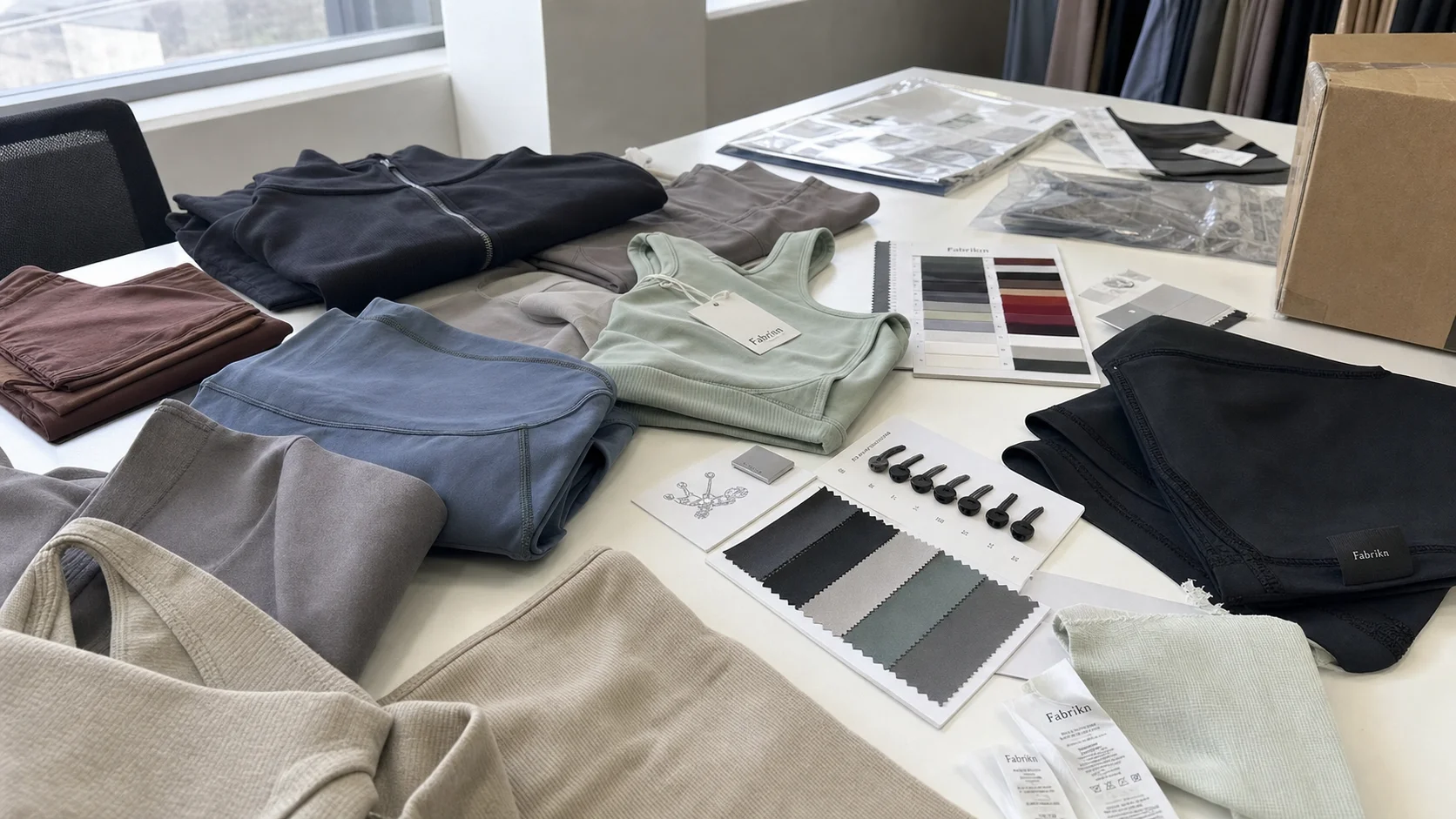
A detailed outline for urgent care procurement teams evaluating custom scrubs screen printing costs, with sections focused on print setups, ink choices, logo placement, order volumes, and healthcare-specific buying considerations.
Custom Scrubs Screen Printing Cost for Buyers - Fabrikn production reference
For urgent care procurement teams, branded scrubs are not a small cosmetic purchase. They sit at the intersection of staff presentation, replacement cycles, budget control, and operational consistency across locations. When buyers search for custom scrubs screen printing cost, the real question is rarely just the print price. The bigger issue is total landed cost per wearable unit, and whether that cost holds up once approvals, sizing, fabric choice, reorder needs, and delivery deadlines are factored in. In practical sourcing terms, many buyers budget a decorated scrub top at roughly $6.50-11.50 per unit at 500-piece volume for standard 65/35 poly-cotton or polyester-rich blends, while full scrub sets with matching pant and logo application commonly land in the $12.00-22.00 range before freight, duty, and special packaging.
In the Activewear & Teamwear category, medical scrubs occupy a practical middle ground. They need comfort and mobility like teamwear, but they also face more demanding wash cycles and stricter image standards than many promotional garments. That changes how procurement teams should evaluate screen printing programs. A low quote on paper can become expensive if the print cracks after repeated industrial laundering, if color matching is inconsistent across reorder batches, or if the supplier prices artwork setup separately on every PO. As a common benchmark, hospital and clinic buyers often ask suppliers to validate print durability through 30-50 home-laundry wash cycles or equivalent internal wash testing before approving a repeat program.
For most urgent care groups, screen printing makes the most sense when the requirement is a simple logo application, moderate-to-high volume, and repeatability across multiple orders. Small clinics ordering a few dozen units may find alternate decoration methods more flexible. Larger networks with recurring demand often gain better value from screen printing once setup charges are absorbed over volume. A typical break point is around 150-250 pieces per logo and colorway; below that level, embroidery or heat transfer often prices more competitively because there is no screen amortization.
Buyers comparing suppliers should focus on four points early: print method suitability for scrub fabric, MOQ thresholds, all-in sample and setup costs, and production lead-time reliability. That gives a more realistic view than unit price alone. It also helps to ask whether the garment factory or decorator holds recognized compliance credentials such as WRAP, BSCI, OEKO-TEX STANDARD 100 for harmful-substance screening, or GOTS if an organic cotton program is involved. If your team is evaluating broader manufacturing or decoration support, it helps to review available capabilities before requesting quotes through https://fabrikn.com/services/.
Screen printing cost on scrubs is built from several layers. Some are obvious, such as garment cost and print quantity. Others are easy to miss during early sourcing. Common quote structures separate garment price, screen/setup, print charge by placement, poly-bagging, carton marking, and freight terms, so buyers should request a line-item breakdown instead of a single bundled number.
The scrub itself is usually the largest cost component. Fabric composition, weight, stretch content, pocket configuration, closure style, and fit grading all affect price before printing starts. A basic unisex V-neck top in a poly-cotton blend usually prices lower than a tailored scrub set with spandex, jogger styling, or antimicrobial finish claims. As a common market range, a basic 65/35 polyester-cotton scrub top in 145-170 GSM fabric may cost around $4.00-6.50 per piece at 500 MOQ, while a 72/21/7 polyester/rayon/spandex top or a 4-way-stretch polyester-spandex style in 180-220 GSM often lands closer to $6.50-10.00 per piece at the same volume.
For procurement teams, this matters because the same logo print can look affordable on one scrub base and uneconomical on another. Printing rarely rescues a poor garment choice. If the base garment has high return rates on sizing or poor wearer acceptance, decoration spend is effectively wasted. Common construction details that move price include bartacked pocket corners, double-needle topstitching, coverstitch hems, elasticated jogger cuffs, zipper chest pockets, and size grading that extends from XXS to 5XL instead of a narrow S-XL run.
Screen printing is efficient, but each color generally requires its own screen. A one-color chest logo is the cheapest structure. Two-color and three-color artwork increase setup time, alignment demands, and press complexity. That often raises both setup charges and per-unit pricing. Typical screen charges are commonly $25-60 per screen for basic contract decoration, with automated jobs on larger runs often quoting per-color setup separately from the garment.
Many urgent care buyers can reduce cost meaningfully by standardizing artwork into one-color or two-color versions for scrubs, even if broader brand guidelines allow more colors elsewhere. As a practical example, a one-color left-chest print may add about $0.60-1.20 per unit at 500 pieces, while a two-color version often adds roughly $0.90-1.80 depending on logo size, ink coverage, and whether a white underbase is needed on dark fabrics.
A small left-chest print costs less than a large back print. Extra placements add labor and increase rejection risk if alignment is not controlled carefully. Common scrub placements include left chest, sleeve, upper back, and lower pocket area. Not every placement performs equally well on every scrub construction. Seams, stretch panels, and pockets can complicate print registration. On many scrub tops, a left-chest print area of about 3 to 3.5 inches wide is the most stable option, while upper-back prints in the 9 x 12 inch range require flatter panels and more careful platen loading.
Common sourcing detail: printers often use youth or small specialty platens, sleeve platens, or pocket fixtures for scrub garments because side vents, princess seams, and chest pockets make standard T-shirt loading less accurate. If a logo crosses a pocket seam or stretch side panel, reject rates usually climb and the per-unit print charge typically increases by $0.20-0.50.
Volume is where screen printing usually becomes competitive. Setup costs get spread across more units, and production efficiency improves. Typical MOQ expectations vary by supplier, but buyers often see custom screen-printed scrub programs start around 100 to 300 pieces per colorway and design. Some suppliers accept lower trial runs, though the unit cost rises noticeably.
At 24 to 48 pieces, screen printing may still be possible, but it is often not the lowest-cost decoration option after setup fees are included. At 250, 500, or 1,000 pieces, pricing usually becomes much more favorable. A common market pattern is around $2.50-4.00 per unit for a basic one-color chest print on a stocked scrub garment at 100 pieces, dropping closer to $0.60-1.20 at 500 pieces and $0.45-0.90 at 1,000 pieces, excluding the garment base.
There is often a fixed charge for artwork cleanup, color separation, film output, and screen creation. Buyers should clarify whether this is a one-time charge held for reorders, or a recurring charge billed per PO. Reorders can be priced attractively if screens or digital files are retained under a clearly documented program. In many programs, vector artwork cleanup costs about $20-50 if the logo is usable, while full redraw or Pantone separation work can reach $75-150 for complex files.
It is also common to ask how long screens are retained. Some decorators keep screens for 6-12 months after the last run; after that, buyers may need to repay screen fees even if the artwork is unchanged. Useful checkpoint: specify Pantone references, target print size in inches, placement from high-point shoulder, and whether artwork approval is digital only or tied to a physical strike-off.
Scrubs are frequently made from poly-cotton or polyester-rich stretch fabrics. These materials can require lower-temperature curing strategies, bleed-resistant inks, or specific underbase treatment. Performance fabrics are often less forgiving than basic cotton tees. That can raise cost modestly, but it usually improves wash durability and reduces print failure risk. For dark navy, ceil blue, black, and wine scrub colors, dye migration control is a common requirement, especially on polyester-rich fabrics above 80% synthetic content.
Printers commonly address this with low-bleed plastisol, low-cure inks in the 260-280°F range, discharge only on suitable cotton-rich fabrics, and a flash-cure plus final conveyor dryer process using equipment such as an M&R Sportsman automatic press or ROQ automatic carousel with a gas conveyor dryer. On stretch scrubs, suppliers often choose a softer-hand ink system and tighter cure-window control because overcuring can stiffen the logo area and reduce wearer comfort.
Pricing varies by region, order size, garment spec, and whether the supplier is decorating blanks or producing fully custom scrubs. Still, procurement teams can use a practical framework when budgeting. For comparison purposes, many buyers ask for ex-works or FOB garment pricing first, then separately model freight, duty, and local delivery to avoid mixing manufacturing cost with logistics variability.
Cost Element Typical Buyer Expectation Notes Blank or custom scrub garment $4.00-10.00 per top at 500 MOQ; $8.00-18.00 per set common Driven by fabric, styling, sizing range, and order volume; 145-220 GSM is a common scrub fabric range Screen setup per color $25-60 per screen per placement Often charged once per design and placement if screens are retained for reorders Print labor per placement $0.60-1.20 per unit for 1-color chest print at 500 pieces One small chest print is cheaper than multi-location decoration; dark garments may need a white underbase Sampling and pre-production approval $35-150 typical depending on sample type Can include strike-off, fit sample, or decorated PP sample; many suppliers credit one sample against bulk orders Packing and labeling $0.10-0.45 per unit add-on Individual bagging, size stickers, barcode labels, and store-level sorting add labor Freight and duty Often excluded from ex-factory pricing Total landed cost should be calculated before comparison; air freight can add several dollars per unit on rush jobsAs a directional guide, a simple one-color logo print on a moderate-volume scrub order often adds a manageable single-digit amount per piece above the garment base, while setup charges are amortized separately. Multi-color prints, low-volume orders, specialty inks, and complex placements can push decoration cost much higher. In common sourcing scenarios, a 500-piece order of basic scrub tops with one left-chest print may land around $4.75-7.75 per unit ex-factory, while a more tailored stretch scrub top with two-color logo can reach $7.50-11.50 before packing upgrades and freight. The exact number is less useful than understanding where the cost moves and what can be controlled.
Buyer judgment: if a quote looks unusually cheap, check whether it excludes setup, pre-production samples, folding, labeling, freight, and compliance testing. Those omissions are common and can distort comparisons. It is also worth confirming whether the fabric or trim package carries OEKO-TEX STANDARD 100, and whether the factory or vendor operates under WRAP or BSCI audit frameworks.
Urgent care uniforms are used hard. That is why fabric and print compatibility should be reviewed before approving artwork. A sourcing shortcut that often prevents rework is to request the exact fabric composition, GSM, weave type, and finish on the quote sheet, because “performance stretch” is too vague to predict print behavior.
Each of these fabrics behaves differently under a print press. Polyester-heavy scrubs may be vulnerable to dye migration, especially on dark colors. Stretch fabrics can distort slightly during printing and may show more stress on large solid prints if the ink film is too rigid. Thin lightweight scrub tops can show print strike-through or hand-feel issues if the ink deposit is too heavy. Twill structures tend to print more evenly than slinky mechanical-stretch constructions, while brushed finishes can slightly reduce edge sharpness on fine logo details.
For most urgent care logos, a small chest print with controlled ink laydown is the safest option. Large graphic treatments are usually a poor fit for medical scrubs from both a cost and durability standpoint. A common recommendation is to keep chest logos under about 10-12 square inches of total ink coverage on stretch scrub tops to maintain softness and reduce cracking risk around bust shaping or pocket seams.
Buyers do not need to become print technicians, but they should ask what ink system is being used and why. Water-based and plastisol systems both have use cases. On performance-oriented scrubs, the key issue is not trend language but adhesion, wash resistance, opacity, and cure stability. In practice, low-cure plastisol is still the most common choice for polyester-rich scrubs because it offers reliable opacity and better control over dye migration than standard water-based systems on dark shades.
Useful sourcing detail: common checkpoints include cure temperature verification with donut probes or heat strips, stretch-and-recovery checks after curing, and a 24-hour post-print adhesion review before packing. If buyers are sourcing organic cotton or sustainability-positioned scrub capsules, they can also ask whether the fabric is GOTS-certified and whether inks are selected to support OEKO-TEX chemical-restriction requirements.
MOQ policy has a direct effect on cost. For stocked scrub blanks, decorators commonly accept 48-100 pieces per logo and colorway, while fully custom cut-and-sew scrub programs more often start around 300-500 pieces per color per style. Mixed-size packs are standard, but buyers should confirm whether tall sizes, petite lengths, or 3XL-5XL carry surcharges of about $0.50-2.00 per unit.
Sampling usually moves through three checkpoints: a fit or size-set sample, a print strike-off or swatch approval, and a pre-production decorated sample. Typical sample fees are around $35-75 for a simple decorated stock sample and $75-150 for a fully custom PP sample, with lead times of about 5-7 business days for stock samples and 10-14 business days for custom samples. It is common for one approved PP sample to become the sealing sample for bulk inspection reference.
Approval workflow should also specify artwork format, Pantone references, print dimensions, and placement tolerances. A typical placement tolerance is plus or minus 0.25 inch on a chest print, and many buyers request a signed approval sheet showing distance from high-point shoulder and center-front. Common sourcing detail: bulk production normally should not start until both the decorated PP sample and size spec have written approval, otherwise logo placement disputes become difficult to recover after cutting or printing begins.
Lead times depend on whether the supplier is printing on stocked garments or producing custom scrubs from fabric procurement onward. For stocked scrubs with approved artwork, a common production window is 7-12 business days after art approval for 100-500 pieces. For fully custom scrub programs, total lead time is more commonly 18-22 business days if greige fabric is available and 30-45 days if fabric must be dyed, finished, and tested before cutting.
Rush orders are possible, but buyers should expect premiums. In common market practice, a 10-20% rush surcharge applies when production is inserted ahead of queue or shipped by air. The main lead-time dependencies are fabric availability, lab-dip or shade approval for custom colors, screen approval, sample sign-off, and whether size assortments are standard or require make-to-order grading. Reorders are usually faster when artwork, screens, and fabric references are already on file; many repeat programs can turn in 5-10 business days on stocked garments if raw inventory is available.
A useful sourcing detail is to ask for a time-and-action calendar showing art approval, screen burning, sample dispatch, bulk print start, final inspection, and ship date. Buyers with multi-site rollouts often also reserve buffer stock of 3-5% in core sizes because small top-up orders under 50 pieces are usually the most expensive per unit.
The main quality risks in printed scrubs are print cracking, poor adhesion, dye migration, placement inconsistency, shade variation between garment lots, and sewing defects around the print zone. These issues are more common when logos are applied over pockets, near side vents, or on high-stretch panels. Typical defect tolerance follows an AQL inspection approach such as 2.5 major / 4.0 minor, although exact standards vary by buyer.
Inspection should start before printing. Common checkpoints include fabric shade approval, GSM verification, shrinkage testing, panel skew or bow review, and confirming that chest panels are free of oil marks or needle damage before they reach the press. During decoration, suppliers commonly check print position, color match to Pantone, ink opacity, cure temperature, and hand feel. After printing, a typical inspection set includes wash test, crocking or rub review, seam quality, measurement check, barcode accuracy, and carton assortment verification.
Useful sourcing detail: many buyers require inline inspection after the first 20-30 pieces off press and a final random inspection at 100% packed-carton stage. For scrub construction, practical sewing checkpoints include SPI consistency, bartack strength at pocket corners, skipped stitches at side vents, and neckline binding symmetry. If compliance is important, buyers can also ask for current WRAP or BSCI audit reports and OEKO-TEX documentation for fabric or print components where available.
Screen printing is usually the best value for simple logos at volume, but it is not the only method buyers should compare. Embroidery is common for left-chest branding and often works well from 24 pieces upward, though it can feel heavier on lightweight scrub tops and may require a backing that irritates the wearer unless a soft cover is added. Heat transfer or CAD-cut logos are often used for low MOQ runs and names, with typical turn times of 5-7 business days on stocked garments.
DTF and transfer printing have become common for short runs, but many uniform buyers still prefer screen printing for 250+ pieces because the per-unit cost is lower and the wash performance is more predictable on simple logos. Embroidery on a chest logo commonly costs around $1.25-2.50 per unit at 100-300 pieces, while heat transfer might run $1.50-3.00 depending on size. Screen printing often becomes the cost leader once the order reaches 250-500 pieces and the art is limited to one or two colors.
Useful sourcing detail: for stretch scrub fabrics, embroidery may pucker unless the stabilizer, hooping tension, and stitch density are adjusted, while heat transfers can reduce breathability on larger logos. Screen printing on an automatic press with low-cure inks is still commonly preferred for logo areas under 4 inches wide on polyester-rich scrub tops.
Get a free quote from Fabrikn — your trusted B2B clothing manufacturer with 10+ years of experience. MOQ as low as 200 pieces.
Get a Free Quote →What is a typical custom scrubs screen printing cost?For a common 500-piece order, a one-color left-chest print often adds about $0.60-1.20 per unit, plus screen charges of roughly $25-60 per color. If the scrub top itself costs $4.00-6.50, the decorated ex-factory unit can commonly land around $4.75-7.75 depending on fabric and packing.
What MOQ is common for custom printed scrubs?For stocked scrub blanks, 48-100 pieces per logo is common. For fully custom scrub manufacturing, 300-500 pieces per color per style is more typical, especially when custom fabric dyeing or private labeling is involved.
How long does production usually take?Stock-garment decoration commonly takes 7-12 business days after artwork approval. Fully custom scrub programs are typically 18-22 business days when materials are ready, and 30-45 days when fabric sourcing, dyeing, or testing is still pending.
Which fabric is easiest to screen print?65/35 polyester-cotton blends in the 150-170 GSM range are commonly the easiest and most forgiving. Polyester-rich stretch fabrics can print well, but they usually need low-bleed, low-cure ink systems and tighter process control to avoid dye migration and stiffness.
Which certifications matter most?Common buyer requests include OEKO-TEX STANDARD 100 for harmful-substance screening, WRAP or BSCI for social compliance, and GOTS when the scrub fabric uses certified organic cotton. These do not replace product testing, but they are widely recognized sourcing checkpoints.