
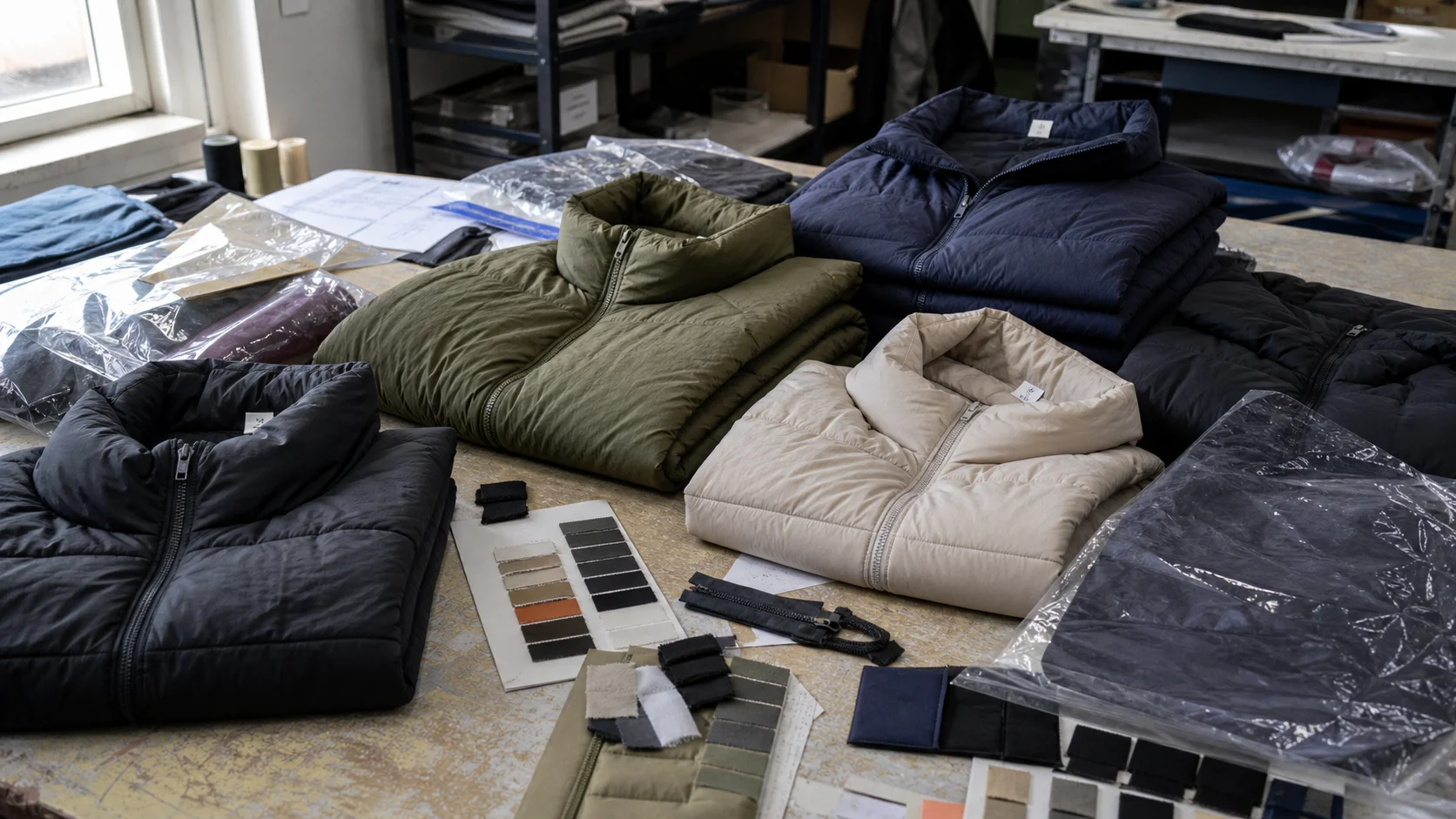
A focused outline for security teamwear buyers evaluating how OEM jacket fabric testing affects pricing, compliance, durability, and program rollout decisions.
OEM Jacket Fabric Testing Pricing for Security Buyers - Fabrikn production reference
OEM jacket fabric testing pricing is not a side issue for security buyers. It sits close to the center of cost control, wearer safety, appearance retention, and contract compliance. In security teamwear programs, jackets do more than fill a uniform line. They need to project authority, stay consistent across repeat orders, hold up in outdoor use, and avoid early failures that trigger complaints from field teams.
That is why buyers searching for oem jackets fabric testing pricing for security teamwear programs should look beyond a simple lab fee. The actual question is whether the testing scope matches the use case. A low quoted testing package can still become expensive if it misses problems such as color bleeding, seam slippage, coating failure, pilling, poor water resistance, or reflective trim delamination.
Security jackets usually face a tougher mix of wear conditions than standard promotional outerwear. Many are used across day and night shifts, in vehicles, at gates, in warehouses, and in open weather. Fabric performance has to stay stable under friction, repeated laundering, light rain, and routine abrasion from radios, belts, and body movement. If a fabric fails after deployment, replacement cost quickly surpasses the initial test budget.
From a sourcing standpoint, testing works best when it is built into development from the first material shortlist. It should not be treated as a last-minute box to check before shipment. Buyers who align test standards with fabric selection, trim approvals, and production sealing tend to get fewer surprises later.
For teams reviewing manufacturing support, it helps to compare fabric development and compliance processes early. Buyers can review broader OEM workflow details through https://fabrikn.com/services/ before moving into technical discussions.
Testing quotes often look simple on paper, but the price usually covers several layers of work. Security buyers are not only paying for a lab report. They are paying for sample preparation, test method selection, material identification, risk screening, possible retesting, and the time needed to interpret results against garment performance expectations.
In practical sourcing terms, fabric testing cost may include:
This matters because one security jacket program may involve far more than a shell fabric. A typical OEM jacket can include outer shell, membrane or coating, mesh or taffeta lining, insulation, zipper tape, hook-and-loop, rib or cuff material, reflective elements, labels, and printed or embroidered insignia. Some buyers ask for shell-only testing, then learn later that trim failure caused the real field problem.
A good supplier will usually help narrow testing to the highest-risk components first. That is where technical judgment has value. Not every item requires the same depth of testing, but the shell fabric, coating, and critical trims almost always deserve close attention in security outerwear.
Pricing varies by market, lab network, compliance standard, and whether testing is done at development stage or under shipment pressure. Still, buyers can work with practical budget ranges.
For standard non-certified outerwear programs, basic fabric testing packages for one shell fabric can often start around USD 150 to USD 400 per colorway if the scope is limited to a few core performance checks. A broader performance package can move into roughly USD 400 to USD 900 per fabric set when multiple fastness, physical, and water-resistance tests are included. More complex programs that include coated fabrics, reflective trims, multiple components, or repeat verification can run from USD 900 to USD 2,500 or more across the full jacket bill of materials.
Those figures are directional, not fixed. The exact amount depends on how many tests are required, whether the buyer needs compliance to a named standard, and whether failures trigger retests. Security buyers should also expect extra cost if they want testing on both lab-dip stage fabric and final bulk fabric, which is often a sensible step for dark navy, black, or custom corporate colors.
Most security jacket OEM orders are not enormous fashion runs. Typical MOQs may land around 300 to 800 pieces per style for simpler programs, while more customized outerwear with special trims, embroidery placement, or coated fabric sourcing may require 800 to 1,500 pieces per style-color to keep costs workable. Lower MOQs can still be possible, but testing cost then becomes a larger percentage of the unit price.
That is a key sourcing judgment. On a 300-piece order, a USD 700 test package feels expensive per unit. On a 5,000-piece contract, the same test budget is usually a minor protection cost.
The right test menu depends on the jacket specification. Security buyers do not need every possible textile test. They do need the tests that match actual wear, weather exposure, and care conditions.
In security programs, dark colors dominate. Navy and black are usually safer than brighter shades on appearance management, but they still present risk. Crocking, shade inconsistency between body panels and pocket flaps, and visible streaking after coating or finishing can all become rejection points. Testing should be tied to approved shade bands and handfeel standards, not just to pass or fail numbers.
Lowest-cost testing is rarely the best buy if it skips the failure modes that security teams actually notice in the field: wet-out, rubbing marks, reflective trim peel, seam stress, and visible color change.
Fabric testing prices move for predictable reasons. Buyers who understand those drivers can reduce waste without stripping out important controls.
A softshell with one shell fabric and one zipper is simpler than a padded security parka with shell, membrane, lining, insulation, storm cuff, reflective tape, and several closure systems. More components usually mean more submissions and more possible failure points.
Testing one approved navy does not automatically cover black, gray, or hi-vis contrast panels. Dye chemistry and finish behavior can differ by color, so cost rises as color count increases.
If the sales brief promises waterproofing, breathability, anti-pill durability, or industrial wash tolerance, each claim needs support. Claim-heavy specifications create wider testing scope and more documentation.
Rush testing can add meaningful fees. So can international sample shipping if the nominated lab is outside the production country. Time pressure often raises cost because failed tests require faster corrective action.
This is one of the biggest hidden budget items. A failed water repellency test or rubbing fastness result can lead to re-finishing, recoloring, or even fabric replacement. Each correction cycle adds time and money.
Some security buyers use a straightforward supplier manual. Others apply internal uniform standards, public tender requirements, or end-user approval matrices. The more layered the standard, the more careful the test mapping needs to be.
Testing is most useful when it is integrated into a clear approval path. For OEM jackets, the usual process should move through structured gates rather than one final pass/fail event.
Lead time depends heavily on this sequence. A straightforward security jacket program using available fabrics may develop in roughly 4 to 8 weeks before bulk, while custom fabric development, coating adjustments, or repeated lab failures can extend preparation by several more weeks. Bulk production lead times often sit around 45 to 90 days after final approvals, but that range shifts with seasonality, fabric mill capacity, and trim booking.
Buyers should be wary of suppliers promising very fast shipment while also proposing full testing from scratch. That combination only works when fabric is already proven, trims are in stock, and approval standards are limited. In most custom security teamwear programs, speed and full validation pull against each other.
For buyers that need to discuss development sequencing before placing an order, supplier background and process visibility matter. A starting point is the company overview at https://fabrikn.com/about-us/.
The cleanest way to budget is to separate testing into three buckets: development testing, confirmation testing, and contingency testing.
This covers early screening on candidate fabrics and trims. The goal is not to certify everything. It is to eliminate weak options before sample revisions become expensive.
This is the budget used on pre-production approved materials. It should confirm that the exact shell, lining, and key trims selected for bulk meet the required standard.
This reserve covers re-tests, substitute components, dye lot changes, or issues flagged during inspection. Many buyers forget this line and then struggle when a program needs corrective action.
A practical rule for security teamwear is to budget testing as a risk control tool, not a procurement nuisance. If the order value is high, the end use is contract-sensitive, or the uniform program must stay consistent across repeat buys, the testing budget should rise accordingly.
Order Scenario Testing Budget Approach Purchasing Judgment Low-volume pilot order Limit to core shell and trim risk tests Keep budget focused, but do not skip rubbing and water-related tests Mid-volume security rollout Use development plus pre-production confirmation Usually the best balance of cost and protection Multi-site contract uniform program Add contingency and selective bulk verification Worth the cost because replacement exposure is larger Repeat annual reorder Reconfirm only changed materials or new dye lots Do not pay to fully retest stable, unchanged components without reasonThere is no universal ideal testing budget. The right level depends on the order structure, use conditions, and failure consequences. Still, some tradeoffs are predictable.
If a buyer cuts testing too hard, the immediate savings are obvious. The hidden costs are not. These usually appear later as delayed approvals, field complaints, uneven repeat orders, or rejected uniforms after distribution. Security garments are visible daily. Appearance failure is not a minor issue when the end user depends on a consistent, professional look.
On the other hand, over-testing can waste time and money on low-risk components, especially in smaller orders. The better approach is selective rigor. Test the shell fabric thoroughly. Test critical trims that affect use, safety, and appearance. Reduce duplication where materials are proven and unchanged.
That is the real purchasing judgment: not maximum testing, and not minimum testing. Enough testing to control commercial risk at the right program stage.
Security buyers can reduce confusion by asking direct technical and commercial questions early.
If a supplier answers these clearly, buyers can compare offers on substance rather than on a low headline quote. Commercial clarity is often just as important as technical competence.
For direct sourcing discussions or RFQ follow-up, buyers can use https://fabrikn.com/contact-us/ to move from general planning into supplier communication.
OEM jacket fabric testing pricing for security teamwear programs should be judged as part of total sourcing risk, not as an isolated lab expense. A cheap testing package can turn costly if it overlooks the actual failure points in the garment. A disciplined testing plan, by contrast, helps buyers protect appearance standards, reduce returns, and avoid reordering problems across uniform contracts.
For most security outerwear programs, the best approach is structured and selective. Start with the shell fabric and critical trims. Tie test scope to end use, not generic templates. Build testing into sample approval, pre-production sealing, and any material change control. Budget for some retesting, because corrections are common when custom fabrics or finishes are involved.
In commercial terms, testing cost is usually small compared with the price of failure after issue. Security buyers who treat fabric testing as an early purchasing decision rather than a late compliance chore tend to get more stable OEM jacket outcomes.
Get a free quote from Fabrikn — your trusted B2B clothing manufacturer with 10+ years of experience. MOQ as low as 200 pieces.
Get a Free Quote →Many programs start around 300 to 800 pieces per style for simpler jackets. More customized styles with special fabrics, coatings, or trims often need 800 to 1,500 pieces per style-color to maintain workable pricing.
Basic screening may start around USD 150 to USD 400 per fabric or colorway. Broader testing packages for a full security jacket program often land between USD 400 and USD 1,200, while more complex multi-component programs can exceed USD 2,500.
The most common priorities are abrasion resistance, pilling, colorfastness to washing and rubbing, seam performance, water resistance or repellency, and trim durability. Reflective tape and zipper performance are often important as well.
In many cases, yes. Early testing helps screen candidate materials, while pre-production or bulk confirmation helps ensure the approved material is the same as what goes into production, especially if the mill or dye lot changes.
Costs often rise when buyers add colorways, performance claims, extra trims, or rush timelines. Retests after failures and verification after fabric substitutions also increase the budget.
Yes, if they focus on high-risk materials and avoid duplicate testing on unchanged, proven components. The shell fabric, key trims, and any claimed performance finishes should still be checked carefully.