
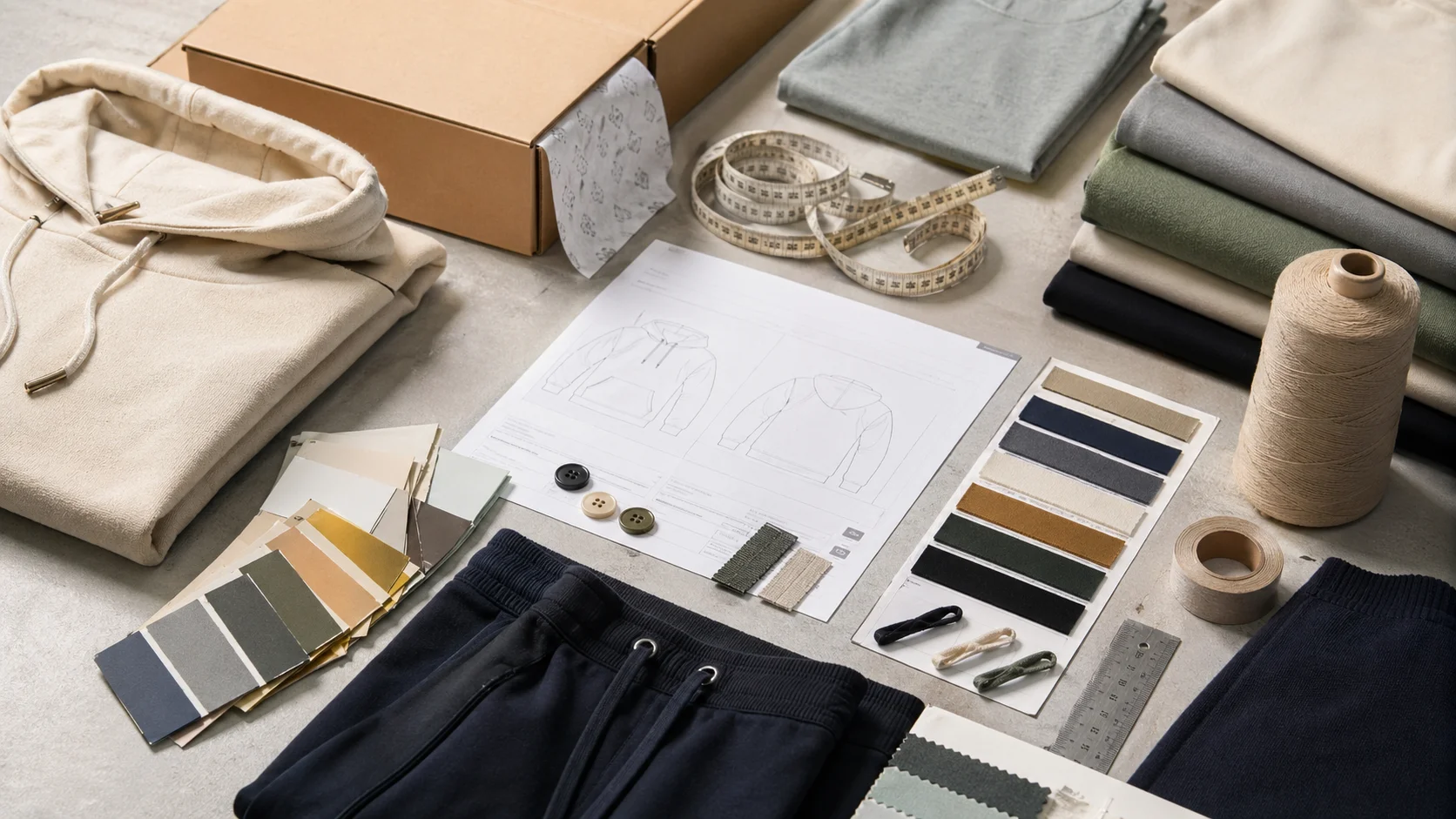
Low-moq Clothing Sourcing compared by sample evidence, fabric or trim specs, MOQ, AQL terms, cost lines, delivery timing, and rework responsibility.
Fast answer: Low-moq Clothing Sourcing: Tech Pack, Sample Gate, MOQ, and QC Terms should be judged by production evidence, not by a generic sourcing promise. The buyer needs sample proof, cost breakdowns, QC checkpoints, and delivery buffers in writing.
Ask for recent sample photos, measurement tolerances, fabric or print test assumptions, decoration test notes, packing examples, and a named inspection checkpoint. These details show whether the team can repeat an approved sample at bulk volume.
Separate garment cost, decoration, labels, packaging, sampling, testing, freight, and rush charges. Clear cost lines make it easier to reduce colorways, adjust size depth, or reserve more time for sampling.
Low-MOQ Clothing Sourcing TipsBusinesses entering the world of apparel often confront a stark reality: traditional clothing manufacturers expect large minimum order quantities (MOQs) that can be financially overwhelming. Yet the market is shifting. Small-batch retail trends, direct-to-consumer brands, and capsule collections have created a growing demand for low-MOQ sourcing solutions. Knowing how to find, vet, and work with manufacturers willing to accommodate smaller runs without sacrificing quality or reliability is essential to staying competitive. This practical review outlines business tips for sourcing low minimum order clothing manufacturers, equipping you with the strategic mindset and practical tactics necessary to succeed.
Before you begin reaching out to suppliers, craft a sourcing strategy that reflects your brand’s priorities. First, define the product range and the specific attributes you value most—whether that is fabric innovation, ethical manufacturing partners, or specialized finishes. Establish realistic batch sizes based on projected demand and the flexibility you need. While low MOQs help reduce inventory risk, extremely small quantities may limit your negotiation leverage. A clear sense of demand curves and product life cycles allows you to determine the sweet spot between inventory control and supplier commitment.
Evaluate your budgeted costs beyond unit price. Low-MOQ runs can involve higher per-piece costs, but you can offset this by prioritizing high-margin items or launching limited-edition drops that justify a premium. Factor in sampling fees, overseas production expenses, shipping, duties, and quality assurance checks. Incorporate lead times into your cash flow forecast so you are not caught with delayed deliveries.
Set key performance indicators for your sourcing process, such as average lead time, defect rates, responsiveness, and flexibility around colorways or trim permutations. Track these metrics across vendors to determine who can function as a reliable partner for future collections.
Finding manufacturers that offer low MOQs often requires building a curated network of partners who understand small-batch dynamics. Start with suppliers that specialize in development work or cater to startup brands. These partners typically operate with a flexible philosophy because they rely on a higher volume of smaller clients. Explore trade directories, industry marketplaces, and sourcing events focused on apparel technology and innovation.
Research fashion incubators, co-working production spaces, and sample rooms that might refer you to independent manufacturers accustomed to producing limited quantities. Networking with designers and fellow founders can reveal hidden partners who do not necessarily advertise large production capabilities.
Global sourcing platforms are useful, but also look within regional and national clusters where smaller manufacturers operate. Supporting local or nearshore facilities can reduce shipping costs and lead times. Build relationships with suppliers who are willing to share their capacity calendars, which helps in planning orders around their production schedules.
Once you have a shortlist of potential low-MOQ suppliers, conduct a thorough assessment. Request detailed capability statements so you understand the machinery, skill sets, and processes available. Evaluate whether they can handle your chosen fabrics, trims, and niche techniques such as embroidery, laser cutting, or sustainable finishes.
Ask for case studies or references from other brands that successfully launched small batches with them. A reliable manufacturer will gladly share insights into turnaround times, quality consistency, and how they handle revisions. Pay attention to communication style—partners that respond promptly and professionally indicate the internal management and accountability you need when working in a lean production cycle.
Visit factories when possible, even if virtually through video walkthroughs. Seeing the layout, hygiene standards, and work environment gives you a sense of their capacity to handle smaller runs without compromising on workflow.
Sampling is critical when working with low MOQs because each run is typically tied to a limited order that must meet quality expectations. Approach sampling strategically by consolidating revisions into single rounds. Provide detailed tech packs—complete with graded measurements, construction notes, and quality expectations—so manufacturers can produce accurate prototypes on the initial attempt.
Utilize digital tools such as 3D prototyping or virtual fittings to reduce the number of physical samples required. When physical samples are needed, clearly outline the difference between fit samples and production samples to expedite approval. Consider investing in sample kits for your key fabrics and trims, which can be shared with potential partners to demonstrate your quality standards up front.
Negotiate sample pricing with production runs. Many suppliers will waive sample fees or apply them to the final invoice when the full order is placed. This is especially workable with manufacturers who value long-term partnerships, even if they are providing a small initial batch.
Negotiation in low-MOQ sourcing extends beyond unit price. Focus on establishing terms that minimize financial exposure while ensuring reliability. Discuss payment structures that align with your cash flow—such as deposits with balance due upon shipment or milestone-based payments keyed to production stages. Seek transparency about potential additional costs, including setup charges, trims, packaging, or expedited services.
Negotiate minimum order quantities with flexibility. Suppliers often have standard MOQs for fabrics or dye lots, but many will reduce them if you take a wider assortment or agree to future volume commitments. Bundle orders across multiple styles or colors to help them reach their minimum while still maintaining the small batch final quantities you need. Inquire about split shipments or rolling orders that allow them to produce the same SKU over time, reducing the up-front quantity while keeping you in their production rotation.
Address lead time guarantees in writing. Low-MOQ partners must be able to respond quickly to changes, and that requires mutual accountability. Agree on penalties or solutions for delays, and maintain open lines of communication so any issues are resolved before they impact your launch schedule.
Maintaining high quality in small production runs is non-negotiable. Develop a quality assurance plan that includes pre-production approval, in-line checks, and final inspections. Detail your acceptance criteria for seams, stitch density, color matching, and packaging. Provide your QA team with reference standards or quality guides that set expectations from the outset.
Use third-party inspection services when working overseas. These inspections ensure that the garments meet your specifications before shipment, reducing the risk of costly rework once the goods arrive. Some suppliers offer internal QA teams; confirm that they adhere to globally accepted standards and remain independent from the manufacturing line.
Track defects by type and frequency to identify if issues are isolated or indicative of systemic problems. Share feedback with your supplier and collaborate on corrective action plans. Repeat business should come with continuous improvement, meaning your partner gets better at small-batch precision after each order.
Ethical and regulatory compliance is increasingly important for brands and their customers. When sourcing low-MOQ clothing manufacturers, verify that the facility complies with labor standards, environmental regulations, and safety protocols. Ask for certifications such as WRAP, GOTS, OEKO-TEX, or SMETA audits depending on your product’s focus.
Seek transparent documentation for any claims you make about sustainability, responsible sourcing, or fair labor practices. Some manufacturers may offer compliance documentation for different jurisdictions, which is useful for multi-market distribution. Keep in mind that smaller factories may not have robust compliance departments, so be prepared to provide guidance and collaborate on building ethical practices.
Traceability is equally vital. Understand where the raw materials originate, especially if you promote specific fiber stories or sustainability credentials. This transparency strengthens brand trust and helps you anticipate supply chain disruptions caused by material scarcity or regulatory changes.
Efficient logistics support is a cornerstone of successful low-MOQ sourcing. Develop a production timeline that accounts for sourcing, sampling, approvals, production, and shipping. Since low MOQs often correlate with higher per-unit transportation costs, optimize shipping by consolidating orders or utilizing deferred shipping options when feasible.
Work with freight forwarders experienced in handling apparel shipments. They can advise on the best carriers, routes, and customs procedures to avoid delays. Consider sea freight when timelines allow, but maintain air freight contingency plans for urgent replenishments or initial bursts of demand.
Adopt just-in-time inventory practices while balancing safety stock for proven best sellers. Low MOQs lend themselves well to limited editions, but you should still forecast demand and maintain buffer stock for rapid restocking. If your production partner allows, arrange for staggered shipments from a single order to help smooth inventory levels.
Low-MOQ sourcing can naturally align with sustainable business practices. Smaller runs reduce waste and can be tailored to on-demand production models, minimizing overstock. Work with manufacturers that recycle fabric scraps, utilize low-impact dyes, and improve energy efficiency in their operations.
Educate your supplier partners about sustainability objectives such as carbon reduction, water savings, or circularity. Joint initiatives, like upcycling excess fabric into new accessories, strengthen your brand narrative and provide tangible environmental benefits.
Communicate sustainability efforts transparently to your customers. Show how low-MOQ sourcing plays a role in minimizing environmental impact while still delivering on quality and style. Close the loop by sharing stories about the factories and artisans involved in each collection, which enhances brand loyalty and consumer connection.
Digitally driven sourcing tools create efficiencies in low-MOQ operations. Use PLM (product lifecycle management) systems to centralize tech packs, samples, and revisions. These platforms help avoid miscommunication and streamline approvals, particularly when multiple stakeholders are involved.
Leverage sourcing marketplaces that list manufacturers by MOQ, location, and capability. Some portals allow you to filter by compliance certifications, sustainability focus, and sample policy, which saves time during discovery. Implement collaborative platforms for real-time communication to track production status, share documents, and maintain version control.
Adopt data analytics to monitor sourcing performance. Track KPIs such as on-time delivery, defect rates, and cost per item. Use these insights to renegotiate terms or discontinue relationships with partners that fail to meet your operational standards. Technology also enables scenario planning for ramping up production or pivoting to different materials based on market trends.
Low-MOQ clothing sourcing is an art that balances flexibility, quality, and strategic investment. By planning meticulously, cultivating trusted supplier relationships, and emphasizing transparency, brands can scale responsibly without the burden of large minimum orders. Remember that successful sourcing extends beyond a single order—it is about nurturing partners who understand your brand vision and can grow alongside you. For those interested in deeper manufacturing collaborations, explore the capabilities and support services available through Fabrikn services, contact the team via the contact us page, or learn more about the company’s mission on the about us section.
Get a free quote from Fabrikn — your trusted B2B clothing manufacturer with 10+ years of experience. MOQ as low as 200 pieces.
Get a Free Quote →MOQ stands for Minimum Order Quantity, which is the smallest batch size a manufacturer will accept. Low-MOQ sourcing targets manufacturers willing to produce small runs that align with lean inventory strategies.
Negotiate by bundling styles, agreeing to future volume commitments, offering stronger payment terms, or accepting split shipments. Demonstrating consistent demand and strong communication can encourage manufacturers to accommodate lower MOQs.
Not necessarily. Reliability depends on thorough vetting, clear expectations, and mutual accountability. Partner with manufacturers that specialize in small-batch production and maintain robust quality procedures.
Challenges include higher per-unit costs, scheduling complexities, and fewer economies of scale. Mitigate these by prioritizing strong planning, consolidating runs, and maintaining flexibility in design and material choices.
Implement strict tech packs, multiple sampling rounds, in-line inspections, and final quality audits. Maintain open communication with your supplier about standards, and use data to track defect trends.