
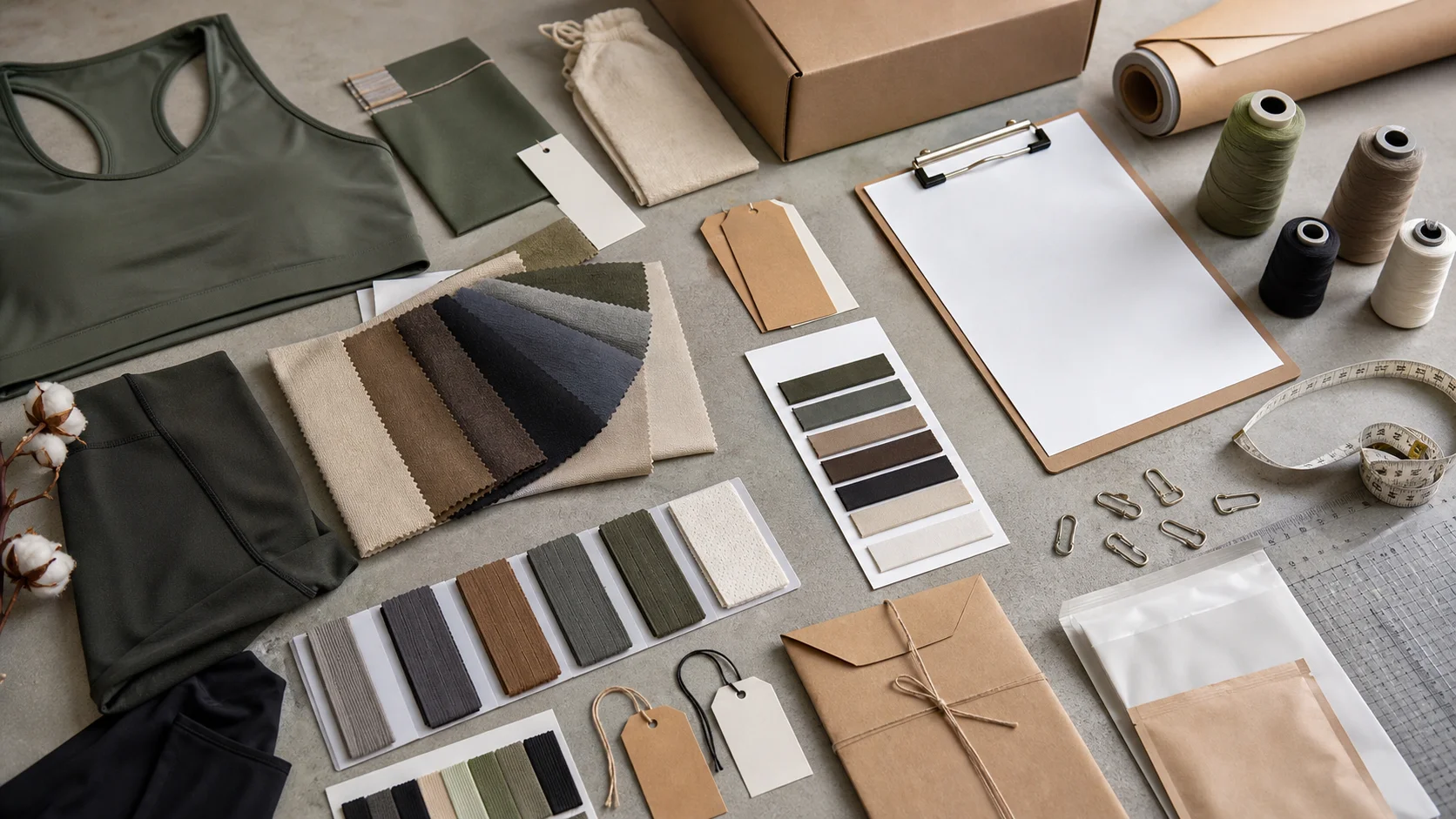
A focused outline for volleyball club distributors comparing how colorfastness standards, testing, decoration choices, and production details affect custom tracksuit pricing.
Custom Tracksuit Colorfastness Pricing for Buyers - Fabrikn production reference
For volleyball club distributors, color is not a cosmetic detail. It is a product performance issue tied directly to reorder stability, sponsor presentation, and return risk. A custom tracksuit may look acceptable when packed, then start showing shade migration, crocking, or wash-down after early use. Once that happens, the lowest quote on the spreadsheet quickly becomes the most expensive order in the program. In practical sourcing terms, even a modest claim rate of 3-5% on a 500-set program can erase the apparent savings from a quote that was only $1.00-1.50 per set lower.
That is why custom tracksuit colorfastness pricing needs to be evaluated as a sourcing variable, not just a laboratory line item. Buyers in the activewear and teamwear category are not only paying for fabric and sewing. They are paying for dye consistency, print compatibility, trim stability, process control, testing discipline, and the supplier’s willingness to build quality assurance into the cost structure. Common cost additions include lab dips, bulk fabric shade band approval, wash testing to AATCC or ISO methods, and in-line inspection at cutting, sewing, and finishing stages.
For volleyball club distributors in particular, the stakes are higher than many first-time buyers expect. Teamwear programs often require matching jackets and pants across age groups, coaches, and reorder cycles. Club colors usually matter to directors, athletes, and parents. If navy jackets shift purple after washing, or red side panels bleed into white piping, the complaint lands with the distributor first. On repeat programs, buyers commonly ask suppliers to retain the approved fabric swatch, Pantone reference, and prior bulk test report for at least one reorder cycle so the next production lot can be checked against the same standard.
In practical terms, colorfastness pricing reflects how much preventive work happens before bulk production ships. Better control usually costs more. That extra cost may come from upgraded yarns, better dye classes, pre-production lab dips, wash testing, sublimation discipline, or stricter inspection thresholds. The right question is not whether colorfastness adds cost. It does. The useful question is whether the added cost is lower than the likely cost of claims, markdowns, and rushed replacements. For common polyester teamwear, that preventive cost is often in the range of $0.35-0.90 per set when spread across 300-1,000 sets, depending on the number of colors and test points.
Distributors comparing suppliers can review broader sourcing support through FabrikN’s services, supplier background on the about page, and quotation follow-up options via contact-us.
Colorfastness pricing is rarely quoted as one neat, isolated fee. In most factory costings, it is built into several production decisions. Buyers need to read between the lines. If one supplier is much cheaper than the rest, the shortfall often sits in unspoken areas such as dye chemistry, testing scope, or shade tolerance. In teamwear sourcing, a price gap of $2.00-3.50 per set between similar-looking offers is commonly traced to differences in fabric GSM, sublimation coverage, trim quality, and whether third-party testing is included.
The main cost drivers usually include:
Some distributors make the mistake of treating all polyester tracksuits as equal from a colorfastness standpoint. That is not a safe assumption. Two 100% polyester tricot jackets can price very differently if one uses lower-grade dyeing control and the other includes validated sublimation panels, anti-migration precautions, and wash test reporting. Common anti-migration measures include lower-bleed disperse inks, controlled calender temperature, and a pre-production strike-off approved before bulk panel printing.
For teamwear, colorfastness is not just about passing one test report. It is about whether every visible component of the tracksuit behaves consistently through wear, washing, storage, and repeat orders.
Fabric choice is usually the first major determinant of colorfastness pricing. Most custom volleyball club tracksuits use polyester tricot, interlock, brushed knit, or polyester-spandex blends because they balance durability, moisture management, and decoration compatibility. Those fabrics also offer fairly stable color performance when the dyeing or printing process is handled correctly. Common constructions include 100% polyester tricot at 230-250 GSM for jackets, 100% polyester interlock at 200-240 GSM for pants, and 90/10 or 92/8 polyester-spandex brushed back knits for more premium warm-up sets.
Plain dyed polyester knits are often cost-effective for stock-based bodies with custom embroidery or heat transfer branding. For fully custom club colors, buyers may choose piece-dyed fabric, cut-and-sew contrast panels, or full sublimation. Each route affects cost and risk differently. As a typical sourcing benchmark, plain dyed polyester sets often quote lower than fully sublimated sets by about $1.50-3.00 per set at 300-500 sets, depending on panel count and trim complexity.
Piece dye can be economical for larger runs, especially when clubs want solid body colors with limited contrast areas. Pricing tends to improve once order quantities rise, but shade matching between separate dye lots can become a reorder issue. Buyers should ask whether bulk yardage comes from one lot and what tolerance is accepted for replenishment programs. A common control point is lab dip approval before dyeing, followed by bulk fabric approval under D65 lightbox conditions, with many buyers asking for one production lot per color for runs under 1,000 sets.
Sublimation is common in teamwear because it can lock graphics into polyester fabric without adding heavy hand feel. It also removes some of the bleeding problems associated with surface prints. Still, it is not automatically risk-free. Poor heat control, incorrect paper alignment, or unstable base fabric can cause shade variation or ghosting. Full sublimation often carries higher setup costs for artwork, panel mapping, and sampling, but it can reduce long-term issues for clubs that need consistent graphic identity. In many factories, panel printing is done with a digital sublimation printer and rotary heat press or calendar press at roughly 190-205°C, and buyers should confirm that strike-offs are checked before bulk transfer.
Cotton-rich fleece or poly-cotton blends can offer a premium casual feel, yet they bring a different colorfastness profile. Dark cotton shades may be more vulnerable to wash-down or rubbing if the dyeing process is not tightly managed. If volleyball club distributors want fashion-oriented travel suits rather than performance warm-ups, they should budget for more careful testing and sample review. Common constructions in this category include 60/40 cotton-poly fleece and 80/20 cotton-poly brushed fleece at 280-320 GSM, where reactive dye performance, enzyme wash behavior, and rubbing fastness should be reviewed more closely than on standard polyester tricot.
As a rule, buyers should expect better colorfastness pricing efficiency on standard polyester constructions than on specialty blends, heavily brushed fabrics, or mixed-material programs. The more variables introduced, the more quality control cost enters the quote. It is also common for suppliers with GOTS, OEKO-TEX, WRAP, or BSCI programs to have more structured material traceability and process documentation, which can support more consistent repeat orders even when the garment itself is not certified to every listed standard.
Many colorfastness failures do not start with the main fabric. They start at the point where materials meet. White zipper tape against a dark jacket front, contrast drawcords, mesh lining, silicone logos, and printed taping can all create secondary risk. A supplier that prices only the shell fabric and ignores trim interaction is leaving a gap in the costing. Typical problem trims include polyester coil zippers with white tape, elastane-rich rib cuffs, and low-cost printed labels that have not been wash-tested together with the shell fabric.
For volleyball club distributors, common risk points include:
Practical buyers should ask whether trims are tested in combination, not only as isolated components. A zipper may pass its own standard, while the tape still picks up staining from the garment body in wash testing. This is one reason low-cost quotes can be misleading. They may reflect compliance on paper but not actual garment interaction. Common inspection checkpoints include checking white trim adjacency after one home-laundry cycle, reviewing transfer adhesion after heat pressing, and verifying that zipper tape, drawcords, and lining do not show visible staining against the approved shade card.
Embroidery usually carries lower colorfastness risk than some print methods, but thread shade stability still matters. Silicone and PU transfers can look premium, yet require adhesion and heat resistance checks. Reflective elements may need separate durability review if the tracksuits are used for travel or outdoor warm-up settings. For sourcing, it is common to specify Madeira- or Gunold-type polyester embroidery thread equivalents, TPU or PU heat transfers, and YKK-quality zipper standards or approved equivalents when quote comparison needs to be more precise.
Colorfastness pricing becomes much easier to judge when the required test scope is written into the inquiry. Without that, suppliers will quote against different assumptions and buyers end up comparing numbers that do not mean the same thing. A buyer asking only for “good colorfastness” may receive a very different offer than a buyer asking for ISO 105 or AATCC-based testing with documented grades and sample references.
At minimum, volleyball club distributors sourcing custom tracksuits should ask about these test areas:
Many buyers target a commercial benchmark such as grade 4 minimum for key fastness categories, though exact thresholds depend on market, fabric type, and end use. It is wise to confirm whether that grade applies to color change, staining, or both, because suppliers sometimes quote one and not the other. For polyester teamwear, common buyer expectations are grade 4 for washing and dry rubbing, with wet rubbing sometimes accepted at grade 3-4 depending on construction and color depth.
Buyers should also ask who performs the testing and at what stage. Common options include internal factory checks during development, pre-production fabric testing after dyeing or sublimation, and third-party verification before shipment. If the factory works with OEKO-TEX-compliant materials, WRAP-audited production systems, or BSCI social compliance processes, that does not replace fastness testing, but it can indicate a more formal quality system and better documentation discipline.
MOQ, sample rounds, and delivery timing all influence colorfastness pricing because testing and process control costs are easier to absorb on larger, more stable orders. In custom tracksuits, common MOQs are 100-150 sets per style-color for simple cut-and-sew programs and 200-300 sets per style-color for fully sublimated or heavily customized programs.
Sampling is usually where hidden cost begins. A first proto in substitute fabric may be cheaper, but it tells the buyer less about true colorfastness than a salesman sample made in actual bulk-intended fabric and trims. Many factories quote 7-10 business days for lab dips, 10-14 business days for sample making after trim confirmation, and 18-22 business days for bulk production after PP approval on repeatable programs; custom sublimation, holiday congestion, and trim sourcing can push bulk lead time to 25-35 business days.
Lead time also depends on material readiness. If greige polyester is in stock, piece dye can move faster. If custom zipper colors, silicone badges, or branded elastic must be developed first, the calendar extends. A common dependency list includes lab dip approval, strike-off approval for sublimation, trim color match, fit approval, and pre-production sample sign-off. Rush schedules often add cost because the supplier may need overtime, split dye lots, or air shipment of trims to hold the ship date.
From a sourcing standpoint, buyers should compare not only the price per set but also what the MOQ includes. One quote at $28.00 per set may include one sample round, one third-party wash test, and standard polybag packing, while a $25.50 offer may exclude testing and charge sample development separately. At 500 sets, colorfast plain-dyed polyester tracksuits commonly land in a narrower apples-to-apples spread once testing, trims, and sampling are normalized.
When colorfastness fails, the direct factory credit is often only part of the real cost. Volleyball club distributors may also absorb reshipping, customer service time, emergency replacement sourcing, and sponsor dissatisfaction. If 50 sets out of a 500-set delivery show bleeding onto white panels, the distributor may be dealing with partial replacements, split-size shortages, and visible inconsistency across the club roster.
Typical cost exposure can move quickly. A return-and-replace event on 30-50 sets may involve $8.00-15.00 per set in reverse logistics and handling before replacement production is even considered. If replacement goods need expedited production or air freight, the extra cost can exceed the original preventive testing budget several times over. This is why experienced buyers often treat third-party testing and stricter trim review as insurance rather than overhead.
Reorders create another problem: shade mismatch. Even if the replacement is technically acceptable, a second lot that differs by a visible half-shade from the original team issue can trigger complaints from coaches and parents. Common safeguards include keeping a sealed bulk approval swatch, retaining one approved TOP sample, and requiring the supplier to check reorder fabric against the original standard before cutting.
When two custom tracksuit quotes look similar, buyers should force the comparison down to specification level. Useful checkpoints commonly include:
Asking for these details in writing makes weak quotes easier to spot. It also reduces the common sourcing problem where one factory prices a basic garment and another prices a genuinely controlled program.
Pricing varies by fabric, decoration, MOQ, and testing scope, but some common market bands help buyers frame discussions. For a standard adult jacket-and-pant set in 100% polyester tricot with embroidery and basic contrast panels, buyers commonly see around $24.00-30.00 per set at 300 MOQ and about $21.50-27.00 per set at 500 MOQ, depending on GSM, zipper quality, and packing requirements.
For full sublimation or heavier customization with multiple panels, custom zipper pulls, and heat-transfer branding, a common range is $27.00-35.00 per set at 300 MOQ and $25.00-32.00 per set at 500 MOQ. Premium cotton-blend or brushed-back travel suits can move into the $30.00-42.00 range because of higher fabric cost, slower sewing, and more demanding fastness control on dark shades.
Third-party colorfastness testing is often embedded in these prices for larger programs, but on smaller runs it may appear as a separate line item. Typical adders are around $150-300 per test package, which matters much more at 100 sets than at 1,000 sets. Buyers should also ask whether the quoted price includes spare panels or spare trim allowances, since these can help resolve minor claims without remaking full garments.
The safest buying approach is usually not to chase the lowest starting price. It is to lock the supplier into a clear technical brief before sampling begins. That brief should define fabric composition, GSM, approved colors, decoration method, trim list, target fastness grades, and inspection points. In practice, many sourcing teams use a one-page tech pack plus approved artwork, Pantone references, size chart, and wash-test requirement list before authorizing samples.
Distributors should also sequence approvals properly. A common order is lab dip or strike-off approval first, then fit sample, then pre-production sample, then bulk. Skipping those stages may save 7-10 days early, but it often creates avoidable rework later. On repeat club programs, it is common to ask the supplier to archive the approved lab dip, trim card, print file, and TOP sample so reorder risk is lower.
Finally, buyers should prefer suppliers that can discuss process controls in practical terms. Useful answers mention disperse dye classes, heat-transfer temperature control, fabric lot management, wash testing frequency, and trim interaction checks rather than broad promises. A factory that can explain its checkpoints clearly is usually easier to manage than one that only says its quality is “good.”
Get a free quote from Fabrikn — your trusted B2B clothing manufacturer with 10+ years of experience. MOQ as low as 200 pieces.
Get a Free Quote →What fastness grade is commonly requested for volleyball tracksuits? A common commercial target is grade 4 for washing, dry rubbing, and perspiration on polyester teamwear, with wet rubbing sometimes accepted at grade 3-4 depending on shade depth and fabric construction.
What MOQ is typical for custom tracksuits? Many suppliers quote around 100-150 sets per style-color for simpler cut-and-sew programs and 200-300 sets for full sublimation or more customized builds, though exact MOQ depends on fabric sourcing and trim development.
How long does bulk production usually take? After final PP approval, a common production window is 18-22 business days for standard polyester programs, while fully custom trims, peak-season capacity, or multiple sample revisions can extend lead time to 25-35 business days.
Which certifications are worth asking about? Buyers commonly ask about GOTS for organic textile programs, OEKO-TEX for restricted-substance screening, and WRAP or BSCI for social compliance and audit structure. These do not replace garment testing, but they can indicate a more documented sourcing system.
What should be checked before bulk approval? Typical checkpoints include approved lab dip or sublimation strike-off, fabric GSM, zipper and trim color match, logo application method, wash-test result, measurement tolerance, and one sealed PP sample retained for reference.