
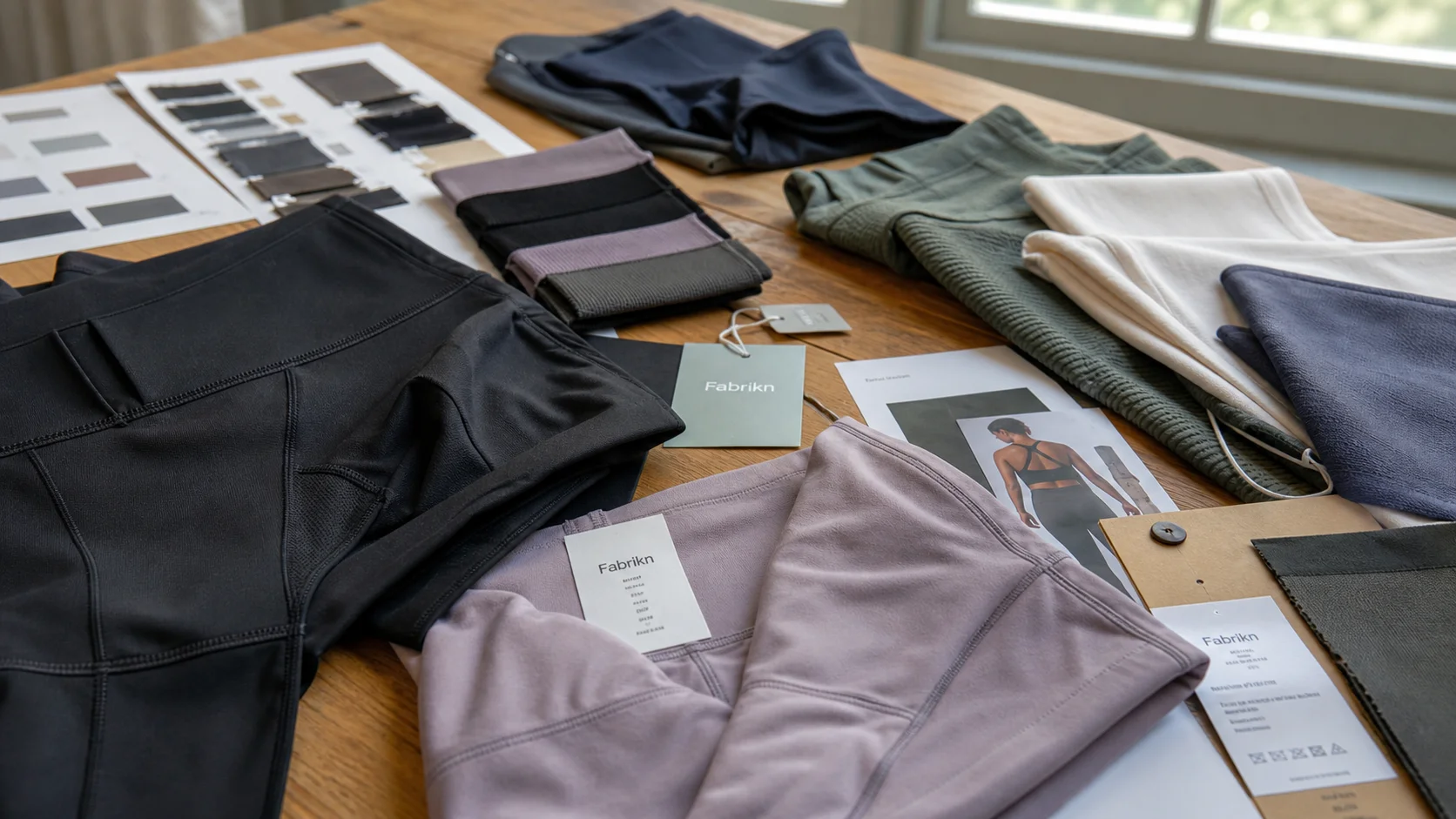
A focused outline on how custom colorfastness testing shapes sourcing decisions for activewear sets, covering fabric performance, print durability, wash protocols, sweat resistance, and buyer checkpoints for gym apparel programs.
Custom Colorfastness Testing for Activewear Sets Sourcing - Fabrikn production reference
Colorfastness testing is not a decorative extra in activewear sourcing. It is a commercial control point. When buyers source coordinated gym apparel sets, they are not only buying fabric and stitching. They are buying repeatability under sweat, wash cycles, abrasion, stretch, and dark-to-light color contact. If that consistency fails, returns rise quickly and brand trust drops even faster.
Activewear creates a harder testing environment than many casual apparel categories. Leggings, sports bras, training tops, biker shorts, and fitted jackets all combine high-elasticity fabrics with tight body contact and frequent laundering. Add screen prints, heat transfers, contrast panels, dyed waistbands, mesh inserts, silicone branding, or brushed finishes, and the risk profile expands. A set that looks clean on the approval sample can still bleed, crock, fade, or stain companion pieces after real use.
That is why custom colorfastness testing matters. Generic mill reports are often not enough, especially for private-label programs, high-saturation shades, sublimated sets, or performance fabrics with multiple trims. Buyers need test selection that matches the actual product design, intended market, and care instructions. The testing plan should reflect whether the set is sold for studio workouts, running, outdoor training, or high-sweat gym use.
For sourcing teams reviewing suppliers, this topic belongs alongside fabric performance, fit consistency, and print durability. It also connects directly to decoration and printing decisions, since pigments, disperse dyes, transfer inks, and finishing chemicals can all influence color migration and wash performance. A practical sourcing process usually ties testing into development, lab dips, strike-offs, size-set review, and pre-shipment quality control.
Brands that need broader production support often combine testing review with factory development planning and merchandising control through partners or sourcing teams. Pages such as /services/, /about-us/, and /contact-us/ are the kind of internal resources buyers typically use when mapping support needs for apparel programs.
Custom colorfastness testing means selecting tests based on the exact activewear set being sourced instead of relying on a standard one-size-fits-all checklist. The difference is important. A black nylon-spandex legging with a silicone logo and brushed interior does not carry the same risk as a pastel polyester-spandex yoga set with sublimation print panels. Both are activewear, but the dye classes, finishing routes, and end-use exposure are different.
In sourcing terms, customization usually covers four areas: material construction, color depth, decoration method, and end-use conditions. Fabric composition matters because polyester, nylon, cotton blends, and recycled synthetics can behave differently in wash, perspiration, and heat exposure. Dark or neon shades often need stricter scrutiny because they are more likely to show crocking, staining, or unacceptable shade loss. Decoration methods such as screen printing, heat transfer, reflective print, foil, pigment print, and sublimation also change the testing profile.
End-use is the fourth filter. If the garment is built for high-intensity training, buyers should pay close attention to perspiration fastness, rubbing fastness, wash durability, and color transfer to lighter fabrics. If the product will be packed tightly, shipped in humid conditions, or exposed to warm retail environments, migration risks and shade instability deserve extra attention.
Custom testing also includes agreeing on pass standards early. A report without a clearly defined acceptance level creates avoidable disputes later. Many programs align to buyer manual requirements or market-level standards, but the commercial point remains the same: the supplier should know before bulk dyeing what result is required for each relevant test.
Activewear sets are exposed to more friction and more chemistry than standard fashion basics. They absorb sweat, stretch repeatedly, and stay close to the skin for long periods. Those conditions can reveal weaknesses that stay hidden in a showroom sample.
One common risk is rubbing or crocking on deep shades, especially black, navy, burgundy, cobalt, and fashion neons. Tight leggings and sports bras create constant friction during wear, then face frequent wash cycles. If dye fixation is weak, color can transfer onto hands, underlayers, or paired garments. This matters even more when sets combine dark bottoms with lighter trims or pale contrast stitching.
Another risk comes from heat. Many activewear programs use heat transfer logos, laminated details, bonded seams, or elastic applications that expose the fabric to elevated temperatures during production. Some synthetic fabrics, especially polyester-based materials, can show migration issues where dye moves into prints or lighter overlays over time. This is a recurring concern in decoration and printing, not only in base fabric coloration.
Perspiration also changes the equation. Acidic and alkaline sweat tests matter because activewear is designed for exactly that environment. A fabric can pass a basic wash result and still underperform when exposed to sweat and pressure. That is where buyers see staining on contrast areas, fading under the arms, or transfer onto linings and pads.
Set programs carry an added challenge: matching and interaction. A bra and legging sold together should age in a compatible way. If one component fades faster or releases color onto another, the set loses its premium value. Sourcing teams should judge colorfastness not only garment by garment, but also across the full coordinated product package.
The right test menu depends on the garment, but several tests appear repeatedly in sound activewear sourcing programs.
This is the baseline. It checks shade change and staining after washing under specified conditions. Buyers should confirm the test method, wash temperature, detergent type, and cycle severity against the care label and market expectation. A premium training set intended for repeated weekly use should not be evaluated too lightly.
Both acidic and alkaline perspiration tests are relevant for gym apparel. This test is especially important for underband areas, armholes, waistbands, and compressive zones. It is one of the clearest separators between fashion-active product and true performance-active sourcing discipline.
Dry and wet rubbing tests help identify crocking risk. Wet rubbing often exposes weaknesses sooner, especially in dark shades and heavily brushed or peached surfaces. Buyers should treat marginal wet crocking results cautiously if the product includes light trims, mesh panels, or pale packaging contact surfaces.
Water fastness helps evaluate staining and shade change from moisture exposure. This can matter for humid transport conditions, post-workout wear, and resort or swim-adjacent active collections. Sea water testing is not necessary for every gym set, but it can be relevant for crossover products.
Lightfastness is often overlooked in fast-moving activewear programs, yet it matters for outdoor training apparel and retail display. Bright colors and some synthetic dye systems can lose appearance faster when exposed to sunlight or strong store lighting.
Polyester-rich fabrics used in compression wear and printed sets may need migration assessment, especially under heat-applied logos or transfers. A print that looks sharp after pressing can discolor later if the base dye migrates upward. This is a classic sourcing problem in decorated activewear.
For decorated styles, buyers should not isolate fabric fastness from print performance. Screen prints, reflective graphics, silicone transfers, and heat-seal logos should be tested after wash and, when relevant, after heat exposure. The question is not only whether the print stays attached, but whether the surrounding fabric discolors or bleeds into it.
A useful testing plan starts with the bill of materials rather than the purchase order deadline. Buyers should map each component: shell fabric, lining, waistband elastic, drawcord, binding, pads, mesh, zipper tape, print, transfer, and label. Any part that touches a dyed surface or a light companion material can become a staining point.
Next, define risk by color and use. Dark solids, red families, fluorescent shades, and contrast color-blocking deserve stronger review. Compression garments and brushed interiors also raise the risk level because they increase friction and contact time. If the activewear set is marketed as squat-proof, sweat-ready, or high-performance, the testing expectation should rise accordingly.
Then match test conditions to reality. A sourcing team should ask practical questions:
Custom testing is also the point where buyers decide whether to test at fabric stage, garment stage, or both. Fabric-stage testing is faster and cheaper for screening, but garment-stage testing is often more realistic when trims, sewing tension, heat application, and after-finishing affect final performance. For many activewear sets, the safest path is a staged approach: lab dip and fabric approval first, then garment-level confirmation on salesman sample or pre-production sample, followed by selective bulk verification.
Fiber composition is only the starting point. Fabric construction and finishing can change outcomes significantly. Polyester-spandex interlock, nylon-spandex tricot, circular knit jersey, rib panels, brushed-back fabrics, and seamless constructions all respond differently in testing. Brushed or peached surfaces may show more rubbing sensitivity. Compression knits can intensify friction. Recycled fibers can perform well, but consistency depends on the processing route and dye control.
Trims deserve equal attention. Waistband elastics, dyed drawcords, zipper tapes, pocket bags, bra pad covers, and binding tapes can all create staining issues if they are not tested as part of the system. A supplier may present a good shell fabric report while the real problem sits in the dyed elastic or a low-grade label print.
Decoration choices directly affect colorfastness risk in the Decoration & Printing category. Consider the tradeoffs:
Purchasing teams should push suppliers to disclose not just the fabric composition, but also the dyeing route, finish type, print method, and curing or heat-press conditions. If those details remain vague, the testing plan is being built on incomplete information.
Sample approval is where many avoidable bulk claims can still be stopped. In activewear sourcing, colorfastness should be built into the sample timeline rather than treated as a final inspection topic.
A practical approval flow often looks like this:
This sequence matters because early lab dips rarely tell the full story. A color can look commercially acceptable in a swatch and still fail under wash or perspiration once finished into an elastic garment. Buyers should insist that pre-production samples use actual bulk components whenever possible. Substitute trims and trial print methods create false confidence.
For new suppliers or first-time constructions, it is sensible to hold production release until the key colorfastness reports and handfeel confirmation are aligned. That can feel slower at the purchase order stage, but it is usually faster than dealing with a bulk hold after cutting or a claim after delivery.
Custom testing affects both lead time and minimum order planning, and buyers should budget for that upfront. Standard activewear developments may absorb a basic test cycle without much disruption, but custom programs with multiple colors, decorated panels, and performance trims can add several rounds of revision.
Typical MOQ ranges vary by supplier structure and fabrication, but many activewear manufacturers quote somewhere around 300 to 800 pieces per color per style for cut-and-sew programs, while more specialized mills or highly customized developments may push effective MOQs higher. Matching sets can also create practical MOQs by component, especially when bras and leggings use different consumption levels, removable pads, or separate decoration setups.
Testing can influence MOQ economics because low-volume orders leave less room to re-dye or rework if results miss target. On a small order, one failed dark color can erase margin quickly. On larger orders, buyers may gain leverage for extra lab submissions or reserve bulk fabric for confirmation runs, but the financial exposure is also larger if issues are missed.
Lead time depends on several variables:
Buyers should assume that custom colorfastness control adds time when the product includes high-risk shades, recycled synthetics, complex trims, or multiple decoration techniques. The tradeoff is straightforward: a tighter development calendar with weak testing discipline usually shifts risk into claims, markdowns, or replacement negotiations later.
Inspection should not stop at checking report copies. The physical product still needs close review because some colorfastness risks appear first as warning signs rather than outright failures.
Watch for loose surface dye on dark shades, especially black leggings and brushed interiors. Inspect white or pale contrast areas for early staining. Review underarm, crotch gusset, waistband fold, and bra underband zones where pressure and perspiration will be concentrated. Look at heat transfer edges for discoloration, shine, or migration halos. Evaluate whether lining, pad covers, and mesh inserts remain clean after contact.
Packaging can also create issues. If garments are packed before cooling fully after heat application or before moisture is controlled, shade transfer and set marking can happen in transit. This is not always visible in a fresh production line review, so pre-shipment inspection should include random carton opening and internal contact-point checks.
One common mistake is over-relying on single-lot reports. Bulk fabric can vary by dye lot, especially across replenishment programs or color repeats. If the activewear set will be reordered, buyers should treat the first approval as a standard to maintain, not a guarantee that future lots will behave the same.
Suppliers do not need to run the same lab infrastructure to be reliable, but they do need a disciplined process. Buyers should look for clarity in four areas: what is tested, when it is tested, who reviews the result, and what happens if it fails.
A capable supplier should be able to explain the fabric specification in plain technical terms, including composition, weight, stretch profile, finish, decoration method, and target care conditions. They should also identify high-risk shades and likely failure points before bulk production. If a supplier treats all colors and all activewear constructions as equivalent, that is a weak sign.
Ask practical sourcing questions:
The best purchasing judgment here is not to buy the cheapest report package. Buy the testing plan that fits the risk of the product. A simple solid-color training top may need a lighter control structure than a premium matching set with dark compression leggings, pale bra lining, foil logo, and contrast mesh inserts. The cost difference in testing is usually minor compared with the cost of a rejected shipment or an online review cycle built around color bleed complaints.
Custom colorfastness testing for activewear sets sourcing is ultimately about reducing avoidable commercial risk. It connects fabric selection, dye method, decoration choice, sample approval, and bulk inspection into one sourcing decision. Buyers should not treat it as a routine lab formality.
The most dependable approach is to test according to the real product: actual fiber blend, actual color depth, actual trims, actual print method, and actual end use. That means paying more attention to perspiration, rubbing, wash behavior, migration risk, and dark-light interaction than many general apparel programs require. It also means setting pass criteria before production and using pre-production samples made with bulk-intended materials.
From a purchasing standpoint, the tradeoff is clear. Stronger custom testing may lengthen development and add cost at the front end, but it sharply improves decision quality for gym apparel sourcing. For activewear sets sold as coordinated performance products, that discipline is usually worth it.
If a sourcing program needs support aligning development, supplier communication, and quality checkpoints, internal planning resources such as /services/, /about-us/, and /contact-us/ can help frame the next step.
Get a free quote from Fabrikn — your trusted B2B clothing manufacturer with 10+ years of experience. MOQ as low as 200 pieces.
Get a Free Quote →It is the process of choosing colorfastness tests based on the exact fabric, color, trim, decoration method, and end use of an activewear set, rather than using a generic apparel test checklist.
Wash fastness, perspiration fastness, rubbing fastness, water fastness, and migration-related checks are often the most relevant. Lightfastness and print durability can also be important depending on the garment and market.
Dark shades often show higher risk of crocking, staining, and visible shade loss, especially on stretch fabrics used in leggings and sports bras. The risk increases when dark panels are combined with light trims or linings.
For many activewear programs, both are useful. Fabric-stage testing helps screen early, while garment-stage testing reflects the real impact of trims, sewing, heat transfers, and finishing on final performance.
Many cut-and-sew programs fall around 300 to 800 pieces per color per style, though requirements vary by supplier capability, fabric sourcing, and decoration complexity. Specialized developments or low-volume custom colors can push effective MOQs higher.
Yes. Waistband elastics, labels, zipper tapes, bra pad covers, drawcords, and heat-applied logos can all create staining, migration, or wash-performance problems if they are not tested as part of the complete garment system.