
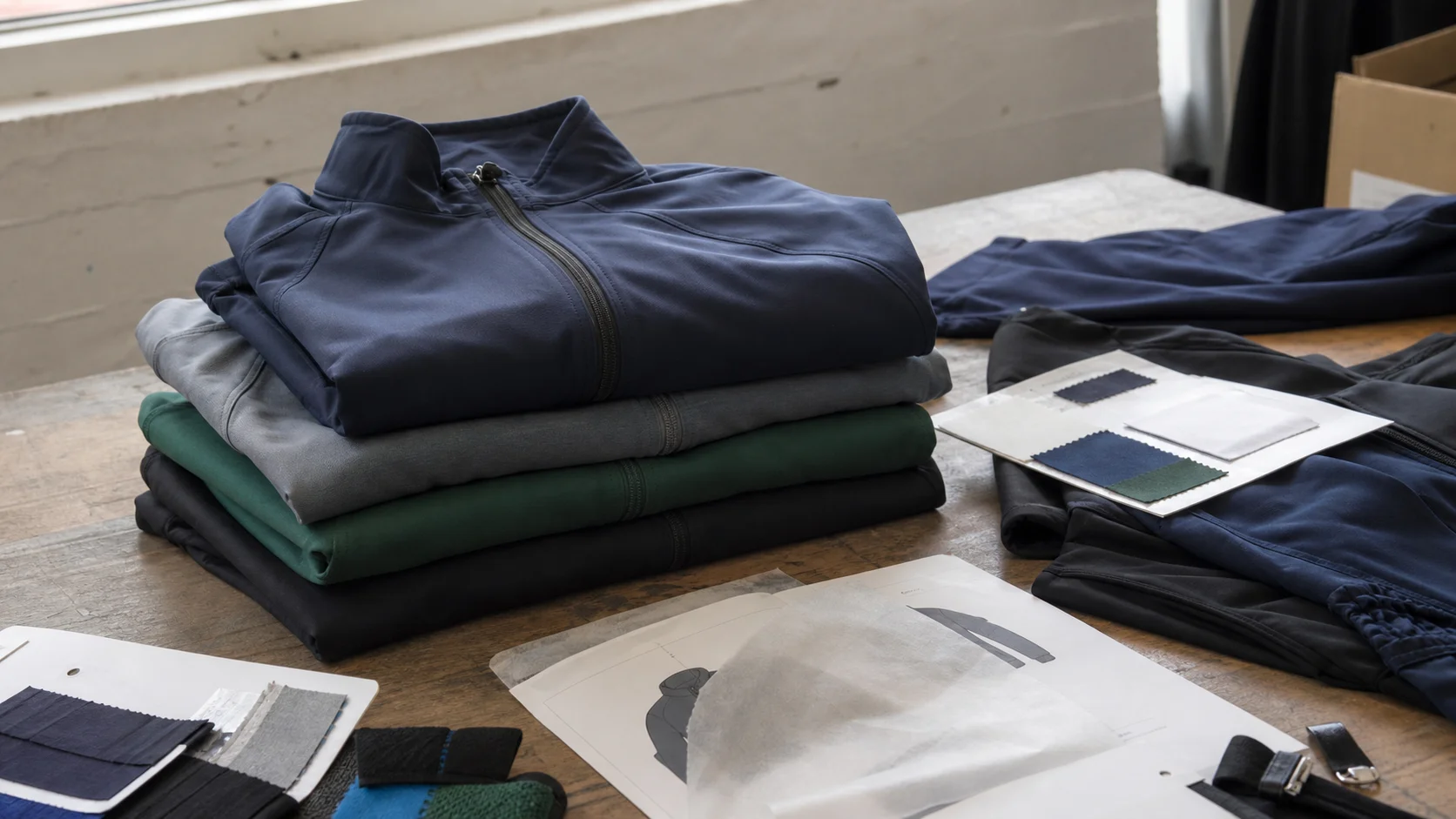
A product-specific outline for corporate wellness merchandise buyers sourcing custom activewear sets with embroidery, with sections focused on fit, stitch application, branding zones, sustainable fabrics, proofing, and production details.
Buy Custom Embroidered Activewear Sets - Fabrikn production reference
For corporate wellness merchandise buyers, custom activewear sets with embroidery sit in a practical middle ground between premium brand presentation and long-term wearability. Printed logos can work well for short campaigns, large graphics, and aggressive color expression. Embroidery, by contrast, usually signals permanence. It looks more considered, tends to hold up through repeated washing, and often fits internal programs where the merchandise needs to represent company culture rather than a one-time event.
That distinction matters when activewear is being purchased for employee wellness initiatives, gym partnerships, company retreats, onboarding kits, incentive programs, or executive merchandise. Buyers in this category are usually not selecting a single promotional T-shirt. They are building a coordinated set, often including leggings, joggers, shorts, sports bras, zip jackets, hoodies, or training tops, with sizing consistency and repeatability across multiple departments or locations.
Embroidery also supports a cleaner brand language. A chest logo, sleeve emblem, or hem detail often feels more refined than a large front print, especially when the target wearer is moving between office, commute, studio, and casual settings. For many corporate programs, that broader usability improves actual wear rates. Merchandise that gets worn repeatedly has stronger brand value than products that stay in drawers.
There is a production tradeoff, though. Embroidery on stretch performance garments is not a simple decoration upgrade. It changes how panels behave, affects stitch tension, and can create visible puckering if the fabric, backing, logo size, and placement are not matched properly. Buyers who treat embroidery as a late-stage add-on often run into preventable problems. The better purchasing approach is to specify embroidery requirements early and align them with fabric choice, garment construction, and intended use.
Companies evaluating suppliers can review broader development capabilities through pages such as FabrikN’s services, which is useful when comparing whether a supplier can handle fabric sourcing, sampling, and bulk production in a coordinated workflow.
Quote requests for custom embroidered activewear sets are often too vague. “Need sustainable activewear with logo embroidery” is not enough for reliable pricing. Suppliers need a usable tech brief, even if it is still preliminary.
At minimum, buyers should define the garment mix. That means stating exactly what makes up the set: for example, women’s high-waist leggings plus a quarter-zip top, or unisex joggers plus a hoodie and performance tee. The target fit also matters. A compression legging, relaxed jogger, and fashion athleisure flare pant each require different pattern priorities and fabric recovery levels.
Core specification points usually include:
For performance sets, common fabric ranges can include 220–300 GSM interlock or jersey for leggings and bras, 180–260 GSM jersey for training tops, and 280–350 GSM knit or fleece-backed constructions for joggers and outer layers. Those numbers vary by category, but buyers should ask for exact composition and finished fabric weight rather than approving by handfeel alone.
Trim specifications matter more than many first-time buyers expect. Waistband elastic width, zipper brand and finish, drawcord type, reflective elements, removable cups, and seam construction all affect both price and user satisfaction. If embroidery is involved, the placement must be considered against seams, linings, pockets, and stretch zones. A chest logo on a stable double-layer panel behaves very differently from embroidery placed directly on a lightweight compression bra or on the thigh panel of high-stretch leggings.
Embroidery works well on activewear when the design is adapted to the garment rather than forced onto it. This is where many sourcing conversations become too simplistic. A logo that looks sharp on a cotton cap or sweatshirt may not translate cleanly to a slick recycled polyester/spandex knit.
The key issue is stability. Performance fabrics usually stretch, recover, and move more than traditional embroidered bases. Needle penetration, stitch density, and backing choice can distort the surface. If the logo is too dense, the area can feel stiff and uncomfortable. If the base fabric is too light, the logo perimeter may ripple after washing.
Practical embroidery considerations include:
Buyers should ask whether the supplier will produce a digitized embroidery file specifically adjusted for the chosen fabric. That is a small question with large consequences. Generic digitizing can lead to poor edge definition, thread breaks, and uneven appearance across size ranges.
There is also a comfort issue. Employees using activewear for yoga, gym sessions, walking clubs, or travel may object to rough backing or bulky thread buildup against the skin. In some cases, a small left-chest logo on a jacket is ideal, while a heat-transfer logo may be the better option for high-compression garments worn close to the body. Good purchasing judgment means evaluating where embroidery adds brand value and where it may reduce wearability.
Embroidery is usually best used as a premium branding detail, not as a default solution for every panel in an activewear program.
Because this article sits in the Sustainable Fashion category, the material conversation needs to be practical rather than vague. Sustainable claims in activewear are often overstated. Buyers should separate preferred fiber content from verified environmental performance.
For custom activewear sets, common lower-impact options include recycled polyester, recycled nylon, organic cotton blends, and in some categories, modal or TENCEL-based blends for lighter lifestyle pieces. Recycled polyester remains common because it offers performance familiarity, colorfastness, and easier integration into existing activewear supply chains. Recycled nylon can offer a premium handfeel, often used for smoother leggings and bras, but pricing is usually higher.
Useful buying questions include:
One common issue is partial sustainability. A supplier may quote recycled shell fabric while using conventional elastic, virgin-poly trims, and standard polybags. That does not necessarily make the project unsuitable, but buyers should understand where the sustainability claim starts and stops. In corporate programs, internal stakeholders often expect cleaner reporting than “eco-friendly activewear” can honestly provide.
Embroidery thread itself is another detail worth reviewing. Not every factory offers lower-impact embroidery thread options, and not every sustainable thread performs equally well on stretch garments. Buyers do not always need to insist on a fully recycled embroidery thread if that choice compromises stitch quality, but the tradeoff should be discussed openly.
If the program is part of a wider responsible sourcing strategy, it may help to start with the supplier’s development and production scope, then move into material validation. Buyers who need direct consultation can usually shorten that process by using a sourcing contact page such as this contact channel early, before requesting multiple rounds of revised costing.
MOQ expectations for custom embroidered activewear sets vary sharply depending on whether buyers are selecting stock bodies with customization or developing a private-label set from scratch.
Typical ranges often look like this:
Production Model Typical MOQ Range Notes Stock activewear with added embroidery 50–150 sets per style/color Fastest route, fewer customization options Semi-custom activewear with fabric/color choices 150–300 sets per style/color Balanced option for many corporate programs Fully custom private-label activewear sets 300–800 sets per style/color MOQ can increase with specialized fabrics and trimsThese are not hard rules. Some suppliers can go lower if they are using in-stock fabric, simplified packaging, or a shared production line. Others require higher minimums once custom dyeing, branded trim, or size-intensive assortments are involved.
Embroidery affects pricing in several ways:
Large logos, multiple placements, metallic threads, tonal detail, and dense satin stitching all push cost upward. Buyers comparing quotes should check whether embroidery pricing is based on stitch count, logo size, flat rate per placement, or included within a full CMT calculation.
Lead times also depend on what is actually being made. A realistic planning framework often includes:
Buyers under deadline pressure should be careful with optimistic promises. The biggest lead-time variables are often fabric availability, sample revision cycles, embroidery testing, and approval lag on the buyer side. Air shipping can recover some schedule, but it will not fix an unresolved logo issue discovered after bulk sewing has already started.
The sampling process for custom embroidered activewear sets should be structured, not informal. Corporate buyers sometimes approve early samples based on a quick visual check, then discover fit problems or embroidery distortion too late. A disciplined approval path reduces that risk.
A typical sequence may include:
The embroidery strike-off is especially important. Buyers should not rely only on a digital rendering of the logo. A physical strike-off shows thread coverage, text legibility, edge sharpness, and how the logo sits on the actual base fabric. If the final garment is highly elastic, the sample should be evaluated after light stretching and after a wash test.
For activewear sets, fit approval deserves more time than many merchandise teams initially allocate. Corporate wellness programs usually cover a broad user base, not a narrow fashion fit profile. That means size grading, rise height, inseam tolerance, armhole comfort, bra support level, and waistband recovery need careful review. A good-looking sample in one size can still fail in extended sizes if the pattern is not graded well.
Pre-production approvals should confirm more than just appearance:
When the buyer’s internal team is new to apparel sourcing, it helps to review the supplier background and process clarity before committing. A page such as about us can be useful for basic qualification, though real sourcing decisions should still depend on technical responses, sample quality, and communication discipline.
Inspection risks for embroidered activewear are not limited to obvious sewing defects. The product combines performance apparel concerns with decoration-specific issues, so the QC checklist should reflect both.
Common risks include:
Inspection timing matters. If a supplier only checks finished garments after packing, the project is exposed to larger rework risk. Inline checks during cutting, embroidery, sewing, and finishing are more useful. Buyers should ask when embroidery is applied in the production flow and how damaged pieces are isolated from approved stock.
AQL inspection is still relevant for this category, but it should be paired with functional review. For example, a set can pass a standard appearance inspection while failing practical wear expectations because the embroidered area scratches the skin or pulls uncomfortably during movement.
Packaging is another overlooked area. Matching tops and bottoms into correct size sets sounds straightforward, yet set-packing errors are common in bulk programs. If the order is being distributed to employees across multiple offices, assortment mistakes create immediate operational friction. Buyers should confirm carton ratio planning, barcode requirements, and whether mixed-size packs are allowed.
Not every activewear supplier is strong at embroidery, and not every embroidery-capable supplier is strong at performance apparel. Buyers should screen for both competencies.
Useful supplier evaluation criteria include:
Price should not be the only filter. A lower quote can become expensive if the factory lacks control over embroidery on unstable fabrics or if the supplier underestimates fit development time. Corporate buyers usually need reliability, repeat orders, and consistent branding across future programs. That favors suppliers who are transparent about what should be embroidered and what should be printed or transferred instead.
It is worth asking direct questions:
The quality of those answers usually tells buyers more than a polished catalog does.
Custom embroidered activewear sets are not ideal for every corporate merchandise project, but they are especially effective in programs where perceived value, repeat wear, and brand polish matter.
Strong use cases include:
In these scenarios, embroidery helps position the set as a lasting apparel item rather than a disposable giveaway. That said, buyers should still segment the program. A premium embroidered zip jacket paired with a minimally branded legging or jogger is often a better purchasing decision than putting embroidery on every garment in the set. The result is cleaner, more comfortable, and easier to scale.
There is also a budget strategy here. If the corporate goal is broad employee distribution at lower cost, it may make sense to reserve embroidery for top layers and use simpler branding methods on base pieces. If the goal is VIP gifting or leadership merchandise, denser customization and upgraded packaging may justify the spend.
Buying custom activewear sets with embroidery for corporate wellness merchandise is less about trend appeal and more about disciplined product planning. The best outcomes come from matching branding method, fabric performance, sustainability targets, and wearer comfort from the start. Embroidery can elevate activewear, but only when buyers respect the technical limits of stretch fabrics and the realities of sample development.
For sourcing teams, the key decisions are straightforward: define the set clearly, specify fabric and trim expectations early, test embroidery on real performance materials, and treat approvals as technical checkpoints rather than visual formalities. That approach reduces rework, protects budgets, and produces activewear employees will actually wear.
In sustainable fashion, credibility depends on specifics. Buyers should ask for exact material composition, realistic MOQ guidance, transparent lead times, and honest discussion of production tradeoffs. A supplier that can explain those details clearly is usually a safer partner than one offering broad promises and low headline pricing.
Get a free quote from Fabrikn — your trusted B2B clothing manufacturer with 10+ years of experience. MOQ as low as 200 pieces.
Get a Free Quote →For stock-based programs with added embroidery, MOQs often start around 50–150 sets per style or color. Semi-custom programs commonly fall around 150–300 sets. Fully custom private-label development often starts closer to 300–800 sets, depending on fabric, colors, and trim complexity.
It depends on the garment and logo placement. Embroidery usually gives a more premium look and strong wash durability, especially on jackets, hoodies, and stable knit tops. Printing or heat transfer may be better for high-stretch, body-close pieces where comfort and flexibility matter more.
Common options include recycled polyester, recycled nylon, and some organic cotton or cellulosic blends for less compressive styles. Buyers should ask for exact fiber percentages and supporting documentation rather than relying on general sustainability claims.
After final approvals, bulk production often takes about 5–10 weeks, though total project timing can be longer once sampling, fabric development, and logo approvals are included. Custom dyeing, complex embroidery, and peak-season booking can extend the schedule.
At minimum, buyers should approve the fit sample or pre-production sample, fabric composition and GSM, color, embroidery strike-off, logo placement, labels, packaging, and carton assortment plan. Skipping any of these checkpoints increases the chance of bulk issues.
The most common issues are embroidery puckering, uncomfortable backing, logo distortion on stretch fabric, measurement inconsistency, and set-packing errors. Inspection should cover both garment performance and decoration quality.