
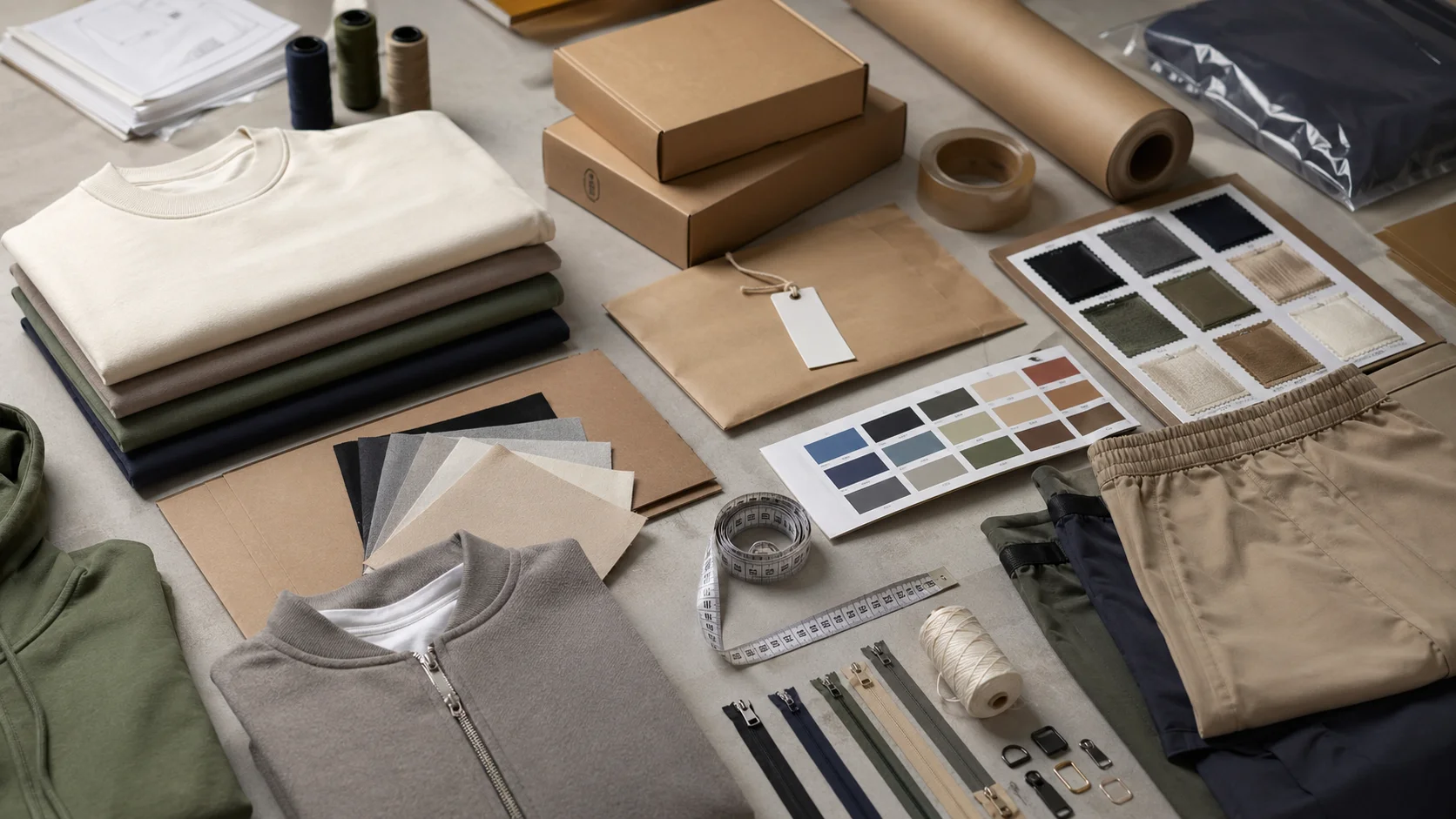
Clothing Ecommerce Fulfillment Service Comparison with checks for samples, fit, MOQ, QC evidence, pricing terms, and delivery risk.
Fast answer: Clothing Ecommerce Fulfillment Service Comparison should be judged by production evidence, not by a generic sourcing promise. The buyer needs sample proof, cost breakdowns, QC checkpoints, and delivery buffers in writing.
Ask for recent sample photos, measurement tolerances, fabric or print test assumptions, decoration test notes, packing examples, and a named inspection checkpoint. These details show whether the team can repeat an approved sample at bulk volume.
Separate garment cost, decoration, labels, packaging, sampling, testing, freight, and rush charges. When every cost line is visible, it becomes easier to reduce colorways, adjust size depth, or reserve more time for sampling.
Clothing Ecommerce Fulfillment Service ComparisonChoosing a clothing ecommerce fulfillment service is one of those decisions that looks simple on paper and gets complicated fast once orders start moving. I have seen brands lose margin, damage customer loyalty, and create avoidable headaches because they picked a warehouse that was cheap on inbound storage but expensive on pick fees, or fast on paper but slow when the first holiday spike hit. In practice, the difference between a warehouse that ships at a 2:00 pm cutoff and one that closes the wave at 11:00 am can decide whether you hit next-day delivery in Zone 2 or miss it by 24 hours.
This guide compares the main fulfillment models for apparel brands, breaks down pricing, timelines, accuracy expectations, returns handling, and the operational details that matter when you are shipping T-shirts, denim, outerwear, activewear, or subscription boxes. If you want a practical comparison rather than generic sales talk, this should help. It is built around the numbers that usually matter in the real world: $1.75 to $4.50 per pick-and-pack order, 18 to 22 business days for a typical cut-and-sew production cycle before inventory even reaches the warehouse, and the 99.5%+ inventory accuracy you should expect from a competent apparel operation.
Clothing Ecommerce Fulfillment Service Comparison - Business Tips manufacturing guide Fulfillment is more than picking a box and printing a label. For clothing brands, a proper service usually includes receiving inventory, quality checking cartons, storing SKUs, picking orders, packing garments in the right presentation, shipping with the right carrier, handling returns, and in some cases kitting or custom insert assembly. On the floor, that often means an inbound ASN scan, carton count verification, barcode labeling, then putaway by bin, shelf, or pallet location before the first order is ever touched.
Apparel brings its own complications. A warehouse that handles phone cases or vitamins may still struggle with size runs, color variants, polybag condition, folding standards, and SKU-level accuracy. A single style can easily have 8 sizes and 6 colors. That is 48 variants before you even count seasonal versions. One mix-up can trigger a costly exchange and an unhappy review. If the warehouse is not checking at the UCC-128 or individual UPC level, the odds of a size-color error go up fast.
Good fulfillment for clothing also protects the brand experience. If your customer expects a neatly folded hoodie with branded tissue and a thank-you card, the warehouse has to repeat that experience every time. Consistency matters. A lot. The best teams document fold specs, polybag gauge, and insert placement so every carton looks like it came off the same packing bench, not whatever associate was on shift.
In-house fulfillment means your team stores inventory and ships orders from your own facility, office, or backroom warehouse. It gives you the most control, especially if you are launching a small brand or testing new SKUs.
I have seen in-house shipping work well for brands doing under 300 orders a month, especially if the founder is still close to operations. The monthly bill looks low, but the real cost shows up in labor, packing supplies, mistakes, and the hidden time spent running to the carrier drop-off point. Once you start printing 4x6 thermal labels all day, folding on a stainless steel table, and staging cartons on pallet racking, you are effectively running a small warehouse whether you call it that or not.
Typical setup cost can be as low as $500 to $3,000 for shelves, packing tables, scales, and printer hardware. A basic kit usually includes a Zebra ZD421 label printer, a Dymo for samples, a USB scale, a tape gun, and corrugated mailers in common sizes like 10x8x4 and 12x9x4. Labor becomes the bigger issue. Once volume rises above 500 to 1,000 orders a month, the model often gets messy unless shipping is your core competency.
A 3PL stores your products and handles order fulfillment on your behalf. This is the most common choice for growing clothing ecommerce brands because it converts fixed overhead into variable cost.
Most apparel 3PLs charge receiving fees, storage fees, pick and pack fees, packaging charges, and shipping costs. Better providers also support lot tracking, returns inspection, retail prep, and batch kitting. The best ones understand that a garment warehouse is not the same as a general merchandise warehouse. You want a team that knows the difference between case pack, each pick, and a folded retail presentation, and that can handle a 48-hour inbound window without losing track of carton counts.
In my experience, a strong 3PL is worth its price when you are shipping 500 to 10,000 orders a month and need reliable turnaround, clean reporting, and the ability to scale without hiring a warehouse team from scratch. A good operator will also give you a real service-level agreement, often 99.5% order accuracy and same-day dispatch for orders received before 2:00 pm local time.
These are fulfillment providers built specifically for clothing, footwear, accessories, and lifestyle brands. They usually have better folding standards, better SKU management, and a stronger grasp of size-color complexity.
A specialized apparel warehouse often charges a little more than a generic 3PL, and I think that is fair. The extra cost is usually easier to justify than the cost of replacing missing sizes, reworking damaged packaging, or dealing with returns from poor presentation. One mild criticism, though: some “specialists” talk a big game and still run a mediocre operation. Ask for real process details, not polished marketing copy. If they cannot explain their scan-to-pack workflow, barcode verification, and how they segregate high-value SKUs, keep looking.
Some brands sell through Shopify, Amazon, TikTok Shop, wholesale, and pop-up events at the same time. A hybrid setup routes some orders through one warehouse and others through a channel-specific service.
This model is useful when you want Amazon-ready prep for one channel and premium unboxing for your DTC store. The downside is complexity. Forecasting, inventory allocation, and replenishment become harder. If your team is small, hybrid fulfillment can create more coordination work than it solves. It also introduces more carton labels, more routing rules, and more chances for a sell-through discrepancy between your storefront and your fulfillment software.
Fulfillment pricing is where many clothing brands get surprised. Sales reps often quote storage and pick fees, then the invoice arrives with carton charges, label fees, special handling, returns processing, and minimums. The numbers still make sense, but only if you understand the full structure from day one. A warehouse might quote a $0.40 storage bin rate and a $2.10 pick fee, but once you add kitting, poly mailers, branded tissue, and a 7% fuel surcharge on freight, the real landed cost looks very different.
For a clothing brand shipping 1,500 orders a month, a realistic all-in fulfillment cost can land somewhere between $5,000 and $18,000 monthly depending on order complexity, packaging, and shipping zones. That range is broad on purpose. Apparel is never a single-line math problem. The order mix matters: one-item tee orders are not the same as three-piece outfit bundles with inserts and split sizes.
The cheapest quote is rarely the best value. A warehouse charging $2.10 per pick might be slower, less accurate, or weaker at branded packing than a $2.75 provider that saves you from replacements and customer service issues. I would rather pay a little more for clean operations than chase the lowest invoice and spend twice as much fixing mistakes. If a provider cannot explain how they control mis-picks below 0.5%, the low number is probably hiding something.
Speed matters, but accuracy matters more. A customer can forgive a two-day delay once. They do not forgive the wrong size in a sold-out color.
For clothing brands, the target is usually same-day or next-day fulfillment for orders placed before the cutoff time. Many established 3PLs promise 24-hour dispatch. Some do it well. Some only do it well on quiet weeks. The difference often comes down to whether the facility runs wave picking, zone picking, or simple single-order pick paths, and whether inventory is barcode-scanned at pick and pack or just eyeballed by an associate.
Ask how the warehouse handles peak days, not average days. A facility with 40 staff and a nice dashboard might work beautifully in March, then fall apart during Black Friday if it lacks seasonal labor planning. I have seen brands lose their whole December momentum because the warehouse could not handle the volume spike and did not communicate early enough. A serious operator should be able to show you how they add temporary labor, extend cutoff times, and manage carrier pickups when volume doubles.
In a good apparel operation, order accuracy should sit at 99.5% or better, and inventory accuracy should stay above 98.5%. If a partner cannot measure those numbers monthly, they are probably not controlling them tightly enough. Ask whether they use RF scanners, cycle counts, and lot-level exceptions for damaged or quarantine stock.
Returns are part of the apparel business, not a side issue. Depending on category, return rates can run from 15% to 35%, and that is before sale events or influencer-driven traffic spikes. A warehouse that understands apparel should have a clear reverse logistics process for inspection, rebagging, re-folding, and disposition.
The most efficient returns flow usually starts with an RMA number, followed by condition grading when the item arrives. A top-notch team will separate sellable, clearance, repair, and scrap inventory. For example, a T-shirt with intact tags and no wash wear can often be restocked the same day after a quick steam and rebag, while denim with heel drag, deodorant marks, or removed tags should be quarantined or marked final sale.
For exchanges, speed matters even more. Many brands issue a replacement as soon as the return scan is registered instead of waiting for physical inspection. That is a good move if your margins can absorb it. If the warehouse has a dedicated returns bench, a steam tunnel, and enough shelf space for quarantine stock, the turnaround can be 24 to 48 hours instead of a full week.
One detail worth asking about: who pays for the outbound exchange shipping and how the warehouse handles size swaps in inventory systems. Apparel brands often lose money when the reverse flow is manual and the warehouse does not reconcile the return before restocking the corrected size.
If you are under 300 orders a month, in-house fulfillment can still make sense, especially if you are testing fit, building demand, or managing a small local customer base. Once you move beyond that, labor starts to matter more than storage.
If you are in the 500 to 10,000 orders per month range, a general 3PL is often the most sensible middle ground. You get lower overhead, better shipping rates, and a team that already knows how to manage peak weeks. Just make sure the 3PL actually supports apparel, not just “ecommerce.”
If you have deep size runs, frequent exchanges, and a brand presentation that has to stay consistent, an apparel-specialized fulfillment partner is usually the best fit. They should be able to handle fold specs, branded inserts, and high-SKU intake without needing constant handholding.
If you are selling heavily on Amazon, wholesale, and DTC at the same time, hybrid fulfillment can work, but only if someone on your team owns inventory allocation and reconciliation every week. Without that discipline, the complexity compounds fast. I would want to see a weekly replenishment rhythm, a minimum stock threshold per channel, and a clear answer on how they prevent overselling on fast-moving sizes like M and L.
If they cannot answer these questions in concrete terms, that is usually your answer. A credible partner should be able to tell you whether they run RF scanners, whether they use WMS-based carton routing, and how many business days it usually takes to clear a receiving queue during peak season.
This is where a lot of apparel brands leave money on the table. The best manufacturing partner is not only good at sewing garments; they also understand how those garments will be stored, packed, labeled, and shipped after production. That matters whether you are working out of Guangzhou, Dhaka, or Ho Chi Minh City, where lead times, trim sourcing, and packing standards can vary quite a bit by factory.
For example, a cut-and-sew partner in Guangzhou may be comfortable building tech packs, grading patterns, and running smaller MOQ programs with 18 to 22 business day production windows, while a knitwear supplier in Dhaka may be optimized for larger runs using imported compacted cotton jersey, rib knits, and flatlock construction. In Ho Chi Minh City, many factories are strong on activewear and outerwear with processes like heat-seal taping, bartack reinforcement, and YKK zipper installation. Those production details affect fulfillment later because a garment that arrives with inconsistent polybagging, mixed carton counts, or missing size stickers becomes a warehouse problem immediately.
Material choice matters too. A brand using 180 GSM combed ring-spun cotton T-shirts, 12 oz fleece hoodies, 14 oz selvedge denim, or recycled polyester activewear should specify not just the fabric but the packing standard that follows it. If you are producing organic cotton, ask for GOTS documentation. If you need skin-contact compliance, OEKO-TEX Standard 100 is the certification you want to see. WRAP and BSCI matter when you are vetting labor and social compliance across the supply chain.
A good partner should also know the machinery and processes that keep quality consistent. That can mean a Gerber or Lectra cutting table for accuracy, Juki single-needle lockstitch machines for main seams, Brother coverstitch units for hems, Kansai flatlock machines for activewear, and a steam finishing line before polybagging. Those details are not just factory trivia. A consistent finish reduces damaged returns, cuts down on rework, and makes warehouse receiving faster because product arrives folded, tagged, and cartonized the same way every time.
The smartest setup is usually one where manufacturing and fulfillment are planned together. Carton dimensions, SKU labeling, master carton counts, and retail-ready hangtags should all be agreed before production starts, not after the first shipment lands. That is how you avoid the classic problem where the factory ships perfect garments in the wrong carton mix and the warehouse spends two days fixing what should have been caught at source.
Get a free quote from Fabrikn — your trusted B2B clothing manufacturer with 10+ years of experience. MOQ as low as 200 pieces.
Get a Free Quote →If you are under 300 orders a month, in-house shipping can work, but once you want to scale, a general 3PL or apparel-focused 3PL is usually better. The tipping point is often when labor costs and packing errors start eating the savings from doing it yourself.
For many brands, the realistic all-in cost lands around $2.50 to $4.00 per unit at a 500 MOQ-style order flow, plus shipping. If the brand needs branded packaging, inserts, or split shipments, the number can easily climb above that.
Same-day shipping before a 2:00 pm cutoff is a strong benchmark. Many good providers will ship in 1 to 2 business days, even during normal peak periods, as long as inventory is available and the warehouse is properly staffed.
For manufacturing and supply-chain credibility, look for GOTS, OEKO-TEX Standard 100, WRAP, and BSCI depending on your product and sourcing model. A warehouse itself may not hold all of these, but a vertically connected manufacturing and fulfillment partner should be able to document compliance clearly.
Fit, color expectation, and fabric hand feel drive most apparel returns. In many categories, return rates of 15% to 35% are normal, especially for online-only brands without fitting room data or strong product education.
Yes, but ask how they kit. Manual kitting on a bench is very different from an automated or semi-automated workflow with scan validation, fulfillment instructions, and batch control. You want them to describe the actual process, not just say “yes” and move on.
If you want, I can also turn this into a cleaner diff-style update against your original HTML so it is easier to paste into the source file.Use these related guides to compare specs, costs, quality checks, and buyer decisions before making the final call.