
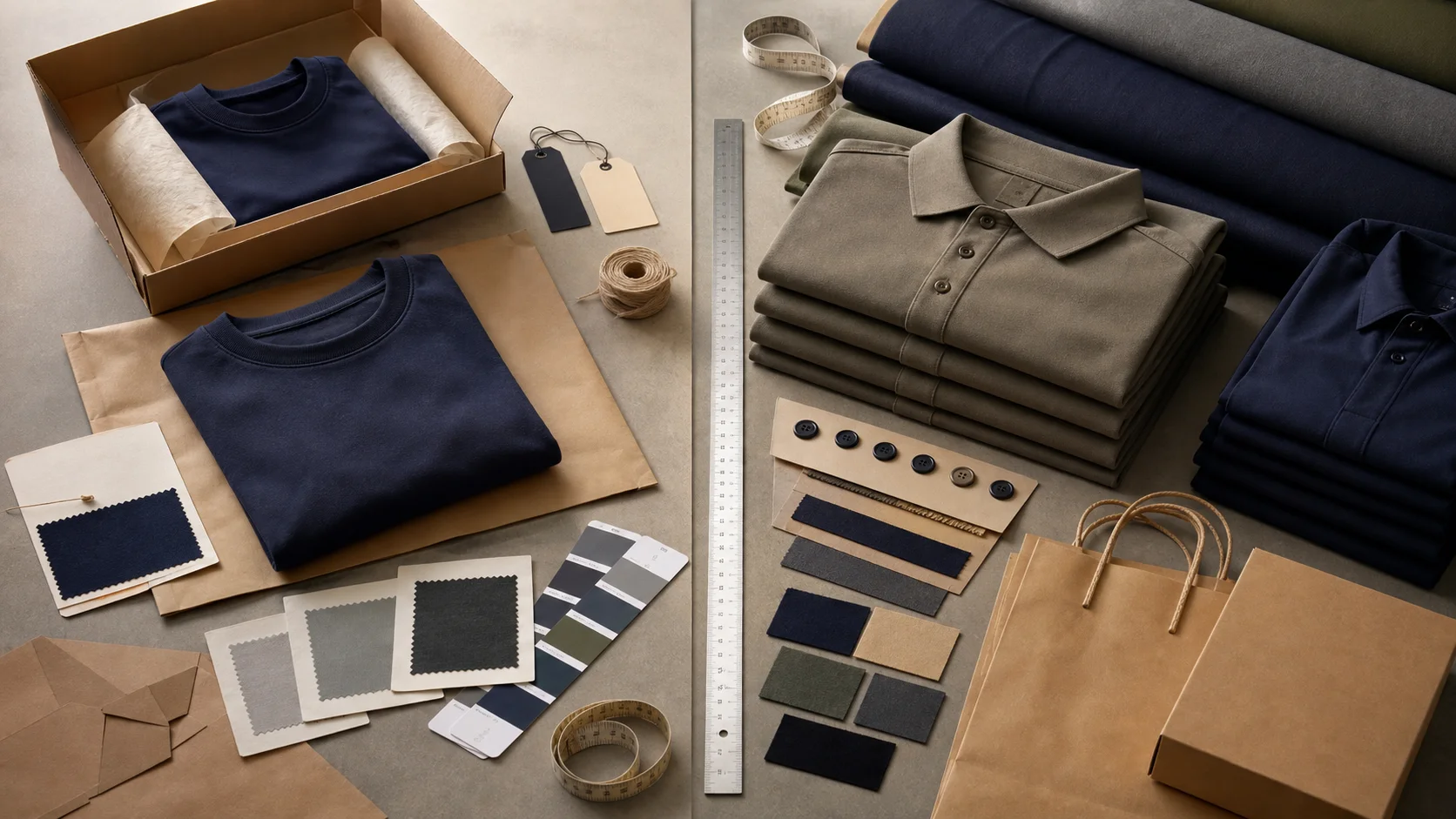
Clothing Factory Audit Checklist for Buyers with checks for samples, fit, MOQ, QC evidence, pricing terms, and delivery risk.
Fast answer: Clothing Factory Audit Checklist for Buyers: A Practical should be judged by production evidence, not by a generic sourcing promise. The buyer needs sample proof, cost breakdowns, QC checkpoints, and delivery buffers in writing.
Ask for recent sample photos, measurement tolerances, fabric or print test assumptions, decoration test notes, packing examples, and a named inspection checkpoint. These details show whether the team can repeat an approved sample at bulk volume.
Separate garment cost, decoration, labels, packaging, sampling, testing, freight, and rush charges. When every cost line is visible, it becomes easier to reduce colorways, adjust size depth, or reserve more time for sampling.
Choosing the right clothing factory is one of the most important decisions a buyer can make. Whether you are sourcing private label apparel, launching a new fashion brand, or expanding an existing product line, the factory you select will directly affect quality, lead times, compliance, cost, and your overall reputation in the market.
That is why a clothing factory audit checklist for buyers is so valuable. It helps procurement teams, brand owners, product developers, and sourcing managers evaluate suppliers systematically instead of relying on samples, promises, or price alone. A strong audit process gives you confidence that the factory can meet your standards consistently and scale with your business.
This guide walks through what to inspect, what questions to ask, and how to assess whether a supplier is truly capable of producing your garments at the level your brand requires. If you are currently comparing factories or planning a supplier visit, this article will help you build a practical and repeatable vetting process.
Auditing a clothing factory is not just about checking boxes. It is about reducing risk before it becomes expensive. A supplier may show excellent salesmanship, attractive pricing, and polished product photos, yet still struggle with production control, fabric traceability, worker safety, or on-time delivery.
For buyers, a factory audit helps answer the most important sourcing questions:
A properly audited factory can help you avoid defective shipments, production delays, and compliance problems. It can also support a healthier long-term partnership, especially if your brand depends on repeat orders and seasonal replenishment.
If you are still in the early stages of supplier evaluation, you may want to review Fabrikn’s manufacturing services to understand the kinds of production support and capabilities a reliable apparel partner should offer.
A comprehensive clothing factory audit typically covers four broad areas:
This includes the factory’s legal registration, ownership structure, production scope, export experience, and ability to handle your specific product type. A factory that excels in woven shirts may not be the best fit for technical activewear, for example.
Buyers should examine workflow efficiency, machine condition, inline inspection processes, final inspection procedures, and how the factory handles rework and defects.
Labor practices, health and safety, environmental management, and documentation standards are critical, especially if you sell into regulated markets or work with larger retail customers.
A factory can have strong machinery but still be a poor partner if it misses deadlines, gives vague answers, or lacks a stable team. Clear communication and professional project management matter as much as physical production capacity.
Before you visit a factory or schedule a remote audit, define what success looks like for your business. The better prepared you are, the more useful the audit will be.
Document the garments you want to produce, including fabric type, construction details, sizing, target market, packaging needs, and expected order quantities. A factory audit should test whether the supplier can realistically deliver your specific products.
Decide in advance which factors matter most. For example, you may prioritize quality consistency, compliance, speed, or small MOQ flexibility. Your scorecard should reflect your business goals.
Ask for company registration, certifications, factory profile, client references, machinery list, production capacity details, and quality policy. Reviewing documents beforehand saves time and helps you spot inconsistencies during the audit.
Schedule time for a facility walk-through, management meeting, production review, quality inspection discussion, and a final Q&A session. A rushed visit can hide important details.
Below is a practical checklist buyers can use when vetting garment suppliers. You can apply it during an on-site visit, a virtual audit, or a third-party inspection.
Some warning signs are obvious, while others are subtle. Buyers should treat the following issues seriously:
One red flag may not disqualify a supplier, but multiple warning signs should prompt caution. In sourcing, it is usually better to walk away early than to correct preventable problems after production starts.
A structured scoring system makes it easier to compare factories objectively. Instead of relying on intuition, assign weights to the categories that matter most for your business.
Score each supplier from 1 to 5 in every category, then multiply by the assigned weight. This approach makes it much easier to compare factories that may look similar on paper but perform very differently in practice.
Do not choose the cheapest factory by default. A slightly higher cost is often justified if the supplier reduces defect rates, protects delivery schedules, and offers stronger compliance assurance.
An on-site audit remains the most effective way to assess a clothing factory, because it allows you to observe workflow, worker conditions, and operational discipline directly. However, remote audits are increasingly useful when travel is limited or when you are screening many suppliers quickly.
For best results, many buyers use a two-step process: first a remote pre-screening, then an on-site audit for the most promising suppliers. If you need help assessing whether a factory is a good fit for your product line, you can also reach out through Fabrikn’s contact page for sourcing support and next-step guidance.
Asking the right questions is just as important as walking the floor. Here are practical questions buyers should include in every factory audit:
These questions help reveal not only the factory’s capabilities but also how transparent and solution-oriented the team is when under pressure.
The audit itself is only the beginning. After the visit or assessment, consolidate your findings quickly while details are still fresh. Review notes, photos, documents, and scoring results with your sourcing team.
A supplier audit should lead to a clear decision: approve, conditionally approve, or reject. If a factory has strong potential but needs improvement, define specific requirements and deadlines before moving forward.
At Fabrikn, we understand that choosing the right garment manufacturing partner is a major business decision. Buyers need more than attractive pricing; they need production reliability, clear communication, and confidence that a supplier can meet quality and compliance expectations.
Our team works with businesses that want a more structured and transparent sourcing experience. Whether you are developing a new line or scaling an existing program, we help buyers evaluate production needs, understand manufacturing options, and move forward with greater confidence.
To learn more about our capabilities, visit our about us page or review our services. If you are ready to discuss your sourcing goals, please contact us.
Get a free quote from Fabrikn — your trusted B2B clothing manufacturer with 10+ years of experience. MOQ as low as 200 pieces.
Get a Free Quote →A clothing factory audit checklist for buyers is a structured list of criteria used to evaluate a garment manufacturer’s capabilities, compliance, quality systems, and reliability before placing orders.
Look for consistent documentation, clear answers, a clean and organized facility, realistic capacity claims, quality control procedures, and positive evidence of compliance and production experience.
Yes, especially for new suppliers. Even if you cannot visit in person, a remote audit, document review, and third-party inspection can help reduce sourcing risk.
There is no single most important part, but quality control, compliance, and production capability are usually the most critical for apparel buyers. A factory must be able to produce your garments consistently and responsibly.
Remote audits are useful for screening and preliminary evaluation, but they are usually best paired with an on-site inspection or third-party verification for final approval.
Most buyers compare at least three suppliers to understand differences in pricing, capabilities, communication, and quality standards before making a final decision.
Document the issue, ask for a corrective action plan, and determine whether the problem is fixable. If the issue affects safety, compliance, or core production reliability, it may be safer to move on.
Supplier vetting protects your brand from quality failures, shipment delays, compliance problems, and costly rework. It helps ensure that the factory can support your business long term.