
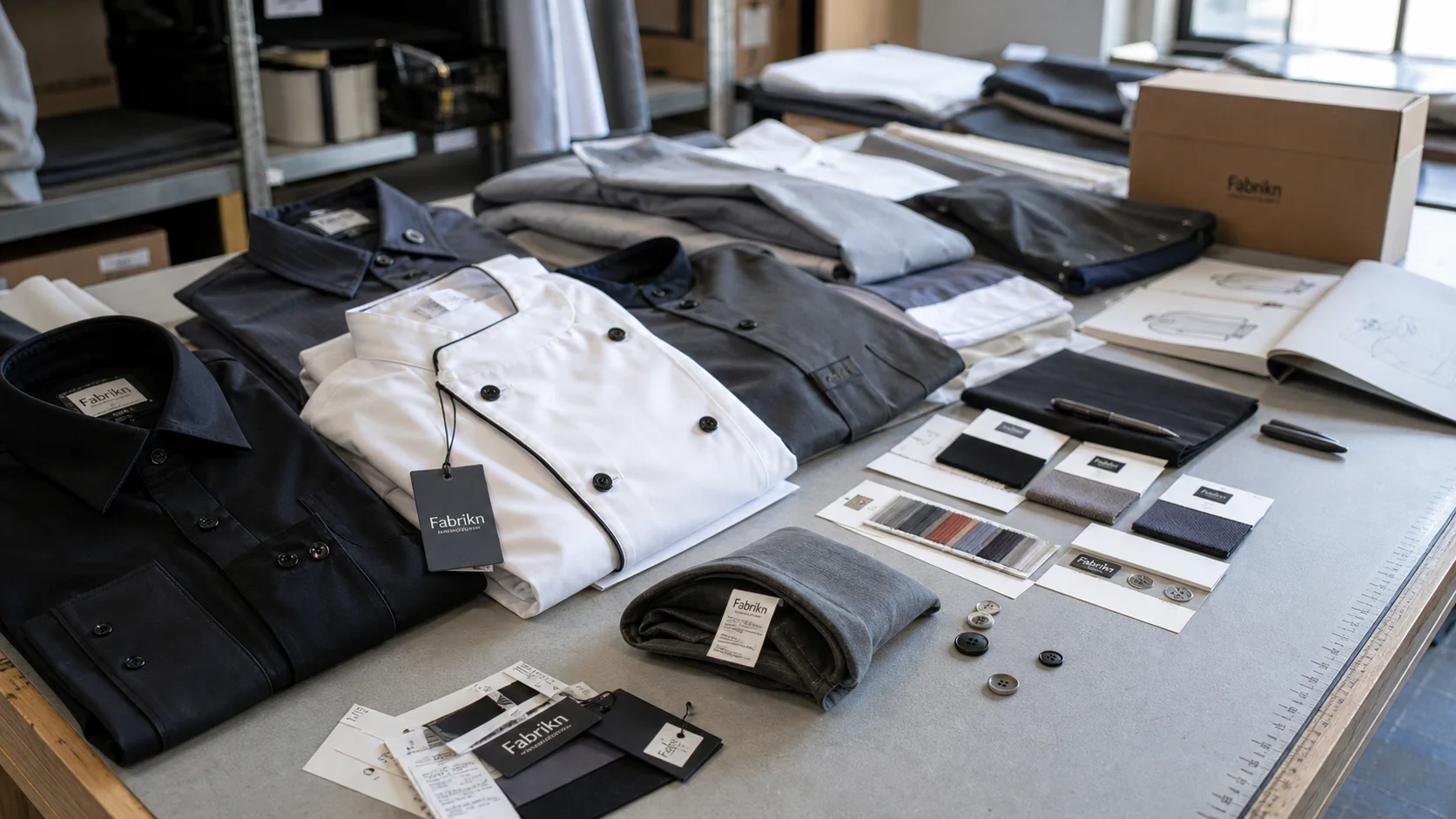
Vet Clothing Manufacturers in China with checks for samples, fit, MOQ, QC evidence, pricing terms, and delivery risk.
Fast answer: Vet Clothing Manufacturers in China: The Essential Checklist for should be judged by production evidence, not by a generic sourcing promise. The buyer needs sample proof, cost breakdowns, QC checkpoints, and delivery buffers in writing.
Ask for recent sample photos, measurement tolerances, fabric or print test assumptions, decoration test notes, packing examples, and a named inspection checkpoint. These details show whether the team can repeat an approved sample at bulk volume.
Separate garment cost, decoration, labels, packaging, sampling, testing, freight, and rush charges. When every cost line is visible, it becomes easier to reduce colorways, adjust size depth, or reserve more time for sampling.
Category: Business Tips
China remains a dominant hub for clothing manufacturing thanks to its extensive production infrastructure, skilled workforce, and cost efficiencies. However, partnering with the wrong supplier can derail a business through missed deadlines, quality issues, compliance failures, and reputational risk. That is why a comprehensive clothing manufacturer vetting checklist is essential for businesses seeking to work with Chinese partners. A structured and detailed checklist helps you move beyond surface-level interactions, enabling you to differentiate between credible manufacturers and those with hidden pitfalls. For brands operating in competitive markets, this vetting process is not just about selecting a supplier—it’s about safeguarding your brand equity and customer trust.
This article walks through every step of the vetting process, from initial preparation to long-term relationship management, helping businesses make confident decisions when sourcing garments from China. Throughout the article, you will also find how Fabrikn supports your journey with insights into our manufacturing services, culture, and contact pathways for personalized assistance.
Before you dive into evaluating manufacturers, define what success looks like for your specific project. Preparation includes understanding your product category, expected volume, quality requirements, timeline, budget, and compliance mandates. This strategic groundwork ensures you have measurable criteria to compare suppliers accurately.
Consider whether you need a manufacturer with quick turnaround, low minimum order quantities, specialized fabrics, or advanced technology. Prioritize these needs so you can weigh them correctly during the vetting process.
KPIs give you quantifiable benchmarks for evaluation. Early KPIs might include response time, documentation completeness, sample turnaround, and initial inspection results. These indicators help filter vendors before investing significant resources.
Bring together representatives from procurement, quality, compliance, design, and logistics. Each function contributes a unique perspective, ensuring your checklist remains balanced between cost, creativity, and risk management. Involving internal stakeholders early also accelerates alignment and decision-making once you shortlist manufacturers.
Start vetting by gathering as much background information as possible. This research stage reduces the risk of dealing with ghost factories or non-compliant operations.
Don’t rely solely on information provided by the manufacturer. Cross-verify through industry directories, trade associations, inspection reports, customer testimonials, and business registries. Digital platforms such as Alibaba can provide initial data, but independent validation is crucial.
A credible manufacturer will have a professional website, detailed product information, and clear contact channels. Communication responsiveness is also a litmus test for reliability. Assess how promptly and transparently the manufacturer answers inquiries. Poor communication early on is often a sign of challenges ahead.
Having compiled preliminary information, apply a detailed checklist divided into categories to assess viability comprehensively.
Once a manufacturer passes the initial screening, arrange a site visit or hire an independent inspection service. Seeing the operation firsthand reveals how the factory handles workflow, cleanliness, worker conditions, and equipment maintenance.
Ensure the visit includes meetings with key stakeholders—factory managers, QC supervisors, and procurement leads. Their openness, accountability, and problem-solving mindset offer valuable signals about future collaboration.
Deep dive into the manufacturer’s manufacturing execution, covering everything from material handling to finishing.
Assess their prototyping workflow. Are CAD patterns provided, and is there a digitized sample approval system? Quick turnaround times for prototypes save valuable time in product development.
Check how the factory sources zippers, buttons, labels, and packing materials. Quality inconsistencies in trims can derail a finished product even if the garment construction is solid.
Review how garments are packed, labeled, and stored before shipping. Proper packaging protects the product and ensures compliance with retailer or logistics requirements.
Quality assurance should be a cornerstone of your partnership. Ask for documentation that outlines their QC checkpoints, rejection logs, and continuous improvement initiatives.
Look for evidence that the factory embraces a preventive approach rather than relying solely on reactive inspections. Modern QA includes digital checklists, photo documentation, and real-time communication with buyers.
Request the latest audit results from recognized bodies. While audits can be outdated, they provide insights into how the factory handles compliance and continuous improvement. If no audits exist, see if the factory is open to facilitating one.
Reputational risks in modern supply chains mean you must ensure your manufacturer shares your commitment to ethical practices.
Check wastewater treatment systems, energy efficiency programs, and chemical management. Sustainable manufacturing isn’t just a trend—it’s becoming a baseline expectation from forward-looking brands.
Assess their business continuity plans, especially in the face of geopolitical shifts, pandemics, or natural disasters. A resilient factory will have redundancy plans, inventory buffers, and clear escalation pathways to minimize disruption.
Negotiation is more than price. It involves establishing clear ownership of patterns, designs, and confidential information.
Formalize sample approval timelines and make sure any deviations are documented before full production starts. Clear documentation prevents misunderstandings and ensures accountability.
Share sensitive materials only after signing NDAs, and consider watermarking tech packs. Limit access to critical patterns, and monitor the factory’s production schedule to ensure no unauthorized copies are made.
Once selected, managing the relationship proactively ensures your supply chain remains stable.
Track KPIs such as on-time delivery, defect rates, compliance issues, and responsiveness. Sharing dashboards or scorecards helps maintain transparency and fosters mutual accountability.
Encourage feedback loops where your factory suggests efficiency gains, cost-saving measures, or sustainable innovations. A true partner will invest in the relationship beyond one-off orders.
Throughout this journey, Fabrikn remains a resource you can rely on. Learn more about how we support scalable apparel production and business guidance on our about us page, or reach out directly via contact-us for tailored consultation.
Vetting clothing manufacturers in China is a multifaceted endeavor requiring planning, due diligence, and continuous engagement. This essential checklist ensures you cover all critical areas—from legal standing and production capability to quality systems and ethical compliance. Armed with this framework, your business can reduce risk, build reliable supply chains, and confidently partner with manufacturers who align with your values and goals.
Get a free quote from Fabrikn — your trusted B2B clothing manufacturer with 10+ years of experience. MOQ as low as 200 pieces.
Get a Free Quote →A strong brief makes the supplier's job narrower and the quote more reliable. For vet clothing manufacturers in china, include the target customer, sales channel, expected order quantity, size range, decoration needs, packaging requirements, and delivery market. Then call out the details most likely to affect the result, especially MOQ, line capacity, and pattern control.
The brief should also explain what cannot change. Some brands care most about hand feel, some about price, some about launch timing, and some about retail compliance. When those priorities are not written down, suppliers tend to optimize for whatever is easiest to quote. Clear priorities help the factory make better tradeoffs before the first sample is cut or printed.
Ask the supplier to respond with assumptions, not just a price. A useful reply states MOQ, sample route, production capacity, inspection plan, packing method, and freight handoff. If the answer is vague, the project may still work, but it needs a tighter pre-production stage before money and calendar pressure build up.
The best time to catch problems is before the pre-production sample is approved. Check measurements, color, placement, material behavior, shrinkage, construction, labels, and packaging in the same review instead of approving each item in isolation. Many bulk issues are not caused by one dramatic mistake; they come from several small unchecked assumptions.
For vet clothing manufacturers in china, pay special attention to QC checkpoint, export packing, and communication rhythm. These details often look minor in an email but become expensive once cutting, printing, sewing, packing, or shipping begins. A simple checklist with owner, due date, and approval status keeps the brand team and factory aligned.
Bulk production should not start until the supplier can explain how the approved sample becomes a repeatable production standard. That means reference sample storage, line instructions, inline checks, final inspection, and defect handling. A factory that can describe this process clearly is usually safer than one that only promises speed.
Price differences are useful only when the quotes cover the same work. Compare sample cost, material source, trims, decoration, packaging, testing, inspection, and freight assumptions. A low unit price can become expensive if it excludes items the brand needs before launch.
Timeline promises deserve the same scrutiny. Ask what happens if the first sample needs revision, whether materials are in stock, when the production slot is reserved, and how export packing is handled. The most reliable supplier is often the one that gives a realistic calendar instead of the fastest optimistic answer.
Begin by defining your sourcing objectives and KPIs. Clarify your product requirements, volume expectations, compliance needs, and evaluation metrics before contacting suppliers. This preparation ensures consistency and focus during screening.
Use official business registries, audit databases, and export records. Complement this with independent inspections, request documentation (e.g., business license, tax certificate), and verify addresses and contact information to ensure legitimacy.
Your checklist should cover legal standing, production capacity, quality control practices, compliance certifications, technological capabilities, logistics support, communication responsiveness, and ethical policies. Ensure it also includes IP protection measures and continuous improvement mechanisms.
While not always mandatory, an on-site assessment is invaluable for confirming the factory’s capabilities, worker conditions, and processes. If visiting isn’t feasible, hire trusted third-party inspection services to conduct audits and share detailed reports.
Fabrikn supports apparel brands with transparent manufacturing practices, quality assurance, and proactive communication. Our team helps you navigate sourcing decisions, fosters strategic partnerships, and delivers insights to optimize your supply chain. Explore our services to learn more.