
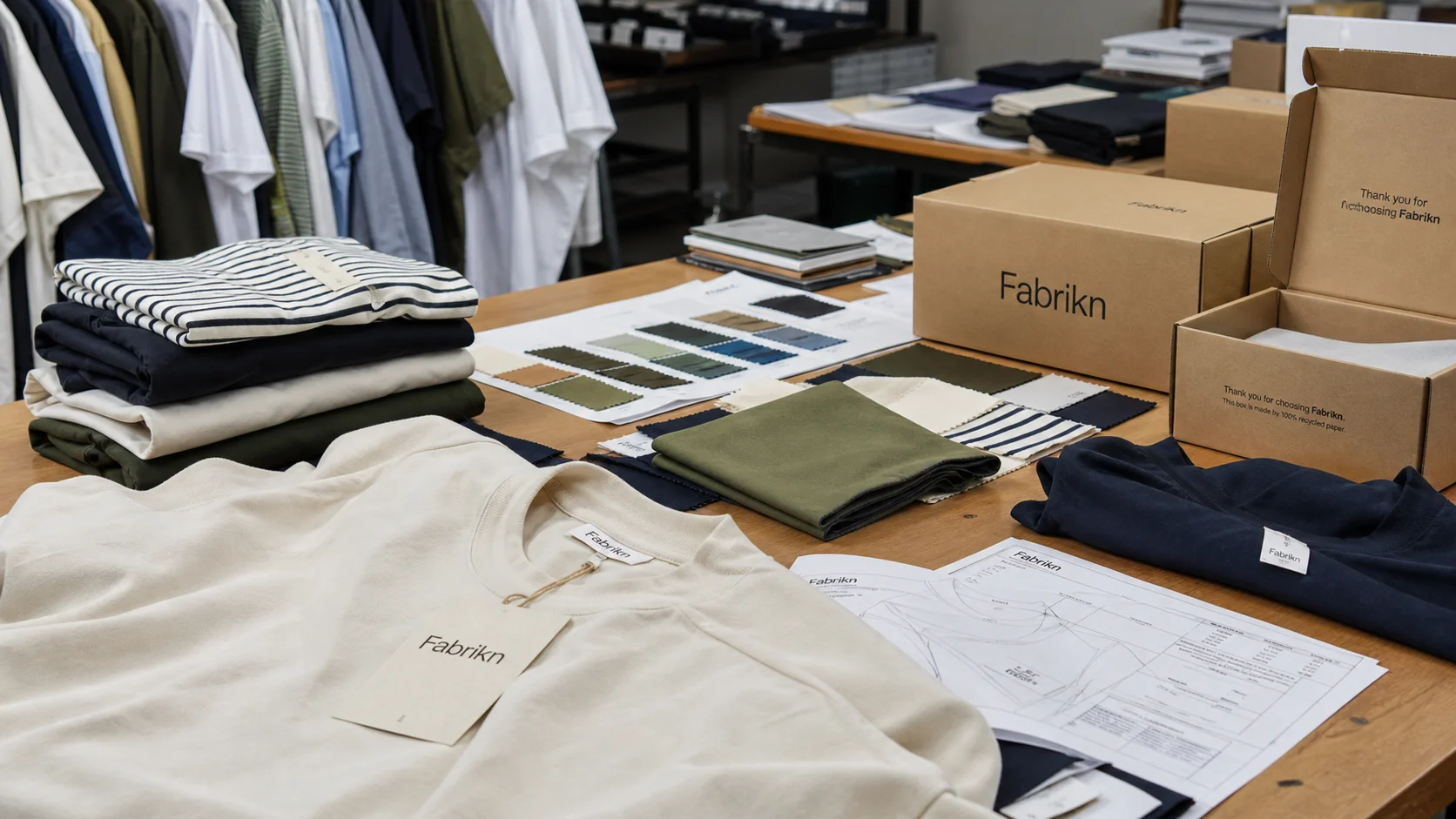
Plan seasonal fleece hoodie production with clear fabric, color, trim, decoration, packaging, and delivery requirements for retail rollouts.
Use this page when the seasonal rollout depends on fleece hoodie consistency, approved colors, and a supplier calendar that prevents late deliveries.
Decision pointWhat to confirm before productionProduct specFabric weight, fit block, size range, trims, and decoration method.Order economicsMOQ, sample cost, unit tiers, packaging, freight, and repeat-order terms.Quality controlPre-production sample, color approval, measurements, labeling, AQL, and carton marks.Seasonal rollouts reward brands that plan early and choose partners with discipline. A clothing production partner for seasonal collection rollouts has to do more than sew garments on time. The right factory or manufacturing team needs to handle short development windows, controlled fabric sourcing, repeatable quality, and a calendar that respects retail delivery dates. When those pieces are weak, the season usually gets expensive fast: late samples, missed approvals, inventory gaps, and rushed freight are common failure points.
This guide breaks down how to assess a clothing manufacturing partner for a seasonal program with practical buying judgment. The goal is not to find the cheapest quote on paper. It is to find a partner that can support your product mix, protect your margins, and deliver on the date the market expects.
How to Choose a Clothing Partner for Seasonal Rollouts - Clothing Manufacturer manufacturing guide
Seasonal collections move on a fixed clock. Buyers want product ready for a launch window, merchandisers want reliable delivery, and design teams want enough flexibility to respond to fit feedback or fabric issues. That combination makes seasonal production more demanding than a basic repeat program. A strong partner has to manage speed, consistency, and communication at the same time.
Seasonal rollouts also create uneven volume. One colorway may sell well enough to justify a re-order, while another needs to stay lean. Some styles need heavier fabric weights for fall, then lighter knits or breathable wovens for spring. A capable clothing production partner for seasonal collection rollouts understands that each season brings a different technical and commercial problem.
The right manufacturing partner should be comfortable with:
That is why the first question is not “Can this factory make the garment?” It is “Can this partner make the garment at the right quality, in the right window, with the least amount of surprise?”
Start with basic production fit. A partner should already handle the category you plan to sell. Knitwear, woven tops, tailored garments, outerwear, athleisure, and children’s apparel all require different machinery, operator experience, and QC habits. A generalist can work for simple programs, but seasonal rollouts usually punish inexperience.
Look for evidence that the partner can manage the complete production sequence, not just the sewing line. That includes pattern handoff, material planning, sampling, grading, pre-production checks, cutting, sewing, finishing, packing, and shipment coordination. If any one of those steps is weak, the schedule can slip.
If the partner publishes service categories, review them closely. A page such as fabrikn.com/services/ should make it easier to see whether the operation supports development, bulk production, trims, and packaging in a structured way. A clean services scope is useful because seasonal rollouts usually fail when assumptions are left unspoken.
Production claims are easy to make and hard to verify. A factory may say it can handle “all types of apparel,” but that does not mean it is efficient with your fabric and construction. A partner making high-gauge knits, shell jackets, or tailored shirting needs specialized know-how. Ask what types of garments are produced regularly, what machines are in use, and where the technical pain points usually appear.
Pay attention to whether the supplier understands your sales channel. DTC brands may need smaller drops and faster replenishment. Wholesale accounts may need consistent labeling, barcoding, and carton labeling. Seasonal rollouts often involve both, so the partner should be able to adapt packing and documentation to different retail requirements.
Minimum order quantity is one of the first commercial filters. For seasonal rollouts, MOQ is not just a pricing issue. It affects assortment breadth, color risk, and cash tied up in inventory. A low MOQ can help a brand test demand, but extremely low quantities can raise unit cost and limit factory attention. A high MOQ may improve efficiency, yet it can overexpose the brand if the season underperforms.
Typical MOQs vary widely by garment type and factory structure. A rough working range for many programs might look like this:
Program Type Typical MOQ Range Buying Note Basic T-shirts / knit tops 100-500 pcs per color/style Useful for testing demand, but unit cost can move quickly at the low end. Wovens / shirts / dresses 200-800 pcs per style Fabric utilization and trim sourcing often drive the floor. Outerwear / technical garments 300-1,000 pcs per style Complex construction and component count usually push MOQ higher. Private label basics 50-300 pcs per style Possible with stock fabric programs, but color and sizing options may be limited.These are not universal numbers. A better question is whether the MOQ aligns with your sales forecast, size curve, and margin model. A partner that cannot support a realistic launch quantity for your season will force uncomfortable compromises later.
Style count matters as much as quantity. Ten styles at 200 units each can be harder to manage than two styles at 1,000 units each. Every additional style increases risk in sampling, labeling, grading, and inspection. Seasonal collections often perform best with a controlled lineup rather than a large, uncoordinated assortment.
Fabric and trim decisions shape the entire rollout. Seasonal products often depend on very specific handfeel, weight, drape, and color consistency. A good clothing production partner for seasonal collection rollouts should be able to speak clearly about fabric composition, shrinkage tolerances, finishing methods, and trim availability before bulk commitment begins.
Ask for precise material information, not just broad descriptions. Useful details include:
Specification discipline is where many seasonal programs get exposed. A sample may look right in the hand, but if the shade banding is unstable or the trim lead time is longer than the garment sew time, the calendar slips. Ask whether the supplier locks specs before bulk and how they handle deviations. The best answer is simple and documented, not vague and optimistic.
For seasonal collections, fabric approval is rarely just a design step. It is a risk-control step. If the cloth is late or inconsistent, the whole launch can move with it.
It is also worth asking whether the partner can source against approved standards or only against a preferred mill list. Each approach has tradeoffs. Approved sourcing can give more flexibility, but it demands tighter oversight. Restricted sourcing may be easier to manage, yet it can limit options on price, texture, and delivery timing.
Seasonal rollouts should have a disciplined sampling ladder. That usually includes tech pack review, proto sample, fit sample, fabric approval, sales sample or size set, pre-production sample, and then bulk start. Some programs use fewer gates, but the logic stays the same: confirm the garment before committing to bulk.
Ask the partner to describe the sample flow in order. If the process is unclear, the project can become reactive very quickly. A disciplined partner should be able to tell you what is needed at each stage, who signs off, and what changes are allowed after approval.
Good sample management often includes these steps:
Pay close attention to sample timing. A supplier may quote a quick sample turnaround, but that is only useful if comments are handled cleanly and the next round does not restart from zero. The question is not how fast one sample arrives. The real question is whether the development cycle closes fast enough to protect the launch window.
If there is a serious development gap, a brand should pause. Fast bulk production cannot fix a weak sample. It only multiplies the mistake.
Lead time is often misunderstood as a single number. In seasonal production, it is really a chain of dependencies: design freeze, fabric booking, sample approval, material arrival, bulk cutting, sewing, finishing, packing, inspection, and shipment. Any one delay can push the whole rollout.
Typical total lead times can range from 8 to 20 weeks or more, depending on garment complexity, fabric sourcing, and order volume. Simple cut-and-sew basics can move faster if materials are stock-supported. Outerwear, wash-heavy denim, or custom-developed fabrics can take much longer. The more seasonal and technical the garment, the more important it becomes to build schedule buffer.
Ask the partner for a lead-time breakdown rather than a single promise. Useful checkpoints include:
Lead time should also be tied to real dependencies. A factory that waits for all materials before starting can be safer on consistency, but slower overall. A factory that begins with partially available materials may gain speed, but the coordination burden rises. The right choice depends on how much schedule risk the season can absorb.
Brands planning a seasonal launch should also understand that weather-driven categories need more slack. Outerwear, sweaters, and cold-weather accessories are often unforgiving if they miss the shelf window. That is one reason to work with a partner that communicates early and clearly. If the calendar starts to drift, you want notice before the drift becomes irreversible.
Quality is where seasonal rollouts either protect margin or lose it. A good partner needs a practical QC system, not just a promise to “check everything.” Ask how inspection is performed at fabric stage, inline stage, and final stage. In many cases, the strongest control comes from catching defects early, before bulk defects repeat across hundreds of units.
Key inspection risks include:
Seasonal programs also face pressure from compressed timelines. When a factory rushes to meet a ship date, inspection can become less rigorous. That is a poor trade if the retailer or customer will reject the goods later. Ask whether the partner has a documented AQL process, who signs off on quality issues, and how rework is managed when defects are found.
It helps to review the broader manufacturing posture of the company as well. A clear company page such as fabrikn.com/about-us/ can be useful for understanding whether the business presents itself as a focused production partner or a loose broker. Transparency is not proof of capability, but it is often a sign that the supplier is willing to be accountable.
Price is part of the decision, but it should be read in context. A low quote may leave out trim upgrades, sample rounds, testing, packing changes, or rework allowances. Seasonal programs are particularly vulnerable to hidden costs because schedules are tight and small mistakes are expensive to fix.
When comparing quotes, ask for the same structure from each partner:
Watch the relationship between price and flexibility. A supplier that offers aggressive pricing may be doing so by limiting customization, fabric choice, or date changes. That can work for simple repeat basics. It is less comfortable for seasonal rollouts that need development support and timing flexibility.
Payment terms matter as well. Deposit structures, balance timing, and material prepayment requirements all affect cash flow. A brand with several seasonal deliveries in motion at once may prefer a partner that can stage payments logically across sampling, material booking, and bulk completion. The lowest price means little if the payment structure creates avoidable strain.
Some warning signs are easy to miss when a quote is attractive. A serious seasonal partner should answer direct questions without drifting into vague reassurance. If the responses stay generic, it usually means the operation is not tightly controlled.
Red flags include:
A softer but important warning sign is mismatch between your season and the partner’s operating style. A factory built for large, stable orders may struggle with short seasonal windows. A nimble small-batch shop may be excellent at development but not have the discipline for larger buy quantities. The right partner is not always the biggest one. It is the one whose production model fits your calendar and volume profile.
When the options look similar, use a structured scorecard. That keeps the decision grounded in execution rather than sales language. Rate each potential partner across the same criteria and compare the total, but do not ignore any severe weakness in sampling, lead time, or quality control.
Criterion What Good Looks Like What To Question Category fit Regular experience with your garment type and fabric family Broad claims without relevant examples or process detail MOQ and scale Quantities fit your launch plan and re-order strategy Minimums that force too much inventory or too many SKUs Sampling Clear approval steps and fast comment turnaround Loose sample language or multiple unclear revision loops Materials Specific fabric and trim specs with test awareness Vague fabric names or no trim planning Lead time Timeline broken into stages with stated dependencies One-number promises with no schedule logic QC Inline and final inspection discipline with correction steps Assurance without process detail Commercial fit Transparent pricing and terms Quotes that keep changing as the project becomes realChoosing a partner this way makes the decision easier to defend internally. It also helps the team align on tradeoffs. A slightly higher unit price can be acceptable if the partner protects delivery certainty, sample speed, and quality consistency. A lower quote that creates launch risk is often the more expensive option in practice.
If the sourcing team is narrowing the field and wants a more direct conversation, use the contact path early rather than late. A page such as fabrikn.com/contact-us/ is the right place to ask pointed questions about garment category fit, sample flow, MOQ, and production timing. That conversation should be specific. Seasonal rollouts are too time-sensitive for generic outreach.
Before sharing a project, prepare a concise package with tech packs, target quantities, size breakdowns, fabric ideas, and required delivery windows. That makes vendor feedback more useful and reduces the chance of hidden assumptions. It also helps separate true production partners from suppliers that are only comfortable after the order is already simplified.
Fabrikn, like any clothing manufacturer, should be evaluated on the same fundamentals: technical fit, capacity, communication, and quality discipline. A partner is only useful if it can translate a seasonal brief into production that arrives on time and to spec.
Choosing a clothing production partner for seasonal collection rollouts is really a risk-management exercise. The right partner supports more than sewing. It helps control sampling, fabric consistency, trims, lead times, and inspection outcomes. It also understands that the rollout date is part of the product. If the goods arrive after the season has shifted, the commercial value drops fast.
Brands should favor partners that give clear answers, realistic timelines, and documented processes. Look for supplier discipline before chasing the lowest quote. Seasonal collections depend on timing, and timing depends on partners that know how to manage detail without turning every decision into a delay.
Get a free quote from Fabrikn — your trusted B2B clothing manufacturer with 10+ years of experience. MOQ as low as 200 pieces.
Get a Free Quote →There is no single best MOQ. Many brands work within 100 to 500 pieces per style for basics, while more technical garments often require higher minimums. The right level depends on demand forecast, fabric type, and how much inventory risk the season can carry.
Simple programs can sometimes move in 8 to 12 weeks, while more complex seasonal garments may need 12 to 20 weeks or more. The real timeline depends on sample approvals, fabric booking, trim sourcing, testing, and shipment method.
At minimum, the tech pack, fit sample, fabric quality, trim details, measurements, and pre-production sample should all be approved. If the garment uses special washes, coatings, or finishes, those should also be signed off before bulk cutting begins.
Failures often come from poor communication, incomplete specs, late material decisions, or unrealistic timelines. A factory can be technically strong and still be the wrong fit if its operating style does not match the speed and flexibility the season requires.
Not usually. The lowest quote can hide weak sampling support, limited material options, or less reliable delivery. A better choice is the partner that offers a balanced mix of price, quality control, and schedule confidence.
Shade variation, measurement drift, and trim mistakes are among the most common risks. These issues can appear small in sample form and become costly across a full production run, especially when the calendar leaves little time for correction.
Use the same scorecard for both partners and compare category fit, MOQ, sampling process, lead time structure, quality control, and commercial terms. If one supplier is vague on any of those points, that is usually the deciding factor.