
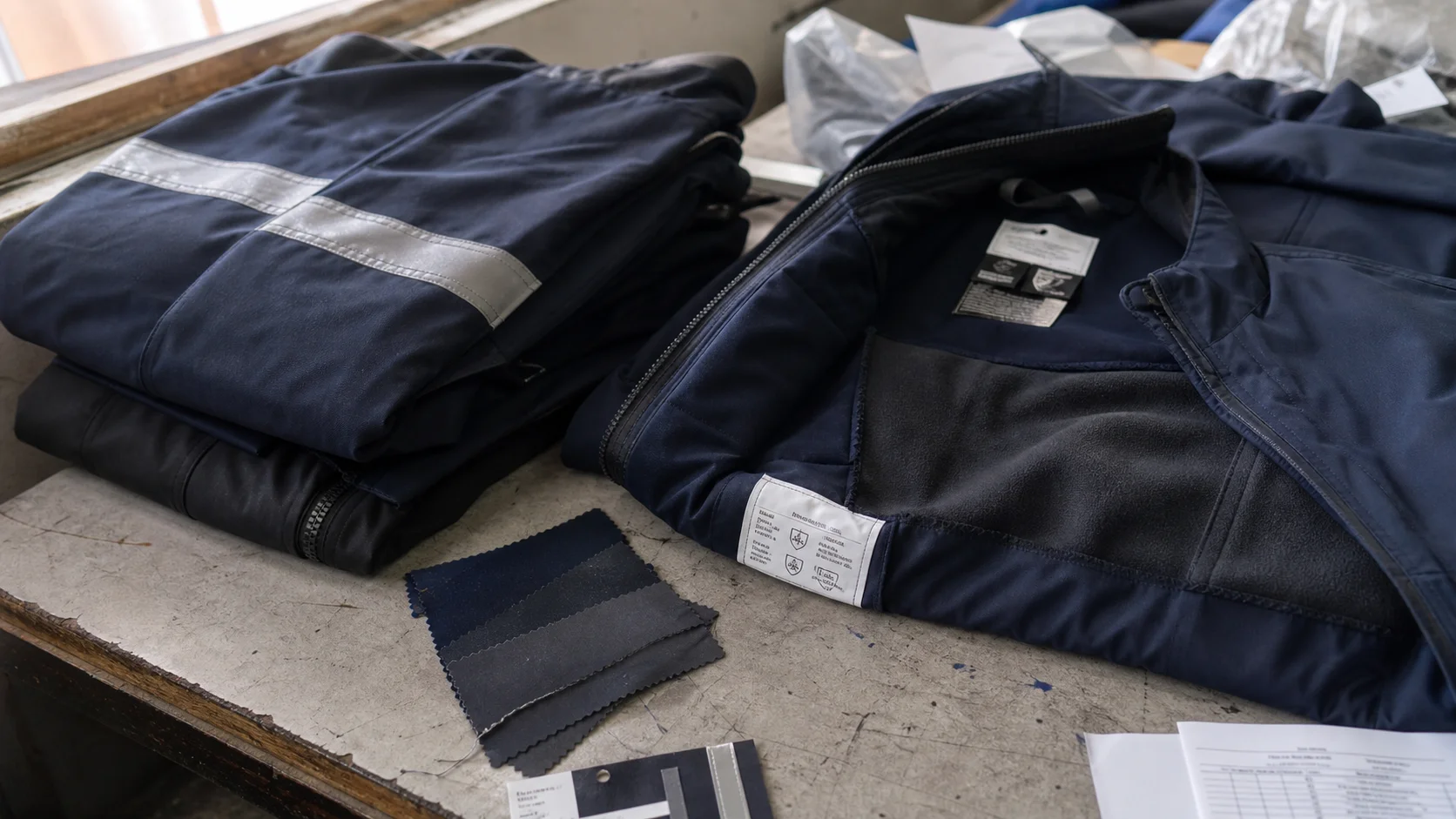
A focused outline for restaurant group procurement teams evaluating custom uniform jackets with fabric testing, covering wear performance, test standards, approval workflows, and quote-ready specification details.
Custom Uniform Jackets With Fabric Testing Quotes - Fabrikn production reference
Restaurant groups that source custom uniforms at scale rarely struggle with style selection alone. The harder part is making sure outerwear performs across daily service, repeated laundering, mixed job roles, and location-to-location consistency. That is where custom uniform jackets with fabric testing quotes become a serious procurement tool rather than a line-item add-on.
For hospitality buyers, outerwear sits at an awkward intersection of branding, function, and cost control. A jacket has to look presentable in front-of-house, work comfortably in delivery or patio conditions, and survive frequent wear without excessive pilling, color loss, seam failure, or size inconsistency. A simple unit price quote does not tell you enough. A quote tied to fabric testing gives procurement teams a better basis for comparing suppliers, materials, and production risk.
In restaurant group purchasing, the right question is not only “How much does this jacket cost?” It is “What exactly is being tested, to what standard, and what risk remains after approval?” That distinction matters when you are buying for multiple locations, balancing brand uniformity with different climate conditions, and trying to avoid costly reorders or complaints from operations managers.
Custom jackets for restaurant use often include softshells, lightweight bomber jackets, coach jackets, insulated vests, fleece layers, and staff outerwear for curbside, catering, security, facilities, and patio teams. Every option comes with fabric and trim choices that affect durability, appearance, and long-term cost. Some groups need stain resistance and abrasion performance. Others care more about logo clarity, colorfastness, and wash stability. Testing priorities should match the use case.
If your team is reviewing suppliers for custom outerwear, it helps to work with a manufacturing partner that can explain development, testing, and production steps clearly. Buyers comparing sourcing capabilities can review broader support options through https://fabrikn.com/services/ and use that as a baseline for asking more detailed procurement questions.
Restaurant uniforms face harsher conditions than many buyers assume. Heat, grease exposure, frequent washing, movement during service, and storage in back-of-house areas all affect performance. Jackets may be worn outdoors during delivery handoffs, then indoors for the rest of a shift. They may also be shared between part-time staff or transferred across units. That increases the need for reliable sizing and fabric durability.
Fabric testing matters because restaurant procurement is usually judged on total program stability, not just initial buy cost. If a lower-cost jacket pills after a few weeks or shrinks beyond tolerance after washing, the replacement cost quickly wipes out the apparent savings. The same is true when dark colors bleed, logos distort after laundering, or zipper failures trigger repeated claims from operations teams.
Testing also supports internal alignment. Procurement, operations, HR, and brand teams often evaluate uniforms differently:
A fabric testing quote helps translate those concerns into measurable checkpoints. Instead of arguing in general terms about “quality,” teams can review specific items such as shrinkage tolerance, pilling grade, seam strength, colorfastness to washing, and dimensional stability.
That said, buyers should stay realistic. Testing reduces risk; it does not eliminate it. Lab results apply to defined samples and conditions. Production variation, trim substitutions, dye lot changes, and laundering differences still need to be managed through approvals and inspections.
Many uniform quotes are weak because the brief is too vague. If the request only says “custom staff jacket with logo,” suppliers will price very different constructions, fabrics, and quality assumptions. That makes comparisons unreliable.
Before requesting quotes, restaurant group buyers should define the following:
Start with the real wearing conditions. A host stand jacket, a curbside pickup jacket, and a facilities team softshell should not automatically use the same fabric. Clarify whether the garment is for:
State target materials if known, or ask for options within a weight band. Typical examples include:
Fabric weight often falls in practical ranges such as 180 to 220 gsm for lighter layers, 240 to 320 gsm for softshells and fleece-based jackets, and higher total weights for insulated outerwear. Buyers should not over-specify weight without discussing performance, because a heavier fabric is not always better. It may increase cost and reduce comfort for indoor-outdoor use.
Logo application affects both aesthetics and testing needs. Ask suppliers to quote based on the exact branding method:
Embroidery is common and durable, but can stiffen lightweight shells. Heat transfer may preserve a cleaner surface but needs wash and adhesion review. Patches can add premium branding, though they create another attachment point to monitor.
Restaurant groups often overlook sizing until late in development. That creates delays and approval disputes. Specify the target size range early, including whether extended sizes are required. Request a measurement spec sheet with tolerances, not just generic S-XL labeling.
If staff will machine wash at home, testing should reflect that. If garments go through commercial laundering, quote requirements may change significantly. This is one of the most important practical distinctions in uniform sourcing.
Purchasing judgment: a jacket that looks better on first delivery but fails after repeated wash cycles is usually a poor restaurant buy. Wash durability should carry more weight than showroom appearance.
A fabric testing quote generally combines garment development cost, fabric cost, trim cost, and one or more testing charges. The structure varies by supplier and by how far the product is already developed.
In practical terms, buyers usually see one of three quote formats:
Each model has tradeoffs. Separate testing charges are more transparent, but some buyers underestimate the true landed development cost. All-in quotes simplify approvals, though they can hide whether testing is minimal or comprehensive. Staged quoting can save money in early concept rounds, but it may extend timelines if issues surface late.
Buyers should ask whether tests are performed on raw fabric, finished fabric, finished garment, or all three where relevant. A fabric can pass in isolation but still present issues after cutting, sewing, washing, or logo application.
If your sourcing team is organizing a formal inquiry, it is worth contacting the supplier with a structured RFQ and target testing list through https://fabrikn.com/contact-us/. Clear inputs generally produce more useful quotes and fewer revisions.
Not every restaurant group needs heavy-duty outerwear. Many need flexible layering that works across weather changes and role shifts. The best jacket category depends on operating environment and brand position.
Softshell jackets are one of the strongest options for multi-unit restaurant use. They typically offer moderate weather resistance, acceptable structure for front-facing roles, and better comfort than rigid woven shells. A common fabric construction is polyester-spandex bonded with fleece backing. Buyers should check pilling, stretch recovery, seam performance, and logo stability.
Best for: curbside teams, supervisors, patio staff, catering crews, and cooler-climate FOH support roles.
These work well for quick outdoor transitions and promotional appearance. They are usually lower cost than softshells and easier to pack or store. The tradeoff is lower warmth and sometimes noisier fabric hand. Thin shells also need careful review for embroidery distortion and seam puckering.
Best for: host support, queue management, event staff, and light-weather delivery programs.
Bombers offer a stronger retail look and can support premium branding. They can work well for branded chains with a more contemporary image. The downside is that rib trims, lining, and more complex construction increase sourcing variables. Quality differences show quickly in cuffs, collar recovery, zipper smoothness, and shape retention.
Best for: branded rollout programs where image matters as much as utility.
Fleece is comfortable and usually cost-efficient. It is suitable for back-of-house support, delivery teams, and cooler indoor environments. The main risk is pilling and inconsistent visual presentation after repeated wash cycles. Fleece can be a good buy if testing thresholds are clear and the expected life cycle is realistic.
Best for: practical warmth at moderate budgets.
These are useful in colder regions but are often overbuilt for standard restaurant operations. They cost more, take longer to develop, and introduce extra QC points such as fill distribution, quilting consistency, and lining damage. For many chains, these are best reserved for regional programs rather than standard national issue.
The right testing package depends on the fabric and end use, but several items are especially relevant for restaurant group outerwear.
Essential for dark brand colors, especially black, navy, red, and custom tones. Poor performance here can lead to visible fading or color transfer. This matters even more when jackets are worn with lighter shirts or aprons.
Critical for woven and blended fabrics, fleece, and lined garments. Restaurant teams dislike size inconsistency more than most buyers expect. Even moderate shrinkage can create complaints if the garment starts with a trim fit.
Important for fleece, brushed knits, and softshell backings. Pilling is one of the fastest ways a uniform starts to look cheap. A lower initial price often hides this risk.
Useful where staff move constantly, reach overhead, carry trays, or work outdoors. Stress points like armholes, side seams, pocket openings, and sleeve joins deserve attention.
Relevant for delivery, facilities, and outdoor operations where jackets rub against bags, counters, or vehicle surfaces. It may be less critical for occasional wear promotional outerwear.
Not every restaurant jacket needs this, but pickup, valet, and patio teams often do. Buyers should distinguish between light repellency and true weather protection. Marketing language on fabric finishes can be broader than actual performance.
If using heat transfers, badge applications, or dense embroidery, test the decorated panel or finished garment. Decoration can change how a jacket behaves during washing and wear.
Zipper jams and snap failures create immediate dissatisfaction. Trim specs should cover material, finish, puller style, and where relevant, corrosion or coating wear risk.
Testing Area Why It Matters Higher-Risk Jacket Types Pilling Resistance Maintains clean appearance after repeated wear Fleece, bonded softshell, brushed fabrics Shrinkage Protects fit consistency across locations Lined jackets, fleece, cotton blends Colorfastness Prevents fading and dye transfer Dark colors, custom dyed programs Seam Strength Reduces failures during active wear Softshells, fitted silhouettes, utility jackets Logo Durability Protects brand presentation Heat transfer, patch, heavy embroideryMOQ and lead times for custom restaurant outerwear depend heavily on fabric sourcing, customization level, and whether the supplier is using stock materials or developing from scratch.
Typical MOQ ranges for custom uniform jackets often fall into these broad bands:
These are practical ranges, not fixed rules. Some suppliers can accommodate lower MOQs with stock fabrics, while others require larger commitments for custom color or specialized testing. Buyers should also ask whether MOQ applies by style, by color, by total order, or by fabric lot.
A disciplined sample path reduces later disputes. For restaurant group procurement, a standard sequence often includes:
Skipping steps may save time at the start, but it often creates more expensive delays later. Pre-production sample approval is especially important because it confirms the actual combination of fabric, logo treatment, color, and construction.
Outerwear timelines are shaped by more than sewing capacity. Common lead-time drivers include:
A workable estimate for custom jackets may range from several weeks for simple stock-based repeat programs to several months for fully customized development with testing and multiple approval rounds. Buyers should be cautious about any promise that sounds fast without clear assumptions behind it.
Purchasing judgment: the cheapest quote with an unclear critical path is rarely the safest option for multi-location rollout. In restaurant procurement, missed delivery windows can cost more than a moderate unit price difference.
Every uniform buyer wants cost control, but not every cost reduction is smart. Jackets are visible, operational garments. The wrong savings choice usually shows up quickly.
Restaurant groups should also think about replacement frequency. A jacket that costs slightly more but lasts meaningfully longer can be the better program decision, especially if it reduces staff complaints and emergency reorders. The right metric is not unit price alone. It is usable life per garment under real service conditions.
For buyers comparing suppliers, the strongest conversations usually happen when the vendor can explain both capabilities and limitations clearly. Background information about a supplier’s operating approach can be reviewed at https://fabrikn.com/about-us/, then tested against the specifics of your outerwear brief.
Custom restaurant jacket programs often fail for familiar reasons. Most are preventable if they are identified early.
This is common when fabric is approved from handfeel or visual swatches alone. Reduce the risk by requesting performance data and reviewing wash-related tests before final bulk approval.
Dense embroidery on lightweight shell fabrics can pucker or pull the panel. Heat transfers may crack or peel if the base fabric or care method is a mismatch. Ask for decoration testing on production-intended material, not an approximate substitute.
This becomes a bigger problem when replenishment orders are spread over time. Use a locked spec sheet, approved fit sample, and measured pre-production reference garment. Inspection should include measurement checks against tolerance.
Dye lot variation, backing changes, or finish differences can alter appearance and performance. Buyers should ask whether bulk fabric approval or production fabric swatch confirmation is part of the process.
Visual inspection matters, but restaurant outerwear also needs functional review. QC checkpoints should cover measurements, seam integrity, logo position, zipper function, and packing accuracy. If size ratio packing is wrong, rollout problems start immediately at store level.
For multi-unit restaurant buyers, a practical sourcing process is usually more valuable than a long list of aspirational specs. The goal is to get a repeatable, scalable outerwear program with controlled risk.
Do not force one jacket style to solve every operational need. Separate light presentation outerwear from true outdoor service use if necessary.
Include target silhouette, fabric options, estimated annual volumes, branding method, care method, test expectations, and delivery timing. This makes supplier quotes comparable.
Do not approve samples in isolation from testing. A garment that fits well but has unresolved wash or pilling risk is not ready for rollout.
Freeze core details such as fabric code, GSM range, trim specification, logo placement, measurement chart, and packing method.
Tell the supplier what matters most. For restaurant outerwear, that often means measurement compliance, logo consistency, zipper function, color matching, and carton assortment accuracy.
Restaurant groups often focus on launch volume but forget reorder structure. Confirm whether the same fabric and trim can be repeated, what MOQ applies to replenishment, and how long approvals remain valid.
A strong procurement process does not need to be complicated. It needs to be specific. The more precisely the buyer defines use, care, and performance expectations, the more useful fabric testing quotes become.
Custom uniform jackets with fabric testing quotes give restaurant group procurement teams a more reliable way to source outerwear that balances presentation, durability, and budget. The value is not in testing for its own sake. The value is in making better purchasing decisions before bulk production starts.
For restaurant operators, the safest custom jacket program is usually not the one with the lowest initial quote or the most ambitious styling. It is the one with clear fabric specifications, relevant testing, realistic MOQ planning, disciplined sample approvals, and practical inspection controls. That approach helps reduce replacement rates, improve staff acceptance, and keep branding consistent across locations.
When evaluating custom uniforms with fabric testing for restaurant group procurement, buyers should compare suppliers on more than price. Ask what fabric is being used, what will be tested, how approvals are documented, what lead-time assumptions apply, and what inspection risks remain. Those details separate a usable quote from a risky one.
Get a free quote from Fabrikn — your trusted B2B clothing manufacturer with 10+ years of experience. MOQ as low as 200 pieces.
Get a Free Quote →A fabric testing quote is a pricing breakdown that includes garment development and one or more quality tests for the fabric, trims, decoration, or finished jacket. It helps buyers understand both the product cost and the validation cost before bulk production.
The most relevant tests often include colorfastness to washing, shrinkage or dimensional stability, pilling resistance, seam strength, logo durability, and zipper or trim function. The final list depends on jacket type, branding method, and care conditions.
Typical MOQs often range from around 100 to 200 pieces for simpler stock-fabric programs and 250 to 500 pieces or more for fully customized jackets. MOQ may apply by style, color, or total order, so buyers should confirm how it is calculated.
Lead times vary based on fabric availability, sample revisions, testing turnaround, trim sourcing, and order volume. Simpler repeat programs move faster, while fully customized jacket developments can take several months from concept to approved production.
In many cases, yes. Softshell jackets offer a practical balance of appearance, comfort, and weather resistance for outdoor-facing roles. Buyers should still review pilling, seam strength, fit, and logo execution before approving bulk orders.
Testing the finished garment is often the safer choice when decoration, lining, or complex trims are involved. A fabric may perform adequately on its own but behave differently after embroidery, bonding, sewing, or laundering.
One of the most common mistakes is approving based on appearance and price without enough attention to wash durability and fit consistency. In restaurant use, repeat wear and laundering usually expose quality weaknesses quickly.