
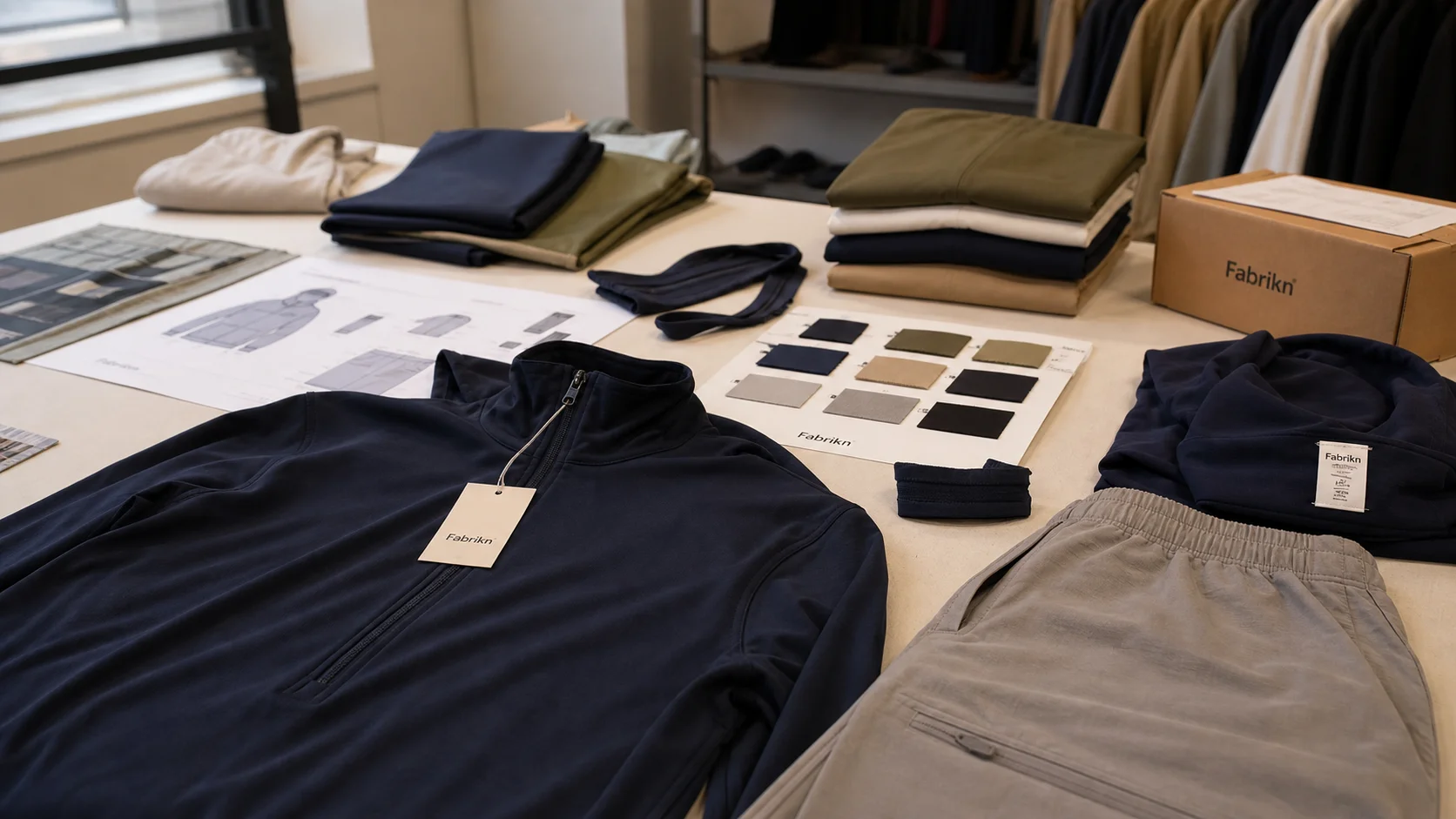
Compostable Poly Bags for Clothing Brands with checks for samples, fit, MOQ, QC evidence, pricing terms, and delivery risk.
Fast answer: Compostable Poly Bags for Clothing Brands: What Works should be judged by production evidence, not by a generic sourcing promise. The buyer needs sample proof, cost breakdowns, QC checkpoints, and delivery buffers in writing.
Ask for recent sample photos, measurement tolerances, fabric or print test assumptions, decoration test notes, packing examples, and a named inspection checkpoint. These details show whether the team can repeat an approved sample at bulk volume.
Separate garment cost, decoration, labels, packaging, sampling, testing, freight, and rush charges. When every cost line is visible, it becomes easier to reduce colorways, adjust size depth, or reserve more time for sampling.
I’ve watched brands spend six months debating 18% versus 22% cotton, then approve a shipping pack that adds a useless layer of plastic to every single unit. That’s where compostable poly bags for clothing brands stop being a branding exercise and start behaving like a factory decision. Packaging touches every shirt, bra, hoodie, and pair of leggings before it reaches a shelf or doorstep. Ignore it, and the waste shows up in carton damage, warehouse rework, and returns.
More than 200 factory visits across eight countries kept showing the same thing: the garment spec got attention, but the bag spec got treated like filler. Expensive filler. A DTC label shipping 100,000 units a year can remove 2,000 to 4,000 kilograms of conventional plastic by switching from a thick LDPE sleeve to a properly specified compostable format, provided the material survives 3-4 weeks in transit and 2-3 warehouse touches before the customer even opens it.
Poly bags do four jobs at once. They block moisture. They cut friction in cartons. They keep returns clean enough for resale. And they shape the first tactile impression a customer gets. In fast-moving fulfillment centers, I’ve seen a 0.05 mm bag fail because it split at the fold line during a 1.2-meter drop test. Broken bag, stained knit, rejected return, another carton repacked by hand.
The cheapest bag usually creates the highest total cost. A bag priced at $0.03 can trigger $0.12 to $0.35 in hidden losses once you count breakage, repacking, audit failures, and late freight because the first sample run was rejected. I saw it with a private-label basics brand shipping 60,000 pieces a month. They saved $1,800 on purchase price and lost nearly $7,000 in damages and labor over one quarter. Ugly math.
That’s why I do not treat compostable packaging as automatically sustainable. The bag must be certified, the disposal route must exist, and the claim must be specific. If an industrial-compostable bag ends up in a landfill, it is still better than virgin plastic only in theory, not in measurable end-of-life performance. A material choice without a system is just a better story, and I’ve seen that story collapse in audits.
Most compostable poly bags for clothing brands are built from PLA, PBAT, starch blends, or paper-based hybrids. PLA, or polylactic acid, gives clarity and printability. PBAT adds flexibility and tear resistance. Starch lowers resin cost and can improve composting behavior, but too much starch can make a bag brittle in cold storage. Paper hybrids work for certain retail presentations, yet they usually sacrifice moisture resistance and transparency.
The technical differences are not cosmetic. A 20-30 micron PLA-based film can look clean on a luxury tee but may crack in a humid warehouse if the blend is wrong. PBAT-heavy film handles stretch better, which matters for bulky knits, French terry 320 GSM sweatshirts, and folded denim. For lingerie, clear presentation and anti-static behavior matter more than a heavyweight spec, which is why many brands pair a lighter compostable sleeve with a polished carton presentation. If a supplier cannot explain seal strength in kilograms per 15 mm, I keep walking.
Industrial compostable and home compostable are not interchangeable claims. Industrial compostable products are usually tested to standards such as ASTM D6400 or EN 13432, while home compostable bags need harsher proof because backyard compost heaps run cooler and more unpredictably. According to ASTM, certification is about measurable disintegration and biodegradation under controlled conditions, not marketing language. Brands that blur those categories invite complaints and regulator scrutiny.
Material choice should match the product, not the mood board. Knits and basics often need a 30-40 micron film with better puncture resistance. Outerwear needs a stronger seal and more moisture protection, especially after 20-30 days on a sea freight container. Luxury basics can use a clearer film with narrower tolerances because appearance drives perceived value. I’ve seen a $12 tee packed in a flimsy sleeve look cheaper than a $4 tee packed properly.
Color and print matter too. A high-gloss bag can smear water-based ink if the seal area is too hot, while a matte finish can hide scuffs from carton rubbing. I ask for seal temperature windows, usually 110-140°C depending on resin blend, and I want a film gauge tolerance within ±5%. Anything wider, and sample consistency becomes a guessing game.
On paper, virgin LDPE still wins on price. A basic bag can land around $0.02-$0.04 per piece in large runs. Recycled-content poly may sit near $0.03-$0.06, depending on thickness and print. Compostable poly bags for clothing brands often start around $0.05-$0.12, and custom print, thicker gauges, or third-party certification can push them higher. Those ranges move fast with MOQ, artwork, and resin availability.
The landed cost story tells more. A cheaper bag that tears at the loading dock can trigger rework, replacement inventory, and packing delays. I’ve watched a supplier quote $0.028 per bag and then add hidden costs through 15% overrun waste, inconsistent sealing, and a two-week sample correction cycle. On a 50,000-piece order, that delay can bump freight from consolidated truck to partial air, wiping out the savings in one afternoon.
Lead time matters because compostable films are not always stocked in the same volumes as conventional poly. Standard production can take 25-35 days, but custom sizes, custom zippers, or printed artwork often stretch to 45-60 days. Testing adds another 7-14 days if the brand wants puncture, seal, and migration checks. For seasonal drops, that means the bag decision should happen before the final trim card is approved.
Retailer compliance can add another layer of cost. Some chains ask for proof of compostability, a test report, and documented resin origin before they accept goods. I have seen a buyer reject an order because the supplier’s certificate covered the resin family but not the finished bag construction. The bag looked right. The paperwork did not.
Storage risk shows up too. Compostable films can be more sensitive to heat and humidity than LDPE, especially in warehouses that sit above 30°C for months. Climate control, pallet wrapping, and FIFO discipline become part of the packaging spec. If a brand sources private label clothing in multiple factories, packaging specs need to travel with the tech pack, not live in a forgotten email thread. A slightly cheaper bag becomes expensive the moment it fails during packing or cannot pass a retailer audit.
Channel changes everything. DTC mailers need abrasion resistance, clear labeling, and enough flex to survive repetitive handling. Wholesale cartons need stacking strength and low friction so packed units slide without snagging. Retail hanger delivery needs presentation, static control, and enough clarity for the buyer to inspect the garment quickly. A bag that works for one channel can fail in another within the same season.
Regional disposal infrastructure matters as much as film chemistry. Industrial composting is more available in parts of Western Europe and select U.S. metros than in many inland and rural markets. Data from trade.gov and regional waste programs show how uneven infrastructure remains across trade routes. If a brand ships to markets without composting access, it must decide whether the claim is about material behavior or actual end-of-life recovery. Those are not the same promise.
Humidity and freight time are the real stress tests. I’ve seen bags that looked perfect in a 24-hour sample fail after 28 days in a container moving through a monsoon corridor. I’ve seen the reverse too: a thicker film that seemed overbuilt on the bench performed beautifully in a humid warehouse because the seal stayed intact. Mass-market basics often get over-specified, while luxury goods are under-protected because teams think the garment itself is the hero. Damage does not care about that assumption.
For lingerie and delicate items, I insist on cleaner edges, better clarity, and anti-static handling because the customer judges both the product and the care around it. That is where I have seen custom bra manufacturing brands gain more from a precise bag than from a fancier hangtag. Outerwear needs more moisture resistance. Entry-level tees can often use a lighter compostable sleeve if the carton setup is strong and the transit time stays under 10 days.
Some brands chase a premium opaque bag when a clear one would reduce warehouse errors by 8-12%. Others buy a cheap sleeve for premium goods and pay for it in crushed collars and customer returns. I judge packaging by failure rate, not mood.
The certifications buyers should ask for are specific: ASTM D6400 for compostability in the U.S., EN 13432 for the European market, and OK compost marks from TÜV AUSTRIA for industrial or home compost claims. These prove the finished product has been tested against defined standards, not just that the raw resin came from a compostable family. A resin certificate alone is not enough.
I ask suppliers for the full test report, the certificate scope, and the exact product code tied to the bag construction. If the certificate covers a 25-micron film but the supplier wants to ship a 35-micron printed version, I want new evidence. Chain-of-custody claims should also be documented, especially if the brand wants to say the bag uses bio-based feedstock. That claim is separate from compostability, and mixing the two confuses buyers.
On-pack copy should be plain. Say “industrial compostable where facilities exist” if that is the actual claim. Say “certified to EN 13432” if that is the proof. On product pages, the brand can explain disposal guidance in 2-4 sentences and link to local waste resources. B2B spec sheets can include technical language, certification numbers, and storage conditions such as 18-25°C with low humidity. That level of precision protects everyone.
Vague language causes trouble. “Eco-friendly,” “planet-safe,” and “green packaging” tell a consumer almost nothing. They also create legal risk if the bag ends up in landfill or if the certification is only partial. I have seen a brand lose a retail account over one sloppy sentence in a packaging insert. They had paid 18% more for the bag and still lost trust because the claim was lazy.
According to OEKO-TEX, traceability and verified claims are central to credibility across textile supply chains. Packaging deserves the same discipline. If a brand can document dye lots, trim approval, and wash testing for a garment, it should document bag claims with equal care.
I start every packaging sourcing conversation with a checklist. What is the resin source? What certification scope covers the finished bag? What thickness tolerance can the supplier hold, and what is the seal temperature range? Are the print inks compostable-compatible? What moisture barrier is built into the film? If those answers are vague, the order is not ready.
Then I ask about operations. What is the MOQ, and how many overruns are allowed? Can the supplier make 500 pieces for a pilot, or is the minimum 5,000? How are bags packed for shipment, and what storage conditions are required before use? A manufacturer or factory that says “normal warehouse conditions” without numbers is usually hiding a problem. I want humidity under 65%, cartons off the floor, and a shelf life stated in months, not vibes.
Samples need real abuse. I test puncture resistance with garment hardware, seam integrity under hand pressure, static behavior on synthetic knits, and color transfer after 24 hours against white fabric. For baby and intimate categories, the margin for error is tiny. That is one reason I watch custom baby clothing manufacturing teams so closely; packaging failure can compromise hygiene as well as presentation. If the sample run shows inconsistent gauge or sticky seals, I stop the order.
Red flags are easy to spot once you know them. A supplier who cannot explain industrial versus home compostability. A sample that looks cloudy one day and brittle the next. A promise of “fully degradable” without a named standard. Those are not minor issues. They are signs the factory has not built packaging discipline into its QA process. Good sourcing depends on documented specs, not verbal confidence.
The cleanest rollout starts small. Pick one category, one factory, one market, and one disposal message. I usually recommend a 500 to 2,000 unit pilot over 8-12 weeks so the team can compare damage rates, warehouse handling, and customer response against the current bag. A pilot should include the same carton packout, the same route, and the same fulfillment team.
Build internal approval in layers. Operations cares about seal performance and pack speed. Finance wants unit cost and waste reduction. Marketing cares about language, color, and customer perception. Sustainability needs certification and end-of-life proof. If those teams sign off separately, the brand avoids the classic mistake of approving a beautiful spec that no one can actually use.
Measure five KPIs from day one: damage rate, customer complaints, packaging cost per unit, supplier defect rate, and claim accuracy. I would also track warehouse repack time in minutes per 1,000 units. That number tells you whether the new bag helps or hurts labor efficiency. If defects stay under 2% and claims remain audit-ready, the rollout can expand. If not, pause.
For brands that produce in flexible factories, a tighter packaging spec can improve consistency across categories. I’ve seen cut and sew manufacturing programs benefit because the bag spec becomes part of the production sequence, not a last-minute add-on. That shift saves time and cuts confusion. The best rollout is slow enough to prevent mistakes and fast enough to stop buying bad plastic.
Before the questions, one clarification: cost, certification, and disposal are separate decisions. Brands often bundle them together and end up overspending on the wrong spec.
Typical pricing runs about $0.05-$0.12 per bag, depending on thickness, print, certification, and MOQ. Small runs of 500-1,000 pieces usually cost more per unit than orders above 20,000 pieces. Custom sizes and multi-color printing can raise the price by 15%-30%.
Most suppliers need 25-35 days for production after artwork approval. Custom sizes, printed artwork, or new certification checks can stretch the timeline to 45-60 days. Add 7-14 days for sample testing if you want seal and puncture validation before bulk order.
Ask for ASTM D6400 in the U.S. market, EN 13432 for Europe, and OK compost marks if the supplier offers them. The certificate should match the exact finished bag, not just the raw resin. If the bag construction changes, the proof should change too.
They work best in DTC shipping, retail prep, and wholesale carton packing where the bag protects the garment and the market has composting access. They are less useful if your customer base has no industrial composting facility nearby. In those cases, the packaging may still be acceptable, but the disposal claim must be careful.
Not always. Some products need moisture barriers or longer shelf life that compostable films do not yet match at the same price point. I usually recommend starting with the categories that ship fastest, such as tees, bras, and lightweight basics, then expanding after a 2,000-unit pilot proves the bag can survive transit.
Here are a few extra questions brands often ask when evaluating compostable packaging for apparel.
Yes. Many China-based supplier networks offer custom, wholesale, and bulk programs, but quality control matters more than location. Ask for production samples, certification scope, and factory QA records before placing a large order. A strong supplier will explain the exact resin blend, MOQ, lead time, and packing method without hesitation.
Check the factory’s production consistency, testing process, and storage conditions. Ask how they handle print registration, seal strength, and overrun rates. A reliable factory should provide clear documentation, not just a sales quote.
Bulk buying usually lowers unit cost, but only if your forecast is stable and the bags will be used before the shelf life runs down. Wholesale orders also reduce per-piece freight and can improve color consistency across batches. If demand is uncertain, a smaller custom run may be safer.
The packaging decision is never only about packaging. It affects labor, damage, customer trust, and what a brand can honestly say about its supply chain. Get the spec right, then get the paperwork right, then roll it out with a pilot that proves the bag can earn its keep. That is how compostable poly bags for clothing brands stop being a slogan and start saving money.